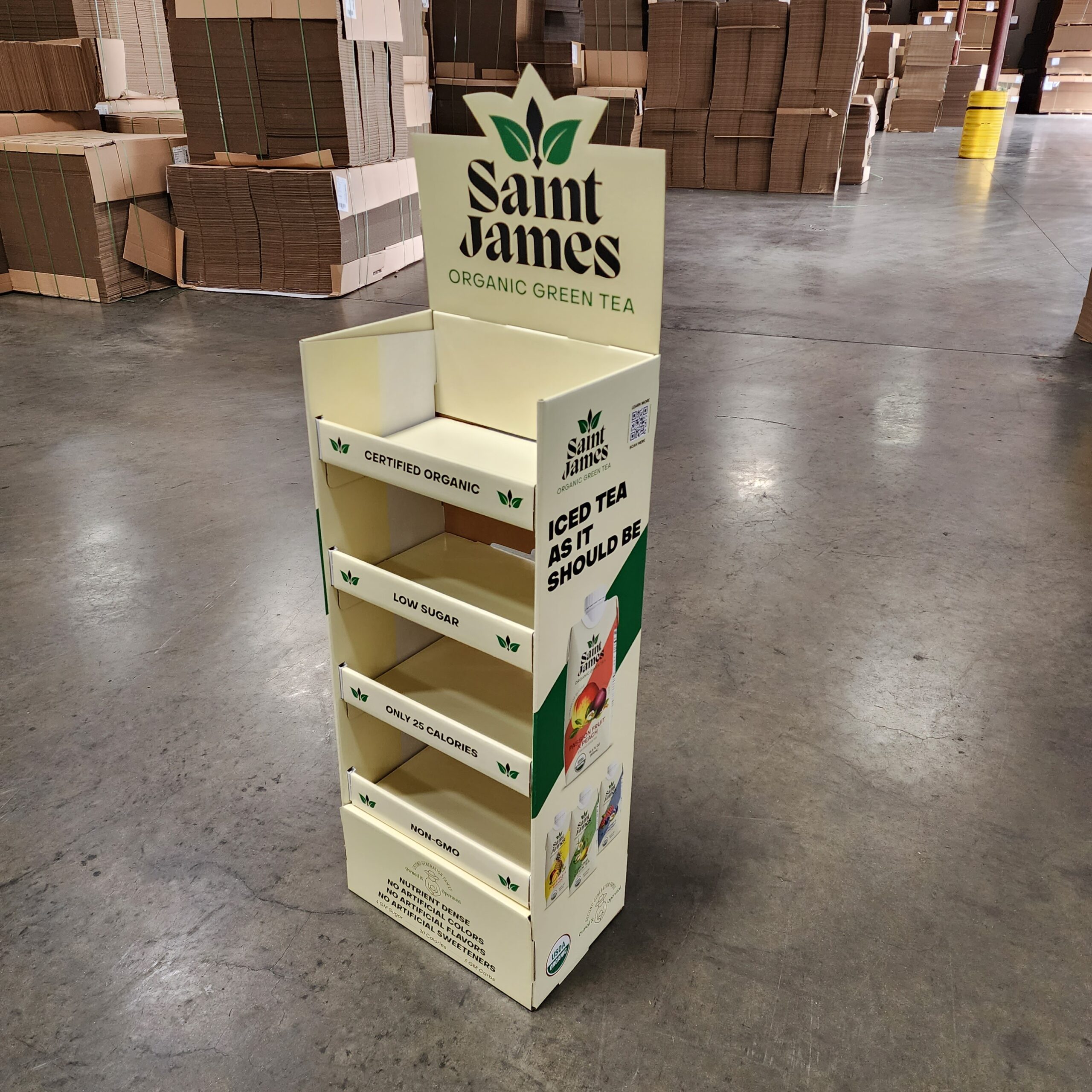
How to Reduce POP Display Costs Without Downgrading Quality
Most cost-cutting in POP displays happens in the wrong place. Brands reduce

Most cost-cutting in POP displays happens in the wrong place. Brands reduce

Most POP display failures aren’t caused by weak materials—they’re caused by poor

Not all retail environments are the same—and your POP display shouldn’t be

Bigger doesn’t always mean better. Many brands default to floor displays because

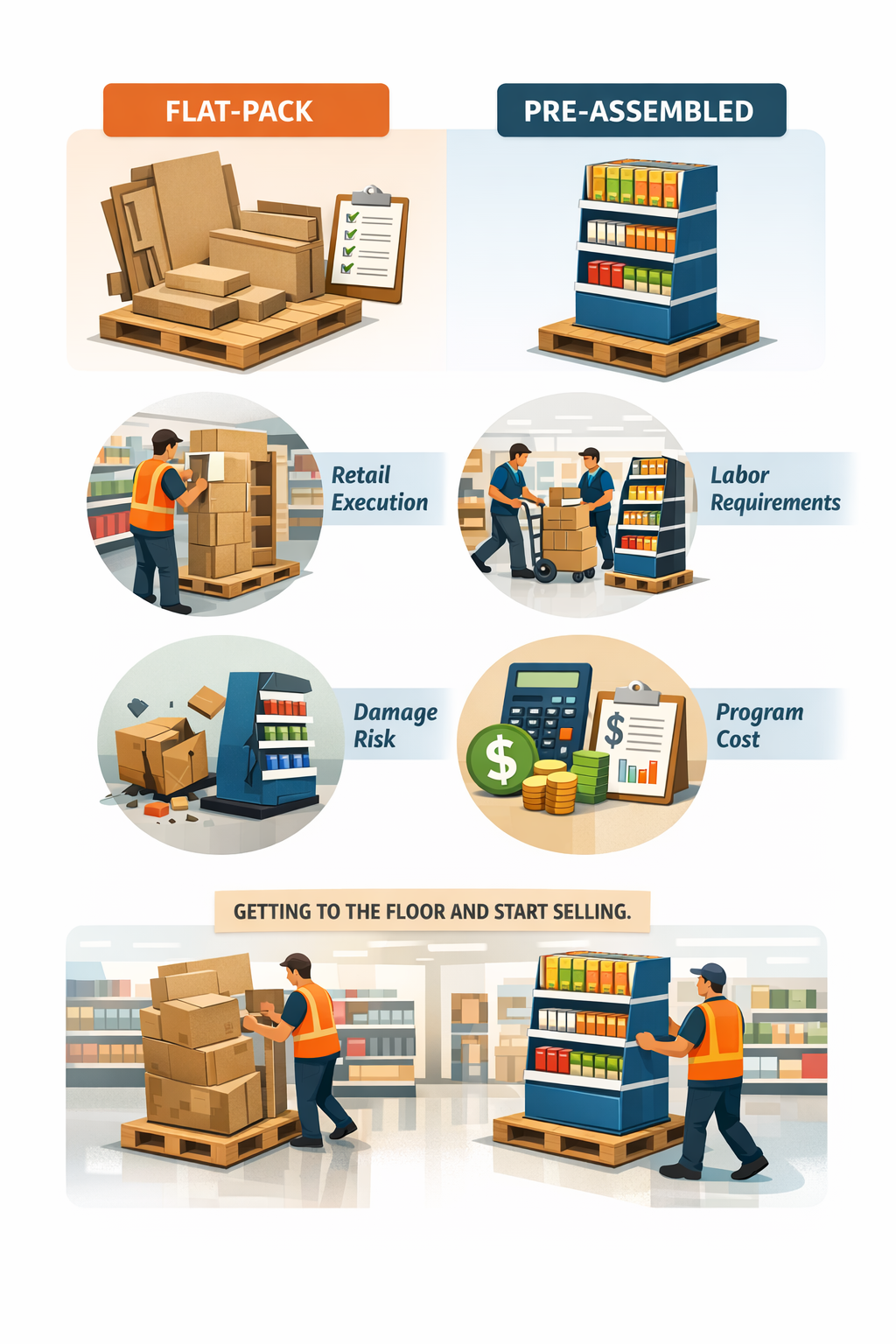
Retail-ready packaging (RRP) and POP displays are often treated as interchangeable. On

In the retail environment, the placement of Point of Purchase (POP) displays

POP display design must serve two masters — maximizing visual impact in-store

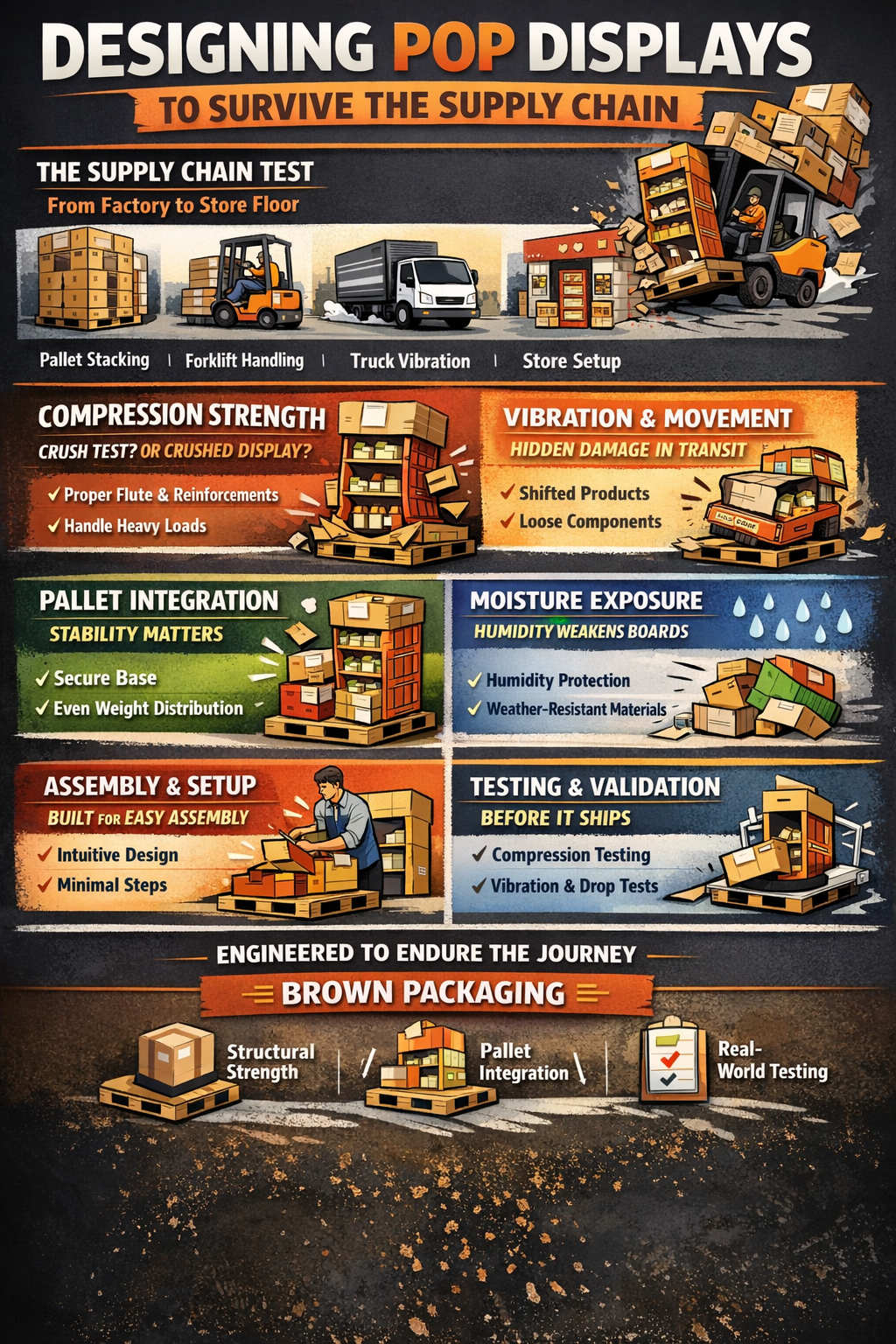
Point-of-purchase (POP) displays do more than attract shoppers—they must also survive the

Club stores such as Costco, Sam’s Club, and BJ’s Wholesale represent unique

Point-of-purchase (POP) displays play a dual role in retail environments: they must
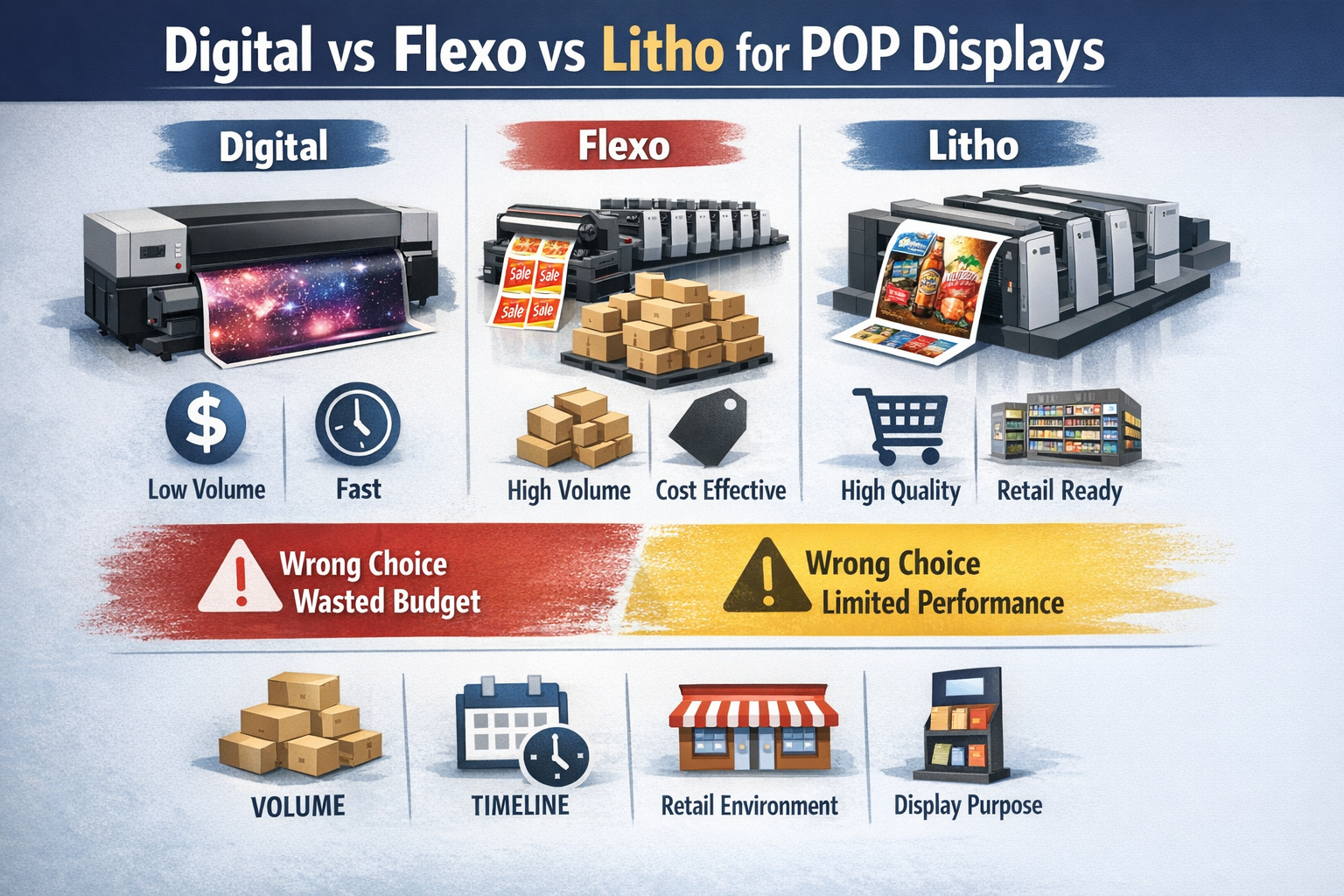
Digital printing is often positioned as the automatic choice for short runs. But the real financial breakpoint isn’t defined by volume alone — it’s determined
Digital printing is often the right starting point for growing brands and expanding SKU portfolios. But growth eventually raises a critical question: when does it
Most POP display programs become inefficient over time—not because of poor design, but because of too many variations. Different sizes, different footprints, different structures. It
Packaging performance testing is designed to verify that packaging can withstand the stresses of distribution. Tests such as drop testing, compression testing, and vibration testing
Most POP floor displays don’t fail immediately—they fail after they’ve been on the retail floor for a short period of time. Week one looks fine.By

A lower unit price doesn’t mean lower cost. In POP display programs, the biggest losses rarely show up on the quote—they show up in damage