Home » How Much Empty Space Is Costing You Per Shipment
How Much Empty Space Is Costing You Per Shipment
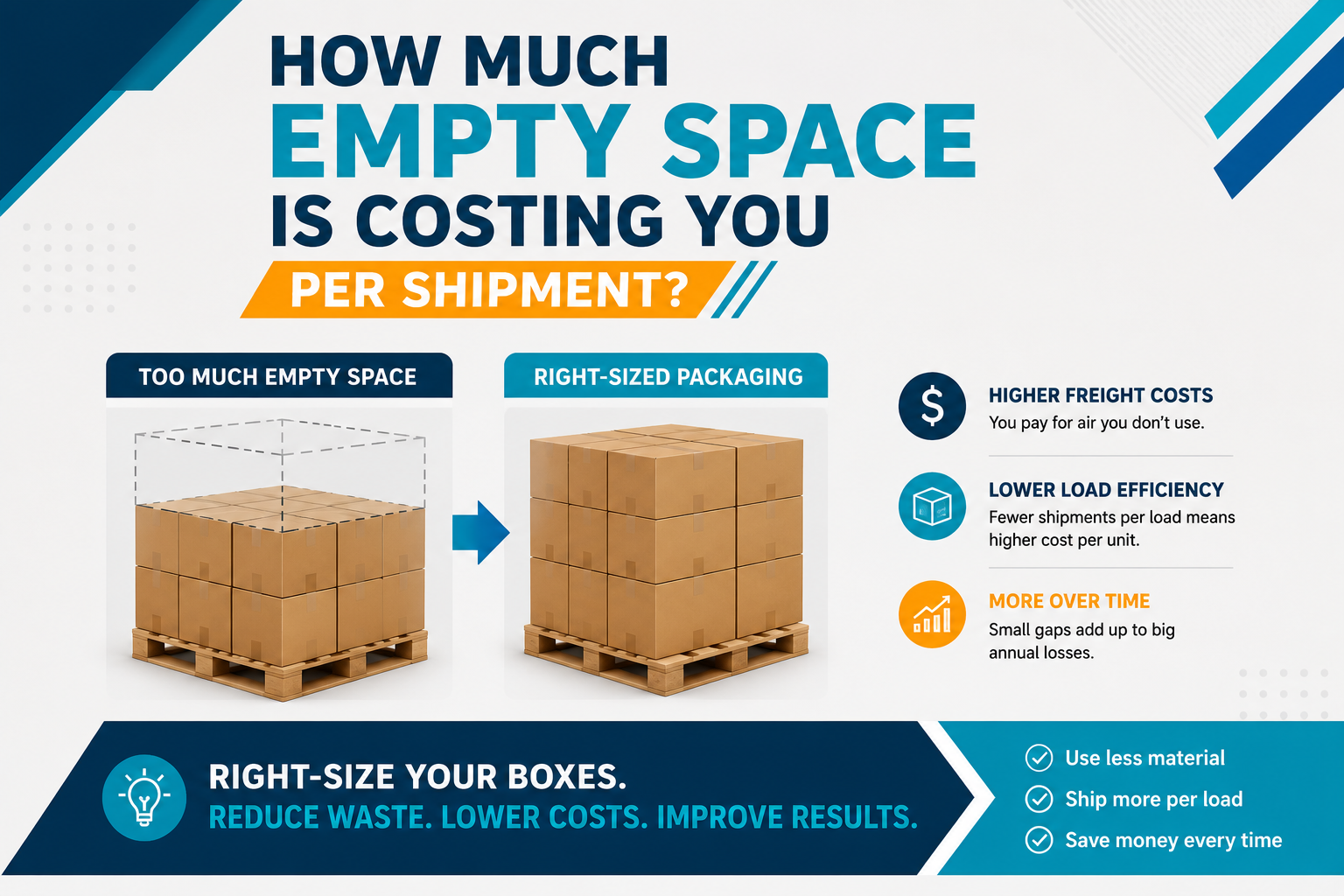
Most companies don’t realize how much they’re paying to ship empty space.
Packaging is often designed around convenience or standard sizes, not efficiency. The result is wasted cube, higher freight costs, and reduced shipment density.
Why Empty Space Matters
Shipping costs are driven by space and weight—not just distance.
When boxes are oversized:
- You increase DIM weight charges in parcel shipping
- You reduce units per pallet
- You ship fewer units per truck
👉 You’re paying to move air, not product
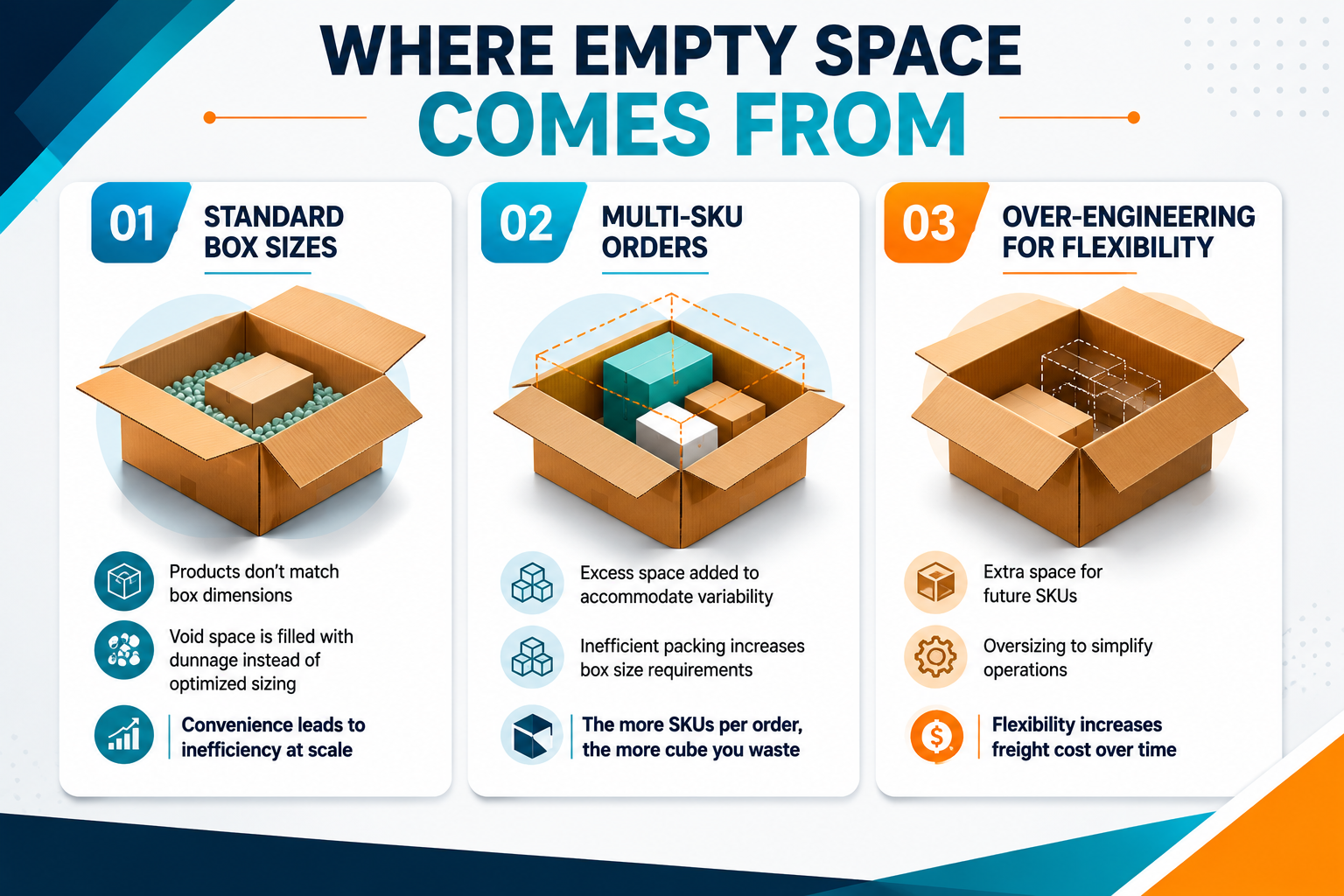
Where Empty Space Comes From
Standard Box Sizes
Using a limited range of box sizes creates poor fit.
- Products don’t match box dimensions
- Void space is filled with dunnage instead of optimized sizing
👉 Convenience leads to inefficiency at scale
Multi-SKU Orders
Orders with multiple items rarely fit standard packaging.
- Excess space added to accommodate variability
- Inefficient packing increases box size requirements
👉 The more SKUs per order, the more cube you waste
Over-Engineering for Flexibility
Boxes are often designed “just in case.”
- Extra space for future SKUs
- Oversizing to simplify operations
👉 Flexibility increases freight cost over time
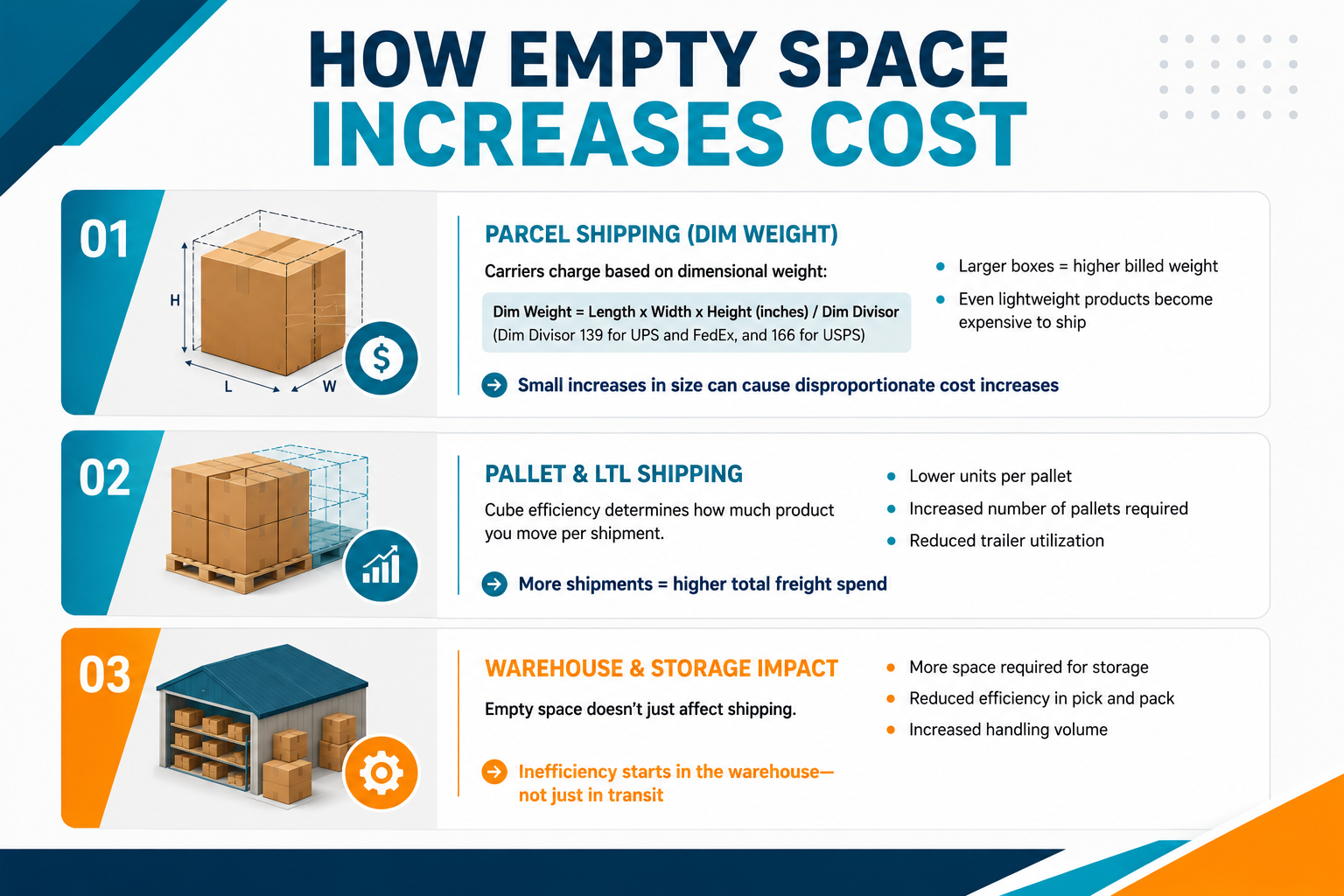
How Empty Space Increases Cost
Parcel Shipping (DIM Weight)
Carriers charge based on dimensional weight:
Dim Weight = Length x Width x Height (inches)/ Dim Divisor
Dim Divisor 139 for UPS and Fedex, and 166 for USPS)
- Larger boxes = higher billed weight
- Even lightweight products become expensive to ship
👉 Small increases in size can cause disproportionate cost increases
Pallet & LTL Shipping
Cube efficiency determines how much product you move per shipment.
- Lower units per pallet
- Increased number of pallets required
- Reduced trailer utilization
👉 More shipments = higher total freight spend
Warehouse & Storage Impact
Empty space doesn’t just affect shipping.
- More space required for storage
- Reduced efficiency in pick and pack
- Increased handling volume
👉 Inefficiency starts in the warehouse—not just in transit
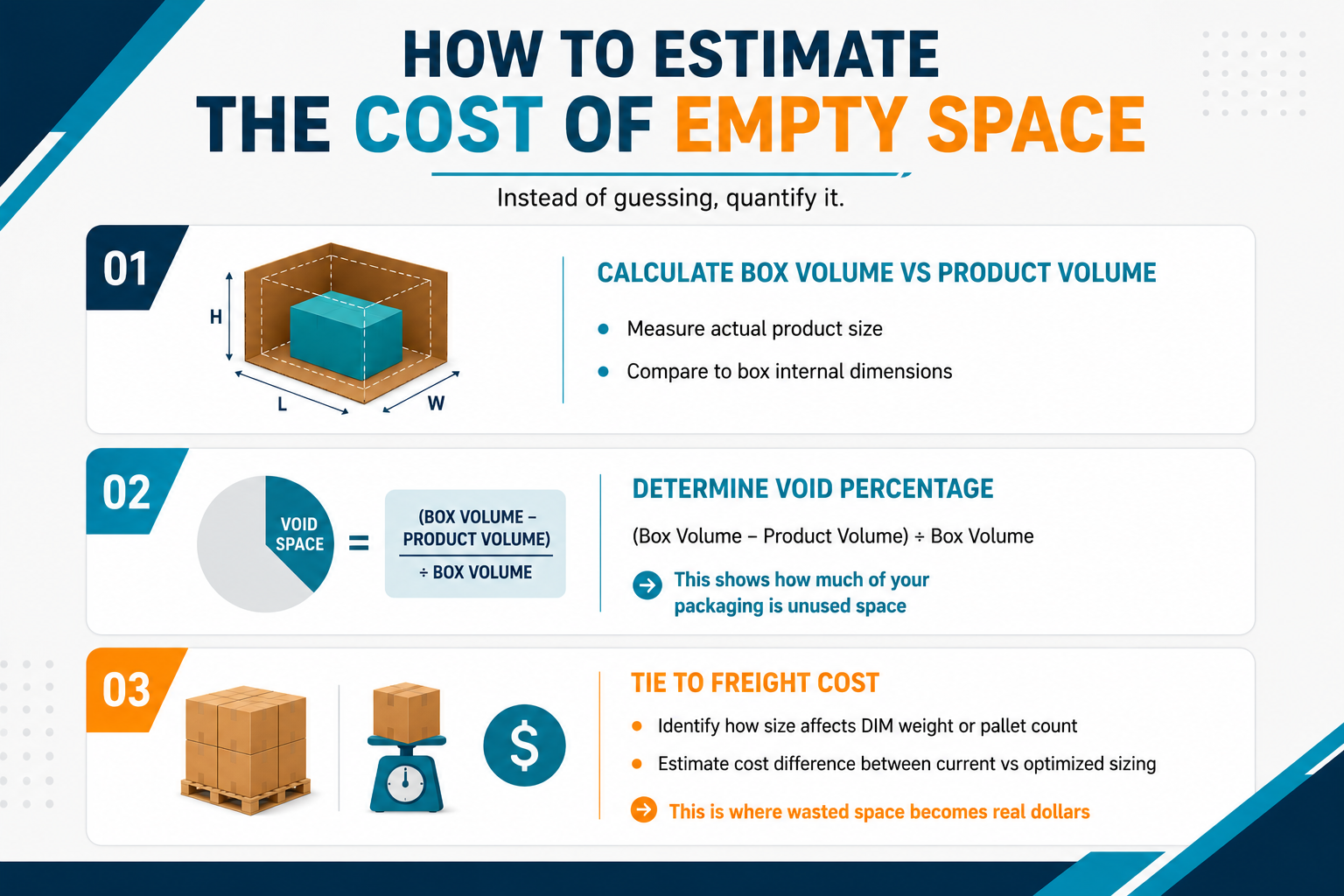
How to Estimate the Cost of Empty Space
Instead of guessing, quantify it.
Step 1: Calculate Box Volume vs Product Volume
- Measure actual product size
- Compare to box internal dimensions
Step 2: Determine Void Percentage
(Box Volume – Product Volume) ÷ Box Volume
👉 This shows how much of your packaging is unused space
Step 3: Tie to Freight Cost
- Identify how size affects DIM weight or pallet count
- Estimate cost difference between current vs optimized sizing
👉 This is where wasted space becomes real dollars
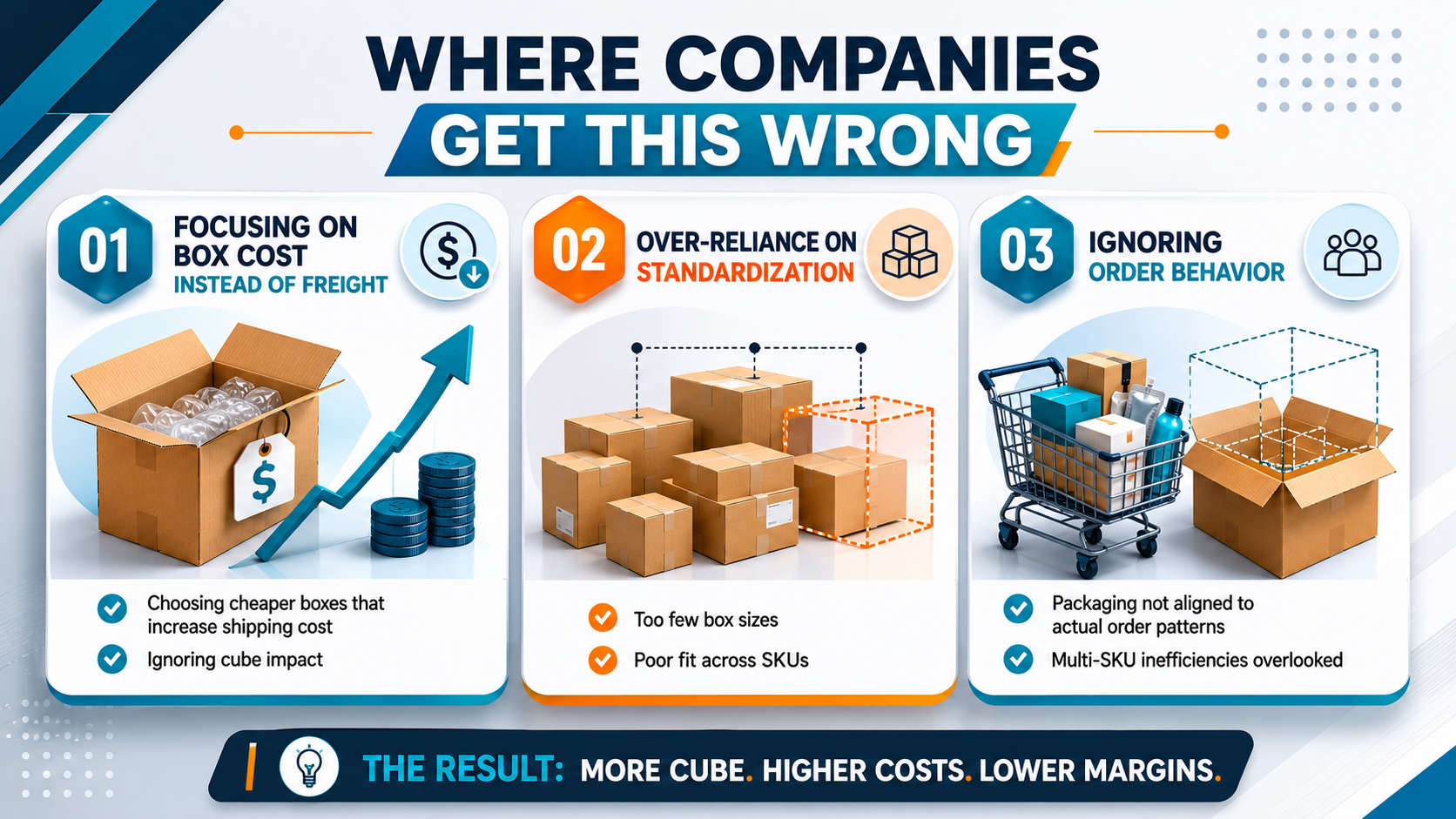
Where Companies Get This Wrong
Focusing on Box Cost Instead of Freight
- Choosing cheaper boxes that increase shipping cost
- Ignoring cube impact
Over-Reliance on Standardization
- Too few box sizes
- Poor fit across SKUs
Ignoring Order Behavior
- Packaging not aligned to actual order patterns
- Multi-SKU inefficiencies overlooked
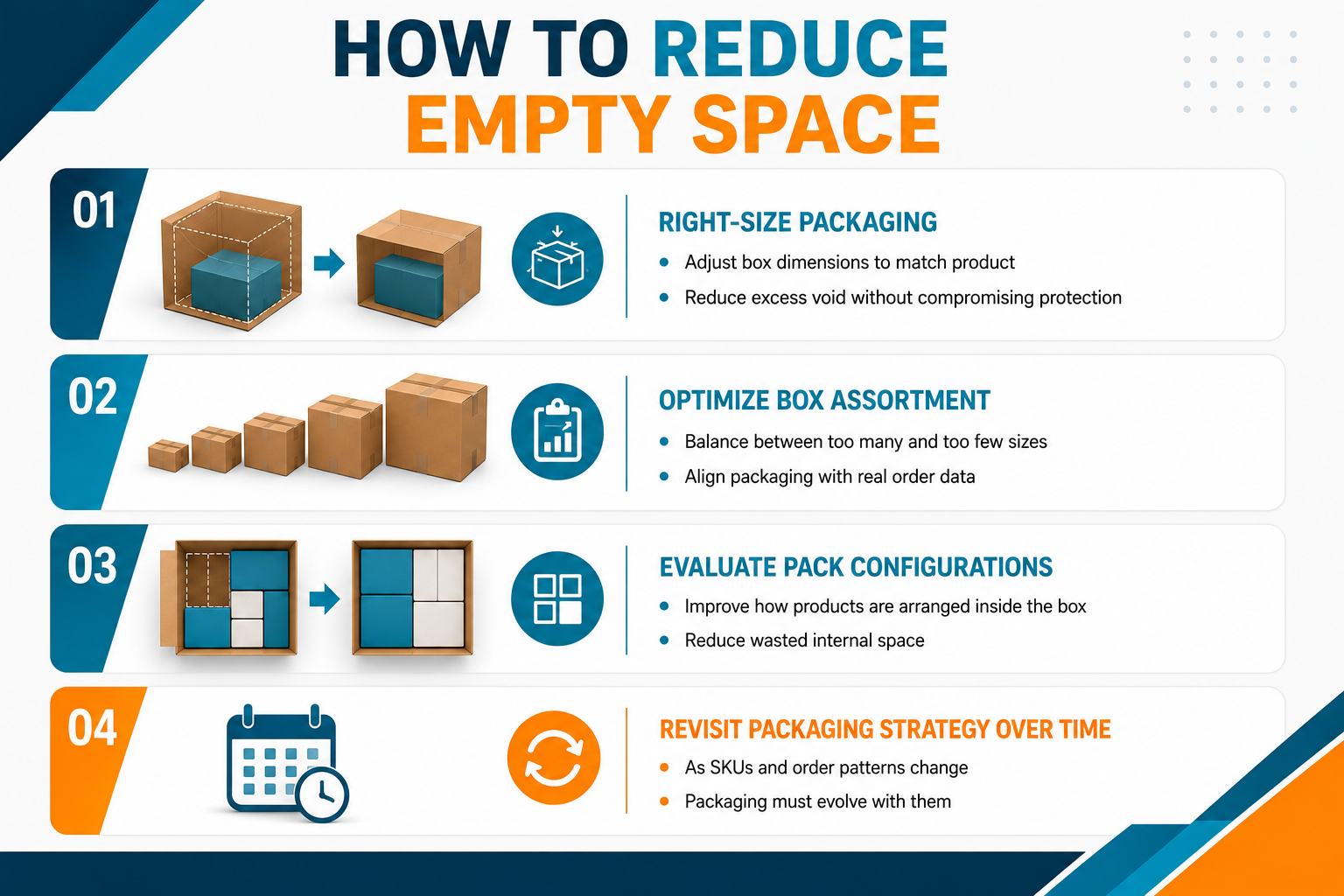
How to Reduce Empty Space
Right-Size Packaging
- Adjust box dimensions to match product
- Reduce excess void without compromising protection
Optimize Box Assortment
- Balance between too many and too few sizes
- Align packaging with real order data
Evaluate Pack Configurations
- Improve how products are arranged inside the box
- Reduce wasted internal space
Revisit Packaging Strategy Over Time
- As SKUs and order patterns change
- Packaging must evolve with them
What This Means for Cost
Empty space is one of the most overlooked cost drivers in packaging.
- It increases freight spend
- Reduces shipment efficiency
- Impacts warehouse operations
👉 And it rarely shows up in box pricing
Final Takeaway
If your packaging is not optimized for cube, you are paying to ship space — not product. Even small dimensional improvements can lead to meaningful cost reduction across every shipment. Brown Packaging helps companies review box sizing, product fit, pallet efficiency, and shipping requirements to reduce wasted space and lower total packaging cost without compromising protection.
Folding carton production is becoming more automated because buyers are asking for faster timelines, tighter consistency, and more flexibility across more SKUs. Shorter product lifecycles, retail launch windows, labor pressure,
Folding carton style matters because structure affects more than appearance. The right carton can improve shelf presentation, packing speed, product access, closure security, storage efficiency, and overall cost. For retail
Pouch packaging trends in 2027 will be shaped by convenience, shelf impact, sustainability pressure, sealing performance, automation, ecommerce growth, and total packaging cost. Buyers will still want pouches that look
Corrugated box trends in 2027 will be driven by a practical mix of cost control, sustainability, ecommerce growth, automation, retail requirements, and supply chain performance. Buyers will still need boxes
Home » How Much Empty Space Is Costing You Per Shipment