Display

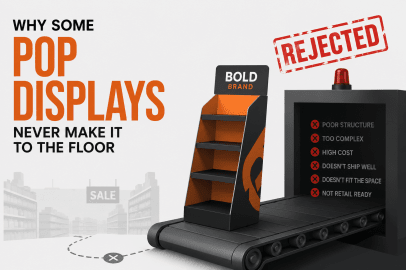
Why Some POP Displays Never Make It to the Floor
A POP display can be perfectly designed, well-produced, and shipped on time…


A POP display can be perfectly designed, well-produced, and shipped on time…

Your POP display isn’t used the way you designed it. It’s used

Most POP display failures don’t start with materials—they start with geometry. Specifically:👉
Not every POP display should be optimized for the lowest cost. In

Most POP displays are designed to look good at production. But that’s
Most POP display programs don’t lose money on materials. They lose it

Taller displays get attention. But they also get: Rejected by retailers Unstable

Cutouts sell the product. They improve: Visibility Brand presentation Shopper engagement But
Most POP displays are designed for full, balanced product loads. But that’s

Most POP display programs become inefficient over time—not because of poor design,