

Home » Why Cheap POP Displays Often Lose Money
Why Cheap POP Displays Often Lose Money
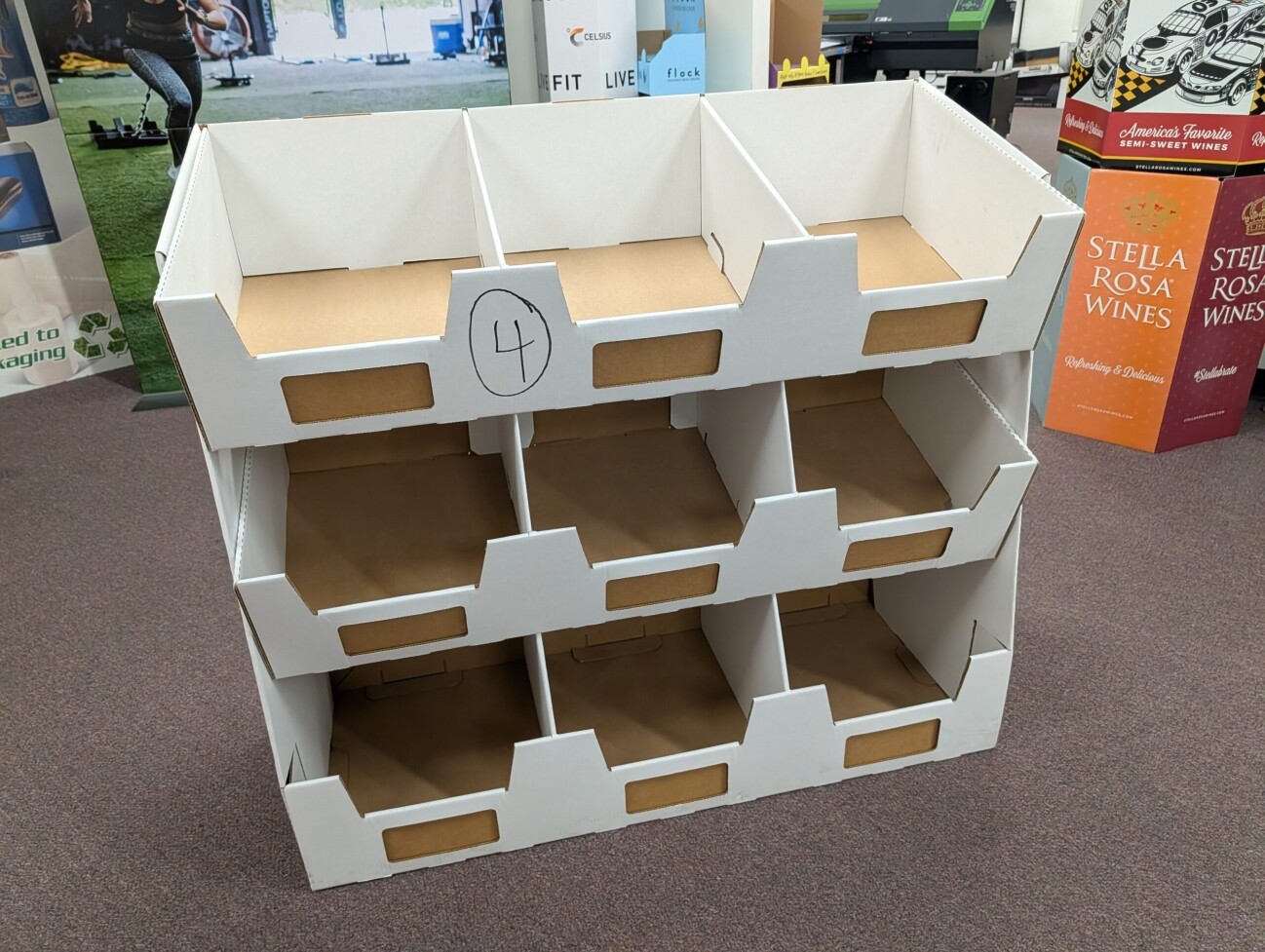
A lower unit price doesn’t mean lower cost.
In POP display programs, the biggest losses rarely show up on the quote—they show up in damage rates, retail rejection, poor sell-through, and operational inefficiencies.
This is where many brands make the wrong decision: optimizing for purchase price instead of total performance.
Unit Cost vs Total Cost of Ownership
The price per display is easy to compare. What’s harder—and far more important—is what happens after production.
A cheaper display can quietly increase:
- Product damage during transit
- Labor time during assembly
- Retail compliance issues
- Early display failure on the floor
A $2 savings per unit can quickly turn into thousands in hidden losses once the display enters the supply chain.
Damage and Returns: The Most Expensive Failure
Displays are responsible for protecting product—not just presenting it.
When structural integrity is compromised:
- Products shift or collapse during shipping
- Displays arrive partially damaged
- Retailers reject shipments or request credits
Even a small increase in damage rates can erase any upfront cost savings.
This is especially critical for:
- Fragile items
- Multi-SKU packouts
- E-commerce and club store programs
If the display fails before it hits the floor, it never had a chance to perform.

Assembly Time and Labor Costs
Flat-packed displays are often chosen to reduce freight—but poorly designed structures shift the cost to labor.
Hidden costs include:
- Longer assembly time per unit
- Increased training requirements
- Errors during setup
- Store-level frustration
Retailers don’t want complexity. If assembly takes too long or is confusing:
- Displays may be assembled incorrectly
- Or not assembled at all
Speed and simplicity directly impact execution.

Retail Compliance and Chargebacks
Retailers operate on strict requirements.
Displays that don’t meet specifications can trigger:
- Refused shipments
- Chargebacks
- Delayed floor placement
Common issues:
- Incorrect pallet dimensions
- Weak structural performance under load
- Labeling or packaging non-compliance
A display that saves money but fails compliance is one of the most expensive mistakes a brand can make.

Sell-Through and Lost Revenue
The biggest cost isn’t operational—it’s missed sales.
Displays that don’t convert result in:
- Lower product velocity
- Unsold inventory
- Reduced reorder opportunities
This happens when:
- The structure breaks down visually
- Product access is poor
- Messaging is unclear or cluttered
A display that looks good in a render but performs poorly in-store becomes a revenue liability.
Short Lifespan = Higher Replacement Costs
Many low-cost displays degrade quickly:
- Edges soften
- Shelves sag
- Graphics wear down
Retail environments are demanding. If a display doesn’t last:
- It gets pulled early
- Or requires replacement mid-cycle
Now you’re paying twice.
Where Smart Brands Actually Save Money
Cost efficiency comes from design and engineering decisions, not material shortcuts.
High-performing programs focus on:
- Right-sizing structures to reduce material waste
- Selecting appropriate flute and board strength for load requirements
- Simplifying assembly to reduce labor
- Aligning print methods with run size and retail environment
The goal is not to spend less—it’s to spend where it matters and eliminate what doesn’t.
The Reality: Cheap vs Cost-Effective
Cheap displays:
- Lower upfront price
- Higher failure rate
- Poor retail execution
Cost-effective displays:
- Optimized for performance
- Lower total cost over lifecycle
- Stronger retail results
There’s a difference—and it shows up fast.

Working with Brown Packaging
At Brown Packaging, POP displays are evaluated based on total cost of ownership, not just unit price.
We help brands:
- Identify hidden cost drivers in display programs
- Optimize structural design for durability and performance
- Align materials and print methods with actual use conditions
- Reduce damage, labor inefficiencies, and compliance risks
The result is a display that doesn’t just cost less—it performs better across the entire supply chain.
Sustainable packaging in 2027 will be less about broad claims and more about proof, performance, compliance, and cost control. Buyers will still care about recyclable materials, recycled content, and lower
Sustainable packaging in 2027 will be less about broad claims and more about proof, performance, compliance, and cost control. Buyers will still care about recyclable materials, recycled content, and lower
A folding carton may look simple once it reaches the shelf, but it goes through a controlled production process before it becomes a finished package. Every step — from paperboard
Folding carton production is becoming more automated because buyers are asking for faster timelines, tighter consistency, and more flexibility across more SKUs. Shorter product lifecycles, retail launch windows, labor pressure,
By submitting your information, you agree to our terms and conditions and privacy policy.

Home » Why Cheap POP Displays Often Lose Money


Creating an effective Point of Purchase (POP) display can be a game changer for any retail business, influencing buying decisions and enhancing product visibility. For

Point of Purchase (POP) displays are an effective way to promote products and increase sales in retail environments. The trends for POP displays in 2023

Retail point of purchase (POP) displays are essential tools for marketing products directly to consumers within retail environments. These displays vary widely in shape, size,