Home » How Cutouts and Windows Weaken POP Display Structure
How Cutouts and Windows Weaken POP Display Structure
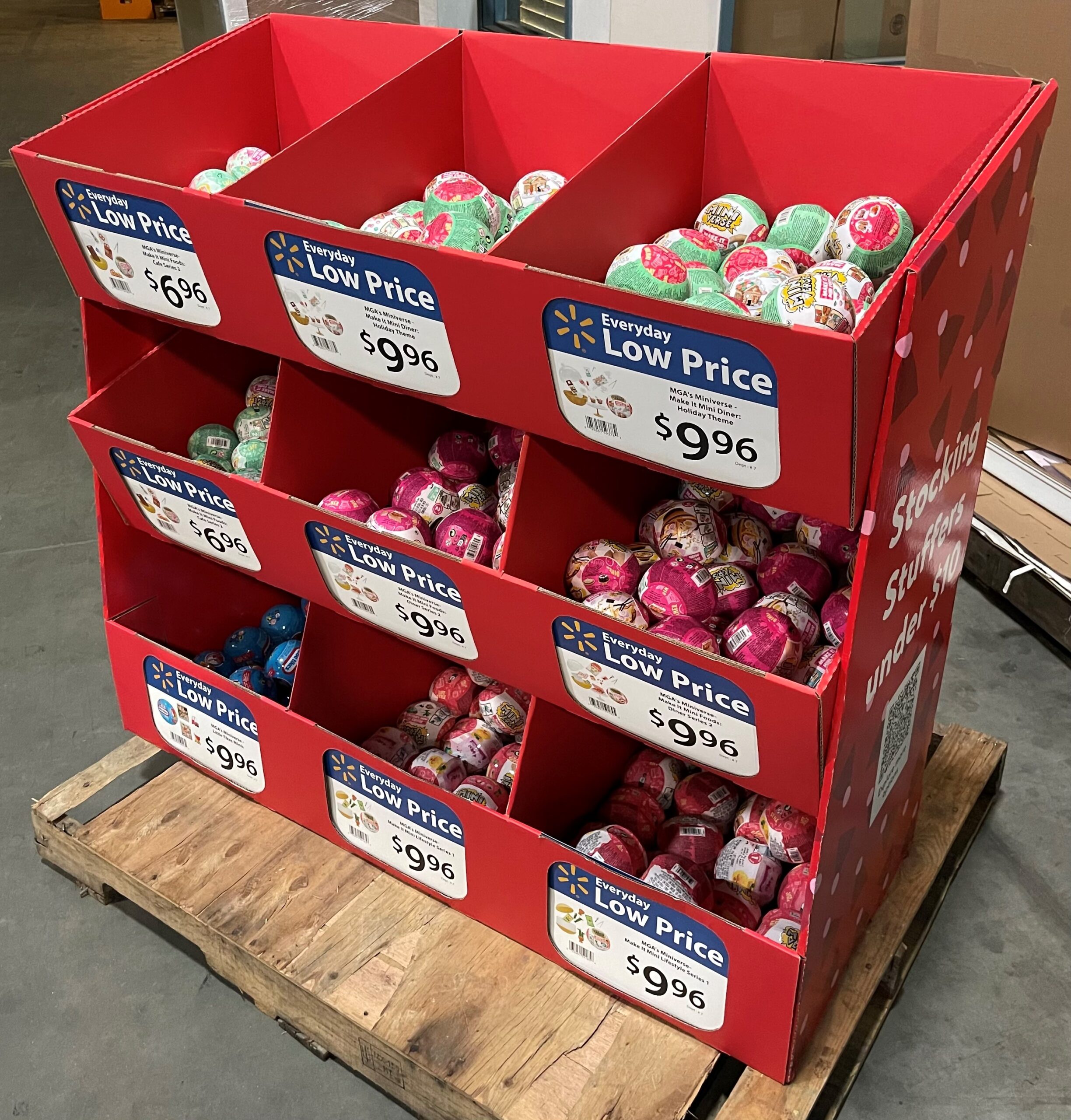
Cutouts sell the product.
They improve:
- Visibility
- Brand presentation
- Shopper engagement
But they also remove something critical:
👉 Structure
Every cutout or window reduces material—and with it, load-bearing strength.
Most designs treat cutouts as purely visual.
In reality, they’re one of the fastest ways to introduce structural failure.
What Cutouts Actually Do to Structure
Corrugated strength depends on continuous material.
When you introduce cutouts:
- You interrupt load paths
- You reduce compression resistance
- You create stress concentration points
This leads to:
- Weakened panels under load
- Higher risk of bending and collapse
- Reduced stacking strength during transit
You’re not just removing board—you’re removing support.
Front Panel Cutouts Are High-Risk
The most common failure point:
👉 Large front-facing windows
Why they fail:
- Front panels often help stabilize the structure
- Removing material reduces resistance to forward bending
Results:
- Display leaning forward
- Shelves losing support at the front edge
- Overall instability under load
What improves visibility can quietly destroy performance.
Cutouts Disrupt Vertical Load Paths
Strong displays rely on:
👉 Continuous vertical load transfer
Cutouts break that path.
Instead of weight traveling cleanly to the base:
- Load shifts unpredictably
- Stress concentrates around edges of the cutout
This creates:
- Localized crushing
- Panel deformation over time
If the load path is interrupted, the structure compensates—and eventually fails.
Edges Become Weak Points
Every cutout introduces new edges.
Edges are:
- More vulnerable to crushing
- More sensitive to moisture
- Less resistant to repeated handling
This leads to:
- Fraying and softening over time
- Reduced durability during replenishment
- Faster visual degradation
The more cutouts, the more weak points you introduce.
Transit Damage Increases with Cutouts
During shipping:
- Displays are stacked
- Compression forces are applied
Cutouts reduce:
- Stacking strength
- Resistance to vertical load
This can cause:
- Collapsed panels in transit
- Warped structures before store arrival
What survives design review may not survive the supply chain.
The Tradeoff: Visibility vs Strength
Cutouts are not the problem—uncontrolled use is.
The balance:
- More cutout → better visibility, less strength
- Less cutout → more strength, less exposure
High-performing designs:
- Use cutouts strategically—not aggressively
- Maintain structural integrity while improving product view
It’s not about removing them—it’s about controlling them.
How to Design Around Cutout Weakness
Effective strategies:
- Reinforce areas around cutouts
- Limit size and placement in load-bearing zones
- Avoid cutting through critical support panels
- Use structural alternatives (angled shelves, open fronts with support)
Design should preserve:
👉 Load paths first, visibility second
Where Brands Get It Wrong
- Oversizing windows for visual impact
- Cutting into load-bearing panels
- Ignoring edge degradation over time
- Not testing compression with cutouts included
- Treating structure and graphics as separate decisions
These mistakes lead to displays that look great—but fail quickly.
What High-Performing Displays Do Differently
They:
- Balance visibility with structural integrity
- Maintain continuous load paths
- Reinforce high-risk areas
- Design cutouts with performance in mind
They treat every removed section as a structural decision—not a visual one.
How Brown Packaging Designs for Performance and Visibility
At Brown Packaging, cutouts are engineered—not just designed.
We focus on:
- Preserving structural integrity while improving product visibility
- Reinforcing panels affected by material removal
- Ensuring displays perform under real-world load and transit conditions
Because if visibility compromises structure, the display—and the product—lose impact.
References
Soroka, W. (2009). Fundamentals of Packaging Technology (4th ed.). IoPP.
TAPPI. (2021). Corrugated Board Testing Methods.
ASTM International. (2022). Corrugated Structural Standards.
ISTA. (2023). Transit Testing Protocols.
Shop! Association. (2023). Retail Display Design Guidelines.
Cutouts sell the product. They improve: Visibility Brand presentation Shopper engagement But they also remove something critical:👉 Structure Every cutout or window reduces material—and with it, load-bearing strength. Most designs
Most POP displays are designed for full, balanced product loads. But that’s not how they perform in-store. Within days: One SKU sells faster than another One side of the display
The choice of material and structural design in folding cartons is directly tied to performance, cost, and consumer perception. The right pairing can mean the difference between a carton that
The integrity of a pouch package is only as strong as its seal. Sealing technologies determine not just the strength of closure but also shelf life, barrier performance, consumer usability,
Home » How Cutouts and Windows Weaken POP Display Structure