
Home » Supply Chain Challenges in POP Display Design
Supply Chain Challenges in POP Display Design
Point-of-purchase (POP) displays do more than attract shoppers—they must also survive the complexities of modern supply chains. From manufacturing and warehousing to transportation and in-store setup, each stage presents risks that can compromise display performance. Addressing these challenges early in design ensures displays not only capture attention on the floor but also arrive intact, compliant, and cost-effective.
Manufacturing and Lead Time Constraints
POP displays are often tied to seasonal or promotional campaigns with fixed launch dates. Tight lead times create risks such as:
- Material availability: Shortages of corrugated board, coatings, or inks delay production.
- Complexity of die-cuts: Intricate designs slow manufacturing efficiency.
- Volume requirements: High-volume orders may exceed production capacity.
To mitigate risks, displays must be designed for manufacturability without compromising branding.
Warehousing and Handling Risks
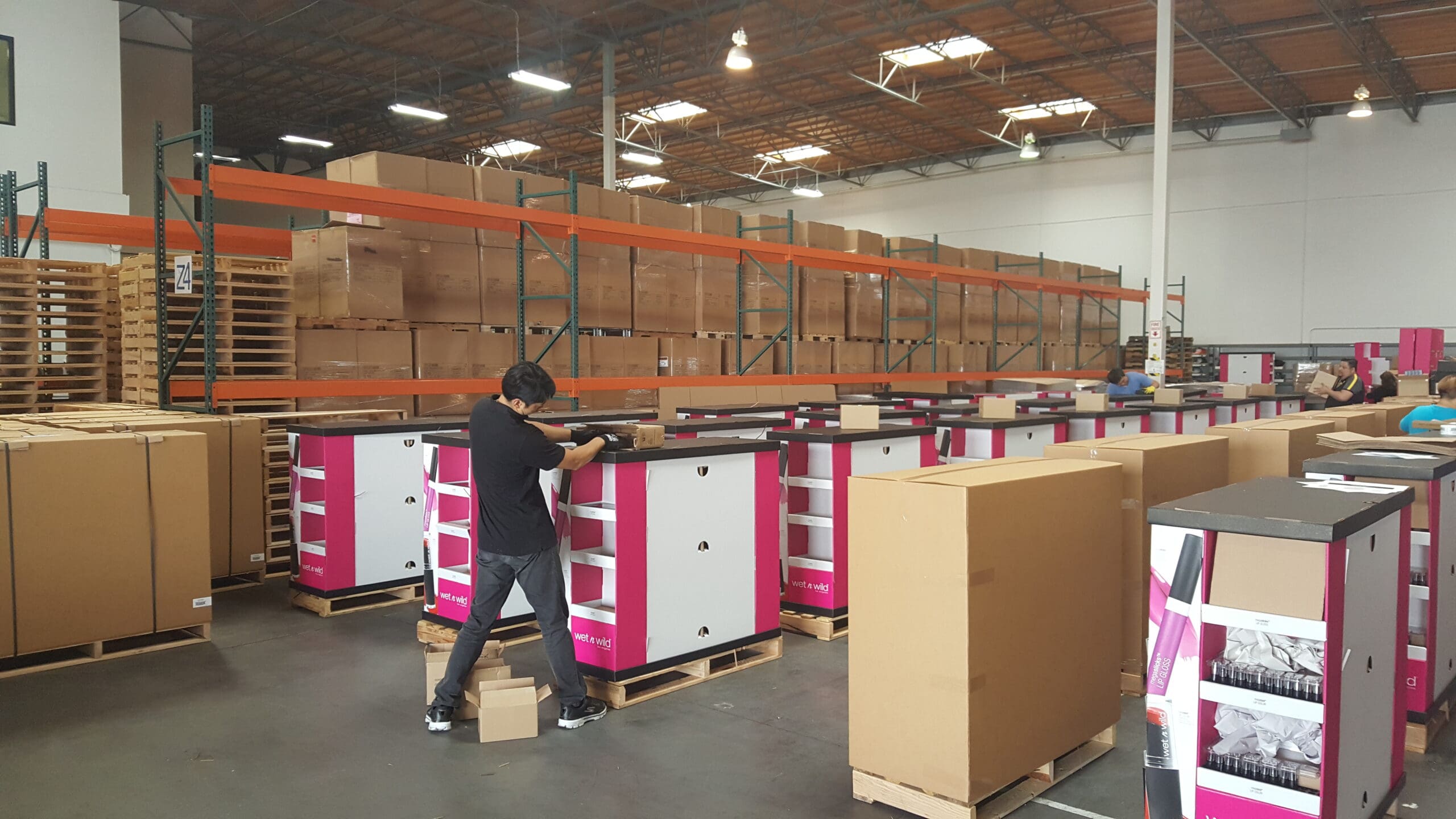
Displays frequently move through multiple handling points before reaching retail stores. Poor design choices can lead to:
- Stacking failures: Weak structural design leads to collapsed units in storage.
- Space inefficiency: Oversized designs increase warehousing costs.
- Damage in staging: Displays not built for repeated handling degrade before reaching stores.
Transportation Challenges
Freight adds another layer of stress on displays. Vibrations, compression, and shifting loads can all cause damage. Key considerations include:
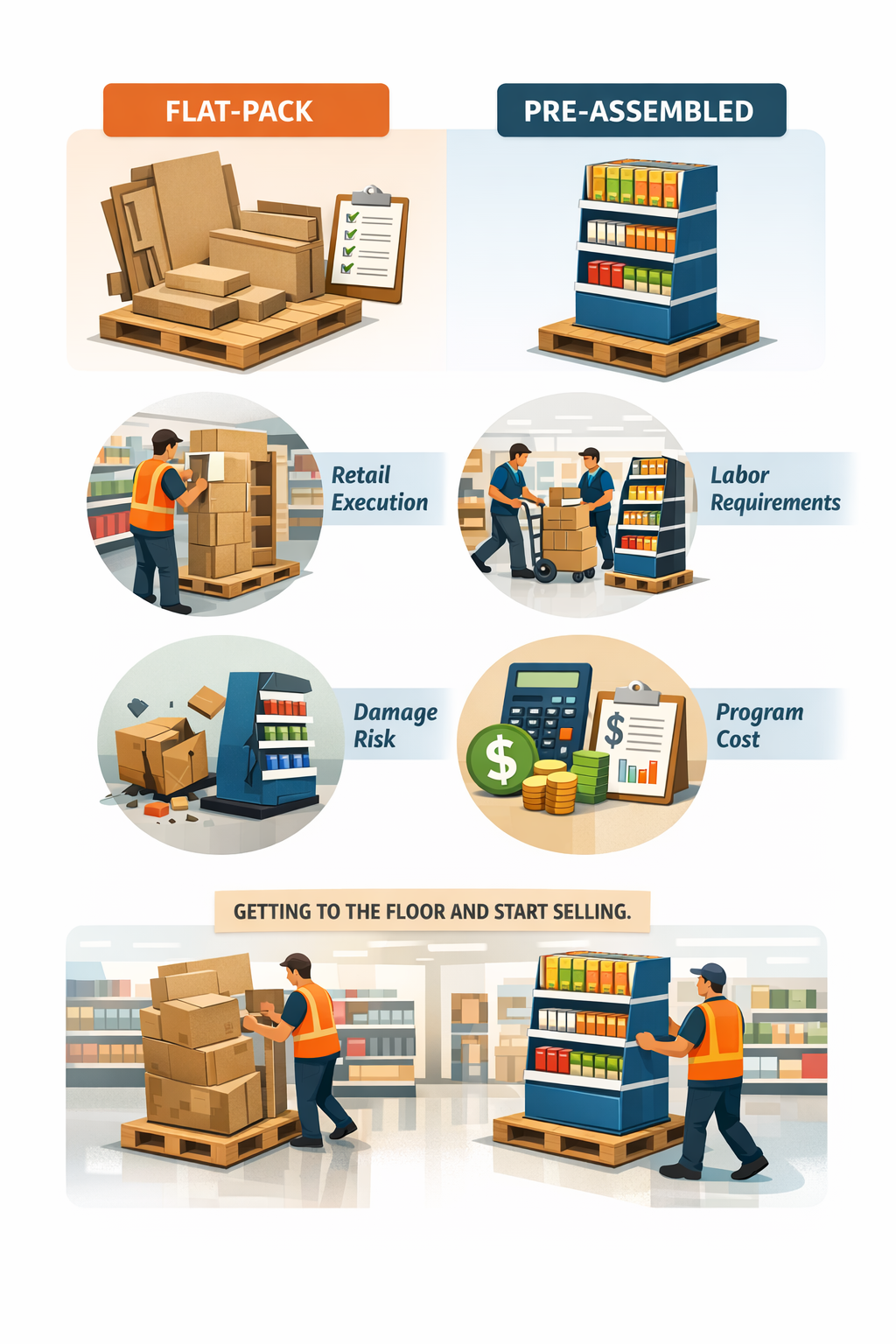
- Flat-pack shipping efficiency to reduce cube and freight cost.
- Reinforced edges and coatings to withstand long-haul transit.
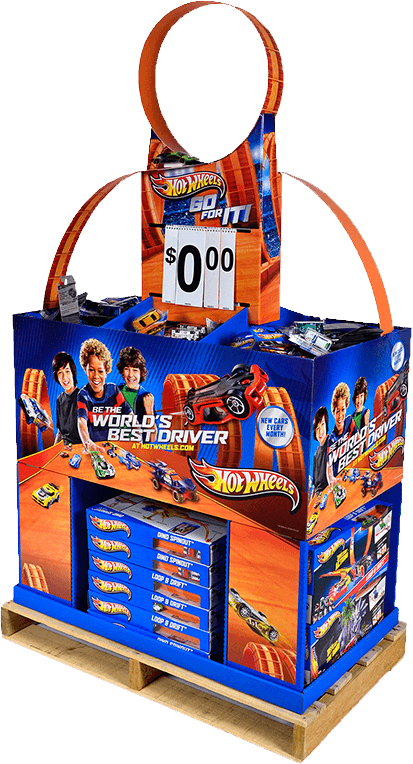
- Pallet compliance to ensure safe and stable shipping.
Retailer Compliance Requirements
Major retailers impose strict specifications for POP displays. Failing to meet them can result in rejected shipments or costly redesigns. Compliance often covers:
- Footprint and height limitations.
- Palletization standards for handling efficiency.
- Graphics placement for barcode and label visibility.
- Safety standards for load stability.
Strategies to Overcome Supply Chain Challenges
- Engage structural and graphics teams early for alignment.
- Test prototypes for strength, compliance, and transit durability.
- Collaborate with logistics partners to optimize pallet and trailer efficiency.
- Plan lead times around material availability and peak retail calendars.
POP Display Solutions with Brown Packaging
Brown Packaging designs POP displays with supply chain realities in mind. From pallet-ready club store displays to compact seasonal promotions, we engineer solutions that balance visual impact with durability and compliance. Contact us to discuss how we can optimize your next display.
References
Shop! Association. (2021). Best Practices for In-Store Marketing and POP Displays. Retrieved from https://www.shopassociation.org
GS1. (2022). Retail Supply Chain Standards for Packaging and Logistics. Retrieved from https://www.gs1.org
Soroka, W. (2009). Fundamentals of Packaging Technology (4th ed.). Institute of Packaging Professionals.
Taller displays get attention. But they also get: Rejected by retailers Unstable under load More likely to fail in-store Height isn’t just a design choice—it’s a tradeoff between visibility and
Cutouts sell the product. They improve: Visibility Brand presentation Shopper engagement But they also remove something critical:👉 Structure Every cutout or window reduces material—and with it, load-bearing strength. Most designs
Most POP displays are designed for full, balanced product loads. But that’s not how they perform in-store. Within days: One SKU sells faster than another One side of the display
The choice of material and structural design in folding cartons is directly tied to performance, cost, and consumer perception. The right pairing can mean the difference between a carton that
Home » Supply Chain Challenges in POP Display Design