





Home » Packaging That Improves Retail Compliance
Packaging That Improves Retail Compliance
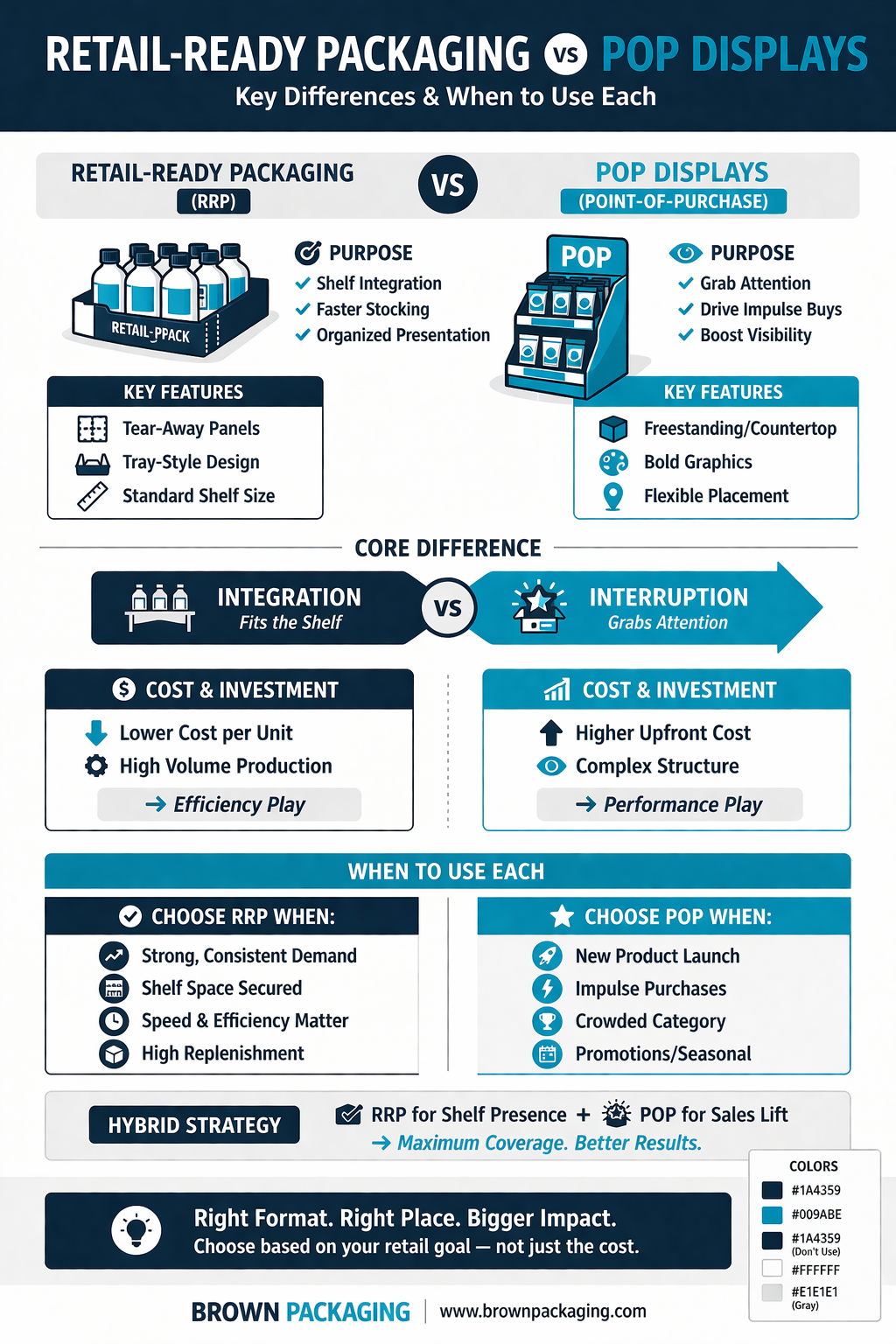
Retailers place strict requirements on packaging to ensure products move efficiently through distribution centers, arrive safely, and look consistent on shelves. Non-compliance can lead to costly chargebacks, rejected shipments, and damaged retailer relationships. Buyers must design packaging that meets performance, labeling, and sustainability standards to avoid disruptions.
Why Retail Compliance Matters
- Financial impact: Chargebacks and penalties cut into margins.
- Operational delays: Non-compliant packaging can hold up entire shipments.
- Retailer trust: Consistent compliance builds long-term partnerships.
- Shelf presence: Packaging that aligns with planograms avoids disruptions at store level.
Key Compliance Requirements
- Structural standards: Packaging must meet durability and palletization guidelines.
- Labeling accuracy: GS1-compliant barcodes and proper product details.
- Sustainability mandates: FSC certification or recyclability requirements from major retailers.
- Testing protocols: ISTA or ASTM performance tests to validate protection.
Common Causes of Non-Compliance
- Incorrect pallet sizes or overhang.
- Weak corrugated grades that collapse under stacking.
- Missing or unreadable barcodes.
- Excess packaging waste conflicting with retailer eco goals.
How to Improve Retail Compliance
- Standardize box sizes to match retailer pallet and shelf guidelines.
- Validate packaging with ISTA or ASTM testing before rollout.
- Collaborate with suppliers who understand retailer-specific requirements.
- Audit packaging regularly to stay aligned with updated standards.
Packaging Solutions with Brown Packaging
Brown Packaging partners with companies to design packaging that meets retailer requirements. From GS1 labeling to FSC-certified materials and ISTA-tested corrugated, we help buyers reduce chargebacks and protect retail relationships. Contact us to improve your retail compliance program.
References
GS1. (2024). Global Standards for Packaging and Labeling. Retrieved from https://www.gs1.org
International Safe Transit Association (ISTA). (2023). ISTA Testing Procedures for Transport Packaging. Retrieved from https://ista.org
Forest Stewardship Council (FSC). (2023). FSC Packaging Certification Guidelines. Retrieved from https://fsc.org
Following multiple rounds of tariff changes and trade policy adjustments, 2026 marks a turning point for U.S. packaging buyers. Many who previously transitioned from China to domestic or nearshore suppliers
Shifting packaging production from China to the U.S. can help stabilize costs, reduce tariff exposure, and shorten lead times. But the transition process requires careful planning. For packaging buyers, the
RSC boxes are known for their efficiency and versatility, but their performance ultimately comes down to strength. Buyers often see numbers like ECT, BCT, and burst strength on specifications —
In packaging, foam isn’t just about initial protection — it’s about maintaining performance over the entire shipping or storage cycle. Compression set and recovery characteristics determine whether foam continues to
Home » Packaging That Improves Retail Compliance