window.uetq = window.uetq || []; window.uetq.push(‘event’, ‘submit_lead_form’,{ event_label:‘SUBMIT MESSAGE’ }); window.lintrk('track', { conversion_id: 10271009 }); window.lintrk('track', { conversion_id: 10271017 });

Sustainable Pet Food Packaging Options

Sustainable Pet Food Packaging Options

Sustainability in pet food packaging is not just about recyclability—it’s about reducing environmental impact across the entire lifecycle. For products with high barrier needs like dry kibble, wet food, and treats, material selection and package design must balance performance with end-of-life recovery options.

Recyclable Mono-Material Films

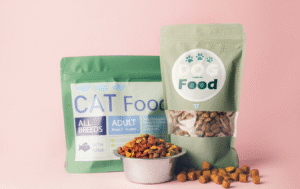
  • Description: Stand-up pouches made entirely from polyethylene (PE) or polypropylene (PP), eliminating the mixed-material layers that complicate recycling.
  • Benefits: Compatible with store drop-off or curbside recycling (where accepted).
  • Limitations: Barrier performance may be lower than multi-material laminates; suitable for short-to-medium shelf life SKUs.
  • Example Specs: PE/PE or BOPP
  • PE structures with EVOH for oxygen barrier.
custom pouch

Post-Consumer Recycled (PCR) Content

  • Description: Incorporating recycled resin into packaging layers.
  • Benefits: Reduces virgin resin use and carbon footprint.
  • Limitations: PCR clarity and odor control can be challenging for food-contact layers; often used in non-contact outer layers.
  • Compliance: Must meet FDA or EFSA standards for food contact when used in inner layers.

Compostable Packaging

  • Description: Materials that break down under industrial or home composting conditions, such as PLA films or paper-based laminates.
  • Benefits: Diverts waste from landfill.
  • Limitations: Limited barrier performance; industrial composting infrastructure is not widely available in all regions.
  • Use Case: Small pet treat pouches or sample packs with short shelf life.

Paper-Based Pet Food Bags

  • Description: Multiwall paper sacks with an inner moisture barrier (e.g., PLA, PE, or EVOH-coated papers).
  • Benefits: Renewable resource, strong branding potential.
  • Limitations: Inner barrier layer may reduce recyclability; requires proper sealing to maintain freshness.
  • Application: Bulk dry food and farm animal feed.
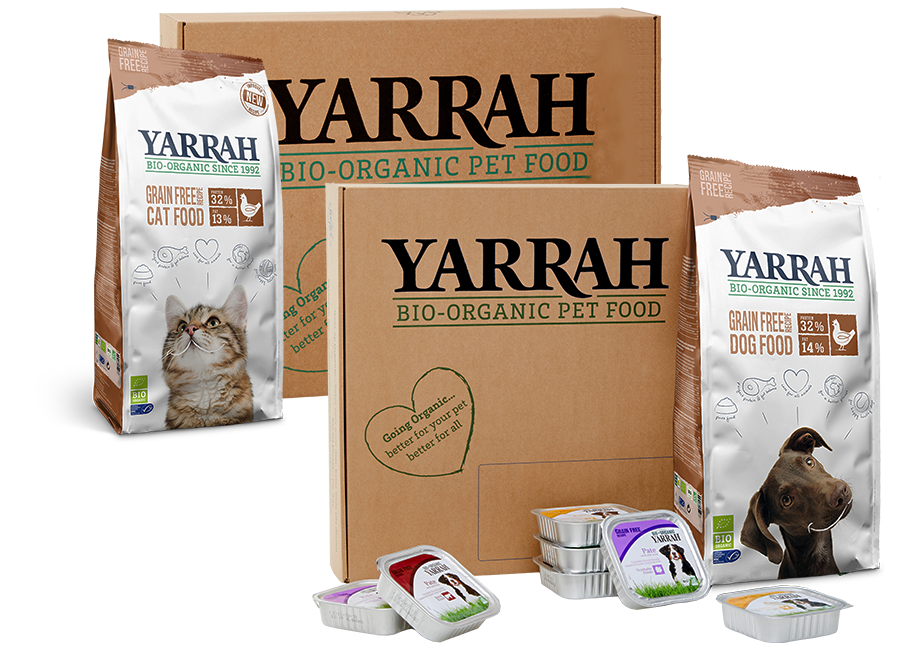
custom corrugated boxes with print and custom printed gusseted pouches

Lightweighting Strategies

  • Description: Reducing film thickness or container wall gauge without compromising barrier performance.
  • Benefits: Less material use per unit, lower transport emissions.
  • Techniques: Resin down-gauging, structural ribbing in rigid containers, optimized pouch dimensions.

Design for Recovery

  • Mono-Material Construction: Eliminates separation challenges at recycling facilities.
  • Removable Labels/Windows: Improves yield in recycling streams.
  • Standardized Resins: PET, HDPE, and LDPE have the most established recovery pathways.

References


ASTM International. (2018). ASTM D6400-19: Standard specification for labeling of plastics designed to be aerobically composted in municipal or industrial facilities. ASTM International. https://doi.org/10.1520/D6400-19
Food and Drug Administration. (2023). Recycled plastics in food packaging. U.S. Food and Drug Administration. https://www.fda.gov/food/packaging-food-contact-substances-fcs/recycled-plastics-food-packaging
European Food Safety Authority. (2023). Safety assessment of recycled plastics for food contact use. European Food Safety Authority. https://www.efsa.europa.eu/en/topics/topic/plastics

Most Recent Posts:
Comparing Single vs. Multi-Material Packaging

Choosing the right packaging material is one of the most important decisions buyers face. Single-material packaging offers simplicity and recyclability, while multi-material designs provide enhanced performance and protection. Understanding the

Read More »
Categories:
Subscribe To Our Newsletter

By submitting your information, you agree to our terms and conditions and privacy policy.

Pet Packaging
Pet Packaging
Facebook
Twitter
LinkedIn
Pinterest
Relevant Posts
Printed Corrugated RETT box with dusk flaps
Corrugated
brownpackaging
Different Types of Sealing and Closures for Corrugated Boxes

In the world of packaging, the way a corrugated box is sealed and closed is as important as the box itself. The right type of sealing and closure not only ensures the safety and security of the contents but also can enhance ease of use, storage, and even branding. This blog post explores the different types of sealing and closure methods available for corrugated boxes, helping businesses choose the best option for their specific needs. Understanding the Importance of Proper Sealing and Closure Before delving into the types, it’s crucial to understand why sealing and closure matter. The right closure method can protect the contents from damage, theft, or contamination, while also providing an additional layer of branding through custom tapes or seals. Tape Closure One of the most common methods of sealing corrugated boxes is using tape. This method is versatile and cost-effective, suitable for a wide range of applications. Pressure-Sensitive Tape: Easy to apply, available in various widths and strengths, and ideal for lightweight to medium-weight boxes. Water-Activated Tape (WAT): Forms a strong bond with the corrugated box, offering superior security, and is excellent for heavier packages. Reinforced Water-Activated Tape: Best for heavy-duty applications, providing extra strength and security. Staple Closure Stapling is a traditional method of closing corrugated boxes, often used for heavy or industrial items. Manual Stapling: Suitable for small-scale operations or where additional security is needed. Pneumatic Stapling: Used in larger operations for efficiency and consistency in sealing. Glue Closure Adhesive or glue is another popular method, especially in automated packaging lines. Hot Melt Adhesive: Quick to apply and set, providing a strong and durable seal. Cold Glue Adhesive: Requires more time to set but offers a strong bond and is suitable for boxes that require refrigeration. Self-Locking Tabs and Slots For consumer-facing products, self-locking tabs and slots offer an appealing and tool-free option. Tab Lock: Simple to use, providing a secure closure without additional materials. Slot Lock: Offers added security as tabs lock into slots, making the box more tamper-resistant. Velcro or Hook-and-Loop Closures For reusable box designs, Velcro or hook-and-loop closures are ideal. Easy Open and Close: Allows for multiple uses, ideal for sample kits or storage boxes. Customizable: Can be designed in various shapes and sizes to suit specific packaging needs. Strapping or Banding Strapping or banding is used for heavy-duty applications or for bundling multiple boxes together. Metal Strapping: Offers the highest strength, ideal for heavy industrial goods. Polyester or Polypropylene Strapping: More flexible than metal, suitable for a wide range of applications. Sealing with Labels or Stickers Custom labels or stickers can double as a sealing method, particularly for light packages or as an additional security seal. Branding Opportunity: Custom labels provide a platform for branding and product information. Tamper-Evident Seals: Enhance security by indicating if the box has been opened. Conclusion The choice of sealing and closure method for corrugated boxes depends on several factors, including the weight and nature of the contents, the shipping and handling process, the need for security, and the desired customer experience. By selecting the appropriate sealing and closure method, businesses can ensure their products are well-protected and arrive at their destination in the best possible condition. Moreover, creative and practical sealing solutions can enhance brand recognition and provide an additional touchpoint for customer engagement. (714)300-0650 request@brownpackaging.com Most Recent Posts: Categories: Corrugated Ecommerce ESD Design Display Flexible Packaging Foam Folding Carton Packaging Plastic Packaging Pouch Printing Protection Retail Rigid Box Thermoform Sustainability Subscribe To Our Newsletter By submitting your information, you agree to our terms and conditions and privacy policy. Custom Corrugated Boxes Facebook Twitter LinkedIn Pinterest Relevant Posts

Read More »
POP floor display
Display
brownpackaging
Balancing Graphics and Structure in POP Displays

Point-of-purchase (POP) displays play a dual role in retail environments: they must capture attention with graphics while supporting products with reliable structure. If one side is overemphasized, the other suffers—eye-catching graphics on a weak structure can lead to product collapse, while overbuilt displays with poor graphics fail to drive sales. Successful POP design requires careful coordination between visual branding and engineering strength. The Role of Graphics in POP Displays Graphics carry the brand message and attract consumer attention in crowded retail aisles. Effective use of color, typography, and imagery transforms a standard corrugated display into a compelling marketing tool. Reinforces brand identity. Highlights product features or promotions. Differentiates products from competitors on the same shelf. However, graphics must be placed with consideration of die lines, folds, and assembly points. A design that looks strong in concept may lose effectiveness if critical elements are cut or hidden during production. Structural Integrity and Functionality The best POP display design balances aesthetics with durability. Structural engineering ensures the display holds weight, withstands handling, and complies with retailer requirements. Load-bearing capacity: Displays must hold multiple units without sagging. Assembly efficiency: Designs should be easy to set up in stores. Retail compliance: Dimensions must fit within chain-specific guidelines. Ignoring structure risks costly failures on the retail floor, from leaning displays to complete collapse. Achieving Balance Between Graphics and Structure Collaborative design: Graphic and structural designers should work together from concept through prototype. Testing in real-world conditions: Simulate load, handling, and lighting before production. Material selection: Choose board grades and coatings that allow high-quality print while maintaining rigidity. Print-to-structure alignment: Ensure graphics align with folds, cutouts, and SKU placement. Industry Examples Club stores: High-traffic environments demand bold graphics paired with strong pallet displays. Seasonal promotions: Graphics drive excitement, but structural resilience ensures displays last through extended campaigns. Cross-merchandising displays: Must hold different SKUs securely without compromising print impact. POP Display Solutions with Brown Packaging At Brown Packaging, we engineer POP displays that balance structural integrity with brand-forward graphics. From retail-ready pallet displays to seasonal floor stands, our team ensures your design attracts attention without sacrificing performance. Contact us to start planning your next POP display. References Soroka, W. (2009). Fundamentals of Packaging Technology (4th ed.). Institute of Packaging Professionals.Shop! Association. (2021). Best Practices for In-Store Marketing and POP Displays. Retrieved from https://www.shopassociation.orgASTM International. (2022). ASTM D642: Standard Test Method for Determining Compressive Resistance of Shipping Containers. (714)300-0650 request@brownpackaging.com Most Recent Posts: Categories: Corrugated Ecommerce ESD Design Display Flexible Packaging Foam Folding Carton Packaging Plastic Packaging Pouch Printing Protection Retail Rigid Box Thermoform Sustainability Subscribe To Our Newsletter By submitting your information, you agree to our terms and conditions and privacy policy. POP Display Facebook Twitter LinkedIn Pinterest Relevant Posts

Read More »
The size of a corrugated box, chart of how to measure a corrugated box. Width, length, height or depth. Cardboard boxes size. Package dimensions.
Corrugated
brownpackaging
How to Structurally Design Your Corrugated Box

Structurally designing your corrugated box involves understanding the specific requirements of your product and applying principles of material science and engineering to ensure optimal protection, efficiency, and cost-effectiveness. This process requires careful consideration of the box’s dimensions, material grade, flute type, and the intended use to create a packaging solution that meets both logistical and aesthetic needs. Understanding the Basics of Corrugated Boxes Before diving into the design process, it’s important to grasp the fundamental components of a corrugated box: Fluting: The wavy layer of corrugated paper that provides cushioning and strength. The size, type and the material of the flute affect the box’s compression strength, stacking strength, and crush resistance. Linerboards: Flat sheets of paper that sandwich the fluting, contributing to the box’s durability and structural integrity. Box Types: Common configurations include the Regular Slotted Container (RSC), Full Overlap (FOL), and Die-Cut designs, each offering different benefits in terms of protection and assembly efficiency. Step 1: Assess Product Requirements Start by evaluating the weight, dimensions, and fragility of the product. Consider any additional space needed for internal packaging materials like bubble wrap or foam inserts, which provide extra protection for delicate items. This assessment will guide the choice of box size and strength needed to ensure safe transport and storage. Step 2: Select Material and Flute Type Choose the appropriate material grade and flute type based on the product’s weight and the level of protection required. For lightweight items, a single-wall box with smaller flutes like B or C may suffice. Heavier or more fragile items may require double-wall or triple-wall boxes with larger flutes like A or BC for increased cushioning and strength. The Edge Crush Test (ECT) rating of the cardboard is a critical factor here, indicating the box’s ability to withstand external pressures. Step 3: Design for Efficiency and Sustainability Efficiency in packaging not only reduces material costs but also minimizes waste, contributing to sustainability. Design your box to fit your product snugly while allowing for minimal extra packaging material. Consider using recyclable materials and designing for ease of recycling after use, such as avoiding mixed materials that are difficult to separate. Step 4: Prototype and Test Once the initial design is established, create a prototype of your box. This allows for hands-on testing to ensure the box meets your requirements in terms of size, strength, and functionality. Conduct tests that mimic real-world handling, shipping, and stacking scenarios to identify any structural weaknesses or design flaws. Step 5: Customization and Branding Customization isn’t just about aesthetics; it can also enhance the box’s structural integrity. For example, die-cut inserts not only secure products within the box but also add rigidity to the structure. Use the exterior for branding, but ensure that any printing or customization does not compromise the box’s strength. Step 6: Iterate Based on Feedback Use feedback from the testing phase to refine your design. This may involve adjusting dimensions, changing the flute type, or reevaluating the material grade. Iteration is a crucial step in optimizing the design for both protection and cost. Conclusion Structurally designing a corrugated box is a detailed process that blends science, engineering, and aesthetics. It requires a deep understanding of the product needs, material properties, and the logistical demands of shipping and handling. By following these steps and focusing on both function and form, you can develop a corrugated box that not only protects your product but also enhances your brand’s presentation and sustainability efforts. If you are interested in custom structurally designed corrugated boxes, then partner with Brown Packaging today to get started. (714)300-0650 request@brownpackaging.com Most Recent Posts: Categories: Corrugated Ecommerce ESD Design Display Flexible Packaging Foam Folding Carton Packaging Plastic Packaging Pouch Printing Protection Retail Rigid Box Thermoform Sustainability Subscribe To Our Newsletter By submitting your information, you agree to our terms and conditions and privacy policy. Custom Corrugated Boxes Facebook Twitter LinkedIn Pinterest Relevant Posts

Read More »