
Home » RSC Box Design Fundamentals: Why It’s the Industry Standard
RSC Box Design Fundamentals: Why It’s the Industry Standard
The Regular Slotted Container (RSC) is the most widely used corrugated box style in the world. Its simplicity, manufacturing efficiency, and versatility make it the default choice across industries ranging from industrial parts to e-commerce fulfillment. Understanding what makes RSC boxes so effective helps buyers decide when standardization is the best approach — and when alternatives may be worth considering.
What Defines an RSC Box
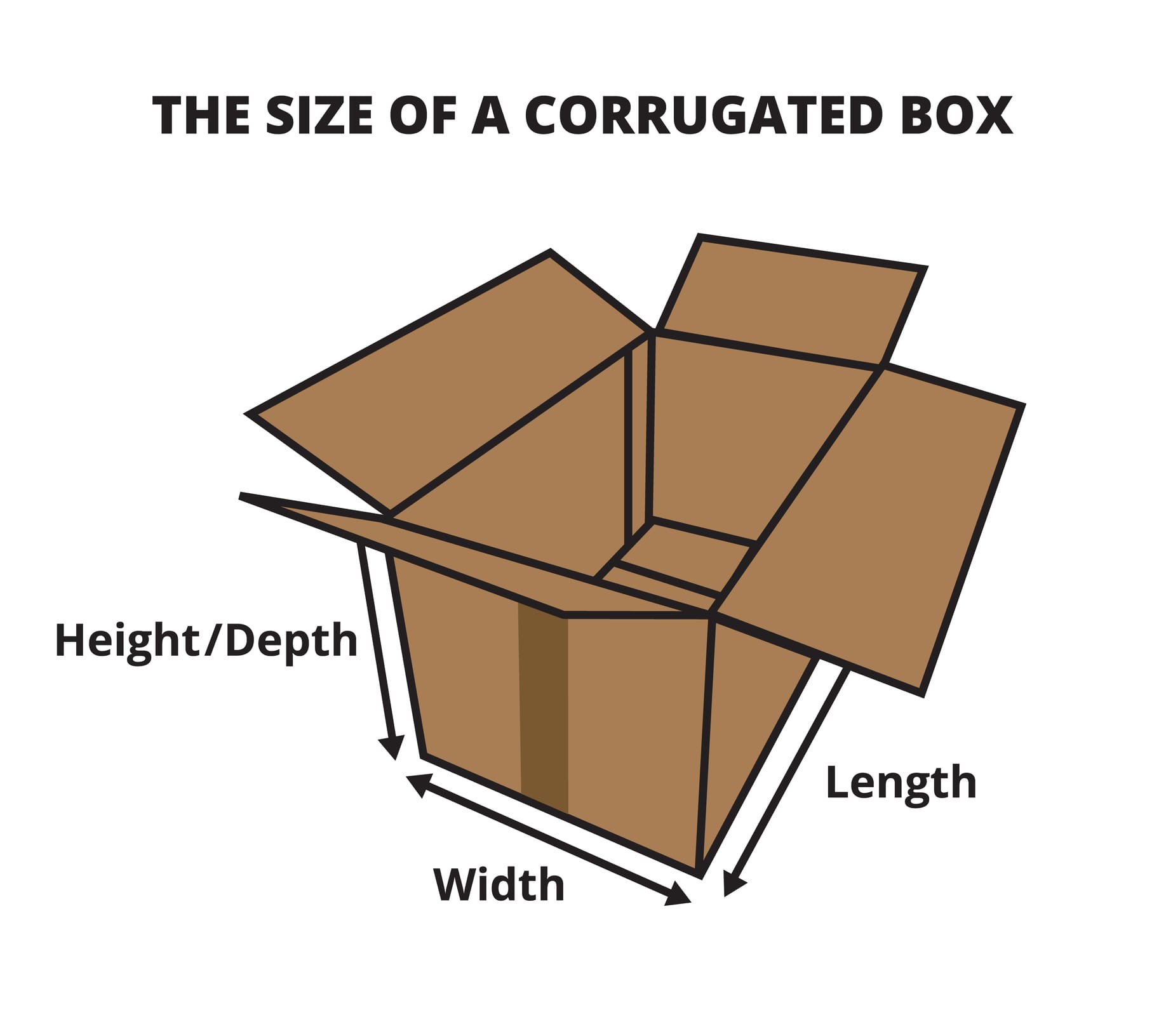
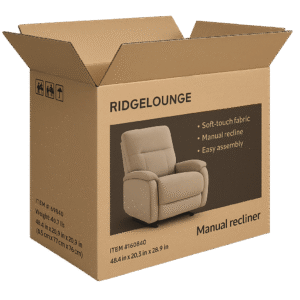
An RSC is manufactured from a single sheet of corrugated board with flaps of equal length that meet at the center when folded. The design minimizes board waste, requires only a single die-cut or slotting process, and can be assembled with tape, glue, or staples. Its dimensions can be adjusted easily to accommodate nearly any product size.
Why RSC Remains the Standard
Manufacturing Efficiency
- RSCs use minimal board compared to other box styles.
- They can be produced on high-speed corrugators and folder-gluers without complex tooling.
- Standardized sizes reduce lead times and lower setup costs.
Structural Strength
- The design maximizes stacking strength with flaps that reinforce the edges of the container.
- Compatible with a wide range of flute profiles and board grades, from single-wall E-flute to triple-wall heavy-duty.
Versatility
- Works for products ranging from lightweight consumer goods to heavy industrial components.
- Compatible with automation in packing, sealing, and palletization systems.
- Easily branded with flexographic or digital print for retail and e-commerce applications.
Cost Effectiveness
- Board utilization is highly efficient, reducing waste.
- Standardized production reduces cost per unit at scale.
- Assembly and sealing are simple, requiring minimal labor and materials.
Limitations of the RSC
While RSC is unmatched for general-purpose shipping, it’s not always the best option:
- Requires tape, glue, or staples, which adds materials and labor.
- Lacks the premium presentation of die-cut mailers for e-commerce.
For unusually heavy or fragile products, other styles (like Full Overlap or RETT) may provide better performance.
Buyer Takeaway
RSC boxes dominate corrugated packaging for one reason: they offer the best balance of strength, efficiency, and cost. If your priorities are bulk shipping, pallet strength, and scalability, RSC is almost always the right choice. But for premium presentation, automation-friendly features, or specialty protection, it’s worth exploring alternative styles.
References
- Fibre Box Association. (2023). Corrugated Box Styles and Design Guide. https://www.fibrebox.org
- Association of Independent Corrugated Converters (AICC). (2024). Corrugated Packaging Fundamentals. https://www.aiccbox.org
- Soroka, W. (2016). Fundamentals of Packaging Technology (5th ed.). Institute of Packaging Professionals.
Folding carton artwork can look finished on screen and still create problems once it reaches production. The dieline is where design, structure, printing, cutting, folding, and gluing all come together.
Most POP display failures don’t start with materials—they start with geometry. Specifically:👉 Shelf span Designs often look structurally sound on paper, but once loaded, shelves begin to: Sag Bend unevenly
Lower quantity packaging orders usually mean:👉 Higher cost per unit But that doesn’t mean they’re always the wrong decision. In certain situations, smaller runs are more efficient overall—even at a
Not every POP display should be optimized for the lowest cost. In some cases, spending more isn’t inefficient—it’s necessary. Because the real question isn’t:👉 “What does it cost?” It’s:👉 “What
Home » RSC Box Design Fundamentals: Why It’s the Industry Standard