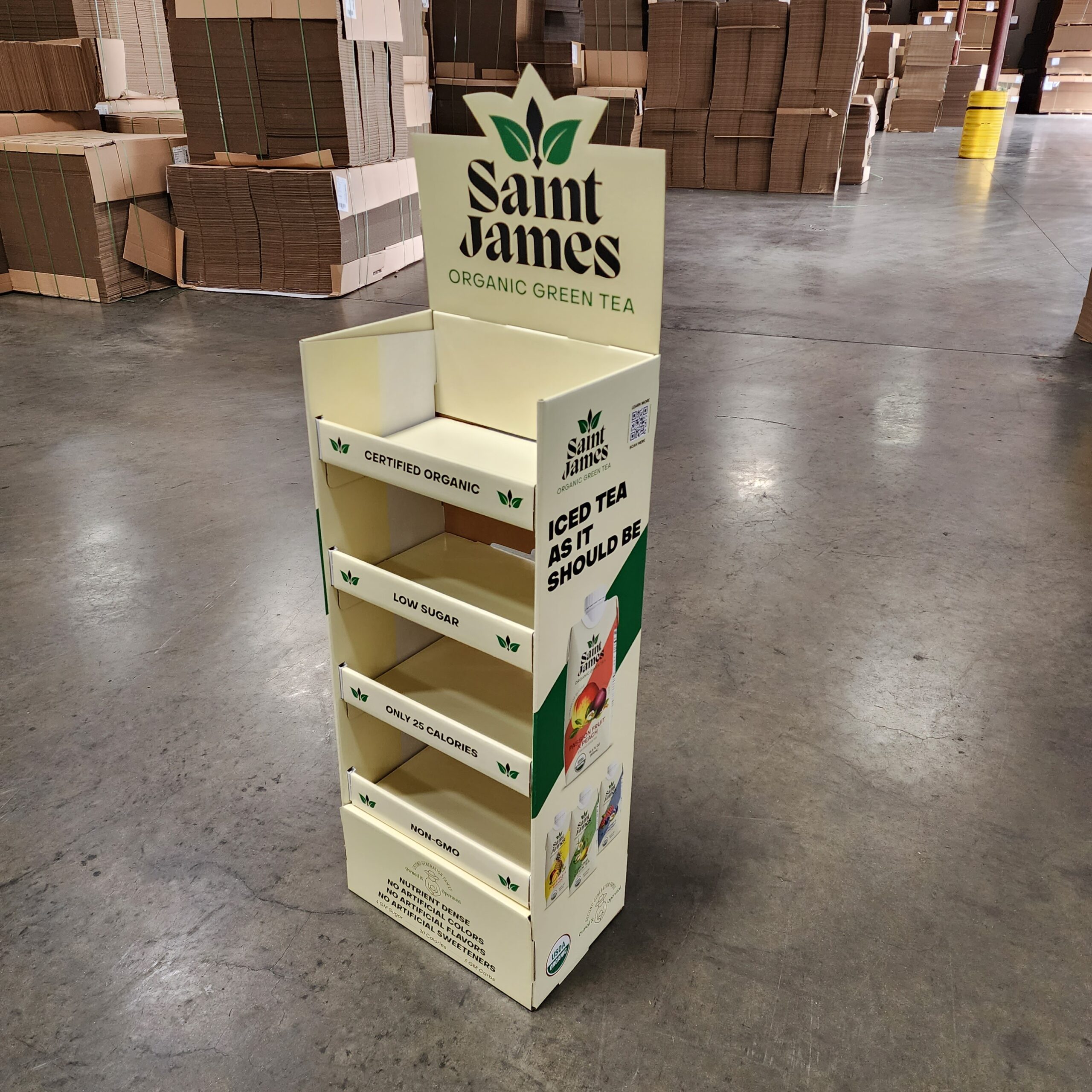
Balancing Graphics and Structure in POP Displays
Point-of-purchase (POP) displays play a dual role in retail environments: they must

Point-of-purchase (POP) displays play a dual role in retail environments: they must

Point-of-purchase (POP) displays must catch a shopper’s eye while also moving efficiently

Cross-merchandising is one of the most effective ways to increase basket size

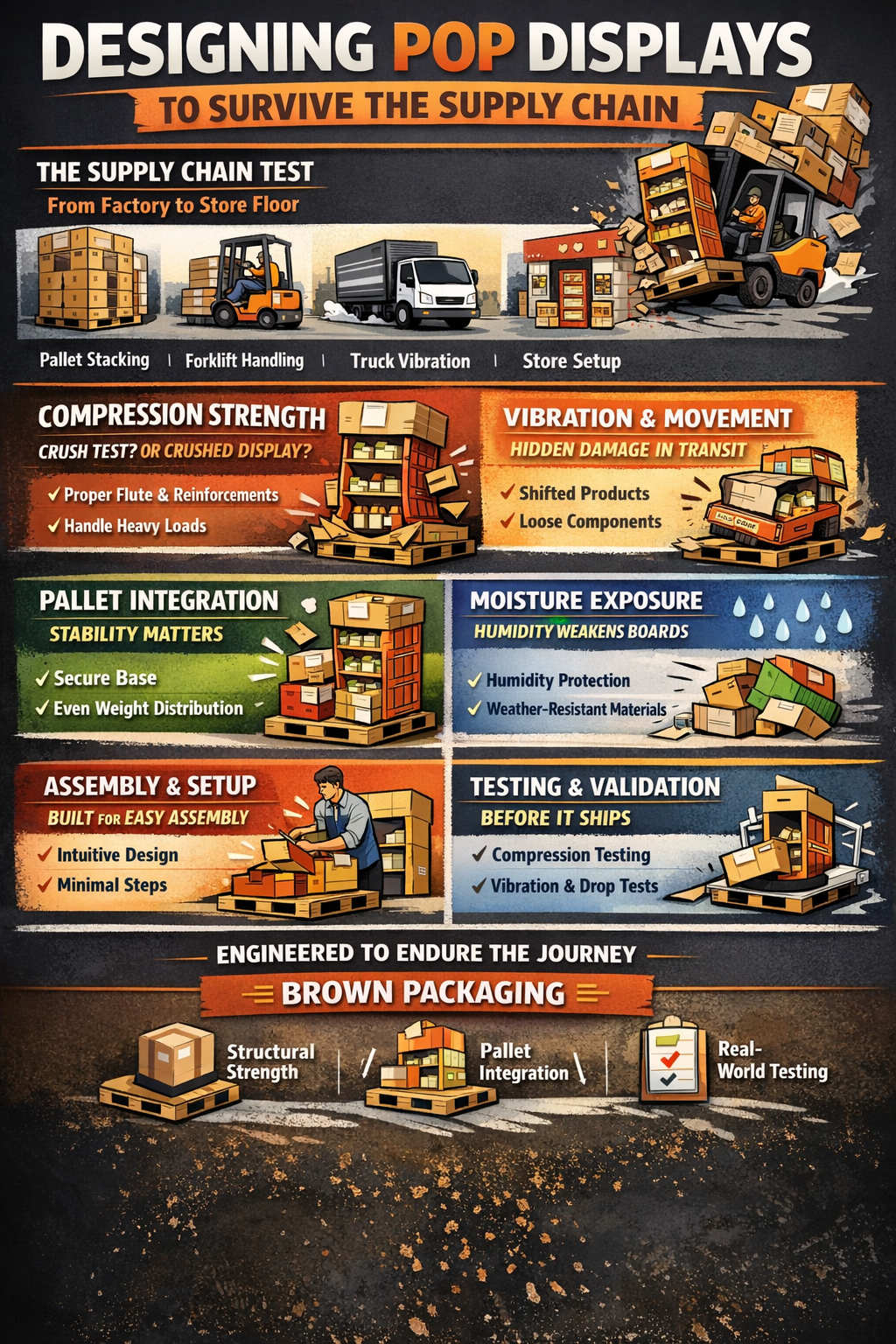
POP displays must balance eye-catching branding with structural integrity. Inadequate load-bearing design

Seasonal promotions are among the most powerful opportunities for brands to capture

Freight is one of the largest cost drivers in retail packaging programs.

When it comes to maximizing shelf space and capturing buyer attention, few

As the retail landscape continues to evolve, staying ahead of the latest

As the 2025 holiday season approaches, retailers are gearing up for what

Point of Purchase (POP) displays are a dynamic marketing tool used to
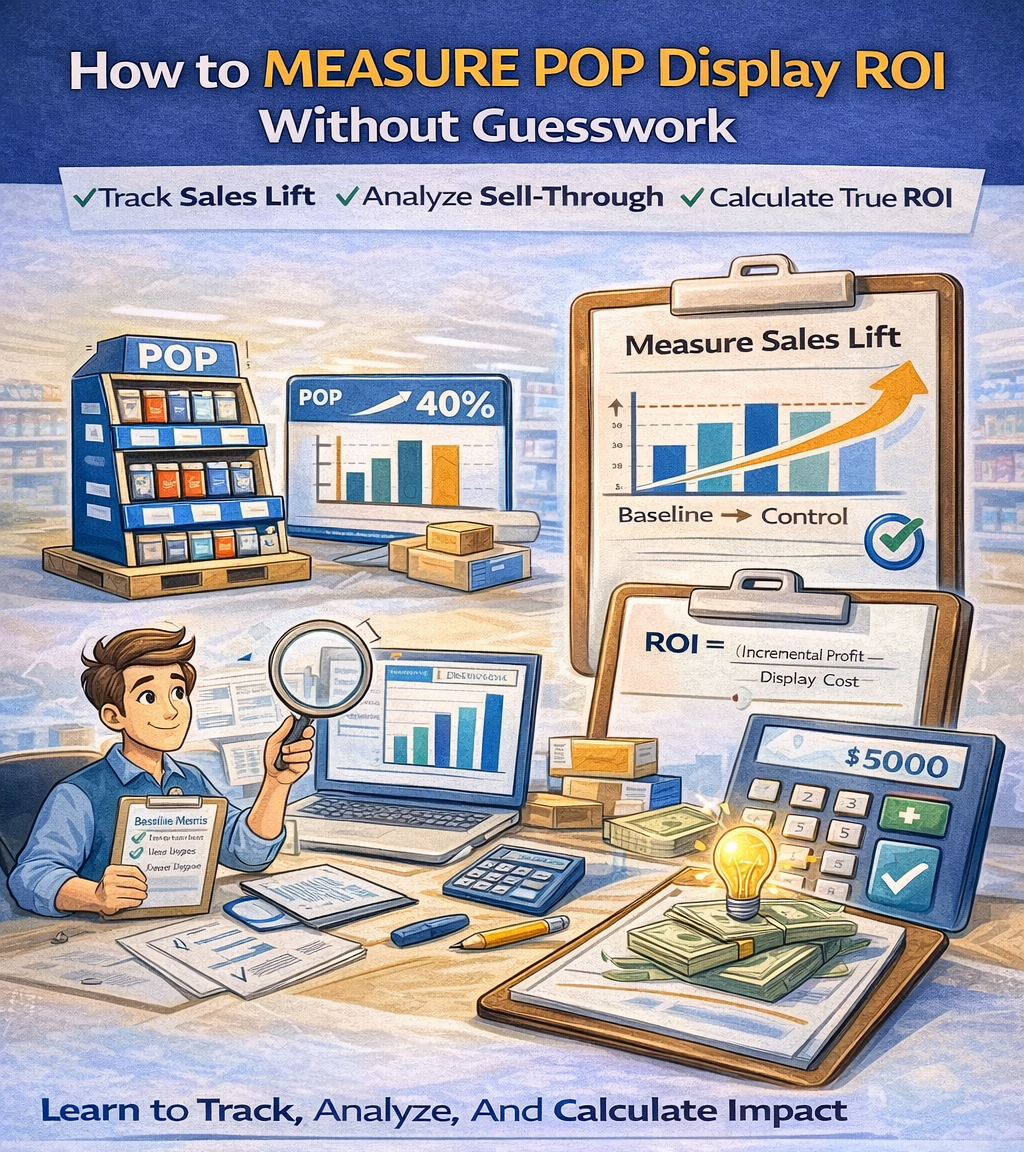
Most brands invest in POP displays without clearly measuring performance. They look at sales after rollout and assume the display worked—or didn’t. But without isolating
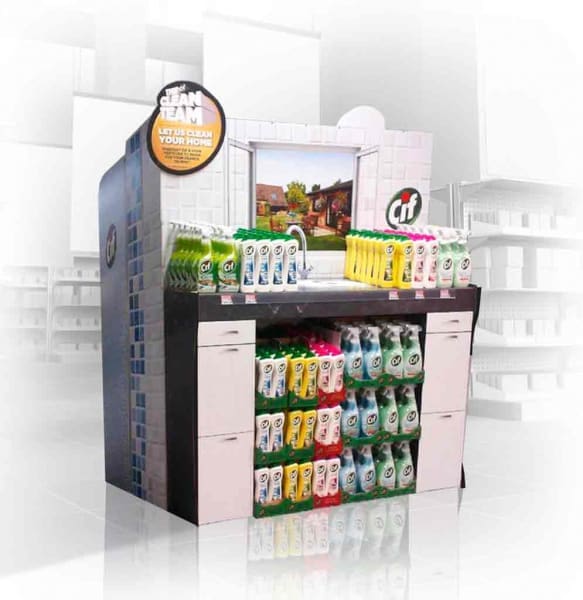
Most cost-cutting in POP displays happens in the wrong place. Brands reduce board grade, simplify structure too aggressively, or cut print quality—only to see: Higher
Oil prices don’t just affect fuel—they ripple through nearly every part of packaging. When oil rises, packaging costs follow.When oil drops, costs don’t always fall
Most POP display failures aren’t caused by weak materials—they’re caused by poor weight distribution. A display can use the right board, the right flute, and
Not all retail environments are the same—and your POP display shouldn’t be either. What works in big box retail often fails in specialty stores, and
Bigger doesn’t always mean better. Many brands default to floor displays because they assume more visibility equals more sales. But in many retail environments, counter