

Home » The Art and Science of Point of Purchase Displays: Definition and Applications
The Art and Science of Point of Purchase Displays: Definition and Applications
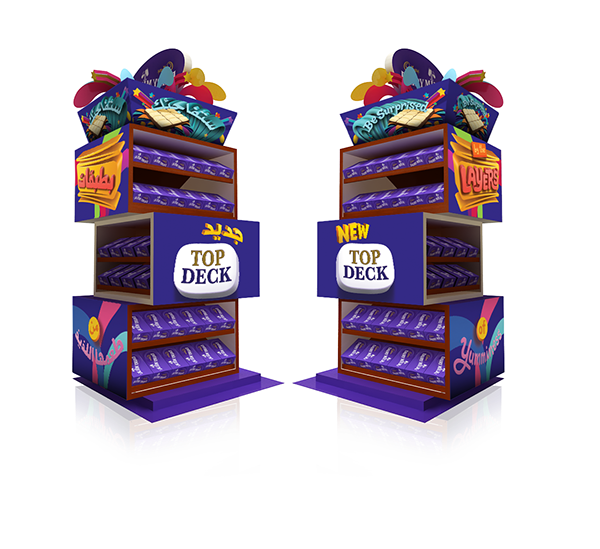
In the bustling world of retail, where competition is fierce and every inch of shelf space matters, staying ahead requires innovation. You’ve cultivated an exceptional business, a skilled team, and a compelling product lineup. However, you’ve noticed that certain competitors seem to be outselling you. Naturally, you’re intrigued and want to explore avenues that can give you a competitive edge. This is where Point of Purchase (POP) displays come into play.
Demystifying Point of Purchase Displays
Picture yourself navigating the aisles of your local supermarket. Amidst the array of neatly organized products on the shelves, your attention is irresistibly drawn to a strategically positioned display that showcases a selection of items. This strategic arrangement is what’s known as a Point of Purchase (POP) display – a dynamic solution that has the potential to transform your products from ordinary to attention-grabbing.
Unveiling the Influence of POP Displays
The essence of a POP display is simple yet remarkably effective. It’s a custom-made display set apart from its usual shelf location, demanding attention in the store. Unlike typical shelf arrangements, POP displays are often situated at the heart of aisles or at aisle ends, ensuring maximum visibility. This placement empowers your products with heightened prominence and branding opportunities, allowing them to shine amidst the retail landscape.
The Artistry of Presentation
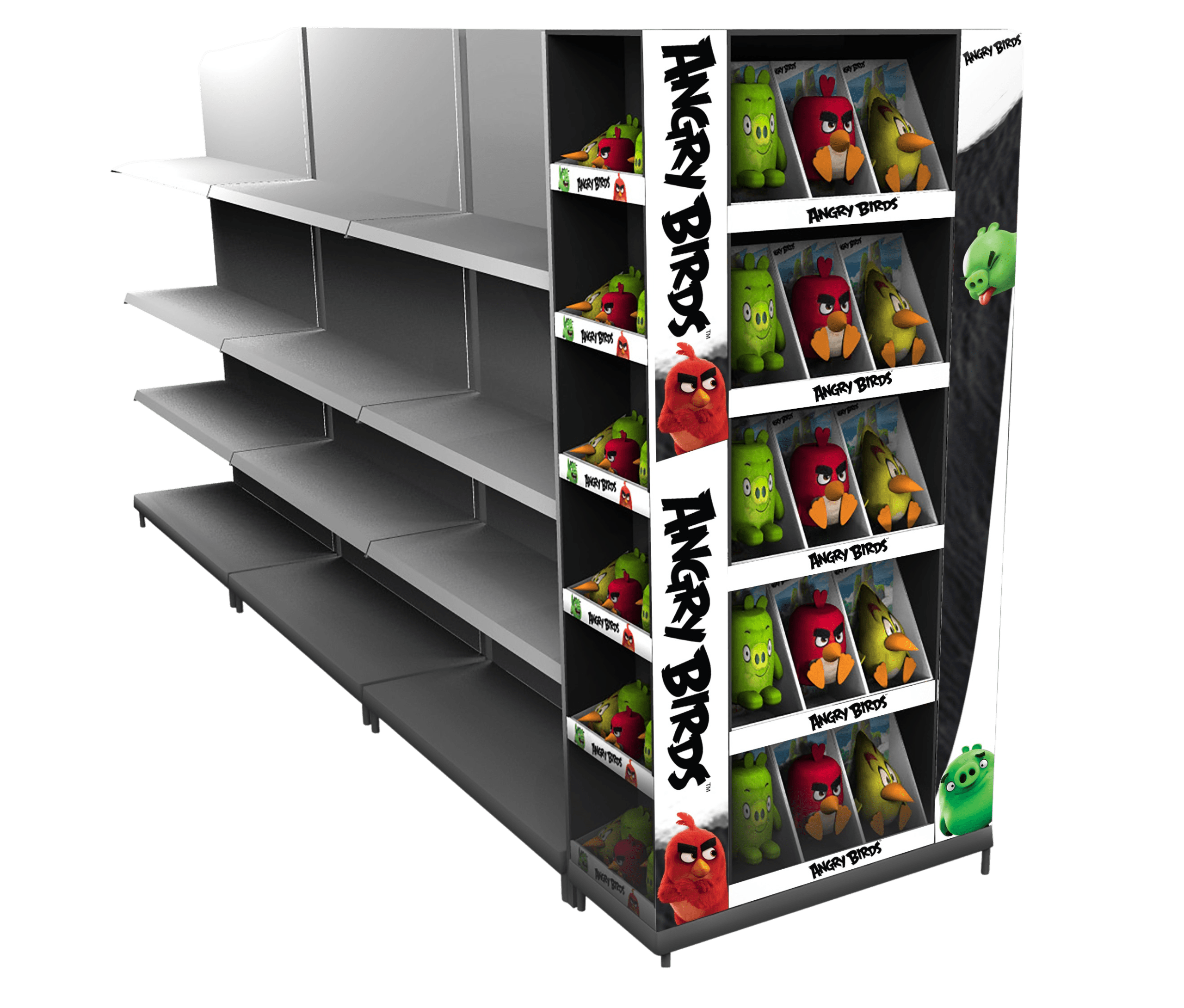
A standard POP display takes physical form with one to four sides, frequently crafted from corrugated cardboard – as depicted in the accompanying image. Imagine the ingenuity employed for canned beverages, where soda or alcohol cases are stacked in creative patterns to create an enticing shape. Each structure houses a curated selection of products, adorned with a strategic interplay of design elements such as color palettes, typography, pricing details, logos, visuals, and product imagery. This symphony of visuals ensures your products seize attention in the bustling retail environment.
Captivating Attention, Driving Sales
The allure of POP displays lies in their ability to capture attention and drive sales. Recall your recent visit to a retail giant like Walmart. Those thoughtfully positioned displays that commanded your gaze were POP displays. It’s likely you’ve even succumbed to their appeal and made a purchase based on their captivating presentation. By breaking away from conventional shelf placements, POP displays adeptly capture shopper interest, translating to higher conversions and amplified sales for the featured products.
Versatility in Application
The realm of POP displays isn’t confined; it spans diverse retail settings. In expansive retail spaces like Walmart, you’ll encounter four-sided POP displays gracing main aisles – known as “action alleys.” These displays, strategically positioned every 10-20 feet, proudly exhibit an array of products encompassing, video games, books, beverages, and packaged foods. Smaller, one or two-sided POP displays mark the end of each aisle, seamlessly connecting to the larger shopping thoroughfares.
From Retail Titans to Local Treasures
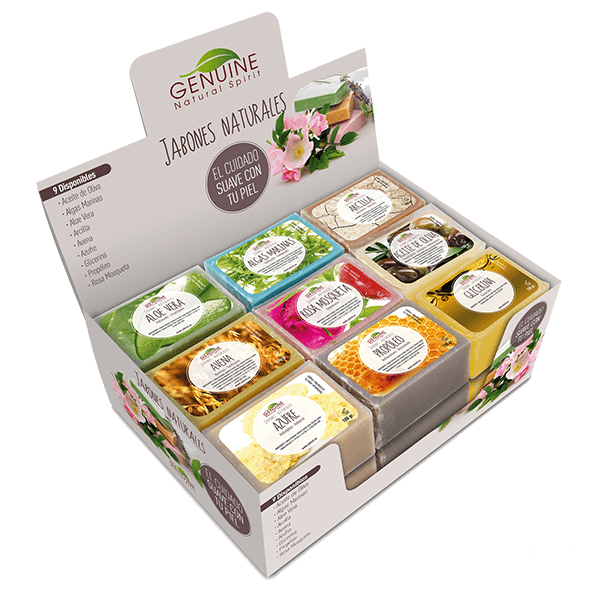
While major retailers prominently showcase these displays, smaller establishments also reap rewards. Gas stations, country stores, auto parts shops, and neighborhood boutiques effectively utilize one or two-sided POP displays to allure customers and heighten product visibility. These displays function as compelling marketing tools, effectively conveying your product’s value proposition and encouraging impulse purchases.
Elevate Your Retail Strategy with POP Displays
In the relentless world of retail competition, innovation is your formidable ally. Enhance your sales prowess by harnessing the potential of POP displays. Their strategic placement, captivating designs, and enhanced visibility can convert casual browsers into enthusiastic purchasers. Whether you’re an industry titan akin to Walmart or a local gem nestled in a community, integrating POP displays can serve as your enigmatic ingredient for retail triumph.
If you are interested in point of purchase displays, then partner with Brown Packaging today to get started.
Sustainable packaging in 2027 will be less about broad claims and more about proof, performance, compliance, and cost control. Buyers will still care about recyclable
A folding carton may look simple once it reaches the shelf, but it goes through a controlled production process before it becomes a finished package.
Folding carton production is becoming more automated because buyers are asking for faster timelines, tighter consistency, and more flexibility across more SKUs. Shorter product lifecycles,
Folding carton style matters because structure affects more than appearance. The right carton can improve shelf presentation, packing speed, product access, closure security, storage efficiency,
Pouch packaging trends in 2027 will be shaped by convenience, shelf impact, sustainability pressure, sealing performance, automation, ecommerce growth, and total packaging cost. Buyers will
Corrugated box trends in 2027 will be driven by a practical mix of cost control, sustainability, ecommerce growth, automation, retail requirements, and supply chain performance.
By submitting your information, you agree to our terms and conditions and privacy policy.
Home » The Art and Science of Point of Purchase Displays: Definition and Applications

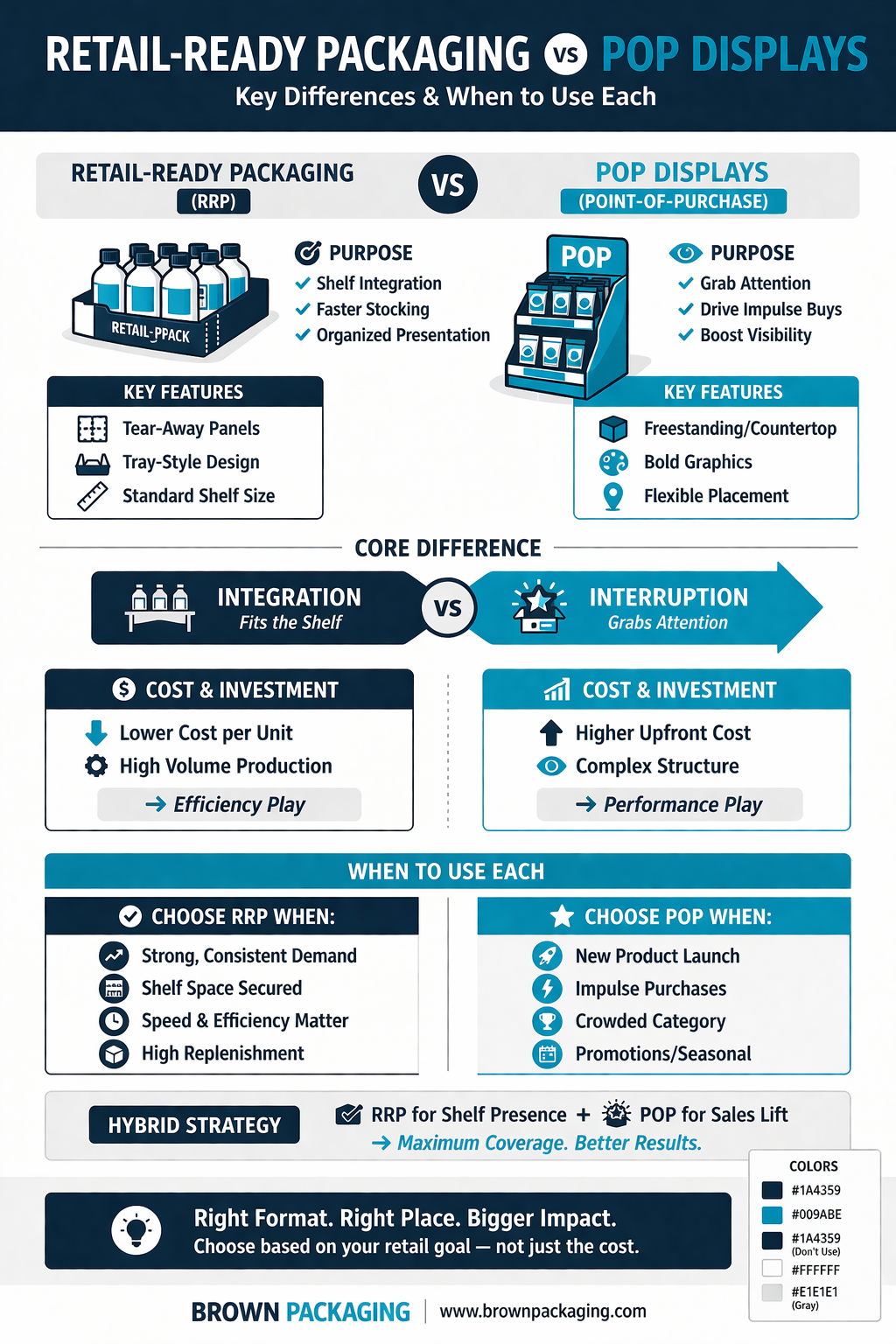

Retail-ready packaging (RRP) and POP displays are often treated as interchangeable. On paper, they both improve product presentation and efficiency. In reality, they serve completely
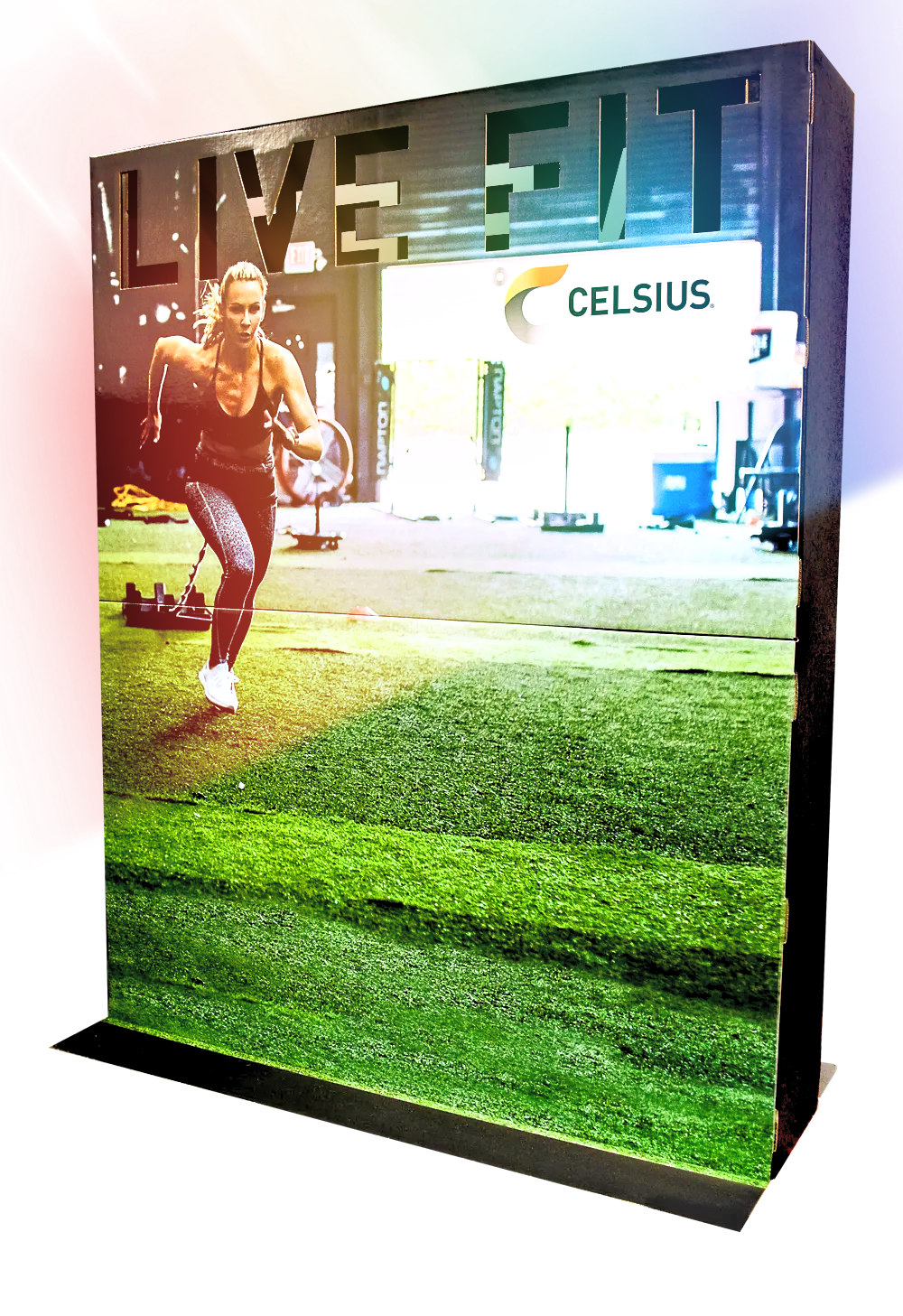
Effective signage is a critical component of successful Point of Purchase (POP) displays. It not only attracts attention but also communicates essential information, helping to
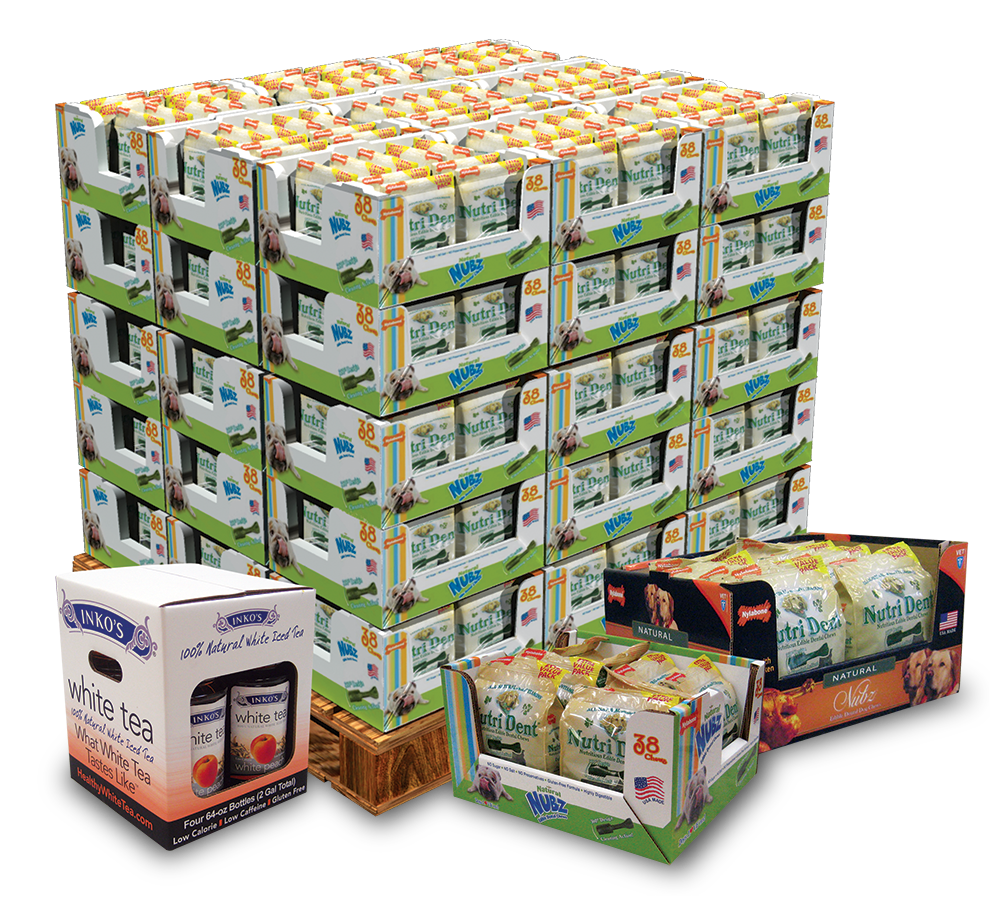
Point of Purchase (POP) displays are an effective way to promote products and increase sales in retail environments. The trends for POP displays in 2023