Home » Corrugated POP Display Printing
Corrugated POP Display Printing
Point-of-purchase (POP) displays are designed to capture shopper attention and influence buying decisions. Beyond structure and branding, the quality of print determines how well a display communicates from multiple viewing angles in a retail environment. Selecting the right printing method ensures your display performs both visually and functionally.
Printing Methods for Corrugated POP Displays
Not all printing methods are suited for corrugated displays. Each has its own strengths and trade-offs in cost, speed, quality, and run size. The three most common methods are:
Flexographic Printing
Flexographic printing uses plates to apply ink as material passes through rollers.
Advantages
Cost-Efficient at Scale: Once plates are created, cost per unit is low for large or repeat orders.
Pantone Accurate: Ensures precise color matching across production runs.
Versatile: Works on uneven surfaces and a wide range of substrates.
High Speed: Suited for mass production.
Limitations
High Startup Costs: Plates and tooling are expensive, making short runs less economical.
Poor for Sampling: Costly and impractical to produce prototypes.
Best Fit: Large-volume retail displays where consistency and color accuracy are priorities.
Digital Printing
Digital printing applies artwork directly from a file to the substrate, eliminating plates.
Advantages
Low Startup Cost: Cost-effective for short runs and prototypes.
Fast Turnaround: Ideal for tight deadlines or seasonal campaigns.
Flexible: Easily handles multiple SKUs or frequent artwork changes.
High Quality: Produces sharp graphics suitable for branded displays.
Limitations
Less Economical at Scale: Higher cost per unit for large volumes.
Color Variability: Approx. 95% accurate; not a perfect Pantone match.
Slower Mass Output: Not as efficient as flexographic presses for high quantities.
Best Fit: Small-batch retail displays, prototypes, or variable-data campaigns.
Lithographic (Offset) Printing
Lithographic printing transfers ink from a plate to a rubber blanket, then onto the substrate, with options for coatings or varnishes.
Advantages
Highest Quality: Sharp, detailed graphics with accurate color reproduction.
Premium Finishes: Coatings and varnishes enhance durability and appearance.
Scalable: Handles small to large format prints.
Limitations
High Setup Cost: Plates and setup make short runs expensive.
Not Sample-Friendly: Prototypes are cost-prohibitive.
Longer Lead Time: Setup and adjustments require planning.
Best Fit: High-volume displays where premium image quality is essential for brand impact.`
Designing Graphics for POP Displays
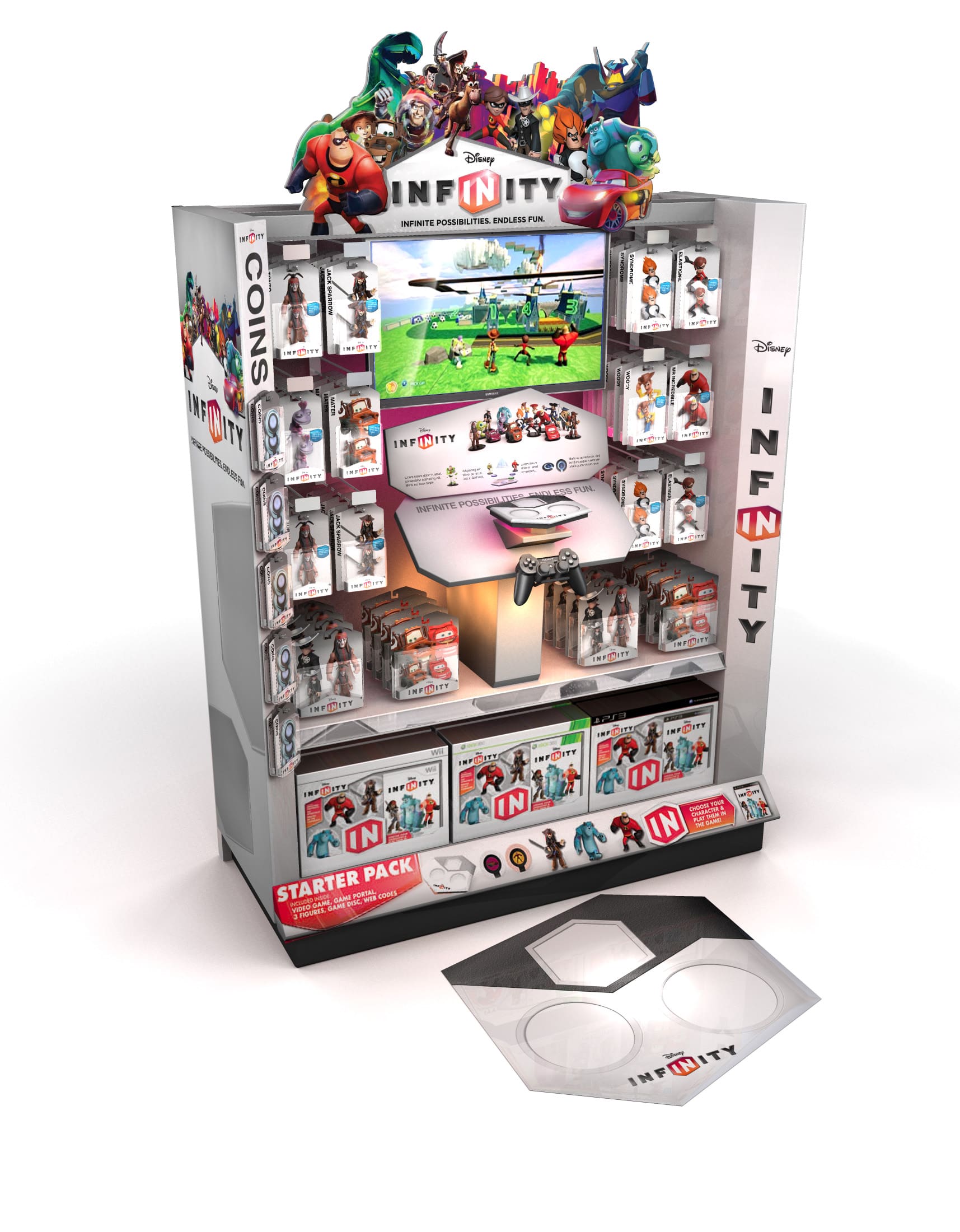
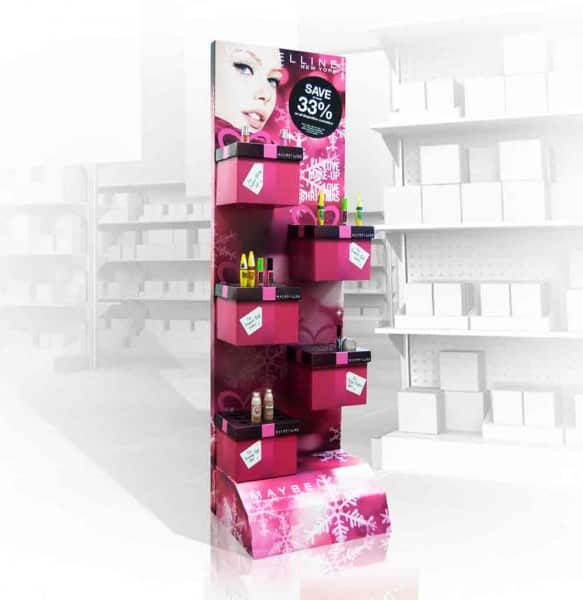
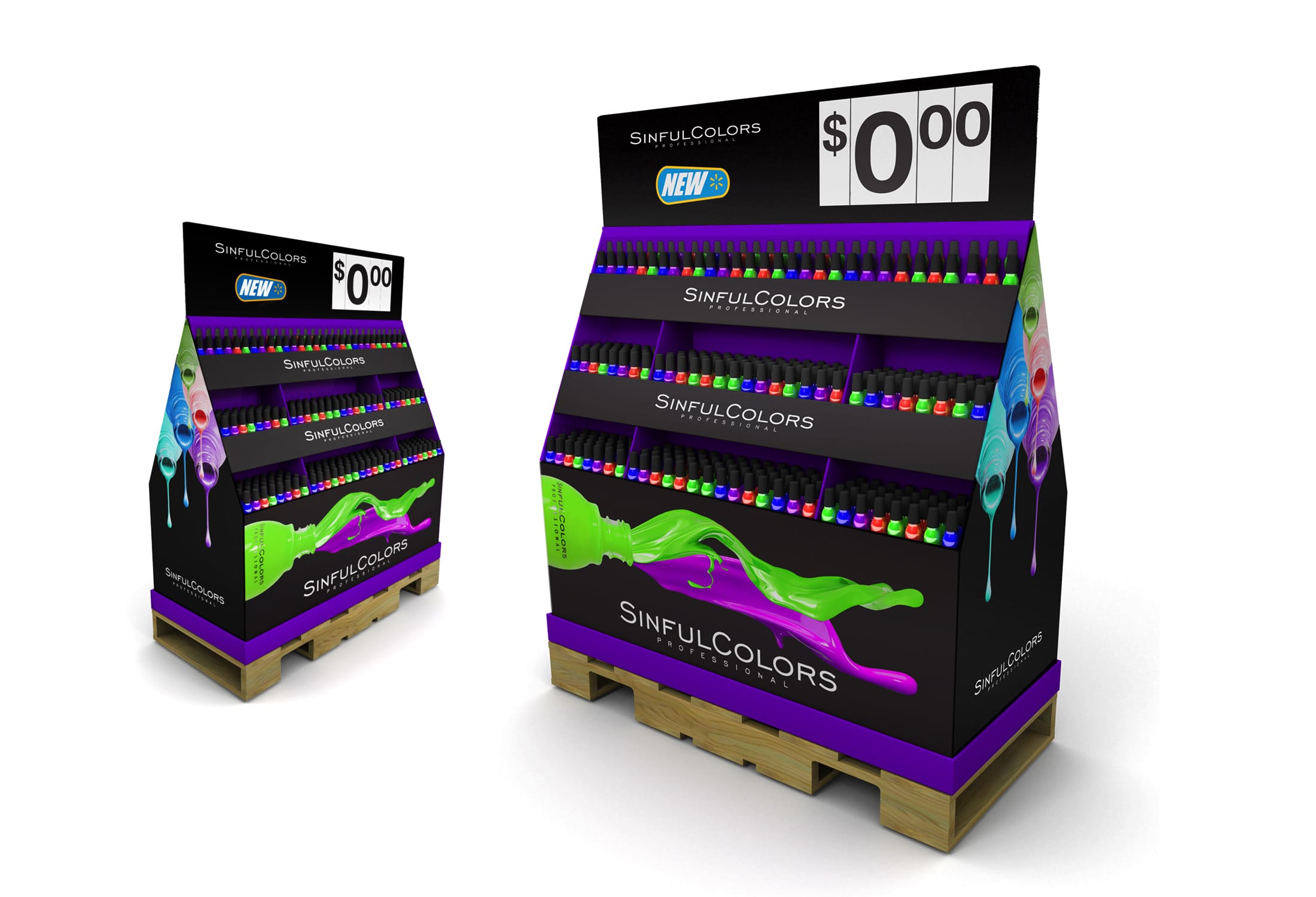
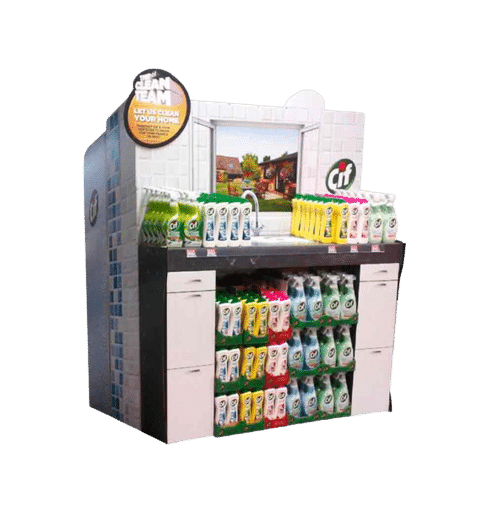
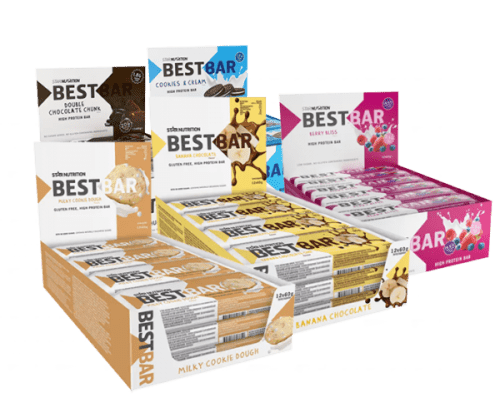
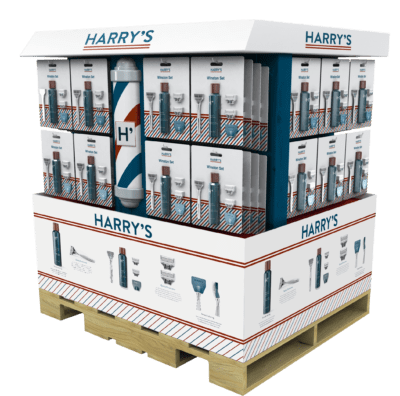
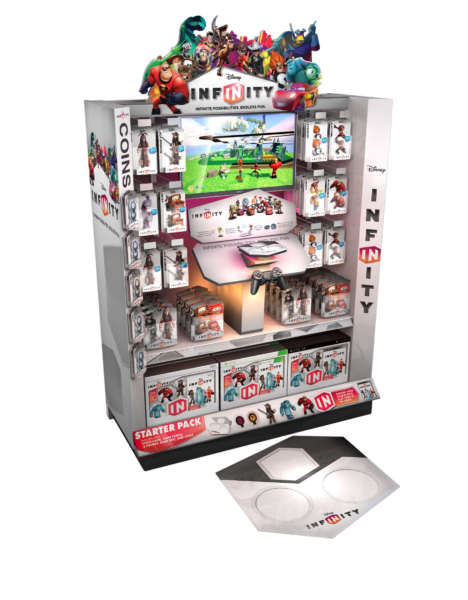
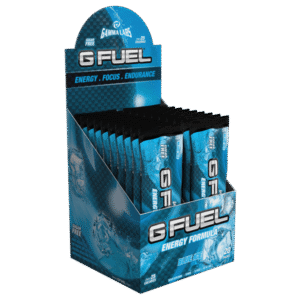
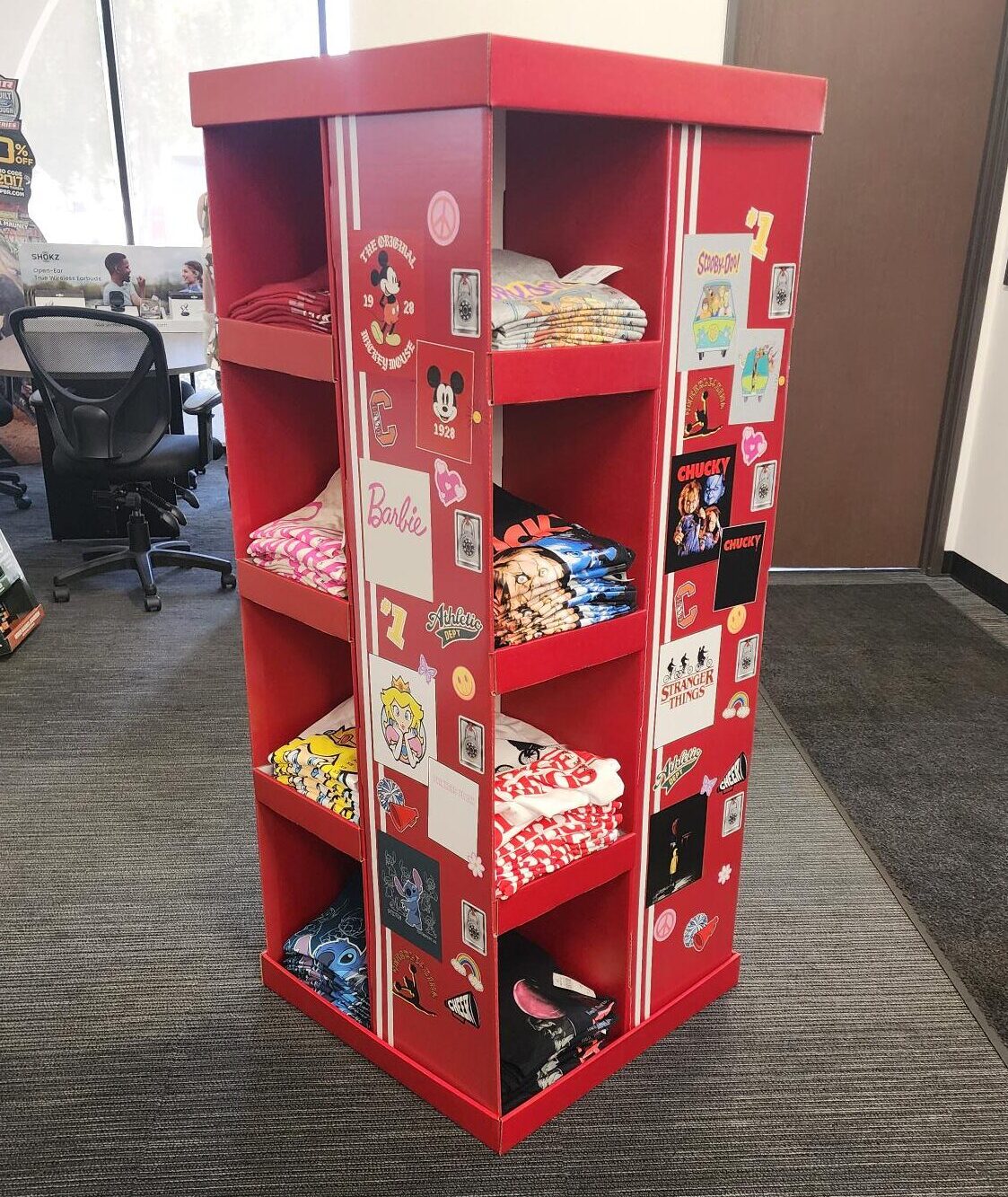
Effective POP displays combine structure with clear, impactful graphics. Common elements include:
Logos and Brand Colors
Product Imagery
Text (ingredients, instructions, contact info)
Symbols and Icons
Promotions or Pricing
Call-to-Action Messaging
Mascots or Characters
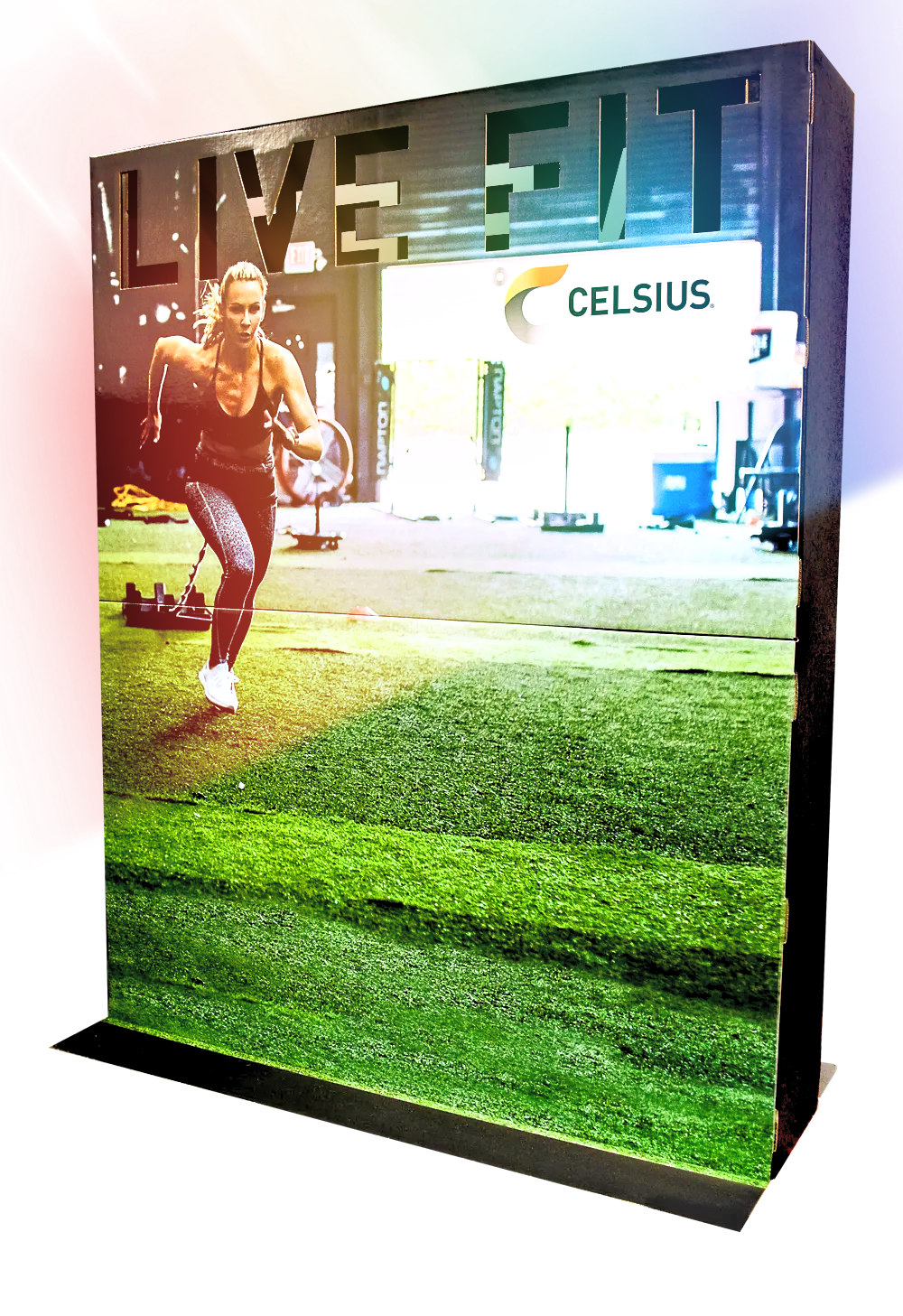
Any artwork provided must be adjusted to fit dielines correctly. Designers ensure bleed, folds, and structural features align with graphics to avoid misprints.
Choosing the Right Printing Method
When selecting a printing process, consider:
Quality: Lithographic offers the highest resolution; flexographic is durable but less detailed.
Budget and Quantity: Flexographic suits large runs, digital works best for small runs, lithographic for high-volume premium graphics.
Lead Time: Digital is fastest due to no plate requirements.
Brand Goals: For premium retail impact, lithographic justifies higher cost; for efficiency, flexographic is the workhorse.
Buyer Takeaway
Use flexographic printing for large-scale runs that need durability and consistent Pantone colors.
Choose digital printing for prototypes, short runs, or campaigns with multiple SKUs.
Invest in lithographic printing for premium displays that require sharp, high-quality graphics.
Selecting the right method ensures POP displays not only stand out visually but also align with budget and timeline requirements.
References
Association of Independent Corrugated Converters (AICC). (2024). Printing Methods in Corrugated Packaging. Retrieved from https://www.aiccbox.org
Flexible Packaging Association. (2023). Digital vs. Flexographic Printing. Retrieved from https://www.flexpack.org
Robertson, G. L. (2016). Food Packaging: Principles and Practice (3rd ed.). CRC Press.
Taller displays get attention. But they also get: Rejected by retailers Unstable under load More likely to fail in-store Height isn’t just a design choice—it’s
Cutouts sell the product. They improve: Visibility Brand presentation Shopper engagement But they also remove something critical:👉 Structure Every cutout or window reduces material—and with
Most POP displays are designed for full, balanced product loads. But that’s not how they perform in-store. Within days: One SKU sells faster than another
The choice of material and structural design in folding cartons is directly tied to performance, cost, and consumer perception. The right pairing can mean the
The integrity of a pouch package is only as strong as its seal. Sealing technologies determine not just the strength of closure but also shelf
Frozen and fresh pet foods are highly perishable and require strict temperature control throughout the supply chain. Packaging must maintain safe product temperatures during transit,
Home » Corrugated POP Display Printing
Cutouts sell the product. They improve: Visibility Brand presentation Shopper engagement But they also remove something critical:👉 Structure Every cutout or window reduces material—and with
When it comes to maximizing shelf space and capturing buyer attention, few pairings are more effective than folding cartons and POP displays. Whether it’s a
In the intricate world of retail, where sales are the ultimate goal, having an exceptional product is just the beginning. To truly succeed, retailers need