

Home » Reducing Packaging Tariff Exposure with U.S. Suppliers
Reducing Packaging Tariff Exposure with U.S. Suppliers
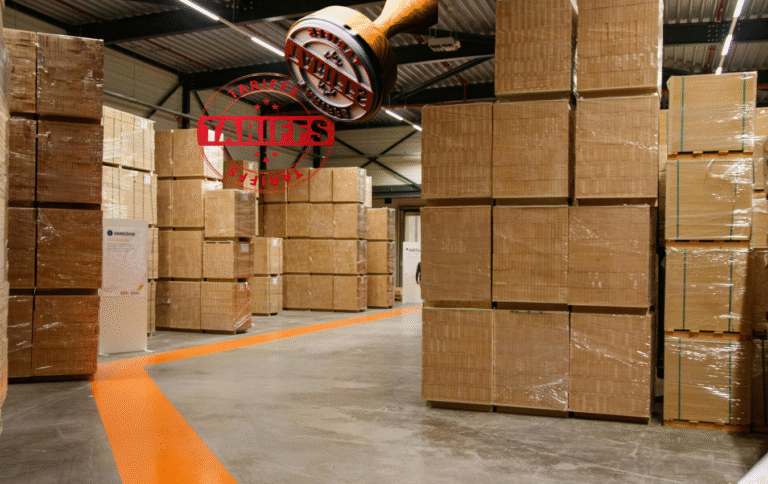
Many U.S. businesses currently sourcing packaging from China are facing a harsh reality: tariffs and trade volatility can quickly erode margins and disrupt supply chains. By shifting toward U.S.-based packaging suppliers, you can reduce exposure to trade risk, stabilize costs, and gain faster lead times.
The Tariff Reality for Packaging Importers
- Chinese imports of packaging materials, like corrugated boxes and folding cartons, are often subject to Section 301 tariffs and additional duties.
- The U.S. government has moved to end the de minimis exemption for low-value Chinese parcels, meaning even small packaging imports can now attract duties.
- Tariffs can be stacked — base duties plus special surcharges — pushing total duty rates in some cases.
These shifting policies mean that what looks cheap today may suddenly double in cost tomorrow.
Risks Facing Packaging Buyers Using China Suppliers
- Margin erosion — sudden tariff spikes eat into profits.
- Unpredictable costs — makes quoting and budgeting harder.
- Supply disruption — export bans, customs delays, or regulatory changes.
- Quality and compliance issues — harder to enforce U.S. standards on distant suppliers.
- Inventory risk — overstocking to hedge risk increases holding costs.
Why U.S. Suppliers Are Attractive Right Now
- Tariff immunity — sourcing domestically removes exposure to Chinese import duties.
- Shorter lead times — faster production and shipping.
- Better oversight — easier quality control, regulatory compliance, and audits.
- Supply chain resilience — less dependence on global political events.
- Total landed cost transparency — fewer hidden risk factors.
How Buyers Should Transition
- Map current China-sourced SKUs — know your exposure by product.
- Run landed cost comparisons — include materials, freight, tariffs, and inventory costs.
- Pilot with U.S. suppliers — start small to test quality, logistics, and price.
- Negotiate transition contracts — volume guarantees or phased ramps to smooth pricing.
- Communicate with stakeholders — show finance, operations, and sales how stability is improved.
- Maintain supply diversity — don’t drop all China sourcing immediately — keep backup paths.
Key Design & Sourcing Guidelines
- Favor modular box sizes that U.S. suppliers can replicate easily.
- Avoid overly custom features that Asian factories might have specialized tooling for.
- Ensure all designs adhere to U.S. ISTA / ASTM testing standards.
- Specify U.S.-friendly materials (domestic linerboard, recycled content) to reduce import dependencies.
Why It Matters for Buyers
Tariff exposure isn’t a temporary issue — it’s a long-term challenge that directly impacts margins and predictability. Businesses that act early to localize packaging supply chains will be better positioned to manage cost, quality, and delivery reliability.
Brown Packaging partners with U.S. manufacturers and distributors to provide stable, tariff-free packaging solutions. From corrugated boxes to custom-printed cartons, our domestic network helps buyers eliminate trade-related risk and maintain consistent supply.
Contact us to explore cost-stable alternatives to imported packaging.
References
- SpeccP. “Tariffs’ effect on packaging.” Spectrum Custom Packaging
- EcoEnclose. “Tariffs, Trade Wars, and Your Packaging.” EcoEnclose
- Packaging Dive. “5 questions about tariff impacts on packaging.” Packaging Dive
- Avalara. “How to handle US-China tariffs and the end of de minimis.” Avalara
- Creative Retail Packaging. “Trump Tariffs: Tracking the Impacts on the Packaging Industry.” creativeretailpackaging.com
Folding carton production is becoming more automated because buyers are asking for faster timelines, tighter consistency, and more flexibility across more SKUs. Shorter product lifecycles, retail launch windows, labor pressure,
Folding carton style matters because structure affects more than appearance. The right carton can improve shelf presentation, packing speed, product access, closure security, storage efficiency, and overall cost. For retail
Pouch packaging trends in 2027 will be shaped by convenience, shelf impact, sustainability pressure, sealing performance, automation, ecommerce growth, and total packaging cost. Buyers will still want pouches that look
Corrugated box trends in 2027 will be driven by a practical mix of cost control, sustainability, ecommerce growth, automation, retail requirements, and supply chain performance. Buyers will still need boxes
Home » Reducing Packaging Tariff Exposure with U.S. Suppliers