
Home » POP Displays for Cross-Merchandising
POP Displays for Cross-Merchandising
Cross-merchandising is one of the most effective ways to increase basket size in retail. By pairing complementary products in a single point-of-purchase (POP) display, brands can encourage impulse buys and highlight product synergies. Well-designed cross-merchandising displays must balance structural integrity with creative graphics to hold multiple SKUs securely while capturing shopper attention.
Why Cross-Merchandising Works
Shoppers often overlook product pairings when items are placed in separate aisles. POP displays solve this by bringing products together in a single, convenient location.
- Encourages impulse purchases.
- Educates consumers on product compatibility.
- Strengthens brand visibility and retailer relationships.
- Increases revenue per shopper visit.
Structural Considerations for Multi-SKU Displays
Cross-merchandising displays require careful engineering to hold different shapes and weights.
- Compartmentalized trays: Keep SKUs organized and accessible.
- Reinforced shelving: Prevent sagging under uneven product loads.
- Flexible layouts: Allow for multiple packaging sizes.
- Retail compliance: Dimensions must fit chain-specific guidelines.
Graphics That Highlight Product Pairings
Graphics play a key role in cross-merchandising by showing shoppers why products belong together.
- Use bold imagery to connect items visually.
- Highlight bundle savings or promotional pricing.
- Position brand messaging where both products share visibility.
- Ensure graphics remain clear even when product stock is low.
Examples of Cross-Merchandising POP Displays
- Snacks and beverages: Pairing chips with soda or beer.
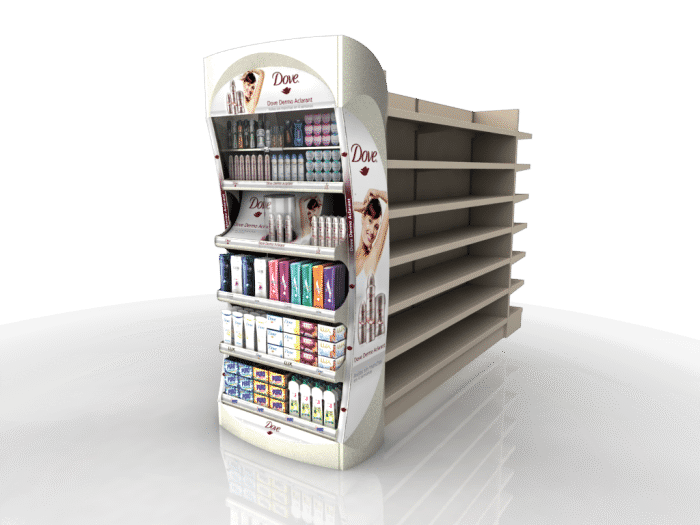
- Health and beauty: Combining shampoo with conditioner or styling products.
- Electronics: Packaging batteries alongside small devices.
- Household goods: Cleaning products displayed with tools or accessories.
POP Display Solutions with Brown Packaging
Brown Packaging designs cross-merchandising POP displays that integrate structural strength with branding impact. Our solutions make it easy to showcase complementary products while meeting retailer standards. Contact us to explore custom display designs for your retail strategy.
References
Shop! Association. (2021). Best Practices for In-Store Marketing and POP Displays. Retrieved from https://www.shopassociation.org
Soroka, W. (2009). Fundamentals of Packaging Technology (4th ed.). Institute of Packaging Professionals.
ASTM International. (2022). ASTM D685: Standard Practice for Conditioning Paper and Paper Products for Testing.
Most POP display decisions eventually come down to a tradeoff:make it look better or make it perform better. The mistake is thinking you have to choose. In reality, the best-performing
Many packaging purchasing decisions are made by comparing price per box. While this metric is easy to evaluate, it often fails to capture the real economics of packaging systems. Packaging
A POP display isn’t successful when it looks good leaving production—it’s successful when it arrives intact, gets placed correctly, and performs in-store. The problem is most displays are designed for
Print is one of the biggest cost drivers in POP displays—and one of the most misunderstood. Most decisions are made based on how it looks, not when it makes sense.
Home » POP Displays for Cross-Merchandising