
window.uetq = window.uetq || []; window.uetq.push(‘event’, ‘submit_lead_form’,{ event_label:‘SUBMIT MESSAGE’ }); window.lintrk('track', { conversion_id: 10271009 }); window.lintrk('track', { conversion_id: 10271017 });

How to Manage Tariffs in Pharmaceutical Packaging

How to Manage Tariffs in Pharmaceutical Packaging

For pharmaceutical companies, sourcing packaging has become more complex in recent years. Tariffs on imported materials and printed components are creating pricing pressure, disrupting long-term contracts, and forcing many buyers to rethink where and how they source their packaging.

Whether you rely on overseas suppliers or work with a domestic partner who sources internationally, tariffs can affect the cost and availability of critical packaging components like folding cartons, blister packs, inserts, and corrugated shippers.

Here’s how to understand the impact—and what you can do to stay ahead.

Know What’s Being Taxed

Not all pharmaceutical packaging is affected by tariffs in the same way. Many of the items commonly used in pharma packaging fall under categories that have been hit with tariffs in recent U.S.–China trade actions.

These may include:

  • Printed folding cartons and inserts
  • Blister pack materials (including PVC and foil)
  • Corrugated shipper boxes
  • Labels and leaflets
  • Some specialty coatings and substrates

Tariff rates can vary, depending on the material, country of origin, and current trade policy. What seems like a small increase per unit can lead to massive cost increases at scale.

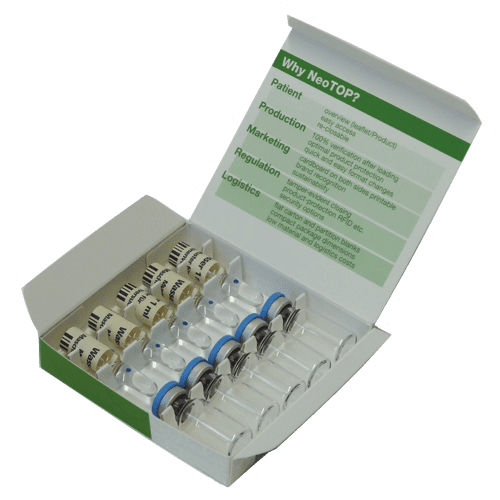
custom printed folding carton, medical packaging

Review Your Supplier’s Origin and Production Model

Even if your supplier is based in the U.S., they may still source raw materials, substrates, or finished packaging components from tariff-impacted countries.

It’s important to ask:

  • Where is each component of my packaging produced?
  • Does the supplier import printed materials or raw board?
  • Are any secondary processes (like lamination or foil stamping) outsourced overseas?

Understanding your true supply chain origin helps you identify where the tariff risks are—so you can plan ahead.

Reevaluate Total Cost of Ownership

Increased tariffs often eliminate the price advantage that used to come with overseas packaging. When you factor in:

  • Tariffs
  • Rising freight costs
  • Port delays and longer lead times
  • Quality control or communication issues

You may find that domestic packaging suppliers are now more competitive on both cost and reliability.

Shipping delays

Talk to Your Packaging Supplier About Domestic Alternatives

If you’re concerned about exposure to tariffs, a proactive supplier should be able to:

  • Offer U.S.-made or NAFTA-friendly alternatives
  • Suggest design or material changes to reduce cost impact
  • Help consolidate SKUs or adjust specs to simplify sourcing
  • Provide packaging that meets FDA labeling and compliance requirements domestically

Shifting to U.S.-based production doesn’t always mean higher cost—it often brings improved supply chain visibility, faster lead times, and fewer surprises.

Factor Tariffs Into Long-Term Strategy

If you’re renegotiating contracts, launching new SKUs, or scaling production, factor tariff risk into your 12–24 month outlook. Ask your supplier:

  • Can they lock in pricing or hold stock domestically?
  • Do they have backup sourcing options if trade rules change again?
  • Are they monitoring tariff changes and proactively communicating impacts?

Being reactive to tariffs leads to missed margins and production delays. Building flexibility into your packaging strategy now can protect your product pipeline later.

custom folding carton for medical

Final Thoughts

Tariffs are no longer a temporary nuisance—they’re a permanent part of global sourcing. For pharmaceutical brands, that means understanding where your packaging is coming from, how trade policy affects it, and what options exist to reduce risk and cost.

Looking for help minimizing tariff exposure on your pharmaceutical packaging?
We can walk you through domestic solutions, supply chain planning, and structural design adjustments to keep your product protected and your packaging program compliant.

Most Recent Posts:
Retail Packaging Trends for 2026

Retail packaging continues to evolve as brands balance sustainability, supply chain performance, and consumer experience. In 2026, buyers face new challenges shaped by material innovation, compliance requirements, and rising consumer

Read More »
Meeting 2026 Packaging Compliance Standards

Packaging compliance is no longer optional—it’s a requirement for accessing retail shelves, shipping networks, and international markets. In 2026, buyers must navigate evolving regulations around sustainability, labeling, and testing to

Read More »
Categories:
Subscribe To Our Newsletter

By submitting your information, you agree to our terms and conditions and privacy policy.

custom folding carton box with medical blister pack for pills
Medical Packaging
Facebook
Twitter
LinkedIn
Pinterest
Relevant Posts
A Look at the Pharmaceutical Industry's Dependence on Blister Packs
Packaging
brownpackaging
A Look at the Pharmaceutical Industry’s Dependence on Blister Packs

In our daily lives, we come across a plethora of pharmaceutical products, either in our personal capacity or via someone close to us. In this blog, we will delve into a significant yet frequently overlooked component of these products: blister packs. We will explore their utility, benefits, and why the pharmaceutical industry is heavily dependent on them. Understanding Blister Packs Before delving into the specifics of the pharmaceutical industry’s dependence on blister packs, let’s first understand what they are. A blister pack is a type of packaging produced by sealing a product in a plastic cavity or pocket, usually with a paper, corrugated, or foil backing. They’re commonly used for packaging pharmaceutical products, particularly pills, tablets, and capsules. Why Blister Packs? So, why does the pharmaceutical industry prefer blister packs over other packaging options? The simple answer is the versatility, protection, and convenience that blister packs offer. Protection and Preservation Blister packs are predominantly used because they protect the individual doses of medication. They offer a barrier to moisture, light, and oxygen, preserving the effectiveness of the drugs. The separation of each pill also prevents cross-contamination and ensures that the product remains tamper-evident until it reaches the end consumer. Patient Compliance and Safety A significant benefit of blister packaging lies in patient compliance. The organized and segmented nature of blister packs allows patients to track their medication intake effectively. It can significantly aid elderly patients or those taking multiple medications at different times of the day. By reducing errors in medication consumption, blister packs enhance patient safety. Ease of Use and Portability Blister packs are designed for consumer convenience. They are lightweight, compact, and easily portable, making them ideal for on-the-go consumers. The simplicity in popping a pill out from its compartment enhances the product’s ease of use. The Business Perspective: Cost-Effectiveness and Marketing Opportunities From the business side, blister packs offer several benefits, including cost-effectiveness and marketing opportunities. Cost-Effectiveness Blister packaging can be highly cost-effective compared to other packaging solutions. The material used is typically less expensive, and the production process is often more streamlined. Also, because blister packs help maintain drug integrity, the rate of product returns or losses due to spoilage or damage is substantially reduced. Marketing Opportunities Lastly, blister packs offer unique marketing opportunities. The backing card provides ample space for branding, important drug information, instructions for use, and even promotional messages. This aspect can give pharmaceutical companies an edge in a highly competitive market. Environmental Considerations of Blister Packs Like any industry, pharmaceutical packaging must consider its environmental impact. While blister packs provide a multitude of benefits, they also have some downsides. These packs are often composed of a combination of plastic and aluminum, which are not biodegradable and difficult to recycle. As environmental awareness rises, pharmaceutical companies are challenged to find more sustainable solutions without compromising the product’s integrity and the consumer’s safety and convenience. The Future of Blister Packs in Pharmaceuticals With the advantages blister packs offer, they’re here to stay. However, the push for more sustainable practices is driving innovation in this sector. We can expect advancements in materials science to produce more environmentally-friendly blister packs in the future. Furthermore, technology may introduce smart blister packs, capable of reminding patients to take their medication, improving adherence rates even further. In summary, the pharmaceutical industry’s dependence on blister packs is multifaceted and rooted in both practical and business considerations. However, as the industry evolves, so too will its packaging methods, with an increasing focus on sustainability and technological innovation. (714)300-0650 request@brownpackaging.com Most Recent Posts: Categories: Corrugated Ecommerce ESD Design Display Flexible Packaging Foam Folding Carton Packaging Plastic Packaging Pouch Printing Protection Retail Rigid Box Thermoform Sustainability Subscribe To Our Newsletter By submitting your information, you agree to our terms and conditions and privacy policy. Blister Packaging Facebook Twitter LinkedIn Pinterest Relevant Posts

Read More »
Edge Crush Vs Mullen Burst: What Is the Difference?
Corrugated
brownpackaging
Edge Crush Vs Mullen Burst: What Is the Difference?

Corrugated Boxes are exposed to many different circumstances during packing, shipping and storage. Ensuring that your corrugated packaging is protecting your product fully is important. The two-test used to evaluate the strength of your packaging are Mullen Burst Test and Edge Crush Test. They both serve a similar purpose of testing the strength of the box, and they test it in different ways. It is important to understand the difference between the two tests, in order to ensure you pick the right strength quality test for your packaging needs. Mullen Burst: The Mullen Burst Test was the first standard box strength test to be used. It uses a pressurized diaphragm to measure how much pressure the side of a corrugated box can endure before it will burst. It is measured in pounds per square inch. This test is best for measuring the forces a box may be subject to during rough handling, as well as the total weight amount the box can hold. It doesn’t measure the amount of weight that can be stacked on top of a box that is when the Edge Crush Test becomes more effective. Edge Crush The Edge Crush Test (ECT) measures the vertical compression along the edge of a package and focuses on the compression and stacking strength of a corrugated box. It is measured by the force in pounds per lineal inch of load bearing edge that a box can take before failure. This test is often used when one is concerned about the max weight a box can handle during pallet shipments and warehouse stacking. More so this test measures how much weight a corrugated box can handle before it would crush. Which test should you use? Edge Crush test is best used when the items you are packaging will not move during shipment, won’t exert lateral force to the sides of the boxes, and won’t go through a variety of different shipment handlers. If you are stacking or palletizing your boxes, ECT can provide a better measure of how the box will hold up during that stacking process. In order to best protect your product from being crushed during shipment, use Edge Crush Test. Mullen Burst test is best if the items in the box will move during shipment, there will be pressure to the sides of the boxes, and the box will go through many different handlers during shipping. If you’re concerned about a package being punctured during shipment use Mullen Burst Test. BMC The Box Manufacturer Certification Stamp (BMC) is added to all corrugated boxes in order to show the boxes strength. Every BMC contains either the Mullen Burst Test Rating or the Edge Crush Test Rating information. This stamp shows that the box is compliant with the regulations set by the National Motor Freight Traffic Association (NMFTA). Although this is not legally required most carriers require it. What is located on a BMC? Box manufacturers name and location Mullen Burst Test Rating or Edge Crush Test Rating Max sum of outside dimensions Max allowed gross weight Board construction   Both Mullen Burst Test and Edge Crush Test are useful in their own ways. Although they both serve a similar purpose of testing the strength of the box, these test are not equivalent as they measure completely different things. It is important to understand the difference between the two tests, in order to ensure you pick the right strength quality test for your packaging needs. If you need assistance understanding the difference between these two test and need help determining which one is best for your business packaging needs, then contact Brown Packaging and one of our packaging experts can assist you. (714)300-0650 request@brownpackaging.com Most Recent Posts: Categories: Corrugated Ecommerce ESD Design Display Flexible Packaging Foam Folding Carton Packaging Plastic Packaging Pouch Printing Protection Retail Rigid Box Thermoform Sustainability Subscribe To Our Newsletter By submitting your information, you agree to our terms and conditions and privacy policy. Custom Corrugated Facebook Twitter LinkedIn Pinterest Relevant Posts

Read More »
How to Prioritize Durability and Protection in E-Commerce Packaging
Ecommerce
brownpackaging
Prioritizing Durability in E-Commerce Packaging

Ensuring that products arrive in perfect condition is a top priority for e-commerce businesses, as damaged items can lead to returns, bad reviews, and loss of customer trust. To prioritize durability and protection in your e-commerce packaging, you should focus on several key strategies: Select the Right Materials Use Protective Inserts Right-Size Your Packaging Secure Sealing Test Packaging Durability Consider the Entire Supply Chain Choose Sustainable Yet Durable Materials Select the Right Materials The foundation of durable packaging lies in using the right materials. Strong, high-quality materials can better withstand the stresses of shipping and handling. Corrugated Boxes: These are widely used for shipping because of their strength and durability. Double-wall or triple-wall corrugated boxes provide extra layers of protection, making them ideal for heavier or fragile items. Padded Mailers: For smaller or more delicate items, padded mailers (with bubble wrap or foam lining) offer extra cushioning while being compact. Rigid Mailers: For documents or flat items that need to avoid bending, rigid mailers are a good choice to protect against damage during transit. By choosing materials that are appropriate for your product’s size and fragility, you can significantly reduce the risk of damage. Use Protective Inserts Inserts provide an extra layer of protection inside the packaging. They help to secure the product in place and absorb impact from movement or drops during transit. Foam Inserts: Custom foam inserts or molded pulp inserts are ideal for protecting fragile or sensitive products like electronics, cosmetics, or glassware. Corrugated Dividers: For multiple items being shipped in the same package, corrugated dividers ensure each product is isolated and protected from collisions with other items inside the box. Air Cushions and Bubble Wrap: For products with irregular shapes, bubble wrap, paper void fillers or air pillows can help fill voids and provide cushioning. The right inserts are critical for absorbing shock and preventing products from shifting, which is one of the main causes of damage during shipping. Right-Size Your Packaging Using oversized boxes leads to excess movement of products inside the package, increasing the chances of damage. Right-sizing your packaging to fit your product snugly minimizes the need for excess filler material and ensures the product is secure. Reduce Void Space: Design packaging that minimizes empty spaces inside the box. This reduces the need for additional packing materials and keeps the product from shifting during transit. Custom Packaging: Consider using custom-fit boxes that are designed specifically for the size and shape of your product. Custom packaging not only offers better protection but also gives your product a more professional appearance. Right-sized packaging also reduces shipping costs by decreasing the dimensional weight of the package, benefiting both your bottom line and the environment. Secure Sealing Durability isn’t just about the box itself—secure sealing is essential to keep the contents safe and intact during transit. Reinforced Tape: Use heavy-duty packaging tape, especially for larger or heavier boxes. Water-activated tape (also known as gummed tape) provides a tamper-evident seal and is more durable than standard tape. Double-Sealing for Fragile Items: For extra protection, consider using multiple layers of tape or reinforcing vulnerable areas of the box, such as the corners and edges, where impacts are more likely to occur. Tamper-Evident Seals: These seals ensure that customers can identify whether the packaging has been opened or tampered with, offering an extra layer of protection and peace of mind. Test Packaging Durability Before committing to a packaging solution, conducting real-world durability tests ensures that your products are protected throughout the shipping process. Drop Tests: Simulate shipping conditions by performing drop tests from different heights to assess how well the packaging holds up to impact. Compression Testing: Test how well your packaging can withstand weight and pressure, especially for items that may be stacked during shipping or storage. Environmental Testing: For products shipped in extreme conditions (hot, cold, or humid environments), test how your packaging materials react to these conditions to ensure the product’s integrity remains intact. Testing helps you identify weak points in your packaging design and gives you the opportunity to make improvements before issues arise with customers. Consider the Entire Supply Chain Your product’s journey doesn’t end when it leaves your warehouse. To ensure durable and protective packaging, consider every step of the supply chain, from your packaging facility to the final delivery. Third-Party Logistics (3PL) Handling: Ensure that your packaging can withstand the handling practices of third-party shipping and logistics companies. This includes drops, stacking, and rough handling. Carrier Requirements: Some carriers have specific packaging guidelines for certain products (like fragile items or hazardous materials). Adhering to these guidelines reduces the risk of damage and ensures smooth shipping. By understanding how your product will be handled at each stage of the supply chain, you can better design your packaging to prevent damage and ensure safe delivery. Choose Sustainable Yet Durable Materials Sustainability and durability don’t have to be mutually exclusive. Many eco-friendly materials can offer excellent protection while reducing your environmental footprint. Recycled Corrugated Boxes: Boxes made from recycled materials are just as durable as virgin fiber boxes, but have the added benefit of being more sustainable. Biodegradable Packing Materials: Biodegradable air cushions, packing peanuts, and bubble wrap offer protective cushioning while minimizing environmental impact. By choosing sustainable materials that also prioritize durability, you meet customer expectations for eco-consciousness while ensuring their products arrive in perfect condition. Conclusion Prioritizing durability and protection in your e-commerce packaging is essential for reducing damage, improving customer satisfaction, and minimizing return rates. By selecting the right materials, using protective inserts, and optimizing your packaging design, you can create a packaging solution that not only protects your products but also enhances the overall customer experience. Regular testing and adapting your packaging to the realities of the supply chain ensure that your packaging is fit for purpose and durable enough to handle the rigors of shipping. If you’re interested in ecommerce packaging, then partner with Brown Packaging today to get started. (714)300-0650 request@brownpackaging.com Most Recent Posts: Categories: Corrugated Ecommerce ESD Design

Read More »