
Home » Why Some POP Displays Never Make It to the Floor
Why Some POP Displays Never Make It to the Floor
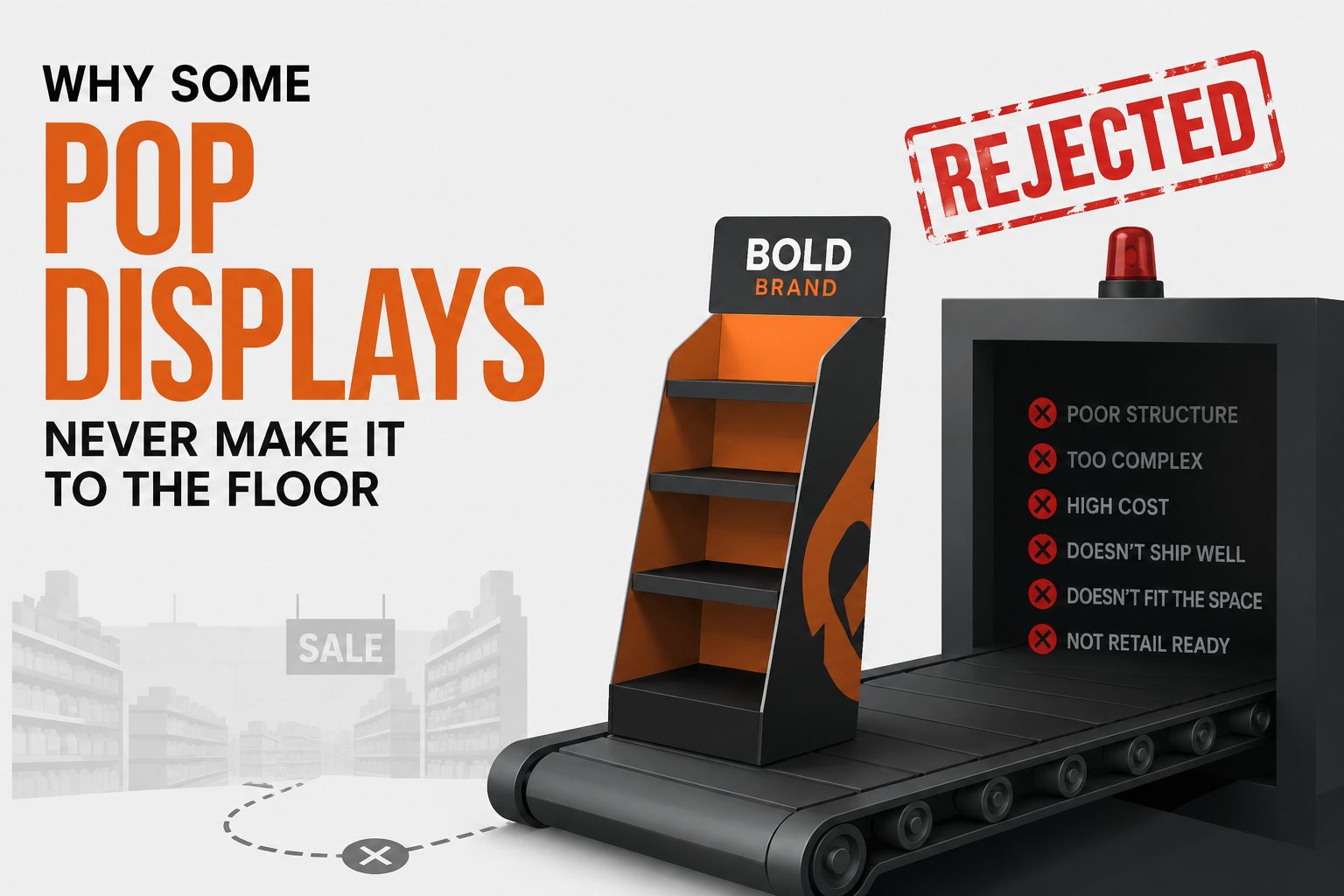
A POP display can be perfectly designed, well-produced, and shipped on time…
…and still never get placed.
This isn’t a design failure—it’s an execution failure.
And it’s more common than most brands realize.
The Reality: Placement Is Not Guaranteed
Getting a display into a store doesn’t mean it reaches the floor.
Between delivery and placement:
- Displays sit in backrooms
- Get deprioritized
- Or never get assembled
If it doesn’t get placed:
👉 It doesn’t sell
Backroom Congestion Stops Execution
Retail backrooms are crowded and chaotic.
Displays compete with:
- Inventory overflow
- Other promotional materials
- Limited storage space
If your display:
- Takes up too much room
- Isn’t easy to stage
It gets pushed aside.
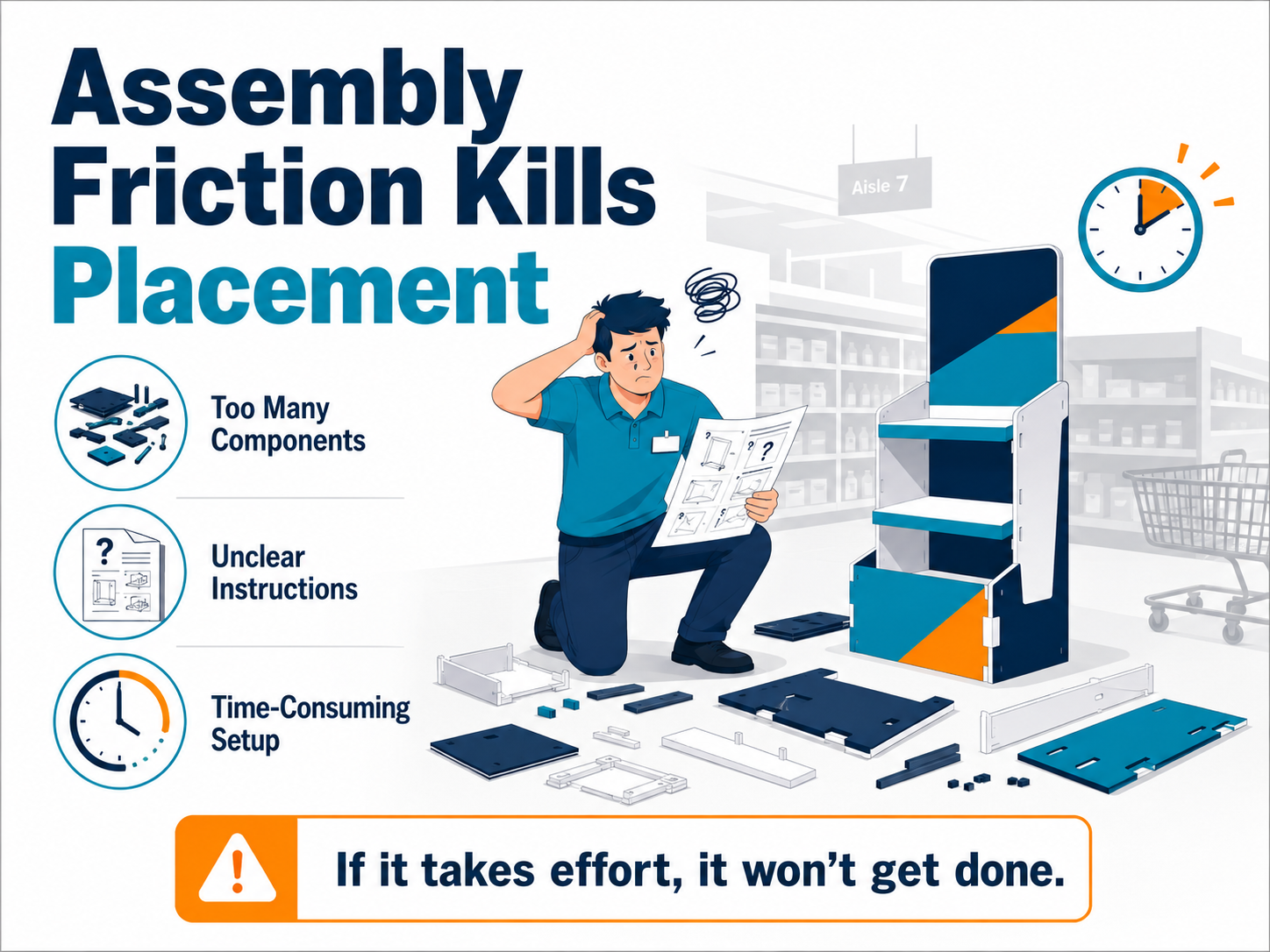
Assembly Friction Kills Placement
If setup is difficult:
- Employees delay it
- Skip steps
- Or ignore it completely
Common issues:
- Too many components
- Unclear instructions
- Time-consuming assembly
If it takes effort:
👉 It won’t get done
No Immediate Incentive = No Priority
Store employees prioritize:
- Restocking shelves
- Customer service
- High-urgency tasks
A display is:
👉 Optional work
If there’s no urgency or clear value:
- It gets delayed
- Or never executed
Retailer Approval Doesn’t Mean Execution
Even approved displays can fail in-store.
Why:
- Store managers make local decisions
- Space may already be allocated
- Layouts change
This leads to:
- Displays left in storage
- Displays placed in low-impact areas
- Displays removed early
Approval ≠ placement
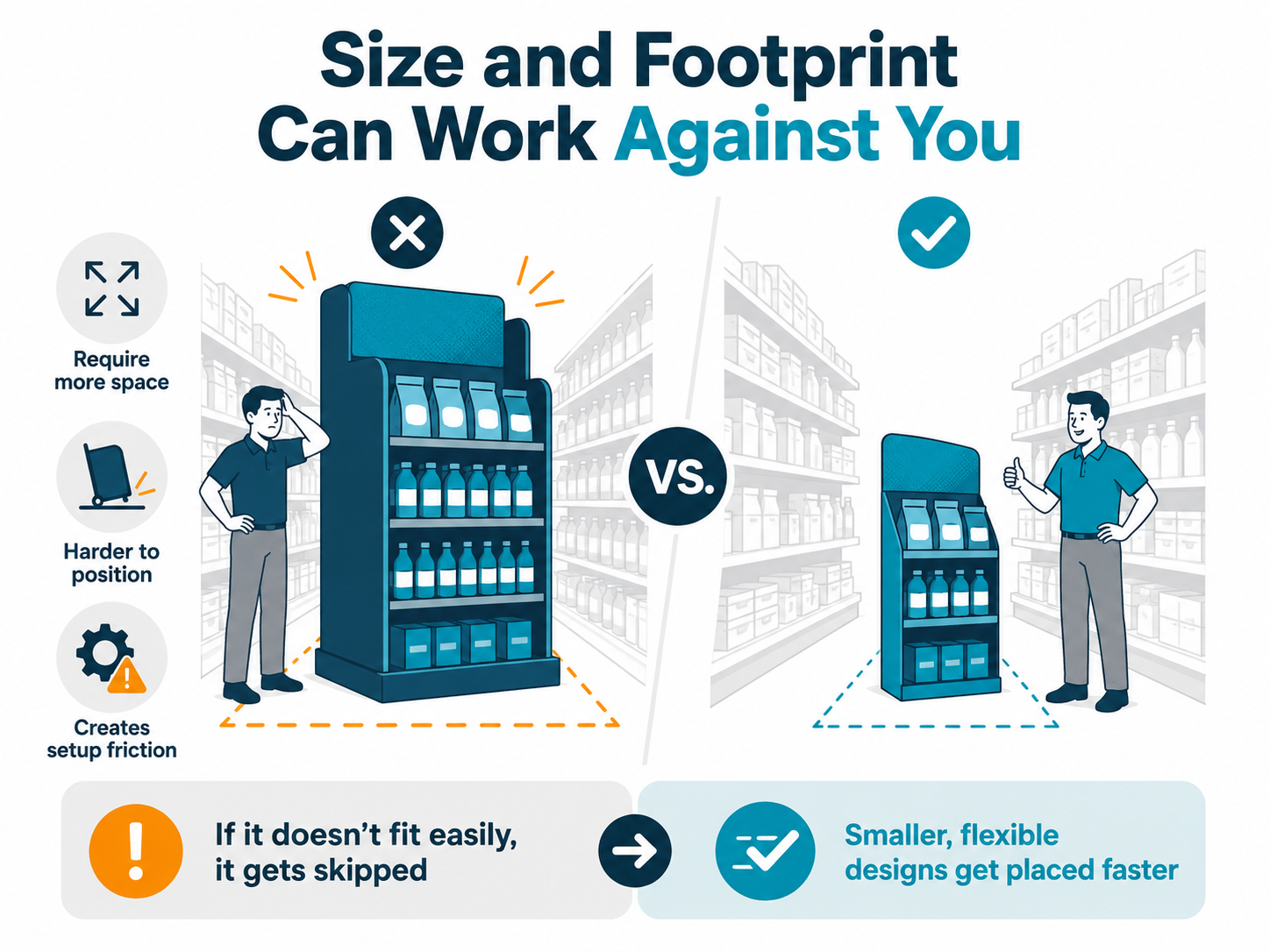
Size and Footprint Can Work Against You
Large displays:
- Require more space
- Are harder to position
- Create friction during setup
If a display doesn’t fit easily:
👉 It gets skipped
Smaller, flexible designs:
👉 Get placed faster and more often
Timing Is a Major Failure Point
Displays arrive:
- Too early → sit in backroom
- Too late → miss promotional window
Retail operates on tight schedules.
If timing is off:
👉 Execution breaks
What High-Performing Displays Do Differently
They are designed for:
- Fast, simple setup
- Minimal footprint
- Clear purpose and placement
- Low effort for store staff
They remove friction at every step.
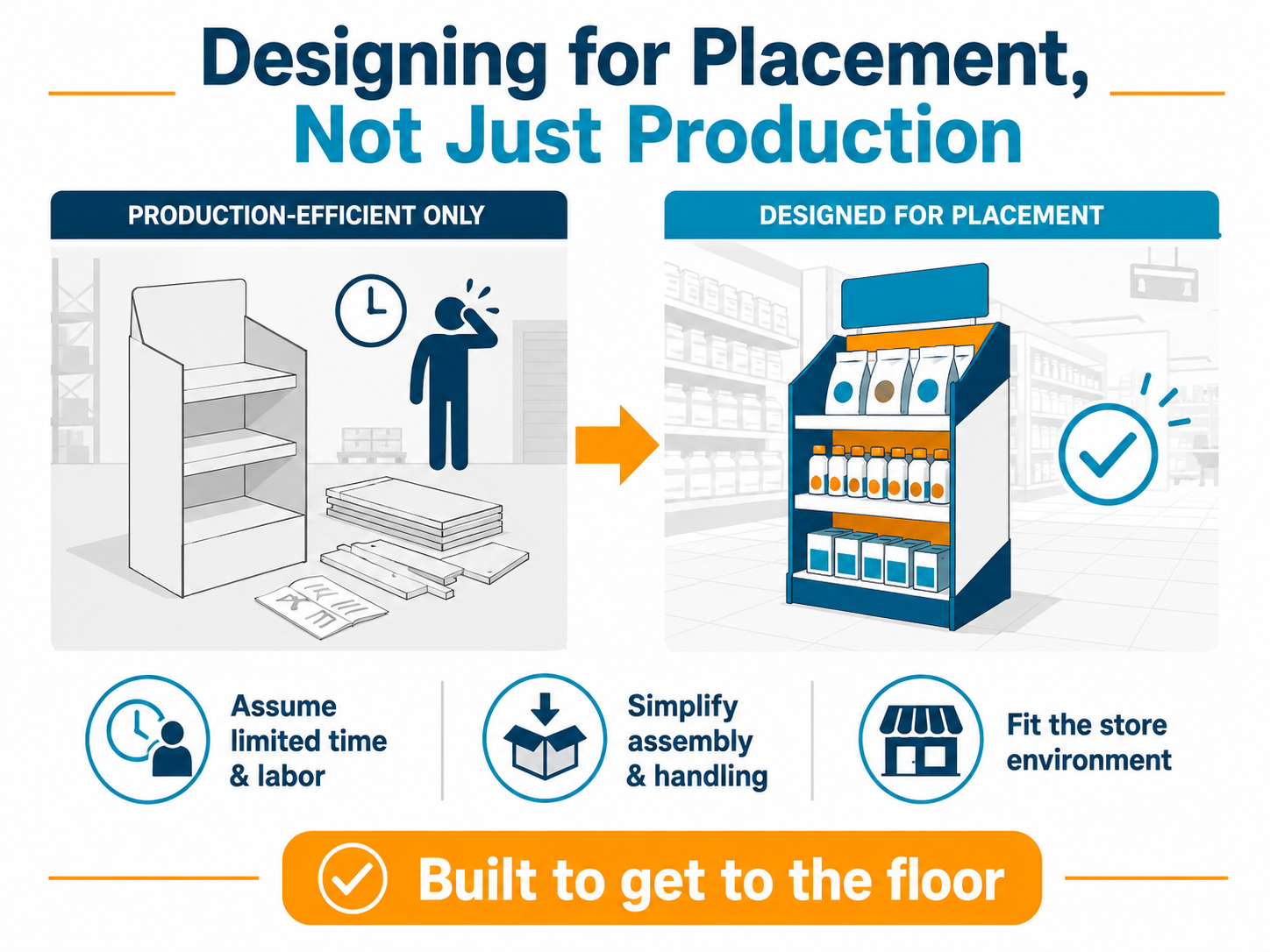
Designing for Placement, Not Just Production
Better displays:
- Assume limited time and labor
- Simplify assembly and handling
- Fit easily into store environments
They’re built to:
👉 Get to the floor—not just out of the warehouse
Where Brands Get It Wrong
- Overcomplicating setup
- Ignoring store-level constraints
- Assuming approval guarantees placement
- Designing oversized displays
- Missing timing windows
These issues stop performance before it starts.
How Brown Packaging Designs for Real Execution
At Brown Packaging, displays are engineered for placement—not just production.
We focus on:
- Reducing setup friction
- Designing for real store environments
- Aligning structure with retail behavior
- Ensuring displays actually reach the floor
Because a display that never gets placed…
👉 never had a chance to perform
References
Shop! Association. (2023). Retail Execution Study.
NielsenIQ. (2022). In-Store Execution Report.
Deloitte. (2022). Retail Operations Study.
Underhill, P. (2009). Why We Buy: The Science of Shopping.
Soroka, W. (2009). Fundamentals of Packaging Technology.
Meta Description
Some POP displays never reach the floor. Learn how backroom, setup, and timing issues impact placement.
Folding cartons are often treated as a simple retail packaging option, but the best folding carton programs are built around more than appearance. The right carton has to balance product
Box Compression Test (BCT) measures how much vertical load a corrugated box can last before it collapses. This matters when: Boxes are stacked on pallets Loads are stored for extended
Most companies don’t realize how much they’re paying to ship empty space. Packaging is often designed around convenience or standard sizes, not efficiency. The result is wasted cube, higher freight
Excess moisture in pet food packaging can cause mold growth, nutrient degradation, clumping, and product spoilage. Effective moisture control combines barrier material selection, packaging design, and controlled production environments to
Home » Why Some POP Displays Never Make It to the Floor