


window.uetq = window.uetq || []; window.uetq.push(‘event’, ‘submit_lead_form’,{ event_label:‘SUBMIT MESSAGE’ }); window.lintrk('track', { conversion_id: 10271009 }); window.lintrk('track', { conversion_id: 10271017 });

What Does The Color of Your Packaging Say About Your Product

personal care labels and packaging

Color plays a pivotal role in product packaging, serving not just an aesthetic purpose but also communicating values, emotions, and expectations to the consumer. Effective use of color in custom packaging can significantly influence customer perception, enhance brand recognition, and ultimately drive purchasing decisions. Let’s delve into how different colors can convey various messages about your products and how they can be strategically used to achieve your business goals.
The Impact of Color in Packaging

Overview of Color Psychology in Packaging

Colors are a powerful tool in packaging design because they have the ability to trigger different emotional responses and convey specific attributes of a brand or product. Understanding the psychology behind colors can help businesses strategically choose hues that align with their brand identity and appeal to their target audience.

Below are a list of the most popular colors used in custom packaging and what they say about your product:

  1. White
  2. Black
  3. Blue
  4. Red 
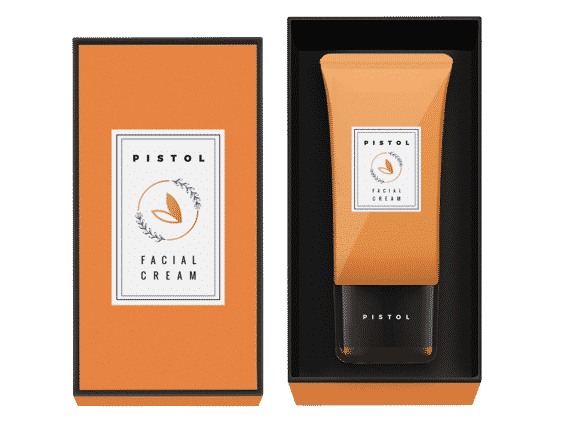
  5. Orange 
  6. Green 
  7. Yellow
  8. Purple
  9. Pink
  10. Using Multiple Colors
  11. Shades Of Colors

Common Colors Used in Custom Packaging and Their Meanings

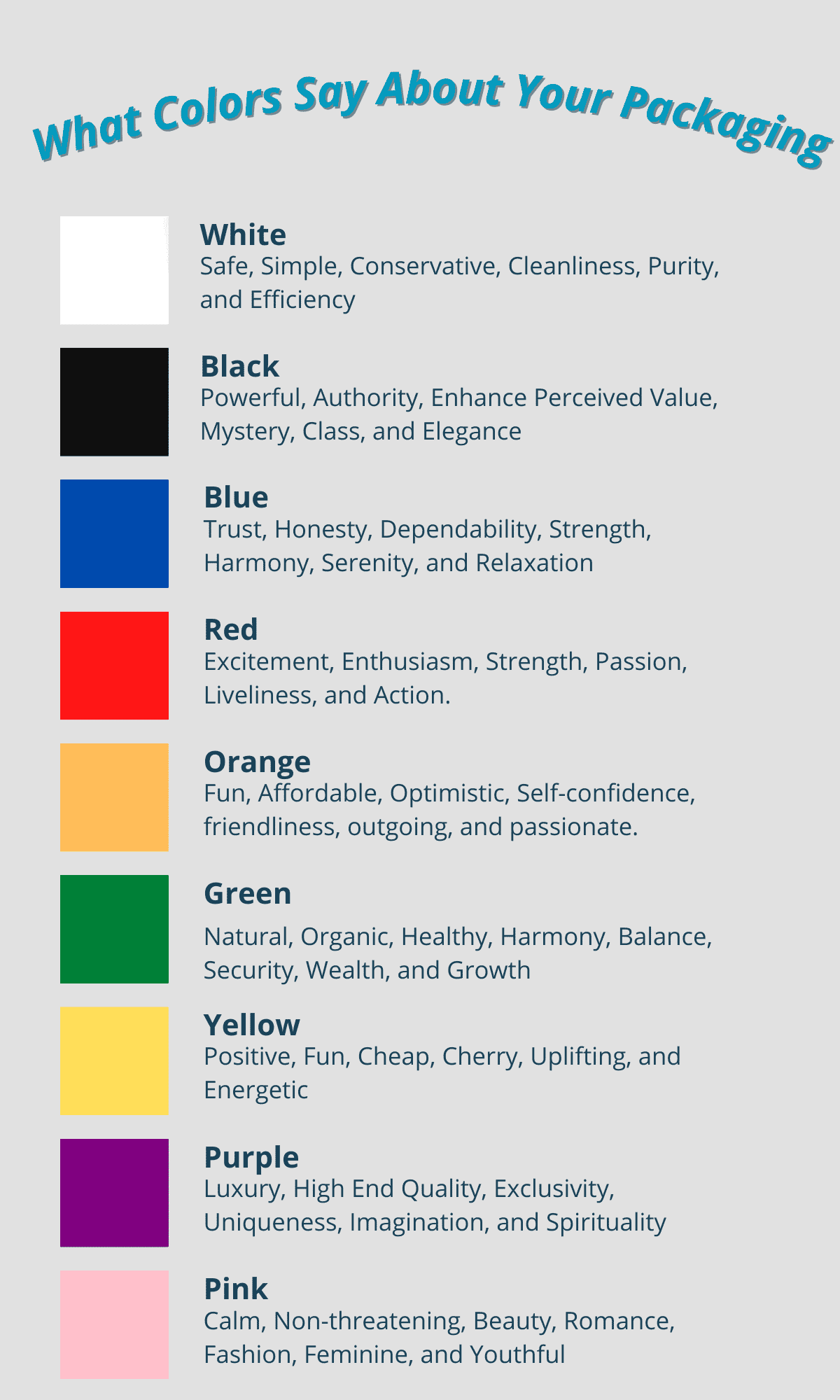
`What Color Says About Your Packaging

White

  • Implications: White symbolizes purity, cleanliness, and simplicity. It is often used to create a perception of safety and sterility, which is ideal for healthcare and personal care products.
  • Applications: Commonly used as a background color to make text and graphics pop, enhancing readability and highlighting important product information.
custom paper merchandise bags

Black

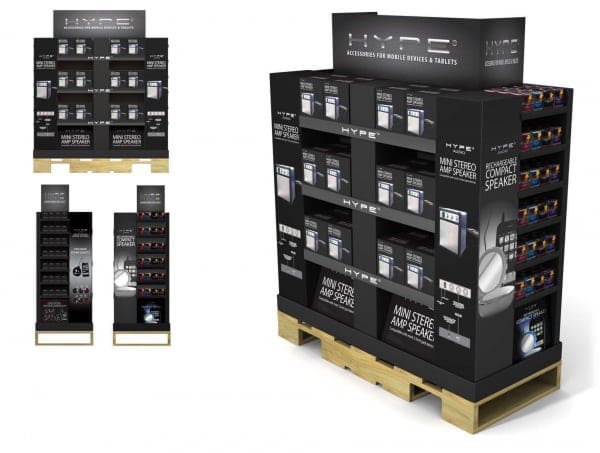
  • Implications: Black is associated with sophistication, luxury, and seriousness. It suggests a premium quality and is often used in packaging for high-end products to convey elegance and exclusivity.
  • Applications: Effective for creating contrast and making other elements stand out, particularly in luxury goods packaging.
custom printed pallet display

Blue

  • Implications: Blue evokes feelings of trust, security, and calmness. It’s preferred universally and is deemed reliable and dependable.
  • Applications: Widely used in products that aim to promote relaxation and trust, such as in the wellness and financial sectors.
custom magnetic boxes
custom Printed Folding Carton

Red

  • Implications: Red is a bold color that stimulates excitement, passion, and urgency. It can increase heart rate, which is why it’s commonly used to attract attention and encourage impulse purchases.
  • Applications: Often used to highlight calls to action or special offers on packaging.
Custom Corrugated Retail Box

Orange

  • Implications: Orange combines the energy of red and the happiness of yellow, representing enthusiasm, creativity, and affordability.
  • Applications: Frequently used to draw attention in retail settings and signal affordability without sacrificing quality.
custom skincare box

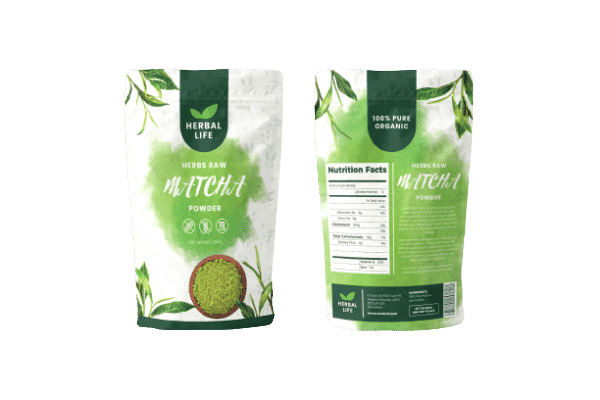
Green

  • Implications: Green is synonymous with nature, health, and renewal. Darker greens are associated with wealth and luxury, while lighter greens are used to promote eco-friendly or natural products.
  • Applications: Ideal for products that want to emphasize organic or sustainable attributes
custom pouches

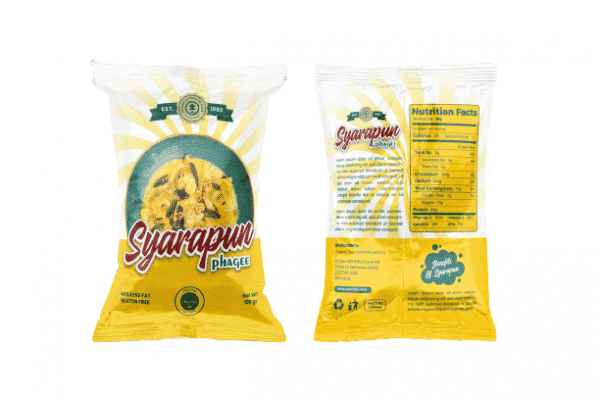
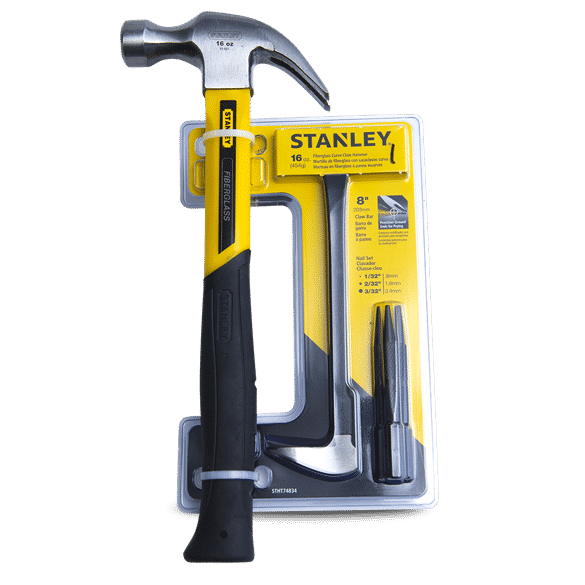
Yellow

  • Implications: Yellow is a cheerful color that exudes optimism and youthfulness. It’s also attention-grabbing and can be used to make packaging more eye-catching.
  • Applications: Effective for products targeting young demographics or those looking to convey affordability and fun.
frozen meals packaging
Hardware blister packs

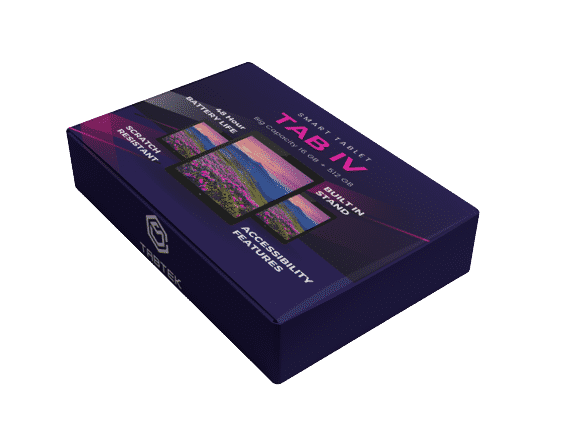
Purple

  • Implications: Purple is often associated with creativity, luxury, and spirituality. It tends to attract attention with a sense of mystery and prestige.
  • Applications: Used in beauty and luxury goods to suggest sophistication and rarity.
custom electronic box

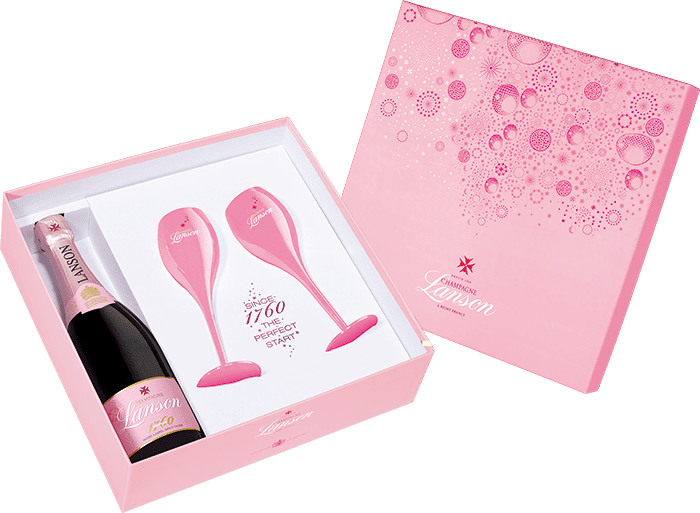
Pink

  • Implications: Pink is traditionally linked to femininity, warmth, and romance. It ranges from playful shades to more serious, muted tones.
  • Applications: Common in products aimed at the female market, particularly in cosmetics and children’s products, to evoke softness and warmth.
Pink Beverage Box with insert

Using Multiple Colors

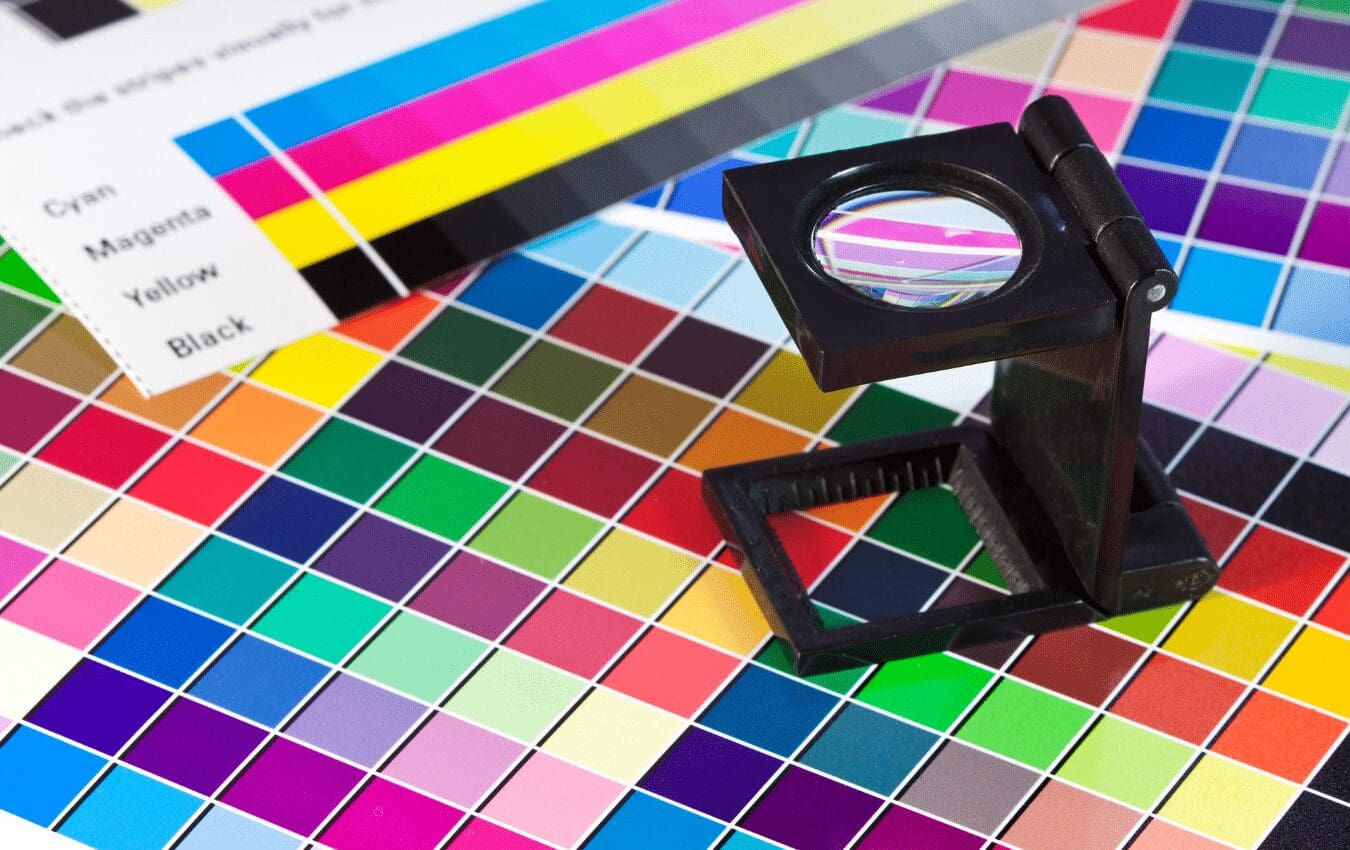
Utilizing multiple colors in packaging needs a balanced approach to maintain brand integrity and ensure clear communication. Complementary colors can create vibrant dynamics and enhance visual appeal, but they should be used judiciously to avoid overwhelming consumers and diluting the brand message.

Custom Printed electronic Box

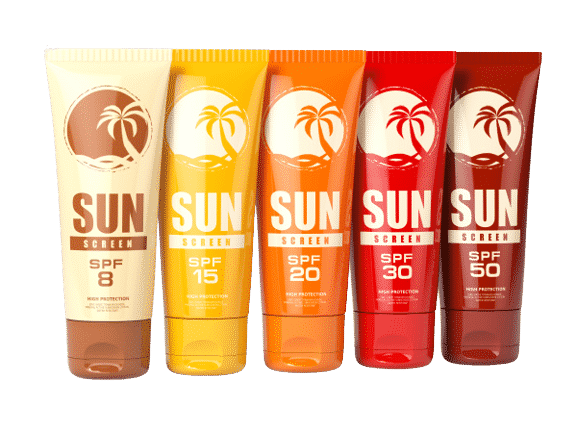
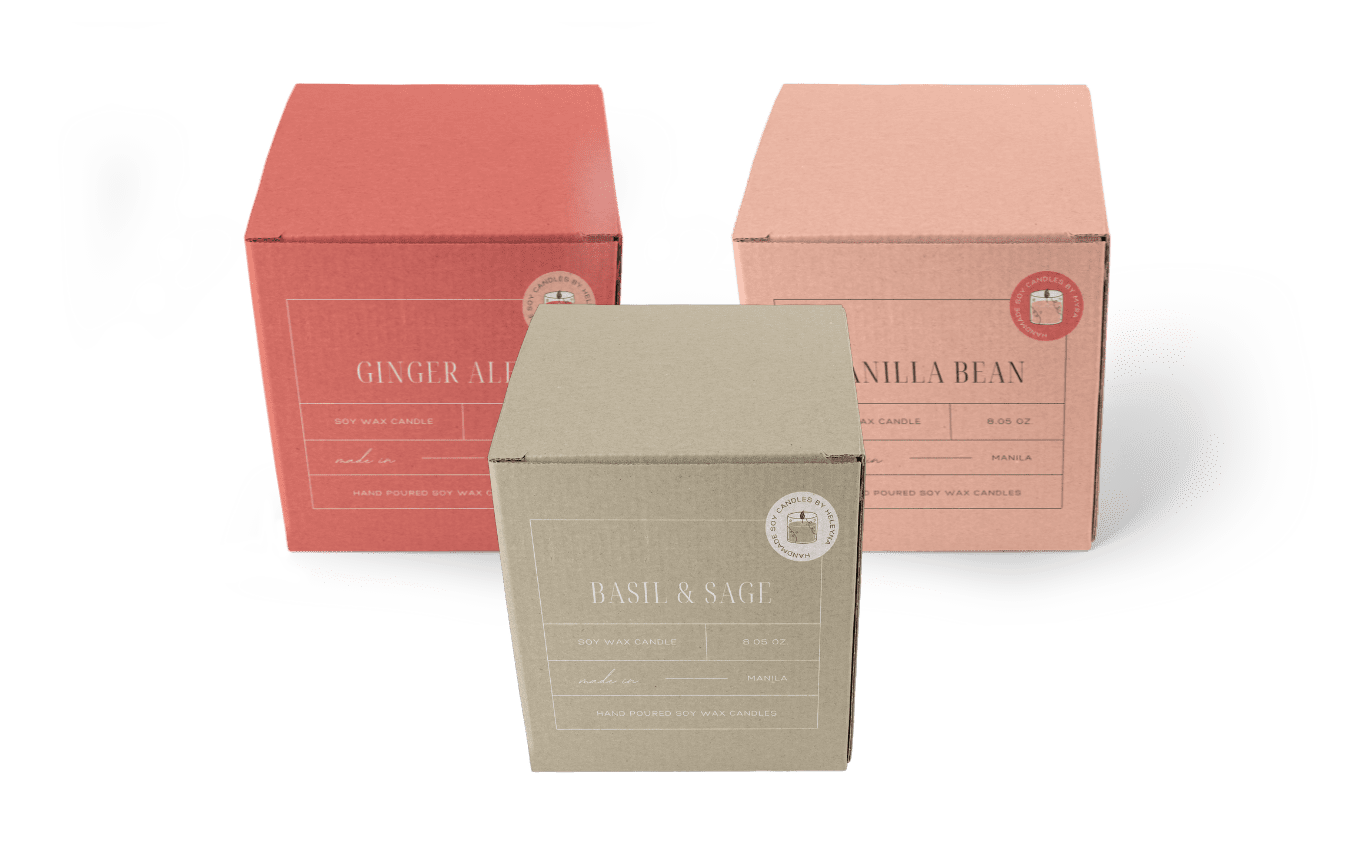
Shades of Colors

The intensity and shade of a color can alter its impact. Darker shades often convey a more professional and luxurious feel, while lighter shades can appear more accessible and soft. Choosing the right shade is crucial in aligning the packaging with the product’s target audience and brand values.

Shades of color for packaging

Summary: What Does Color of Your Packaging Say About Your Product

The color of your packaging is a direct communication tool with your consumers. It not only influences how your product is perceived but can also significantly impact its market performance. By carefully selecting appropriate colors, businesses can effectively position their products, enhance consumer experience, and meet specific market needs.

For personalized guidance on leveraging the power of color in your packaging strategy, partnering with packaging experts like Brown Packaging can ensure that your packaging colors align with your brand identity and marketing goals, maximizing the impact of your products on the shelves.

Most Recent Posts:
Retail Packaging Trends for 2026

Retail packaging continues to evolve as brands balance sustainability, supply chain performance, and consumer experience. In 2026, buyers face new challenges shaped by material innovation, compliance requirements, and rising consumer expectations. Understanding these trends helps companies stay competitive while aligning packaging programs with industry standards. Sustainability Becomes Non-Negotiable Greater use of recyclable and compostable substrates. Retailers pushing suppliers toward FSC-certified materials. Minimalist designs that reduce waste without losing impact. Smarter Packaging for Supply Chains Increased adoption of right-sizing to reduce freight costs. Boxes designed for automation and faster fulfillment. Stronger corrugated grades to withstand long e-commerce journeys. Enhanced Consumer Experience Custom graphics for seasonal campaigns and limited editions. Tear strips, resealable closures, and window cutouts for convenience. Premium finishes that elevate gift packaging at retail. Growth of Hybrid Packaging Formats Combining corrugated strength with folding carton graphics. Modular designs for multi-SKU and club store environments. Packaging engineered to serve both e-commerce and in-store needs. Compliance and Testing Standards Retailers demanding ISTA and ASTM testing for packaging durability. Supply chain audits on recyclability and sustainability claims. More pressure for transparent reporting on environmental impact. Retail Packaging Solutions with Brown Packaging Brown Packaging helps brands adapt to evolving retail packaging trends. From sustainable substrates to automation-friendly designs, our solutions balance branding, durability, and compliance for 2026. Contact us to prepare your packaging program for the year ahead. References Forest Stewardship Council (FSC). (2023). FSC Packaging Certification Guidelines. Retrieved from https://fsc.orgSustainable Packaging Coalition. (2023). Packaging Trends and Consumer Insights. Retrieved from https://sustainablepackaging.orgSoroka, W. (2009). Fundamentals of Packaging Technology (4th ed.). Institute of Packaging Professionals. (714)300-0650 request@brownpackaging.com Most Recent Posts: Categories: Corrugated Ecommerce ESD Design Display Flexible Packaging Foam Folding Carton Packaging Plastic Packaging Pouch Printing Protection Retail Rigid Box Thermoform Sustainability Subscribe To Our Newsletter By submitting your information, you agree to our terms and conditions and privacy policy. Custom Packaging Facebook Twitter LinkedIn Pinterest Relevant Posts

Read More »
Packaging Supplier Contracts: What Buyers Should Know

Supplier contracts can make or break a packaging program. Without the right terms, buyers risk price volatility, missed lead times, and inconsistent product quality. In 2026, negotiating smart contracts is essential for controlling costs, securing reliable supply, and meeting compliance requirements. Why Packaging Contracts Matter Cost stability: Protects against sudden raw material price spikes. Supply security: Ensures availability during peak demand. Quality control: Aligns suppliers with testing and compliance standards. Operational efficiency: Streamlines purchasing and reduces administrative burden. Key Terms Buyers Should Negotiate Volume commitments: Secure better pricing with accurate forecasts. Price adjustment clauses: Define when and how costs can change. Lead times and delivery windows: Avoid shortages and production delays. Testing and compliance: Require ISTA, ASTM, or FSC certification where applicable. Sustainability commitments: Ensure suppliers align with environmental goals. Risks of Weak Contracts Paying inflated prices during market fluctuations. Receiving inconsistent corrugated strength or print quality. Missed shipments leading to costly expedited freight. Difficulty meeting retailer or regulatory compliance. Best Practices for Buyers in 2026 Leverage data: Use past order history to negotiate realistic volumes. Dual sourcing: Maintain backup suppliers for risk management. Annual reviews: Reassess terms to reflect changes in demand and compliance. Collaborative approach: Treat suppliers as partners, not just vendors. Packaging Solutions with Brown Packaging Brown Packaging helps buyers secure strong supplier contracts that balance cost, quality, and supply chain reliability. Our partnerships and industry expertise ensure your packaging program is protected for 2026 and beyond. Contact us to discuss supplier solutions. References Soroka, W. (2009). Fundamentals of Packaging Technology (4th ed.). Institute of Packaging Professionals.Fiber Box Association. (2024). Corrugated Packaging Market Outlook. Retrieved from https://www.fibrebox.orgSustainable Packaging Coalition. (2023). Supplier Standards for Sustainable Packaging. Retrieved from https://sustainablepackaging.org (714)300-0650 request@brownpackaging.com Most Recent Posts: Categories: Corrugated Ecommerce ESD Design Display Flexible Packaging Foam Folding Carton Packaging Plastic Packaging Pouch Printing Protection Retail Rigid Box Thermoform Sustainability Subscribe To Our Newsletter By submitting your information, you agree to our terms and conditions and privacy policy. Custom Packaging Facebook Twitter LinkedIn Pinterest Relevant Posts

Read More »
Meeting 2026 Packaging Compliance Standards

Packaging compliance is no longer optional—it’s a requirement for accessing retail shelves, shipping networks, and international markets. In 2026, buyers must navigate evolving regulations around sustainability, labeling, and testing to avoid costly fines, rejected shipments, or damaged customer relationships. Why Compliance Matters in 2026 Retail requirements: Major retailers demand FSC, ISTA, and sustainability certifications. E-commerce standards: Carriers enforce dimensional weight and package testing rules. Global trade: Export packaging must comply with ISPM 15, ASTM, and ISO guidelines. Consumer trust: Transparency in packaging claims impacts purchasing decisions. Key Compliance Areas for Buyers Material sourcing: FSC-certified corrugated and board for sustainability. Labeling standards: GS1-compliant barcodes and accurate product details. Durability testing: ISTA and ASTM protocols for drop, vibration, and compression. Sustainability regulations: Requirements for recyclable or compostable materials. Chemical restrictions: Compliance with FDA, EU, or state-specific standards. Common Compliance Challenges Keeping up with frequent regulatory changes. Managing multiple certifications across suppliers. Balancing compliance with cost-efficiency. Verifying supplier claims for sustainability. Best Practices for Staying Compliant Audit suppliers annually to confirm certification validity. Run internal packaging tests before scaling. Track regulatory updates for each region you ship to. Work with experienced partners who understand industry compliance. Packaging Solutions with Brown Packaging Brown Packaging helps buyers meet 2026 compliance standards with FSC-certified materials, ISTA-tested designs, and regulatory expertise. Our team ensures your packaging meets retailer, carrier, and sustainability requirements. Contact us to keep your program compliant. References Forest Stewardship Council (FSC). (2023). FSC Certification Guidelines for Packaging. Retrieved from https://fsc.orgInternational Safe Transit Association (ISTA). (2023). ISTA Testing Procedures for Transport Packaging. Retrieved from https://ista.orgGS1. (2024). Global Standards for Packaging and Labeling. Retrieved from https://www.gs1.org (714)300-0650 request@brownpackaging.com Most Recent Posts: Categories: Corrugated Ecommerce ESD Design Display Flexible Packaging Foam Folding Carton Packaging Plastic Packaging Pouch Printing Protection Retail Rigid Box Thermoform Sustainability Subscribe To Our Newsletter By submitting your information, you agree to our terms and conditions and privacy policy. Custom Packaging Facebook Twitter LinkedIn Pinterest Relevant Posts

Read More »
How FSC Packaging Certification Impacts Your Brand

In 2026, sustainability is no longer just a trend—it’s a buyer expectation. Forest Stewardship Council (FSC) certification has become a key benchmark for responsible packaging, signaling that materials are sourced from responsibly managed forests. For packaging buyers, FSC certification is more than a compliance checkbox—it’s a brand value that influences purchasing decisions, retailer acceptance, and customer loyalty. What Is FSC Certification? The Forest Stewardship Council certifies that paper-based packaging materials are sourced from forests managed for environmental responsibility, social benefit, and economic viability. FSC Mix: Packaging contains a blend of FSC-certified and controlled wood. FSC Recycled: Packaging is made entirely from recycled fiber. FSC 100%: Packaging is sourced only from FSC-certified forests. Why FSC Matters to Buyers in 2026 Retail access: Many major retailers now require FSC-certified packaging. Sustainability goals: Aligns with corporate ESG and carbon reduction commitments. Consumer trust: Customers recognize the FSC label and view it as credible. Global compliance: Meets international sustainability regulations. How FSC Certification Strengthens Brand Value Differentiation: Stand out with certified sustainable packaging. Marketing advantage: FSC logos reinforce eco-friendly messaging. Risk reduction: Verified sourcing prevents greenwashing claims. Customer loyalty: Environmentally conscious buyers prefer certified products. Challenges in FSC Implementation Limited supply of certain FSC substrates. Higher costs compared to non-certified materials. Need for supplier audits and documentation. Packaging Solutions with Brown Packaging Brown Packaging partners with buyers to integrate FSC-certified materials into corrugated boxes, folding cartons, and retail packaging. Our solutions support sustainability while maintaining cost efficiency and protection. Contact us to strengthen your brand with FSC-certified packaging. References Forest Stewardship Council (FSC). (2023). FSC Certification Guidelines for Packaging. Retrieved from https://fsc.orgSustainable Packaging Coalition. (2023). Consumer Insights on Sustainable Packaging. Retrieved from https://sustainablepackaging.orgSoroka, W. (2009). Fundamentals of Packaging Technology (4th ed.). Institute of Packaging Professionals. (714)300-0650 request@brownpackaging.com Most Recent Posts: Subscribe To Our Newsletter By submitting your information, you agree to our terms and conditions and privacy policy. Sustainable Packaging Facebook Twitter LinkedIn Pinterest Relevant Posts

Read More »
Sustainable Packaging Buyers’ Guide for 2026

Sustainability is now a top priority for packaging buyers. Retailers, regulators, and consumers are all demanding packaging solutions that reduce environmental impact without sacrificing performance. In 2026, buyers must balance eco-friendly materials, cost, and compliance to build programs that are both effective and future-ready. What Buyers Need to Know About Sustainable Packaging Regulatory pressure: Governments are enforcing stricter rules on recyclability and plastic use. Retail mandates: FSC certification and recyclable packaging are becoming standard requirements. Consumer expectations: Customers increasingly choose brands with visible sustainability commitments. Sustainable Material Options Recycled corrugated: High recycled content while maintaining compression strength. Compostable films: Suitable for select food and retail applications. Molded pulp inserts: Replace foam or plastic for protective packaging. Water-based coatings: Enhance moisture resistance without harmful chemicals. Balancing Cost and Performance Right-size packaging: Reduces material waste and shipping costs. Hybrid solutions: Combine eco-materials with corrugated for balance. Life cycle analysis: Evaluate true environmental impact, not just marketing claims. How to Evaluate Sustainable Suppliers Verify FSC, SPC, or ISO certifications. Request testing data for durability and recyclability. Audit supply chains for consistency and transparency. Ensure claims meet local and international compliance standards. Packaging Solutions with Brown Packaging Brown Packaging helps buyers implement sustainable packaging programs that balance cost, performance, and compliance. From recycled corrugated to eco-friendly coatings and inserts, we deliver solutions that meet 2026 sustainability goals. Contact us to explore sustainable packaging options. References Forest Stewardship Council (FSC). (2023). FSC Certification Guidelines for Packaging. Retrieved from https://fsc.orgSustainable Packaging Coalition. (2023). Packaging Sustainability Trends and Buyer Insights. Retrieved from https://sustainablepackaging.orgSoroka, W. (2009). Fundamentals of Packaging Technology (4th ed.). Institute of Packaging Professionals. (714)300-0650 request@brownpackaging.com Most Recent Posts: Categories: Corrugated Ecommerce ESD Design Display Flexible Packaging Foam Folding Carton Packaging Plastic Packaging Pouch Printing Protection Retail Rigid Box Thermoform Sustainability Subscribe To Our Newsletter By submitting your information, you agree to our terms and conditions and privacy policy. Sustainable Packaging Facebook Twitter LinkedIn Pinterest Relevant Posts

Read More »
Comparing Single vs. Multi-Material Packaging

Choosing the right packaging material is one of the most important decisions buyers face. Single-material packaging offers simplicity and recyclability, while multi-material designs provide enhanced performance and protection. Understanding the trade-offs helps companies balance cost, functionality, and sustainability goals in 2026. What Is Single-Material Packaging? Single-material packaging uses one substrate—such as corrugated board, folding carton, or plastic—for the entire structure. Advantages: Easier to recycle and dispose. Lower material costs in many cases. Streamlined sourcing and inventory. Supports sustainability messaging. Disadvantages: Limited barrier protection. Less customization for fragile or complex products. May require added thickness for strength, increasing weight. What Is Multi-Material Packaging? Multi-material packaging combines two or more substrates—such as corrugated with foam, or paperboard laminated with film—to achieve specific performance outcomes. Advantages: Greater protection against moisture, oxygen, and impact. Allows for premium finishes and enhanced graphics. Ideal for fragile or high-value products. Customizable for unique supply chain conditions. Disadvantages: More difficult to recycle due to material separation. Higher cost and longer lead times. Complex sourcing and inventory management. When to Use Each Approach Single-material packaging: Best for products with low fragility, strong sustainability requirements, or cost-driven programs. Multi-material packaging: Best for high-value, fragile, or regulated products requiring advanced protection. Balancing Performance and Sustainability Buyers must weigh performance needs against eco goals: Use recyclable coatings to extend single-material performance. Choose hybrid designs that separate easily for recycling. Apply multi-material solutions only where risk of damage outweighs cost. Packaging Solutions with Brown Packaging Brown Packaging helps buyers evaluate when to use single- vs. multi-material packaging. Our team balances sustainability, performance, and cost to deliver solutions tailored to your supply chain. Contact us to explore the right approach for your products. References Forest Stewardship Council (FSC). (2023). FSC Packaging Certification Guidelines. Retrieved from https://fsc.orgSoroka, W. (2009). Fundamentals of Packaging Technology (4th ed.). Institute of Packaging Professionals.Sustainable Packaging Coalition. (2022). Design for Recyclability and Multi-Material Packaging Report. Retrieved from https://sustainablepackaging.org (714)300-0650 request@brownpackaging.com Most Recent Posts: Categories: Corrugated Ecommerce ESD Design Display Flexible Packaging Foam Folding Carton Packaging Plastic Packaging Pouch Printing Protection Retail Rigid Box Thermoform Sustainability Subscribe To Our Newsletter By submitting your information, you agree to our terms and conditions and privacy policy. Custom Packaging Facebook Twitter LinkedIn Pinterest Relevant Posts

Read More »
Categories:
Subscribe To Our Newsletter

By submitting your information, you agree to our terms and conditions and privacy policy.

Custom Folding Cartons Multi SKU Packaging
Custom Packaging
Facebook
Twitter
LinkedIn
Pinterest
Relevant Posts
custom printed boxes
Design
brownpackaging
Crafting Effective Packaging Design: A Guide for Marketing Teams

Packaging design is a crucial aspect of any product’s marketing strategy. It serves as a visual ambassador for your brand and plays a pivotal role in attracting and engaging your target audience. In this blog post, we will explore how marketing teams can build an effective packaging design tailored to their audience. Understand Your Audience The first step in designing packaging that resonates with your audience is to thoroughly understand who your audience is. This involves: Conducting market research: Gather data on your target demographic, including their preferences, buying behaviors, and lifestyle. Creating buyer personas: Develop detailed profiles of your ideal customers, considering factors like age, gender, income, interests, and values. Analyzing competitors: Study how your competitors are packaging similar products and identify gaps or opportunities to stand out. Define Your Brand Identity Before delving into design, ensure your team has a strong grasp of your brand identity. Your packaging should consistently reflect your brand’s values, mission, and personality. This includes: Brand messaging: Define the key messages you want to convey through your packaging. Is your brand known for sustainability, luxury, or affordability? Color palette and typography: Establish a consistent color scheme and font style that align with your brand’s personality. These elements should be recognizable and evoke specific emotions. Logo placement: Decide where your logo will be prominently featured on the packaging. This ensures brand recognition and reinforces your identity. Focus on Functionality Effective packaging design isn’t just about aesthetics; it also needs to be practical and functional. Consider the following aspects: Product protection: Ensure your packaging provides adequate protection for the product. Fragile items may require cushioning, while food products may need tamper-evident seals. Ease of use: Make it easy for customers to open, access, and use the product. User-friendly packaging can enhance the overall customer experience. Storage and shelf space: Design packaging that is stackable and doesn’t take up excessive shelf space, as this can impact retailers’ willingness to stock your product. Incorporate Storytelling Packaging is an opportunity to tell a story and connect with your audience on a deeper level. You can achieve this through: Visual storytelling: Use imagery and graphics to convey your brand’s story, values, and product benefits. Visual elements should be consistent with your brand’s narrative. Content writing: Craft compelling and concise copy that engages consumers. Highlight key features, benefits, and unique selling points. QR codes and augmented reality: Incorporate technology to provide customers with an interactive experience, such as access to additional information or videos related to your product. Sustainability Matters Today’s consumers are increasingly eco-conscious, and sustainable packaging design can be a significant selling point. Consider the following: Eco-friendly materials: Explore sustainable packaging materials such as recycled paper, biodegradable plastics, or reusable containers. Reduce waste: Minimize excess packaging and opt for minimalist designs that reduce material consumption. Communicate your efforts: Highlight your commitment to sustainability on the packaging to resonate with environmentally conscious consumers. Test and Iterate Once your packaging design is ready, don’t rush into production. Conduct testing and gather feedback from focus groups or surveys. Use this feedback to make necessary improvements and refinements. Iteration is key to ensuring your packaging design is as effective as possible. Collaborate with Design Professionals While marketing teams have valuable insights into their brands and audiences, it can be beneficial to collaborate with design professionals, especially for complex or specialized projects. Graphic designers, packaging engineers, and UX designers can provide expertise that complements your team’s efforts. If you are interested in packaging solutions, then partner with Brown Packaging today to get started. (714)300-0650 request@brownpackaging.com Most Recent Posts: Categories: Corrugated Ecommerce ESD Design Display Flexible Packaging Foam Folding Carton Packaging Plastic Packaging Pouch Printing Protection Retail Rigid Box Thermoform Sustainability Subscribe To Our Newsletter By submitting your information, you agree to our terms and conditions and privacy policy. Custom Packaging Facebook Twitter LinkedIn Pinterest Relevant Posts

Read More »
custom printed chipboard shelf box
Design
brownpackaging
Effective Print Strategies for Packaging: A Buyer’s Guide

In today’s market, the printing strategy employed on packaging can play a significant role in a product’s success. This guide is tailored to help buyers navigate the array of print options available, ensuring they select the most effective strategy to enhance brand appeal and customer engagement, while balancing cost and quality. High-Quality Graphics and Imagery The use of high-resolution graphics and vibrant imagery makes packaging more attractive and attention-grabbing. Ensuring that these elements are of the highest quality will reflect well on the product and brand. Brand Consistency Maintaining consistency with brand colors, logos, and typefaces across all packaging is essential. This consistency helps in reinforcing brand recognition and loyalty among customers. Cost-Effective Printing Techniques Digital Printing: Ideal for short to medium runs, offering cost savings for smaller orders and flexibility for design changes. Flexographic Printing: Cost-effective for larger runs, it provides durability and consistency, especially for standard designs. Sustainable Printing Practices Eco-friendly practices are not just good for the environment but also resonate with modern consumers. Utilize sustainable inks and materials wherever possible. Providers who offer soy or vegetable-based inks and recycled materials can help in positioning your brand as environmentally responsible. Interactive Elements Incorporating QR codes or augmented reality features can make packaging more engaging. These elements can lead consumers to additional digital content, enhancing brand interaction and providing more product information. Tactile Printing Techniques Techniques like embossing or debossing add a tactile element to packaging, enhancing the unboxing experience. Foil stamping can also be used to add a premium feel to the product. Typography and Readability Creative and legible typography is key to conveying the product’s message. Different font styles and sizes can be used to create emphasis and a hierarchy of information, making it easier for consumers to access key details. Return on Investment (ROI) Consider the long-term ROI when selecting a print strategy. High-quality printing might cost more upfront but can lead to greater brand recognition and customer loyalty. Evaluate how different printing options can impact the overall budget and balance them against the potential long-term benefits. Customization Options Digital printing and other modern techniques offer extensive customization options, allowing for unique packaging designs that can set a product apart in the marketplace. Evaluating Print Providers Choosing the right print provider is crucial. Look for partners who offer not only quality assurance and a wide range of capabilities but also have a robust portfolio and positive client testimonials. It’s important that they understand your industry’s specific needs and offer exceptional customer service. If you are interested in printed packaging, then partner with Brown Packaging today to get started. (714)300-0650 request@brownpackaging.com Most Recent Posts: Categories: Corrugated Ecommerce ESD Design Display Flexible Packaging Foam Folding Carton Packaging Plastic Packaging Pouch Printing Protection Retail Rigid Box Thermoform Sustainability Subscribe To Our Newsletter By submitting your information, you agree to our terms and conditions and privacy policy. Custom Packaging Facebook Twitter LinkedIn Pinterest Relevant Posts

Read More »
Design
brownpackaging
What to Do After Receiving a Packaging Sample

Before committing to a full production run, businesses often receive packaging samples to evaluate fit, functionality, print quality, and overall design. Whether it’s a digital sample (3D render) or a physical prototype, thoroughly assessing the sample ensures that the final packaging meets aesthetic, protective, and branding requirements. Evaluating a Digital Packaging Sample A digital sample, such as a 3D rendering or a dieline proof, is typically the first step in the approval process. It provides a visual representation of the packaging without producing a physical sample. What to Check in a Digital Sample: Structural Accuracy: Ensure the dieline dimensions match your specifications. Print & Branding Alignment: Confirm that logos, graphics, and text are correctly placed. Color Representation: Compare digital colors with your brand standards (note that digital colors may vary slightly from printed results). Typography & Readability: Check for font clarity, spacing, and legal text placement. Product Fit Estimation: Use the digital mockup to visualize how the product will fit inside the packaging. Next Steps for Digital Samples: Approve the design for a physical prototype if all elements look correct. Request modifications if there are misalignments, incorrect fonts, or sizing issues. Verify with a packaging expert to ensure compliance with industry regulations (especially for food, pharmaceuticals, or fragile products). Evaluating a Physical Packaging Sample Once the digital sample is approved, a physical prototype is produced. This allows for a hands-on review to confirm material quality, fit, and structural integrity. What to Check in a Physical Sample: Size & Fit: Ensure your product fits securely inside without excess movement. Material Durability: Assess the thickness, rigidity, and protective properties of the packaging. Printing & Finishing: Check for sharpness of logos, consistency of colors, and quality of coatings (matte, gloss, spot UV, etc.). Ease of Assembly: Verify that the packaging can be easily folded, sealed, or assembled as required. Structural Performance: Conduct drop tests, stacking tests, or compression tests if needed. Shipping & Storage Suitability: If your product requires long-distance shipping, assess whether additional protective inserts or reinforcements are needed. Next Steps for Physical Samples: Approve the sample for final production if all elements meet expectations. Request modifications if there are fit issues, material concerns, or branding inconsistencies. Test the sample in real-world conditions, such as placing it in a warehouse or shipping it to a test location. Making the Final Decision After evaluating the digital and physical samples, finalize your packaging decision by: Confirming with your team that the design meets branding, protection, and compliance requirements. Approving mass production once all issues are resolved. Coordinating with your supplier on lead times, material availability, and any final adjustments. Final Thoughts: Ensuring the Best Packaging for Your Product Receiving a packaging sample is a crucial step in avoiding costly mistakes and ensuring a seamless production process. By carefully evaluating both digital and physical samples, businesses can optimize product protection, branding impact, and customer experience. Need expert guidance in reviewing your packaging samples? Contact Brown Packaging today to ensure your final packaging is perfect before production! (714)300-0650 request@brownpackaging.com Most Recent Posts: Categories: Corrugated Ecommerce ESD Design Display Flexible Packaging Foam Folding Carton Packaging Plastic Packaging Pouch Printing Protection Retail Rigid Box Thermoform Sustainability Subscribe To Our Newsletter By submitting your information, you agree to our terms and conditions and privacy policy. Custom Packaging Facebook Twitter LinkedIn Pinterest Relevant Posts

Read More »