Home » The Drawbacks of DIY Packaging VS Partnering With A Professional
The Drawbacks of DIY Packaging VS Partnering With A Professional
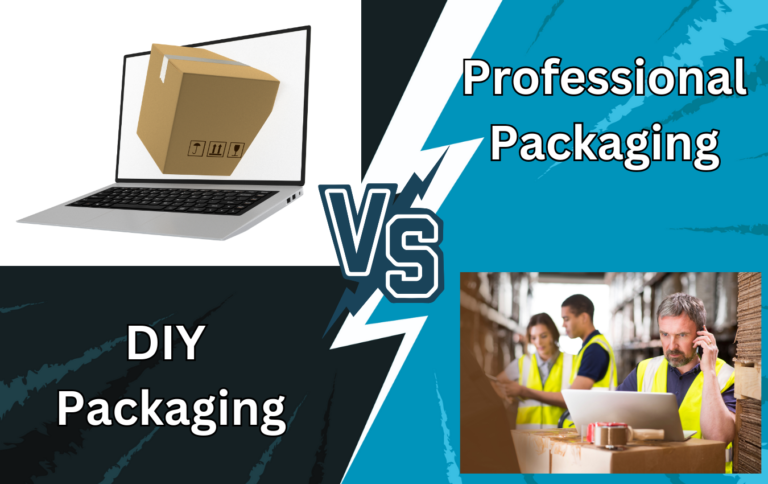
In today’s digital age, online packaging companies offer the convenience of DIY packaging solutions. However, the allure of DIY packaging can mask significant challenges. In this comprehensive guide, we’ll explore the potential pitfalls of DIY packaging and emphasize the importance of partnering with a packaging professional.
The Allure of DIY Packaging
DIY packaging from online companies has gained popularity for several reasons:
- Convenience: Ordering packaging materials online is convenient and can be done at any time, from anywhere.
- Cost Control: DIY packaging allows businesses to have control over their packaging costs by selecting materials and quantities according to their budget.
- Customization: Online platforms often offer customization options, allowing businesses to add branding and tailor packaging to their needs.
- Speed: Some online packaging services promise quick turnaround times, appealing to businesses with tight schedules.
However, the allure of DIY packaging can often mask some significant challenges:
Limited Expertise: Designing effective packaging requires expertise in materials, structural engineering, and graphic design. Many DIY users lack the knowledge to create packaging that provides optimal protection and branding impact.
Branding and Design Limitations: While online platforms offer customization options, they may have limitations in terms of design flexibility, color accuracy, and finishing options. Achieving a unique and branded look can be challenging.
Quality Control: DIY packaging often lacks quality control measures. Users may receive subpar materials or printing results, leading to unsatisfactory outcomes and potential product damage during transit.
Inefficient Prototyping: Testing and prototyping packaging designs can be challenging with online DIY services. You may have to place multiple orders to iterate and improve your packaging, which can be time-consuming and costly.
Material Selection: Selecting the right packaging materials is critical for product safety and presentation. DIY users may struggle to identify the most suitable materials for their specific products.
Limited Support: Online packaging companies may provide limited customer support, making it challenging to resolve issues or seek advice during the design and ordering process.
Hidden Costs: While DIY packaging appears cost-effective at first glance, the total cost of multiple revisions, returns, and damaged products can add up quickly.
The Importance of a Packaging Professional
Partnering with a packaging professional offers several advantages:
- Expertise: Packaging professionals can guide you in selecting the right materials, designs, and finishes to meet your unique needs.
- Quality Assurance: Packaging professionals prioritize quality control, ensuring that your packaging materials and designs meet high standards.
- Customization: They offer more extensive customization options, allowing you to create packaging that truly reflects your brand identity.
- Prototyping and Testing: Packaging professionals facilitate prototyping and testing, helping you refine your packaging design for optimal results.
- Problem Resolution: If issues arise, a dedicated team is available to resolve them promptly, saving you time and frustration.
- Efficiency: Packaging professionals streamline the ordering process, reducing the risk of hidden costs and delays.
Conclusion
While the convenience of DIY packaging from online companies may seem enticing, it often falls short in delivering the desired results. The pitfalls of limited expertise, design constraints, and quality issues can have a significant impact on your brand’s image and product protection. Partnering with a packaging professional empowers you with the expertise, support, and quality assurance necessary to create packaging solutions that truly meet your needs. When it comes to packaging, it’s worth investing in a partner who prioritizes your success and ensures that your packaging aligns with your brand’s identity and customer expectations.
If you are interested in professional packaging solutions, then partner with Brown Packaging today to get started.
Retail packaging continues to evolve as brands balance sustainability, supply chain performance, and consumer experience. In 2026, buyers face new challenges shaped by material innovation, compliance requirements, and rising consumer
Supplier contracts can make or break a packaging program. Without the right terms, buyers risk price volatility, missed lead times, and inconsistent product quality. In 2026, negotiating smart contracts is
Packaging compliance is no longer optional—it’s a requirement for accessing retail shelves, shipping networks, and international markets. In 2026, buyers must navigate evolving regulations around sustainability, labeling, and testing to
In 2026, sustainability is no longer just a trend—it’s a buyer expectation. Forest Stewardship Council (FSC) certification has become a key benchmark for responsible packaging, signaling that materials are sourced
Home » The Drawbacks of DIY Packaging VS Partnering With A Professional

With new tariff proposals and continued trade uncertainty, 2026 is shaping up to be another pivotal year for packaging sourcing strategy. Many companies that shifted production away from China in 2024–2025 are now reassessing cost structures between nearshore and fully domestic manufacturing. While both options reduce tariff exposure, each carries different implications for labor, logistics, compliance, and scalability. Why Cost Comparison Matters in 2026 As global trade policy remains unpredictable, packaging buyers must balance cost efficiency with reliability. Nearshore manufacturing — primarily in Mexico and Canada — offers competitive labor rates and regional proximity, while U.S. converters provide faster lead times, stricter compliance, and integrated fulfillment capabilities. The goal for 2026 is not just lower cost per unit, but optimized total landed cost with minimal risk. Key Cost Factors to Evaluate Labor and Production Efficiency Labor costs continue to be a primary advantage for nearshore production. However, increased automation across U.S. facilities is narrowing the gap. Nearshore (Mexico/Canada): Lower base wages, but variable automation and longer setup times for smaller runs. U.S.: Higher labor rates, but shorter turnaround, reduced downtime, and higher throughput through robotics and digital converting lines. By 2026, modern U.S. converters using digital die cutting, inline gluing, and automated case packing can rival nearshore cost per finished unit once efficiency is factored. Freight and Transit Time Freight volatility remains a major cost driver. With fewer ocean shipments, both nearshore and domestic programs gain predictability, but domestic manufacturing provides the most control. Source Region Average Transit Time Typical Freight (West Coast) Mexico → U.S. 2-5 days Moderate (border clearance dependent) Canada → U.S. 2-5 days Moderate U.S. Domestic 1–3 days Low (regional or inter-state) Faster delivery reduces demurrage, storage, and replenishment delays — a growing cost consideration for multi-SKU packaging programs. Material and Substrate Availability Material flow remains a major differentiator: Mexico: Expanding board and film production but still imports some adhesives and coatings from the U.S. Canada: Strong pulp and FSC® paperboard infrastructure with sustainability advantages. U.S.: Full domestic substrate ecosystem including corrugated, folding carton, and flexible film production. Domestic converters maintain the most resilient material supply, reducing risk from international component dependencies. Quality Control and Waste Reduction For 2026 buyers, consistent print accuracy and die precision matter as much as cost. Nearshore suppliers often deliver competitive quality but may lack full ISO or GMI auditing. U.S. manufacturers increasingly operate under ISO 9001:2015 or G7 Master Printer certification, reducing rejects and non-conformance. Even small rework or print errors can offset initial savings, making quality stability a financial factor rather than a cosmetic one. Compliance, ESG, and Reporting With increased scrutiny on sustainability claims, domestic production simplifies documentation and compliance. U.S.: Transparent traceability for recycled content, FSC® verification, and carbon accounting. Nearshore: Improving ESG frameworks, though validation processes can be slower or fragmented. For brands selling through major retailers, U.S.-based sourcing often shortens ESG audit cycles and meets evolving corporate responsibility standards. Currency, Trade, and Policy Stability Even under the USMCA framework, exchange rates and local policy shifts affect nearshore pricing. Domestic production avoids foreign exchange risk and ensures stable compliance documentation as tariff adjustments continue. Total Landed Cost Comparison (2026 Estimate) Cost Component China Import (Baseline) Nearshore U.S. Domestic Unit Price Low Moderate Slightly Higher Freight & Tariffs High Low None Lead Time 6–8 weeks 1–2 weeks 2–5 days Quality Control Variable Moderate High Compliance Risk High Moderate Low Total Landed Cost (Est.) 100% baseline 85–90% 90–95% This demonstrates that by 2026, both nearshore and U.S. production can outperform Chinese imports once freight, tariffs, and quality consistency are included. When to Choose Nearshore vs. U.S. Manufacturing Nearshore (Mexico/Canada): Ideal for medium to high volume packaging with extended lead time flexibility and lower labor sensitivity. U.S. Manufacturing: Best for just-in-time fulfillment, high-mix SKU programs, and packaging tied to strict compliance or retail testing. Many brands now combine both — running bulk corrugated or folding carton production nearshore while keeping display assembly, printing, and co-packing domestic for faster deployment. Final Outlook for 2026 As tariffs, freight rates, and ESG requirements evolve, hybrid sourcing models will dominate packaging procurement. The most resilient programs will integrate nearshore cost advantages with domestic quality control and logistics precision. In 2026, total cost efficiency comes not from chasing the lowest price — but from designing a supply chain that balances tariff protection, reliability, and sustainability. References U.S. International Trade Administration (ITA). USMCA and North American Supply Chain Outlook 2026. International Corrugated Case Association (ICCA). Global Corrugated Industry Report 2026. Forest Stewardship Council (FSC®). Supply Chain and Certification Data. Soroka, W. Fundamentals of Packaging Technology. 6th ed. Institute of Packaging Professionals. (714)300-0650 request@brownpackaging.com Most Recent Posts: Categories: Corrugated Ecommerce ESD Design Display Flexible Packaging Foam Folding Carton Packaging Plastic Packaging Pouch Printing Protection Retail Rigid Box Thermoform Sustainability Subscribe To Our Newsletter By submitting your information, you agree to our terms and conditions and privacy policy. Custom Packaging Facebook Twitter LinkedIn Pinterest Relevant Posts
E-commerce exposes folding cartons to more handling points, longer transit times, and harsher mechanical stresses than traditional retail distribution. Designing for these conditions requires careful material selection, structural reinforcement, and testing to ensure the product arrives intact and presentable. Understanding E-Commerce Transit Hazards Small-parcel shipping subjects cartons to conditions outside typical retail supply chains: Multiple Sorting Touchpoints: Each transfer increases the risk of edge crush and panel denting. High Vibration: Long delivery routes and conveyor systems cause sustained shaking. Compression Loads: Cartons may be stacked under heavier mixed-weight items in transport. Environmental Variability: Temperature and humidity swings in delivery trucks and sorting centers. (ASTM D4169 simulates these hazards for performance testing.) Material Selection CUK (Coated Unbleached Kraft): Higher tear and puncture resistance, ideal for heavier or rigid products. High-Caliper SBS: Provides a smooth print surface while increasing crush resistance. Poly-Coated or Moisture-Barrier Boards: Essential for humid climates or cold-chain shipments. Tip: Avoid over-specifying — choose the lightest grade that meets drop, compression, and vibration requirements. Structural Reinforcements Full Seal End (FSE): Seals both ends for maximum tamper resistance and panel rigidity. Auto Bottom: Improves stacking strength while enabling faster manual packing. Reinforced Glue Flaps: Wider flaps or added tear-resistant tape in high-stress zones. Double-Panel Sides: Layering board at impact-prone edges to reduce corner crushing. Coatings and Finishes Scuff-Resistant Varnish: Maintains appearance after multiple handling points. Water-Resistant Coatings: Prevent fiber swelling from rain or condensation. Matte Finishes: Reduce visible wear compared to high gloss in transit. Testing and Validation Drop Tests: Simulate handling from waist height at multiple orientations. Vibration Testing: Identify structural weaknesses under sustained shaking (ASTM D4728). Compression Tests: Ensure cartons can withstand stacking in mixed-weight loads (TAPPI T804). Environmental Conditioning: Test under humidity and temperature extremes before market launch. Cost–Performance Balance Over-engineering increases per-unit cost and shipping weight. The most durable e-commerce cartons balance material and style to meet ISTA or ASTM testing requirements without exceeding budget targets. References ASTM International. (2016). ASTM D4169-16: Standard practice for performance testing of shipping containers and systems. ASTM International. https://doi.org/10.1520/D4169-16ASTM International. (2016). ASTM D4728-06(2016): Random vibration testing of shipping containers. ASTM International. https://doi.org/10.1520/D4728-06R16TAPPI. (2017). T 804: Compression test of fiberboard shipping containers. TAPPI Press.Soroka, W. (2014). Fundamentals of packaging technology (5th ed.). Institute of Packaging Professionals. ISBN: 978-1-930268-37-2Twede, D., & Goddard, R. (2021). Cartons, crates and corrugated board: Handbook of paper and wood packaging technology (2nd ed.). DEStech Publications. ISBN: 978-1-60595-120-5 (714)300-0650 request@brownpackaging.com Most Recent Posts: Categories: Corrugated Ecommerce ESD Design Display Flexible Packaging Foam Folding Carton Packaging Plastic Packaging Pouch Printing Protection Retail Rigid Box Thermoform Sustainability Subscribe To Our Newsletter By submitting your information, you agree to our terms and conditions and privacy policy. Folding Cartons Facebook Twitter LinkedIn Pinterest Relevant Posts

Baby boomers, born between 1946 and 1964, are a significant demographic with substantial purchasing power. Often characterized by traditional values, brand loyalty, and a focus on quality, baby boomers have distinct preferences that influence their purchasing decisions. For brands, understanding how to tailor packaging to appeal to this demographic is key. This blog post delves into effective packaging strategies that resonate with baby boomers, ensuring brands can effectively connect with this vital market segment. Understanding Baby Boomer Values To create packaging that appeals to baby boomers, it’s essential to understand their core values and preferences: Clear and Simple Communication: Baby boomers appreciate straightforward and easily digestible information. Quality and Reliability: This demographic values high-quality products and reliable brands. Ease of Use: Functional and user-friendly packaging is important due to the varying physical capabilities within this age group. Subtle Use of Technology: While tech-savvy, baby boomers may not be as driven by the latest digital trends in packaging. Designing for Clarity and Simplicity Simplicity in design and messaging is crucial for packaging aimed at baby boomers. Legible Typography: Use clear, easy-to-read fonts, especially for essential product information. Straightforward Design: Opt for simple, uncluttered designs that convey the product’s purpose and brand’s message without overwhelming the consumer. Prioritizing Quality and Tradition Baby boomers tend to gravitate towards products that exude quality and have a sense of tradition. Durable Materials: Employ materials that are robust and convey a sense of longevity. Classic Aesthetics: Timeless designs often appeal more than trendy ones. Packaging that reflects tradition and quality can be particularly attractive to this demographic. Focusing on Functionality and Accessibility Consider the ergonomic aspects of packaging to cater to the diverse needs of baby boomers. Easy-to-Open Packaging: Ensure packaging is not difficult to open, considering factors like grip strength and ease of access. Clear Instructions: Provide straightforward instructions or guidance, making it easy for consumers to understand how to use or store the product. Incorporating Technology Tactfully While baby boomers are increasingly tech-savvy, the integration of technology in packaging should be thoughtful and purposeful. QR Codes for Additional Information: Utilize QR codes to give access to more detailed product information or instructional videos, which can be helpful without being intrusive. Subtle Digital Engagement: Any digital elements should enhance the product experience in a user-friendly manner. Building Brand Loyalty Brand loyalty is often strong among baby boomers, making it important to reinforce trust through packaging. Brand Storytelling: Use packaging to tell your brand’s story or to highlight its heritage and values. Consistent Branding: Maintain consistent branding across all packaging. Sudden changes can be jarring to a demographic that values consistency and reliability. Sustainable Options Sustainability is becoming increasingly important, even for traditionalist demographics like baby boomers. Eco-Friendly Materials: Incorporate recyclable or sustainable materials where possible. Minimal Waste: Design packaging that avoids unnecessary waste, aligning with the growing environmental consciousness. If you are interested packaging strategies for baby boomers, then partner with Brown Packaging today to get started. (714)300-0650 request@brownpackaging.com Most Recent Posts: Categories: Corrugated Ecommerce ESD Design Display Flexible Packaging Foam Folding Carton Packaging Plastic Packaging Pouch Printing Protection Retail Rigid Box Thermoform Sustainability Subscribe To Our Newsletter By submitting your information, you agree to our terms and conditions and privacy policy. Custom Packaging Facebook Twitter LinkedIn Pinterest Relevant Posts