



Home » RSC Boxes in Freight Optimization
RSC Boxes in Freight Optimization
RSC boxes dominate shipping because they combine strength with efficiency. But beyond protection, their dimensions and stacking performance directly influence freight cost, pallet utilization, and warehouse efficiency. Choosing the right RSC design can reduce supply chain costs by double digits.
Pallet Utilization
- Box Size and Fit
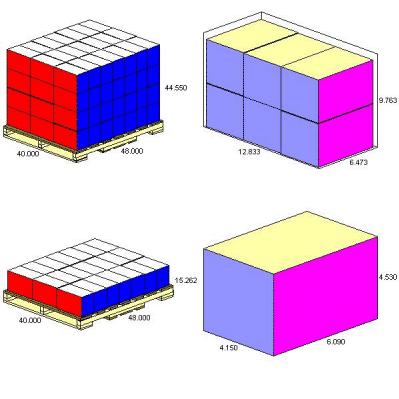
An RSC that doesn’t optimize pallet footprint wastes space. Even a 1–2 inch mismatch can reduce units per pallet by 5–10%. - Standard Pallet Sizes
In North America, most pallets are 48” x 40”. Designing RSC dimensions to fit evenly across this footprint maximizes stacking stability. - Load Stability
Uniform RSC dimensions improve compression strength across the load, reducing toppling and damage in transit.
Dimensional Weight (DIM) Charges
- Carrier Pricing Models
Carriers like UPS and FedEx charge based on dimensional weight, not just actual weight. Oversized RSC boxes can inflate costs significantly. - Right-Sizing
Selecting an RSC that closely matches product volume reduces cube size, cutting freight charges. - Impact on E-Commerce
For direct-to-consumer shipments, oversize RSC boxes can double shipping cost while raising material expense.
Stacking and Compression
- Box Compression Test (BCT)
Determines how much weight an RSC can withstand in a stacked load. - Real-World Factor
Moisture and long-term storage reduce compression strength. Oversizing boxes to “play it safe” only increases freight cost. Instead, balance board grade with actual load needs.
Warehouse Efficiency
- Knock-Down Storage
RSC boxes ship and store flat, reducing warehouse footprint compared to assembled specialty mailers. - Automation
Consistent RSC dimensions reduce jams in case erectors and palletizers, improving throughput.
Buyer Takeaway
- Use RSC dimensions that align with pallet footprints to maximize utilization.
- Avoid oversized boxes — dimensional weight charges add hidden costs.
- Match board grade and box size to actual load requirements instead of over-specifying.
- Optimized RSC design isn’t just packaging — it’s a supply chain cost-control tool.
References
- Fibre Box Association. (2023). Palletization and Shipping Standards. https://www.fibrebox.org
- International Safe Transit Association (ISTA). (2023). Distribution Testing Protocols. https://ista.org
- Soroka, W. (2016). Fundamentals of Packaging Technology (5th ed.). Institute of Packaging Professionals.
Following multiple rounds of tariff changes and trade policy adjustments, 2026 marks a turning point for U.S. packaging buyers. Many who previously transitioned from China to domestic or nearshore suppliers
Shifting packaging production from China to the U.S. can help stabilize costs, reduce tariff exposure, and shorten lead times. But the transition process requires careful planning. For packaging buyers, the
RSC boxes are known for their efficiency and versatility, but their performance ultimately comes down to strength. Buyers often see numbers like ECT, BCT, and burst strength on specifications —
In packaging, foam isn’t just about initial protection — it’s about maintaining performance over the entire shipping or storage cycle. Compression set and recovery characteristics determine whether foam continues to
Home » RSC Boxes in Freight Optimization