
window.uetq = window.uetq || []; window.uetq.push(‘event’, ‘submit_lead_form’,{ event_label:‘SUBMIT MESSAGE’ }); window.lintrk('track', { conversion_id: 10271009 }); window.lintrk('track', { conversion_id: 10271017 });

Packaging: One Distributor vs. Multiple Manufacturers

Packaging: One Distributor vs. Multiple Manufacturers

Managing packaging for your business is more than just ordering boxes and labels—it’s about sourcing the right materials, coordinating timelines, ensuring quality, and staying aligned with branding and compliance standards. For many buyers, this means juggling relationships with multiple manufacturers for items like corrugated boxes, folding cartons, mailers, tapes, pouches, and displays.

But there’s a smarter, more efficient way: working with a single, full-service packaging distributor. Here’s why consolidating your packaging supply chain under one expert partner isn’t just more convenient—it can seriously improve your results.

Simplified Project Management

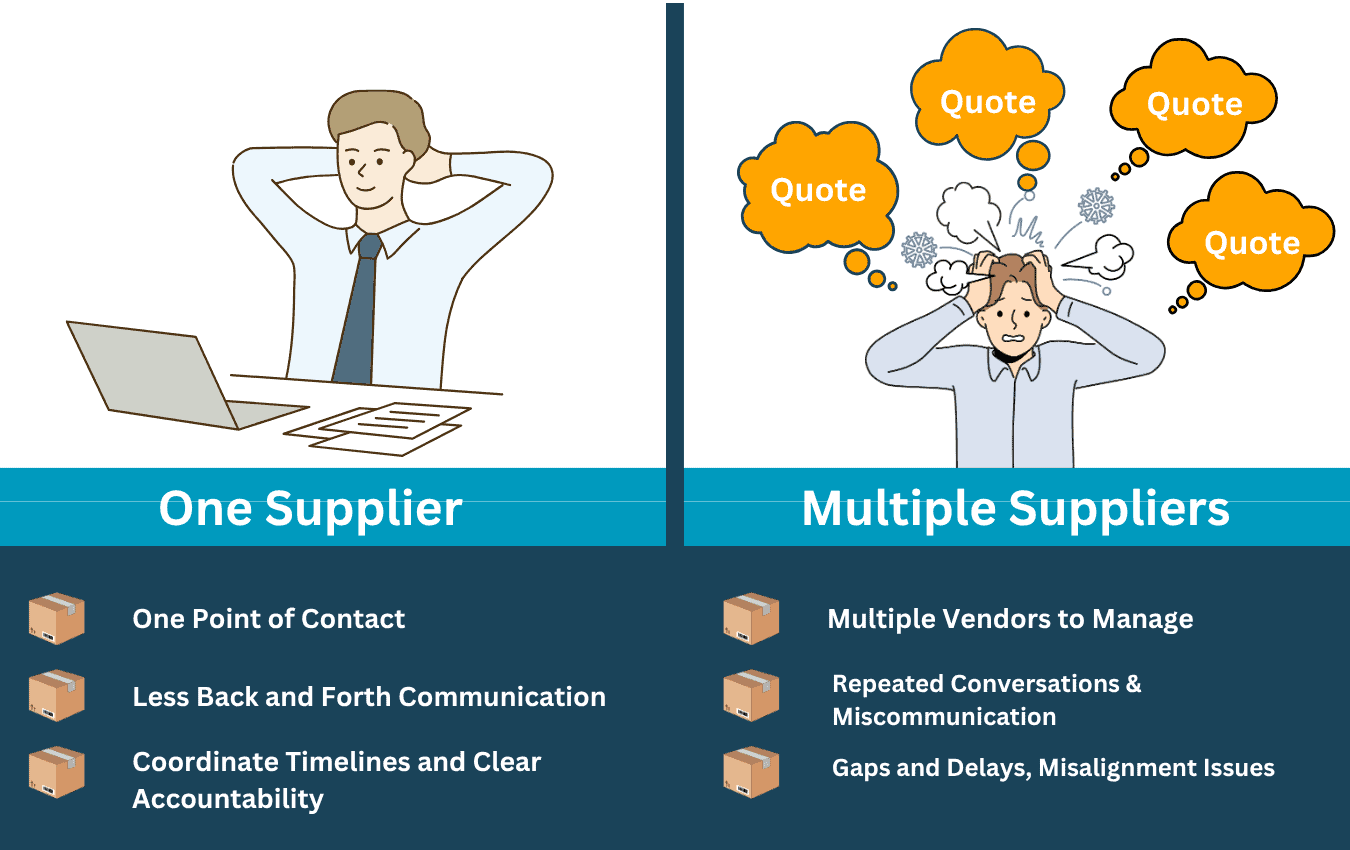
Dealing with multiple vendors often means repeating conversations, managing disconnected timelines, and trying to align different production capabilities. A packaging distributor serves as your central point of contact, coordinating every component of your project—from sampling and quoting to delivery and fulfillment.

✔ One contact for all packaging products
✔ Less back-and-forth communication
✔ No gaps between structural design and production
✔ Clear accountability from start to finish

10 Essential Questions You Should Ask Your Packaging Supplier

Faster Timelines and Better Coordination

When you work with multiple manufacturers, each one operates on their own schedule. If your folding cartons are delayed, but your rigid boxes ship early, your entire packaging launch suffers. A distributor ensures that everything is timed to arrive together, preventing slowdowns and misalignment.

✔ Synchronized production timelines
✔ Coordinated delivery and inventory planning
✔ Streamlined launches for multi-component packaging
✔ Improved speed to market

Benefits of Edge Protectors for Pallet Shipping

Greater Flexibility Across Packaging Types

Manufacturers typically specialize in one category—like corrugated, folding cartons, or flexible packaging. But your brand needs more than that. A distributor gives you access to a wide range of packaging formats and materials without having to build separate relationships for each one.

✔ Corrugated boxes, pouches, mailers, displays, and more
✔ One partner for stock and custom packaging
✔ Flexibility to scale or adjust based on product changes
✔ Support across retail, e-commerce, and promotional needs

Corrugated Mailer

Cost and Volume Optimization

Distributors work across hundreds of vendors and manufacturers, which means they can leverage volume buying, negotiate better pricing, and combine orders to keep your costs down. You’re not locked into one manufacturer’s pricing or volume limitations—your distributor finds the best fit.

✔ Access to competitive pricing through volume
✔ Lower MOQs through consolidated buying
✔ Cost savings on bundled services (design, testing, fulfillment)
✔ Custom sourcing based on your budget and goals

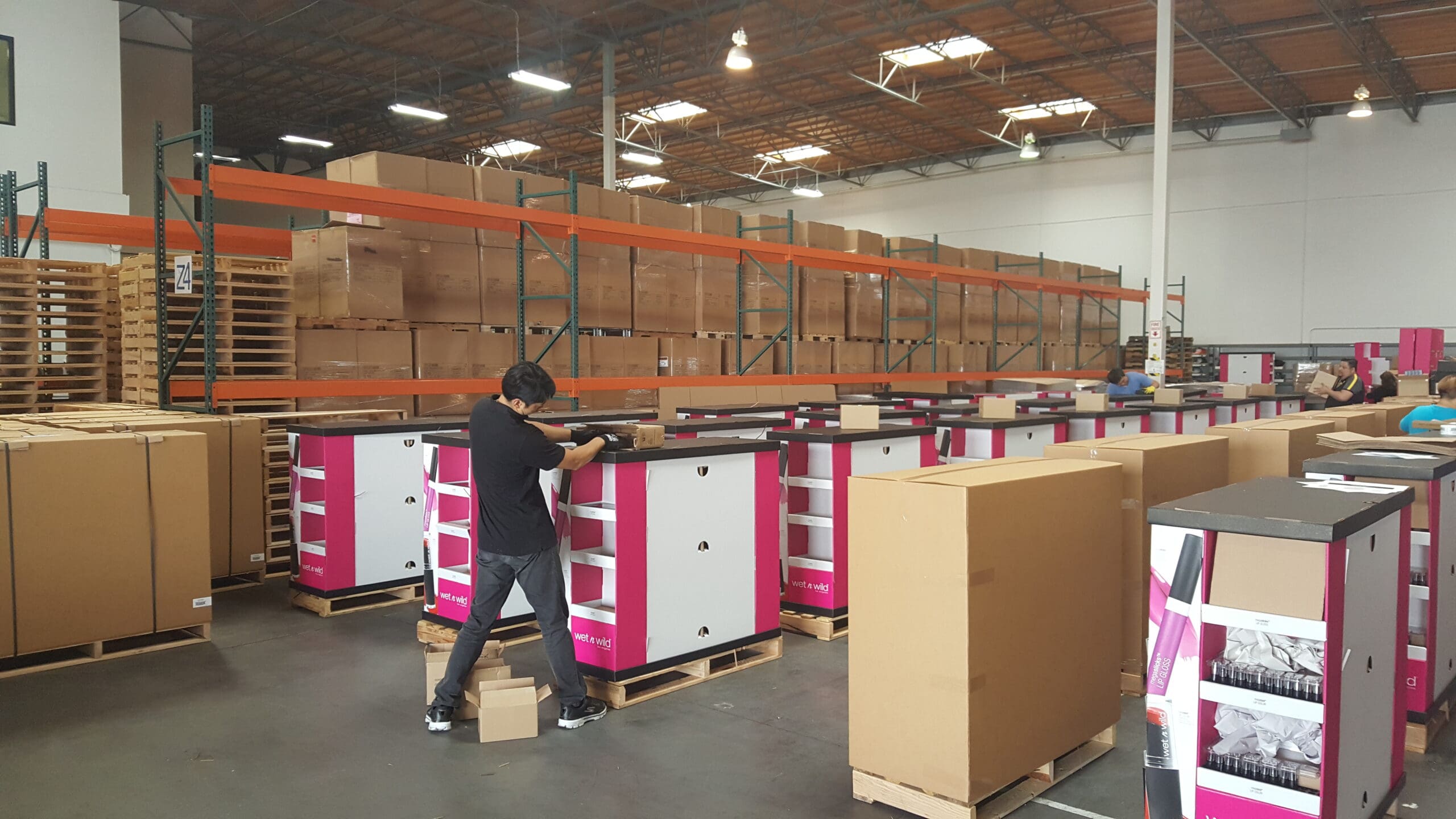
Packout and Fulfillment

Customization with Consistency

When you’re managing structural design through one vendor, printing with another, and labeling elsewhere, it’s easy to lose brand consistency. A distributor helps ensure that every element of your packaging is aligned—visually and structurally—because it’s all being managed under one roof.

✔ Unified branding across all packaging types
✔ Color-matching and layout alignment
✔ Accurate sizing across inserts, boxes, and displays
✔ One design file applied across multiple formats

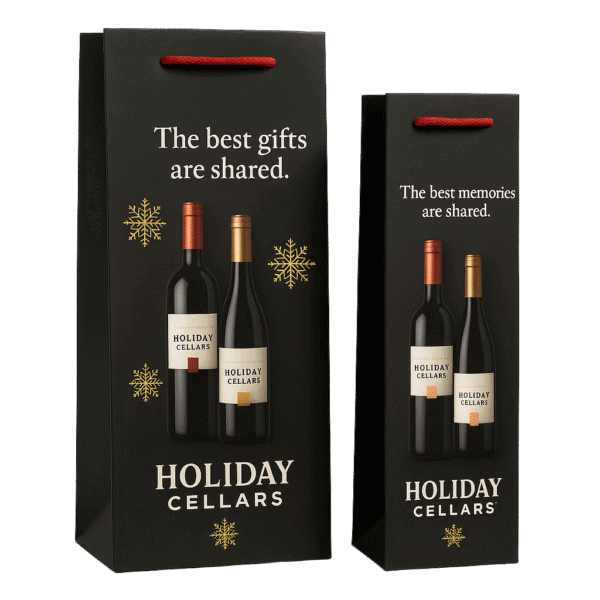
custom wine packaging paper bags with string handle

Support with Compliance, Sustainability, and Retail Requirements

Retailers, distributors, and regulators all have packaging requirements—and those can be hard to manage when you’re dealing with multiple suppliers who may not understand your industry. A packaging distributor understands the bigger picture and helps ensure all products meet the same standards.

✔ Knowledge of FDA, USDA, and retailer-specific requirements
✔ Recommendations for recyclable, compostable, and eco-friendly options
✔ Retail-ready display coordination (Target, Costco, Walmart, etc.)
✔ Accurate barcoding, labeling, and structural compliance

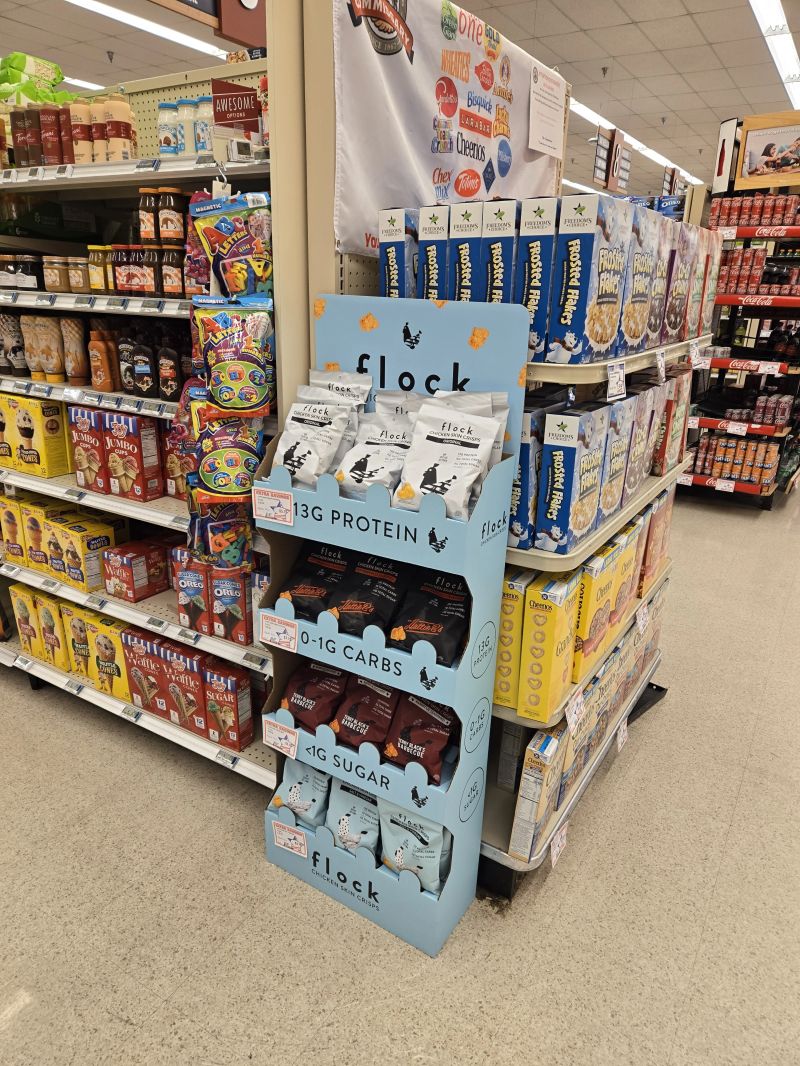
POP Display

Scalability and Long-Term Partnership

As your business grows, your packaging needs evolve. A manufacturer may only serve one niche, but a distributor can scale with you—offering more product options, faster turnarounds, and additional services like fulfillment, packout, and logistics.

✔ Easy to add new SKUs or packaging formats
✔ Long-term consistency across growing product lines
✔ Ongoing optimization of cost, materials, and design
✔ Built-in support for larger retail rollouts or DTC expansion

Final Thoughts

Working with multiple packaging manufacturers might seem like a way to shop around—but in reality, it adds unnecessary complexity and cost to your process. A trusted packaging distributor gives you efficiency, control, and scalability, all while helping you get better results with fewer headaches.

Looking to simplify your packaging supply chain?
We’ll help you manage every detail—from sourcing and design to delivery—so you can focus on growing your business.

Most Recent Posts:
Retail Packaging Trends for 2026

Retail packaging continues to evolve as brands balance sustainability, supply chain performance, and consumer experience. In 2026, buyers face new challenges shaped by material innovation, compliance requirements, and rising consumer

Read More »
Meeting 2026 Packaging Compliance Standards

Packaging compliance is no longer optional—it’s a requirement for accessing retail shelves, shipping networks, and international markets. In 2026, buyers must navigate evolving regulations around sustainability, labeling, and testing to

Read More »
Categories:
Subscribe To Our Newsletter

By submitting your information, you agree to our terms and conditions and privacy policy.

Custom Corrugated retail box with window cut out, sample packs and poly bags
Custom Packaging
Facebook
Twitter
LinkedIn
Pinterest
Relevant Posts
custom printed boxes
Design
brownpackaging
Crafting Effective Packaging Design: A Guide for Marketing Teams

Packaging design is a crucial aspect of any product’s marketing strategy. It serves as a visual ambassador for your brand and plays a pivotal role in attracting and engaging your target audience. In this blog post, we will explore how marketing teams can build an effective packaging design tailored to their audience. Understand Your Audience The first step in designing packaging that resonates with your audience is to thoroughly understand who your audience is. This involves: Conducting market research: Gather data on your target demographic, including their preferences, buying behaviors, and lifestyle. Creating buyer personas: Develop detailed profiles of your ideal customers, considering factors like age, gender, income, interests, and values. Analyzing competitors: Study how your competitors are packaging similar products and identify gaps or opportunities to stand out. Define Your Brand Identity Before delving into design, ensure your team has a strong grasp of your brand identity. Your packaging should consistently reflect your brand’s values, mission, and personality. This includes: Brand messaging: Define the key messages you want to convey through your packaging. Is your brand known for sustainability, luxury, or affordability? Color palette and typography: Establish a consistent color scheme and font style that align with your brand’s personality. These elements should be recognizable and evoke specific emotions. Logo placement: Decide where your logo will be prominently featured on the packaging. This ensures brand recognition and reinforces your identity. Focus on Functionality Effective packaging design isn’t just about aesthetics; it also needs to be practical and functional. Consider the following aspects: Product protection: Ensure your packaging provides adequate protection for the product. Fragile items may require cushioning, while food products may need tamper-evident seals. Ease of use: Make it easy for customers to open, access, and use the product. User-friendly packaging can enhance the overall customer experience. Storage and shelf space: Design packaging that is stackable and doesn’t take up excessive shelf space, as this can impact retailers’ willingness to stock your product. Incorporate Storytelling Packaging is an opportunity to tell a story and connect with your audience on a deeper level. You can achieve this through: Visual storytelling: Use imagery and graphics to convey your brand’s story, values, and product benefits. Visual elements should be consistent with your brand’s narrative. Content writing: Craft compelling and concise copy that engages consumers. Highlight key features, benefits, and unique selling points. QR codes and augmented reality: Incorporate technology to provide customers with an interactive experience, such as access to additional information or videos related to your product. Sustainability Matters Today’s consumers are increasingly eco-conscious, and sustainable packaging design can be a significant selling point. Consider the following: Eco-friendly materials: Explore sustainable packaging materials such as recycled paper, biodegradable plastics, or reusable containers. Reduce waste: Minimize excess packaging and opt for minimalist designs that reduce material consumption. Communicate your efforts: Highlight your commitment to sustainability on the packaging to resonate with environmentally conscious consumers. Test and Iterate Once your packaging design is ready, don’t rush into production. Conduct testing and gather feedback from focus groups or surveys. Use this feedback to make necessary improvements and refinements. Iteration is key to ensuring your packaging design is as effective as possible. Collaborate with Design Professionals While marketing teams have valuable insights into their brands and audiences, it can be beneficial to collaborate with design professionals, especially for complex or specialized projects. Graphic designers, packaging engineers, and UX designers can provide expertise that complements your team’s efforts. If you are interested in packaging solutions, then partner with Brown Packaging today to get started. (714)300-0650 request@brownpackaging.com Most Recent Posts: Categories: Corrugated Ecommerce ESD Design Display Flexible Packaging Foam Folding Carton Packaging Plastic Packaging Pouch Printing Protection Retail Rigid Box Thermoform Sustainability Subscribe To Our Newsletter By submitting your information, you agree to our terms and conditions and privacy policy. Custom Packaging Facebook Twitter LinkedIn Pinterest Relevant Posts

Read More »
Smart Packaging Decisions for a Cost-Conscious Market
Packaging
brownpackaging
Smart Packaging Decisions for a Cost-Conscious Market

Every brand is feeling the squeeze — higher raw material costs, volatile freight rates, and a consumer base more price-conscious than ever. But cutting packaging budgets blindly can lead to damaged goods, compliance issues, and eroded brand value. Smart brands aren’t chasing cheaper boxes — they’re making smarter packaging decisions that balance performance, cost, and perception. The difference between saving money and losing value comes down to how you evaluate your packaging, not just what you pay for it. Beyond Unit Price: Understanding Total Packaging Cost A low unit price might look great on paper — until you factor in assembly time, damage rates, and freight efficiency. Smart packaging evaluation considers the total cost of ownership, including: Material yield (how efficiently sheets convert into boxes) Pallet and trailer utilization (freight optimization) Labor efficiency (ease of assembly or automation compatibility) Product protection (damage rates, replacements, and returns) When buyers assess all these metrics, the lowest-cost box often isn’t the best-value box. Material Selection That Saves in the Long Run Switching materials isn’t just about cutting cost — it’s about reducing waste and improving performance. For instance, moving from double-wall to a high-performance single-wall with better flute structure can cut weight and shipping cost without sacrificing protection. In folding cartons, substrate optimization — using a lighter caliper SBS or switching to coated recycled board — can yield savings that scale across production runs. And for rigid boxes, structural tweaks like thinner chipboard paired with strong wrap papers can preserve presentation while reducing material use. Every small change adds up when you scale across thousands of units. Design Efficiency: The Overlooked Cost Saver A smart structural design can eliminate cost before production even starts. Simplifying folds, reducing glue flaps, or reengineering inserts can cut assembly time and material waste. Modern packaging engineers use CAD-based dieline analysis to optimize layouts — ensuring maximum sheet yield and minimal offcut. For e-commerce and retail brands alike, right-sizing packaging improves shipping efficiency and reduces filler materials while maintaining the brand’s polished look. It’s not just design — it’s design that earns its keep Printing Smart: Matching the Process to the Purpose Not every job needs premium litho or complex spot varnishes. A good packaging partner matches print method to scale and brand intent: Flexo printing for high-volume, cost-efficient runs. Digital printing for short runs, personalization, and multi-SKU campaigns. Litho laminating for high-end visuals in rigid or premium retail displays. By choosing the right print method early, brands can avoid over-engineering — saving both time and money without compromising quality. Data-Driven Decisions: The New Standard for Packaging Buyers Leading companies now use data to guide packaging spend. Damage rate metrics, SKU-level freight analysis, and consumer perception studies all contribute to smarter choices. Smart buyers are no longer asking, “What’s the cheapest box?” They’re asking, “What’s the most efficient box that protects the product, ships well, and supports brand goals?” This mindset shift is what separates cost-cutting from cost control. The Brown Packaging Approach At Brown Packaging, we help brands make smarter packaging decisions by combining engineering analysis, supplier network leverage, and real-world testing. Our process aligns packaging performance with total cost goals — from box design to print selection and logistics. The result: stronger packaging, lower waste, and sustainable cost savings that scale with your business. Because in today’s market, smart packaging isn’t just a cost center — it’s a competitive advantage. References PMMI. (2025). Operational Cost Efficiency in Packaging and Logistics. McKinsey & Company. (2024). Total Cost of Ownership in Consumer Goods Packaging. Packaging World. (2025). Data-Driven Decisions in Packaging Sourcing. Soroka, W. (2009). Fundamentals of Packaging Technology (4th ed.). (714)300-0650 request@brownpackaging.com Most Recent Posts: Categories: Corrugated Ecommerce ESD Design Display Flexible Packaging Foam Folding Carton Packaging Plastic Packaging Pouch Printing Protection Retail Rigid Box Thermoform Sustainability Subscribe To Our Newsletter By submitting your information, you agree to our terms and conditions and privacy policy. Custom Packaging Facebook Twitter LinkedIn Pinterest Relevant Posts

Read More »
The Versatility of Corrugated Boxes
Corrugated
brownpackaging
The Versatility of Corrugated Boxes

Corrugated boxes, often seen as an ordinary tool for storage and transportation, possess versatility that goes beyond their humble reputation. From industries like e-commerce and logistics to home organization and DIY craft projects, the use of corrugated boxes has taken on a dynamic role in various fields. This article explores the multitudinous applications of these eco-friendly and resilient packages, proving why they are a mainstay in our everyday life. Unboxing the Corrugated Advantage Before diving into the various applications, let’s first unbox the inherent qualities that make corrugated boxes an excellent choice. Strength and Durability: Corrugated boxes are designed to be incredibly durable. Their fluted structure provides strength and stability, ensuring they can handle pressure and weight without compromising their shape. Eco-friendliness: As they are made primarily from recycled paper, corrugated boxes are environmentally friendly, both in terms of their production process and their recyclability. Cost-effectiveness: Corrugated boxes are a cost-effective packaging solution, given that their raw materials are readily available and they’re easy to manufacture. Customizability: With modern printing and manufacturing techniques, corrugated boxes can be tailored to any size, shape, or design, making them a flexible choice for various applications. Corrugated Boxes in E-commerce The explosion of e-commerce has seen corrugated boxes play a starring role in logistics and delivery systems. Whether shipping electronics, clothes, or food items, these boxes offer a robust, secure, and customizable solution. The customizable nature of corrugated boxes, combined with the possibilities of digital printing, has allowed brands to create unique and engaging unboxing experiences for their customers. The box is no longer just a transport vessel, but an extension of the brand’s identity and customer experience. Versatility in Logistics Corrugated boxes are widely used in warehousing and logistics due to their durability and stack-ability. They are capable of bearing heavy loads and protecting goods during transport, making them an excellent choice for storing and moving products. Plus, the ease of writing or printing on these boxes makes them ideal for tracking and inventory purposes. Markings, barcodes, or labels can be easily added to facilitate systematic storage and retrieval. Corrugated Boxes in Retail In the retail sector, corrugated boxes aren’t just hidden in stock rooms. They also make appearances as point-of-sale displays, shelf-ready packaging, and more. Their easy customizability allows retailers to tailor their size, shape, and print to suit various products and branding strategies, helping to catch consumers’ eyes and increase sales. Home Use and DIY Projects Beyond their commercial uses, corrugated boxes have also found their way into our homes as storage solutions, DIY projects, and even furniture. Their sturdy construction makes them great for organizing home spaces, while their customizability allows for creative reuse in crafting projects. From making customized gift boxes to crafting playhouses for kids, the possibilities are limited only by one’s imagination. Future of Corrugated Boxes While they’re already immensely versatile, the potential applications for corrugated boxes are far from exhausted. With ongoing innovations in material science and manufacturing techniques, expect to see these humble packages continue to evolve and adapt to our changing needs. In conclusion, the versatility of corrugated boxes stems not just from their physical properties but also from their ability to be customized, reused, and repurposed. This makes them an indispensable tool in various sectors, proving that there is indeed much more to these boxes than meets the eye. If you are interested in corrugated boxes, then partner with Brown Packaging today to get started. (714)300-0650 request@brownpackaging.com Most Recent Posts: Categories: Corrugated Ecommerce ESD Design Display Flexible Packaging Foam Folding Carton Packaging Plastic Packaging Pouch Printing Protection Retail Rigid Box Thermoform Sustainability Subscribe To Our Newsletter By submitting your information, you agree to our terms and conditions and privacy policy. Custom Corrugated Boxes Facebook Twitter LinkedIn Pinterest Relevant Posts

Read More »