
Home » Moisture and Humidity: How They Affect Folding Carton Integrity
Moisture and Humidity: How They Affect Folding Carton Integrity
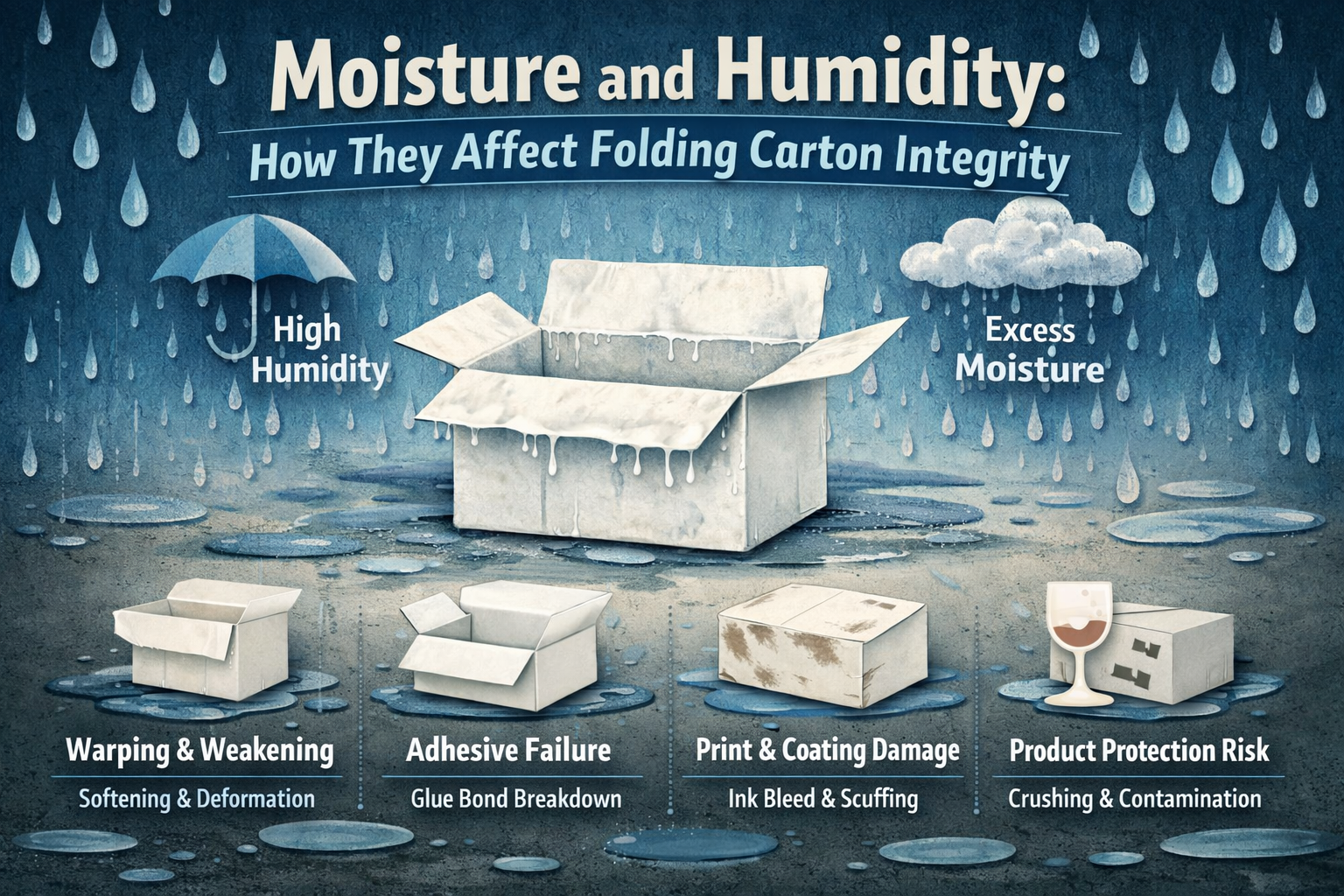
Moisture and humidity can weaken paperboard fibers, alter structural performance, and compromise print quality. From production to end use, controlling these factors is critical to ensure folding cartons perform as intended in any climate or supply chain environment.
Fiber Structure and Moisture Absorption
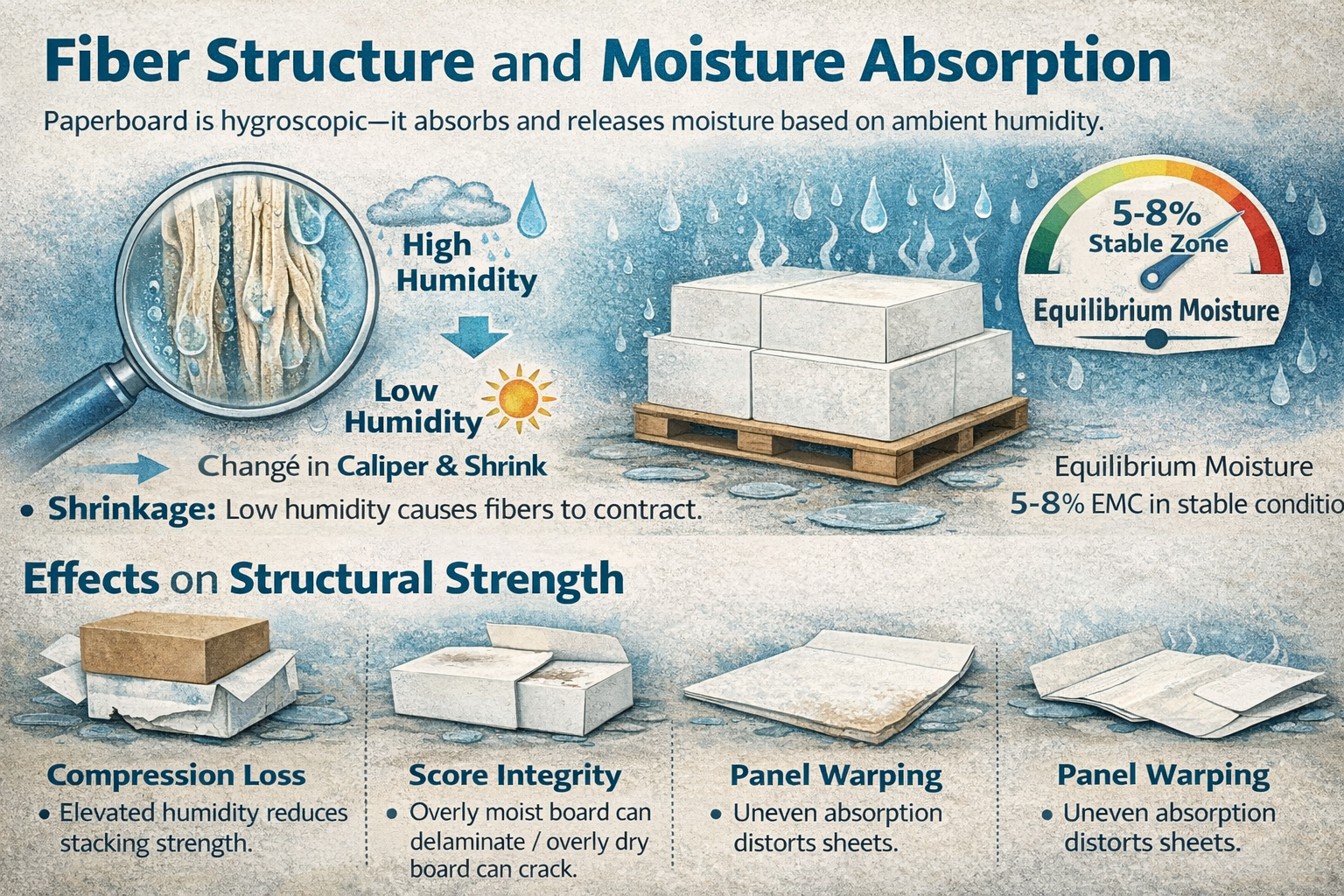
Paperboard is hygroscopic—it absorbs and releases moisture based on ambient humidity.
- Swelling: Fibers expand when exposed to moisture, changing caliper and panel dimensions.
- Shrinkage: Low humidity can cause fibers to contract, leading to curling or warping.
- Equilibrium Moisture Content (EMC): Most boards stabilize at 5–8% moisture content under normal indoor conditions (Soroka, 2014).
Effects on Structural Strength
- Compression Loss: Elevated humidity reduces stacking strength as fibers soften.
- Score Integrity: Overly moist board can delaminate at scores; overly dry board can crack.
- Panel Warping: Uneven moisture absorption across the sheet causes distortion that impacts print registration and assembly.
Coatings and Barrier Layers
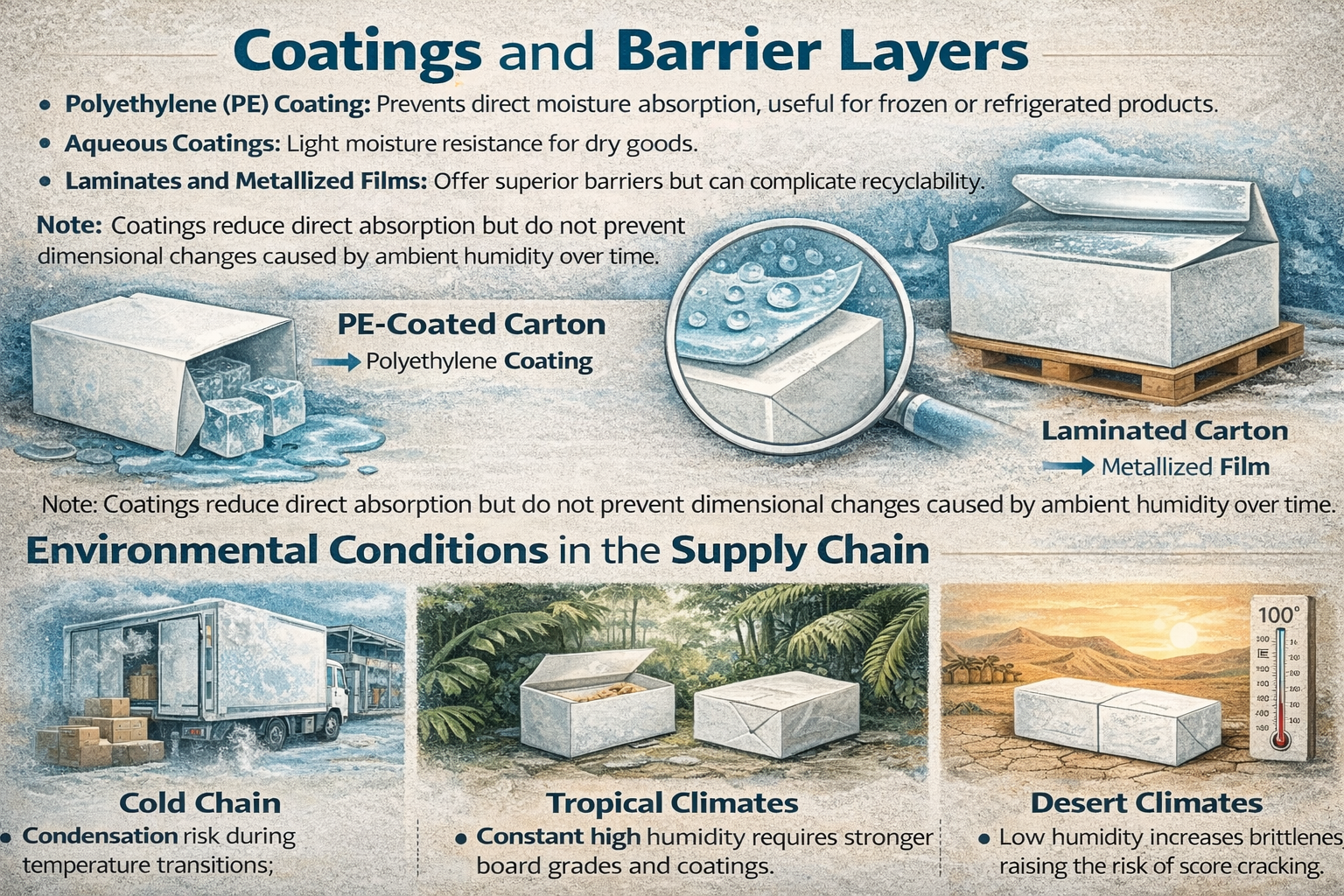
- Polyethylene (PE) Coating: Prevents direct moisture absorption, useful for frozen or refrigerated products.
- Aqueous Coatings: Light moisture resistance for dry goods.
- Laminates and Metallized Films: Offer superior barriers but can complicate recyclability.
Note: Coatings reduce direct absorption but do not prevent dimensional changes caused by ambient humidity over time.
Environmental Conditions in the Supply Chain
- Cold Chain: Condensation risk during temperature transitions; barrier coatings are critical.
- Tropical Climates: Constant high humidity requires stronger board grades and coatings.
- Desert Climates: Low humidity increases brittleness, raising the risk of score cracking.
Storage and Handling Best Practices
- Climate-Controlled Warehousing: Maintain 40–60% relative humidity where possible.
- Acclimation Before Conversion: Allow board to stabilize in the plant environment before die cutting or printing.
- Moisture Testing: Use moisture meters to verify EMC before production.
Design Strategies for Moisture-Exposed Cartons
- Material Selection: Use CUK or poly-coated SBS for cold and damp environments.
- Style Selection: Full Seal End or auto-bottom for added rigidity under moisture stress.
- Folding Sequence: Minimize tight folds in coated or high-caliper boards to prevent cracking.
References
Soroka, W. (2014). Fundamentals of packaging technology (5th ed.). Institute of Packaging Professionals. ISBN: 978-1-930268-37-2
Twede, D., & Goddard, R. (2021). Cartons, crates and corrugated board: Handbook of paper and wood packaging technology (2nd ed.). DEStech Publications. ISBN: 978-1-60595-120-5
Moisture and humidity can weaken paperboard fibers, alter structural performance, and compromise print quality. From production to end use, controlling these factors is critical to ensure folding cartons perform as
Flexible pouches rely on laminates to deliver strength, barrier protection, and shelf appeal. A laminate is a structure made by combining multiple film layers—each selected for a specific function. The
Peak season shipping volumes put pressure on every part of the supply chain. For packaging buyers, right-sizing boxes is one of the most effective strategies to reduce freight costs, improve
After the holiday rush, many packaging buyers face inflated costs from excess materials, rushed procurement, and seasonal surcharges. Q1 is the ideal time to reset, review performance, and implement cost-saving
Home » Moisture and Humidity: How They Affect Folding Carton Integrity