window.uetq = window.uetq || []; window.uetq.push(‘event’, ‘submit_lead_form’,{ event_label:‘SUBMIT MESSAGE’ }); window.lintrk('track', { conversion_id: 10271009 }); window.lintrk('track', { conversion_id: 10271017 });

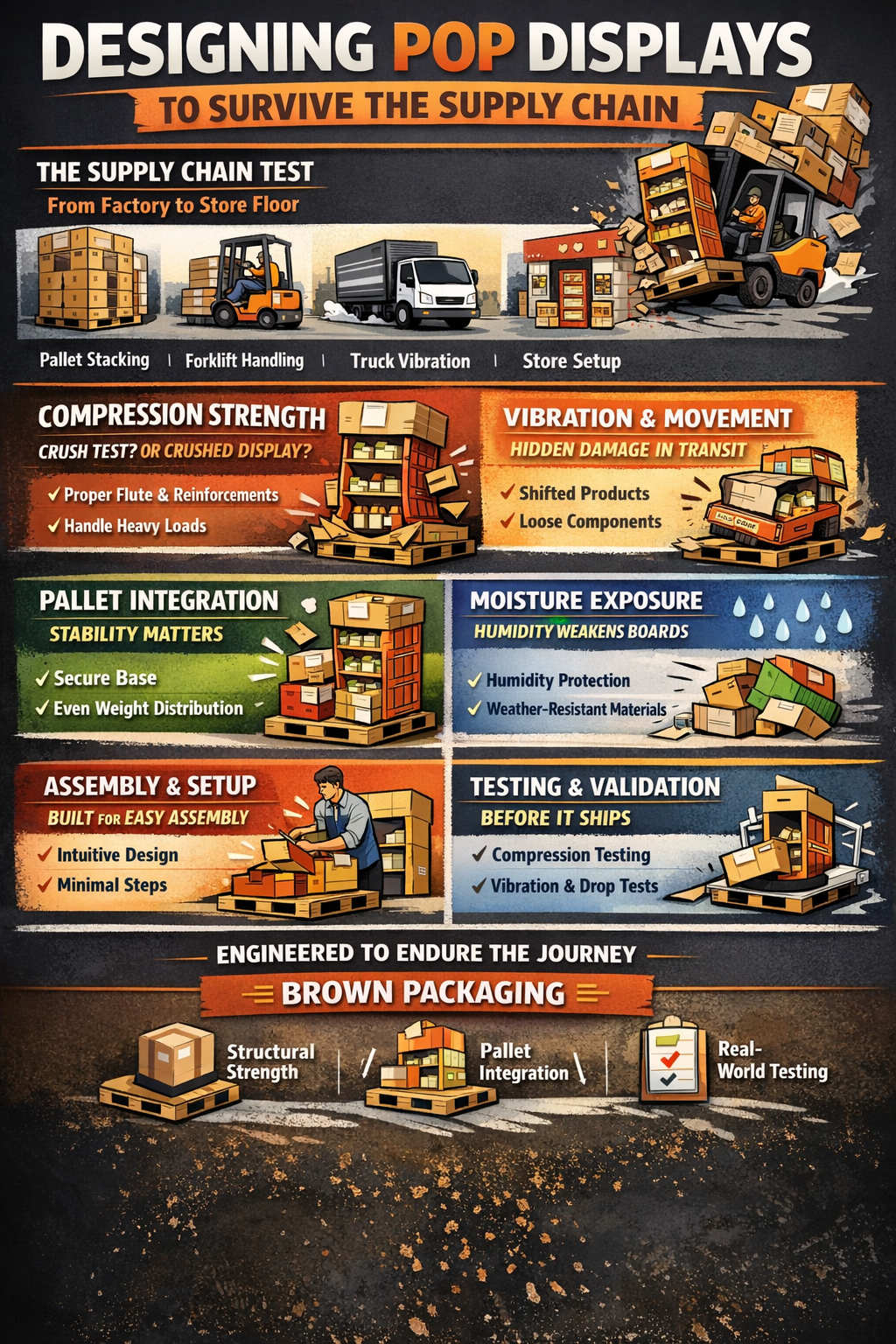
Designing POP Displays to Survive the Supply Chain

Designing POP Displays to Survive the Supply Chain

A POP display isn’t successful when it looks good leaving production—it’s successful when it arrives intact, gets placed correctly, and performs in-store.

The problem is most displays are designed for appearance, not for the real conditions they face during shipping, handling, and retail execution.

That gap is where damage, delays, and lost sales happen.

The Supply Chain Is the Real Test

From production to store floor, displays go through:

  • Pallet stacking and compression
  • Forklift handling
  • Truck vibration and movement
  • Distribution center sorting
  • Store-level transport and setup

Each step introduces stress.

If the display isn’t engineered for this environment, failure is inevitable.

Compression Strength Matters More Than You Think

Displays are often stacked—sometimes multiple layers high.

If the corrugated structure can’t handle vertical load:

  • Units crush at the base
  • Shelves collapse
  • Graphics warp

Key considerations:

  • Proper flute selection (B, C, or double-wall where needed)
  • Reinforced load-bearing panels
  • Even weight distribution across the structure

Underestimating compression is one of the fastest ways to lose an entire shipment.

Vibration and Movement Cause Hidden Damage

Even if a display looks intact externally, internal movement can:

  • Shift products out of position
  • Damage packaging
  • Loosen structural components

This is especially critical for:

  • Multi-SKU displays
  • Fragile products
  • Loose pack configurations

Solutions:

  • Secure pack-out design
  • Internal dividers or inserts
  • Tight tolerance engineering

If the product moves, the display fails.

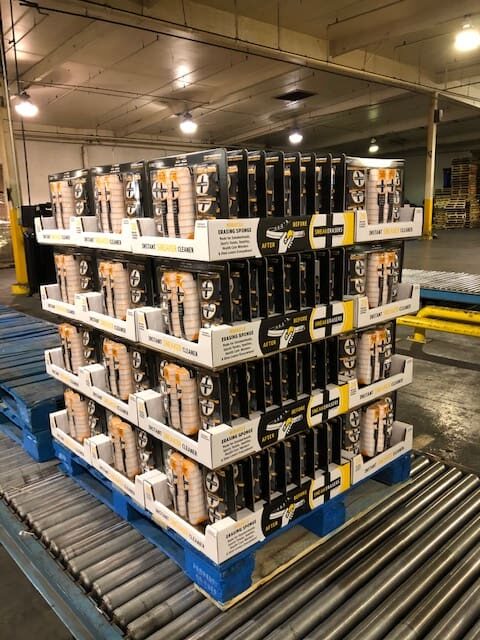
Custom Full Pallet Display with blister packs, corrugated carriers, sample packs, and poly bags

Pallet Integration Is Not Optional

A display isn’t separate from the pallet—it’s part of a system.

Common mistakes:

  • Poor load distribution across pallet
  • Weak base structure
  • No reinforcement at stress points

Results:

  • Leaning or unstable displays
  • Damage during transport
  • Retail rejection

A well-designed pallet-display system ensures stability from warehouse to store.

Moisture and Environment Impact Performance

Corrugated strength changes with humidity.

In real-world conditions:

  • Board can soften
  • Edges lose rigidity
  • Load capacity decreases

This is often overlooked—especially for:

  • Long transit times
  • Seasonal shipments
  • Certain geographic regions

Material selection and coatings must account for environmental exposure.

Assembly Design Affects Structural Integrity

Displays that rely on perfect assembly are risky.

If setup is inconsistent:

  • Structural strength is compromised
  • Load capacity drops
  • Displays become unstable

Design should:

  • Guide correct assembly intuitively
  • Minimize failure points
  • Reduce reliance on precision at store level

If it’s easy to assemble wrong, it will be assembled wrong.

Testing Is Where Most Programs Fall Short

Many displays are never fully tested under real conditions.

What should be validated:

  • Compression testing under full load
  • Vibration testing for transit simulation
  • Drop testing for handling scenarios

Standards like ISTA protocols help identify weaknesses before production—not after failure.

The Cost of Not Engineering for the Supply Chain

When displays fail in transit:

  • Products are damaged or unsellable
  • Shipments are delayed or rejected
  • Retail windows are missed
  • Costs multiply quickly

And none of this shows up in the original quote.

What Durable POP Displays Do Differently

They are:

  • Engineered for load, not just appearance
  • Designed as part of a pallet system
  • Built to secure product during transit
  • Tested under real-world conditions
  • Simple to assemble consistently

Durability isn’t a feature—it’s a requirement.

How Brown Packaging Designs for Real-World Performance

At Brown Packaging, POP displays are engineered to survive the entire supply chain—not just pass initial inspection.

We focus on:

  • Structural design based on load and transit conditions
  • Material selection aligned with environmental factors
  • Pallet integration for stability and compliance
  • Pre-production testing to eliminate failure points

Because if a display doesn’t survive the journey, it never gets the chance to perform.

Most Recent Posts:
Subscribe To Our Newsletter

By submitting your information, you agree to our terms and conditions and privacy policy.

Custom POP Display
POP Display
Facebook
Twitter
LinkedIn
Pinterest
Relevant Posts