Home » Corrugated Print Quality: ECT vs. Bursting (Mullen) Test Board
Corrugated Print Quality: ECT vs. Bursting (Mullen) Test Board
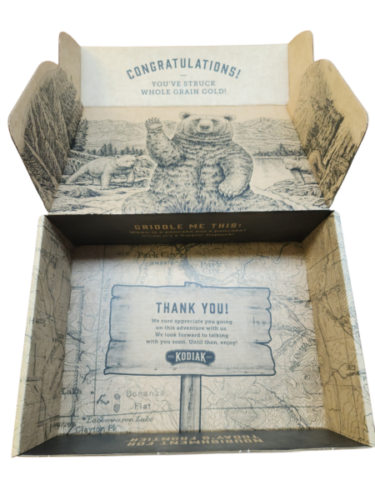
When choosing corrugated board for packaging, print quality is often a critical consideration. Two common board types—ECT (Edge Crush Test) board and Bursting Test board, also called Mullen Test board—have distinct surface characteristics that impact the final print results, especially when using flexographic (flexo) printing. While both boards serve their structural purposes, their composition affects ink absorption, print clarity, and overall aesthetics.
Why Does ECT Board Struggle With Print Quality?
ECT board is designed primarily for stacking strength rather than printing quality. It is rougher and more porous compared to Test board, which results in the following print challenges:
- Ink Absorption Issues: The more porous nature of ECT board allows ink to spread unevenly, leading to a muddy, less defined print.
- Uneven Surface Texture: Rough fibers on ECT board prevent fine details and crisp lines from transferring properly, resulting in a blurry or inconsistent appearance.
- Reduced Ink Holdout: Because the ink penetrates deeper into the material, colors may appear duller and less vibrant compared to smoother boards.
Can You Improve Print Quality on ECT Board?
For brands requiring higher-quality graphics on an ECT board, one option is to order virgin kraft liners instead of standard recycled liners. Virgin kraft liners:
- Have a smoother, more uniform surface, allowing for better ink adhesion and sharper details.
- Reduce ink absorption, leading to brighter, more vibrant prints.
- Are stronger and cleaner-looking, improving the overall aesthetic of the packaging.
When to Use Bursting Test Board Instead
Test board, made from a mix of virgin and recycled fibers, tends to be smoother than ECT board, allowing for better ink retention and detail clarity. If print quality is a priority, a Test board with a higher-quality white or coated liner can significantly improve the final result.
Final Considerations
If your primary concern is cost and stacking strength, ECT board is a solid choice, but expect compromises in print quality when using flexo. For higher-quality branding and graphics, consider upgrading to a Test board or requesting virgin kraft liners to enhance your print results.
Need help selecting the right corrugated board for your packaging? Contact Brown Packaging today to find the best option for your needs!
In 2026, sustainability is no longer just a trend—it’s a buyer expectation. Forest Stewardship Council (FSC) certification has become a key benchmark for responsible packaging, signaling that materials are sourced
Sustainability is now a top priority for packaging buyers. Retailers, regulators, and consumers are all demanding packaging solutions that reduce environmental impact without sacrificing performance. In 2026, buyers must balance
Choosing the right packaging material is one of the most important decisions buyers face. Single-material packaging offers simplicity and recyclability, while multi-material designs provide enhanced performance and protection. Understanding the
One of the biggest challenges in sustainable packaging is balancing environmental responsibility with product protection. Buyers often worry that switching to eco-friendly materials means sacrificing durability or driving up costs.
Home » Corrugated Print Quality: ECT vs. Bursting (Mullen) Test Board

RSC boxes dominate corrugated packaging, but they aren’t always the best fit. Specialty box styles like Full Overlap (FOL), RETT mailers, and die-cut formats offer unique advantages for certain applications. Understanding when to stay with an RSC versus upgrading to a specialty style ensures buyers balance cost, performance, and presentation. When RSC Is Best Bulk Shipping: Strong compression strength makes RSC ideal for palletized loads. Low Cost: Efficient to manufacture with minimal board waste. Versatility: Works across industries from industrial to retail. Automation-Ready: Standardized design runs smoothly on case erectors and palletizers. When Specialty Boxes Are Better Full Overlap (FOL) Flaps overlap fully, reinforcing the top and bottom. Better for heavy products or shipments that need extra stacking strength. RETT Mailers Dust flaps and cherry locks eliminate tape, improving assembly speed. Ideal for e-commerce and branded unboxing experiences. Die-Cut Boxes Custom shapes and closures for product-specific fit. Useful when presentation and consumer experience are top priorities. Key Trade-Offs Feature RSC Box Specialty Box Styles Assembly Speed Slower (tape required) Faster (die-cut, self-locking) Stacking Strength High Variable (higher in FOL, lower in mailers) Branding Potential Basic Premium (better graphics and unboxing) Flexibility Universal Application-specific Buyer Takeaway Stick with RSC when cost, strength, and scalability matter most. Upgrade to FOL for heavy-duty industrial shipments. Choose RETT or die-cut mailers for e-commerce and premium branding. By evaluating your priorities — strength, speed or presentation — you can decide whether RSC remains the best fit or if specialty box styles deliver added value. References Fibre Box Association. (2023). Corrugated Box Styles and Applications. https://www.fibrebox.org Association of Independent Corrugated Converters (AICC). (2024). Corrugated Design and Performance. https://www.aiccbox.org Soroka, W. (2016). Fundamentals of Packaging Technology (5th ed.). Institute of Packaging Professionals. (714)300-0650 request@brownpackaging.com Most Recent Posts: Categories: Corrugated Ecommerce Display Foam Printing Protection Retail Thermoform Sustainability Subscribe To Our Newsletter By submitting your information, you agree to our terms and conditions and privacy policy. Custom Corrugated Boxes Facebook Twitter LinkedIn Pinterest Relevant Posts

Lithography and digital print are two of the most commonly used methods in packaging printing. They both have unique advantages and disadvantages, and understanding these differences can help you make an informed decision about which method is best for your packaging needs. In this blog, we’ll compare and contrast digital print and lithography in packaging. Lithography Lithography, also known as offset printing, is a traditional printing process that has been used for over a century. It involves the transfer of ink from a printing plate to a rubber blanket, which is then pressed onto the paper or packaging material. Lithography is a high-quality printing method that produces sharp, crisp, and detailed images with consistent color and density. Advantages of Lithography Lithography is a high-quality printing method that has been used for over a century and is known for its superior print quality. It is widely used in packaging printing for a variety of reasons, including its versatility, consistency, and cost-effectiveness for large runs. Here are some advantages of lithography in more detail: High-Quality Prints: Lithography produces high-quality prints with accurate color reproduction, sharp images, and consistent color and density. The printing plates used in lithography are carefully prepared, ensuring that each print is of the same quality as the first. Versatility: Lithography can be used on a wide range of packaging materials, including paper, corrugated and plastic. It is also suitable for printing on various shapes and sizes of packaging, making it a versatile option for packaging printing. Consistency: Because lithography uses printing plates, each print is consistent in quality and color. This makes it an ideal choice for large runs where consistency is essential. Cost-Effective for Large Runs: Lithography becomes more cost-effective for large runs because the cost of the printing plates can be spread over a large number of prints. This makes lithography a popular choice for large packaging orders. Excellent Detail and Resolution: Lithography produces prints with excellent detail and resolution, making it the ideal choice for printing complex designs and fine text. Disadvantages of Lithography While lithography has many advantages, it also has some disadvantages that should be considered when deciding whether to use this printing method for packaging. Here are some disadvantages of lithography in more detail: High Setup Costs: Lithography has a high setup cost because it requires the creation of a printing plate and the preparation of the printing press. This can make it less cost-effective for smaller runs of packaging. Long Lead Times: The setup process for lithography can take a long time, which can be a disadvantage when you need your packaging printed quickly. The process of creating the printing plates and preparing the printing press can take several days or even weeks, depending on the complexity of the design and the size of the print run. Limited Customization: Lithography is not the best choice for highly customized packaging as it requires the creation of a new printing plate for each design. This can be time-consuming and expensive, making lithography less suitable for small runs of packaging with different designs. Environmental Concerns: Lithography is not the most environmentally friendly printing method. The process uses chemicals and produces a lot of waste, including used ink, paper waste, and printing plates, which can be harmful to the environment if not disposed of properly. Digital Printing Digital printing is a newer printing technology that has been rapidly gaining popularity in recent years. It involves the direct transfer of digital files to the printing press, eliminating the need for printing plates. Advantages of Digital Print Digital print offers a range of advantages over traditional printing methods like lithography, making it an attractive option for many packaging applications. Here are some advantages of digital printing in more detail: Quick Turnaround: Digital printing has a much faster setup time than lithography, which means that your packaging can be printed quickly. There is no need to create printing plates, which eliminates the time-consuming process of plate making and setup. Cost-Effective for Small Runs: Digital printing is cost-effective for small runs of packaging because there are no setup costs associated with the printing plates. This makes digital printing an ideal choice for startups or small businesses that need a smaller number of packaging prints. Customization: Digital printing allows for a high degree of customization, making it ideal for unique and personalized packaging. Each print can be different without any additional costs, which is perfect for packaging with multiple versions or personalized designs. High-Quality Prints: While digital printing may not match the print quality of lithography, it has come a long way in recent years and can produce high-quality prints with accurate color reproduction, sharp images, and excellent detail and resolution. Versatility: Digital printing is suitable for a wide range of packaging materials, including paper, corrugated, plastic, and some types of metal. This makes it a versatile option for packaging printing that can be used in a variety of applications. Disadvantages of Digital Print Although digital printing has many advantages, it also has some disadvantages that should be considered when deciding whether to use this printing method for packaging. Here are some disadvantages of digital printing in more detail: Lower Print Quality: While digital printing has come a long way in recent years, it still cannot match the print quality of lithography. Digital printing can produce high-quality prints, but the color reproduction, sharpness, and detail may not be as accurate or consistent as lithography. Limited Versatility: While digital printing is suitable for a wide range of packaging materials, it may not be the best choice for all materials. Digital printing may not be suitable for some packaging materials like glass or some types of metal. Additionally, digital printing may not be able to achieve some specialty finishes, such as metallic inks or embossing. Inconsistent Color Matching: Because digital printing does not use the same ink as lithography, color matching can be challenging, especially when it comes to Pantone colors. Variations in temperature, humidity, and the printing substrate can also

Packaging plays a crucial role in protecting products during transportation and handling. However, not all packaging materials, such as corrugated are created equal, and choosing the wrong materials can lead to damaged or lost products. That’s why testing the strength and durability of packaging materials is crucial to the packaging industry. Edge crush testing are processes that measure the strength and durability of packaging materials, particularly corrugated boxes. Corrugated boxes are made of a fluted sheet sandwiched between two flat sheets of paper and are commonly used for shipping and storing products. The strength of the corrugated box depends on the number and size of the flutes, as well as the quality of the paper used. Corrugated Strength and Durability The strength and resistance of corrugated board is determined by the maximum force that the board can withstand before collapsing, known as the compression strength. These board consists of a fluted sheet sandwiched between two flat sheets of paper, providing cushioning and support. Various types of flutes, such as A, B, C, E, F, and N flutes, offer durability and cushioning options for manufacturers to choose from. Edge Crush Testing Edge crush testing evaluates the edge crush resistance of corrugated board. It measures the board’s ability to withstand pressure along its edges without collapsing. As the edges of corrugated boxes are often the weakest points, measuring edge crush resistance is crucial. The testing procedure involves compressing a sample of corrugated board between two plates until it fails. The results are expressed in pounds per inch (PPI) or kilonewtons per meter (kN/m). The Importance of Corrugated and Edge Crush Testing Corrugated and edge crush testing are essential for several reasons. They help manufacturers and distributors choose the right packaging materials based on the fragility, weight, and dimensions of their products. By conducting these tests, businesses can ensure that their packaging materials can withstand the rigors of transportation and handling, reducing the risk of damage or loss. Additionally, meeting industry standards and regulations is crucial, and these tests help ensure compliance. To determine the appropriate packaging material strength, factors such as product weight, dimensions, and fragility should be considered. For example, a small, lightweight product with low fragility may require an Edge Crush Test (ECT) rating of 23 or higher. On the other hand, a large, heavy product with high fragility may require an ECT rating of 44 or higher. The chart below illustrates some general recommendations for product weight, dimensions, fragility, and the required ECT rating: Corrugated Board Strength Equivalencies: Single Wall Corrugated Edit Minimum Edge Crush Test Maximum Suggested Loading Limit Per Carton 23 ECT 20 lbs. 26 ECT 35 lbs. 29 ECT 50 lbs. 32 ECT 65 lbs. 44 ECT 95 lbs. 55 ECT 120 lbs. Corrugated Board Strength Equivalencies: Double Wall Corrugated Edit Minimum Edge Crush Test Maximum Suggested Loading Limit Per Carton 42 ECT 80 lbs. 48 ECT 100 lbs. 51 ECT 120 lbs. 61 ECT 140 lbs. 71 ECT 160 lbs. 82 ECT 180 lbs. ** Please note that the additional factors such as dimensions and fragility are general descriptors and may vary depending on the specific product being packaged. It is essential to consider these factors in conjunction with the weight and consult with a packaging expert to determine the appropriate ECT rating for your specific product and shipping needs.** Benefits of Corrugated and Edge Crush Testing The benefits of corrugated and edge crush testing extend beyond ensuring product safety during transportation. By using the appropriate packaging materials based on the results of these tests, manufacturers and distributors can experience several advantages. Cost Savings: Selecting the right packaging materials reduces the risk of damage or loss during transit, saving businesses costs associated with product replacement, shipping, and customer service. Enhanced Product Quality: Using packaging materials that have been tested for strength and durability ensures that products arrive in good condition, enhancing the overall product quality and customer satisfaction. Environmental Impact Reduction: Choosing materials that are strong and durable helps minimize waste generation and reduce the environmental impact of packaging operations. Brand Image Enhancement: Packaging materials that effectively protect products and deliver them in pristine condition contribute to positive customer experiences, repeat business, and a strong brand image. Future of Corrugated and Edge Crush Testing As technology continues to advance, we can expect improvements in the methods and equipment used for corrugated and edge crush testing. These advancements may include enhanced accuracy, faster testing processes, and the ability to test a broader range of materials. The continuous improvement of testing methods will further enhance the reliability and efficiency of these tests, benefiting the packaging industry as a whole. If you are interested in corrugated packaging that meets your desired edge crush ratings, then partner with Brown Packaging today to get started. (714)300-0650 request@brownpackaging.com Most Recent Posts: Categories: Corrugated Ecommerce ESD Design Display Flexible Packaging Foam Folding Carton Packaging Plastic Packaging Pouch Printing Protection Retail Rigid Box Thermoform Sustainability Subscribe To Our Newsletter By submitting your information, you agree to our terms and conditions and privacy policy. Custom Corrugated Boxes Facebook Twitter LinkedIn Pinterest Relevant Posts