


Home » How to Avoid DIM Weight Charges in 2026
How to Avoid DIM Weight Charges in 2026
Dimensional (DIM) weight pricing has become a major driver of shipping costs in e-commerce and industrial supply chains. Carriers charge based on the greater of actual or dimensional weight, which means packaging design directly impacts freight expenses. Buyers who don’t address DIM charges risk unnecessary costs that can add up to double-digit increases in 2026.
What Are DIM Weight Charges?
DIM weight charges are calculated by multiplying a package’s length × width × height, then dividing by a carrier’s dimensional factor. If the DIM weight exceeds the actual weight, the higher number is used for billing.
- Example: A lightweight product shipped in an oversized box can cost more than a heavier, smaller product.
Packaging Mistakes That Trigger DIM Charges
- Oversized boxes: Shipping items in boxes far larger than the product.
- Excess void fill: Inflated dimensions from unnecessary dunnage.
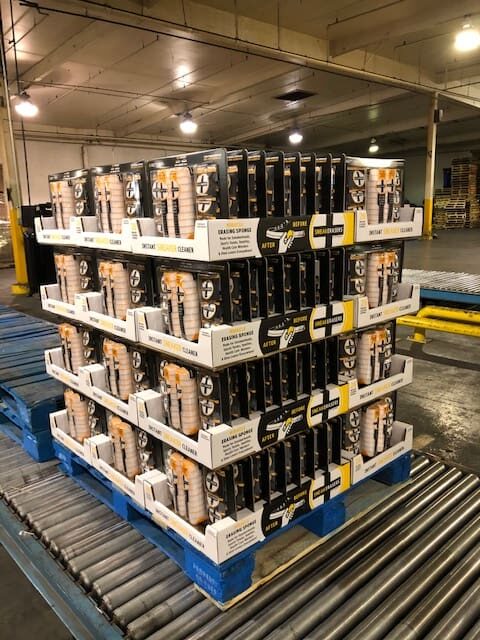
- Non-standard sizes: Boxes that don’t optimize pallet or truck space.
- Ignoring carrier updates: DIM factors are revised frequently.
How to Reduce DIM Weight Costs
- Right-size packaging: Use structural design to closely fit products.
- Multi-depth boxes: Allow flexibility for varying SKUs.
- Collapsible inserts: Keep protection without increasing box dimensions.
- SKU rationalization: Standardize packaging to avoid oversized options.
- Carrier collaboration: Work with shipping providers to align packaging with their pricing models.
Testing Packaging for DIM Efficiency
- Conduct simulated load tests for both protection and space efficiency.
- Compare actual vs. dimensional weight across packaging formats.
- Benchmark results against carrier pricing to validate savings.
Packaging Solutions with Brown Packaging
Brown Packaging specializes in designing packaging that minimizes DIM weight charges. Our team engineers right-sized boxes, inserts, and corrugated solutions that reduce costs while maintaining protection. Contact us to cut freight expenses in 2026.
References
UPS. (2024). Dimensional Weight Pricing Guidelines. Retrieved from https://www.ups.com
FedEx. (2024). Dimensional Weight Pricing and Surcharges. Retrieved from https://www.fedex.com
Soroka, W. (2009). Fundamentals of Packaging Technology (4th ed.). Institute of Packaging Professionals.
There’s no universal “better” option—but there is a better fit depending on your program. Brands often default to flat-pack to save on freight or pre-assembled for convenience, without fully understanding
Most packaging cost discussions focus on unit price. Very few quantify the financial impact of obsolete inventory. Yet for many brands and industrial programs, packaging obsolescence quietly erodes margin more
Most brands invest in POP displays without clearly measuring performance. They look at sales after rollout and assume the display worked—or didn’t. But without isolating variables, that’s just guessing. If
Most cost-cutting in POP displays happens in the wrong place. Brands reduce board grade, simplify structure too aggressively, or cut print quality—only to see: Higher damage rates Poor retail execution
Home » How to Avoid DIM Weight Charges in 2026