

Home » 5 Ways Custom Packaging Can Enhance Product Visibility and Sales
5 Ways Custom Packaging Can Enhance Product Visibility and Sales
Product visibility and sales are two most crucial factors that directly contribute to the success of any business. In the era of the highly competitive retail industry, businesses are always in search of innovative strategies that can enhance their product’s visibility and, consequently, sales. Among these strategies, custom packaging has emerged as an incredibly powerful tool. Not only does it make a product stand out, but it also serves as a silent salesperson, speaking volumes about the brand and its value proposition.
In this blog, we will explore five ways that custom packaging can enhance product visibility and ultimately boost your sales.
Differentiation and Brand Identity
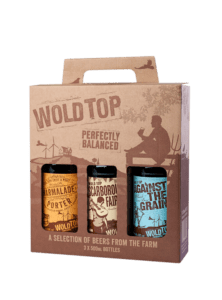
In a market where multiple brands sell similar products, differentiation is key. Custom packaging allows businesses to convey their unique identity and distinguish their products from the crowd. A well-designed package can reflect your brand’s personality and values, establishing an emotional connection with your target customers. For instance, eco-conscious brands may opt for sustainable packaging to resonate with like-minded consumers. This kind of clear, visual differentiation not only enhances visibility but also fosters brand loyalty, which can lead to increased sales.
Enhanced Shelf Impact
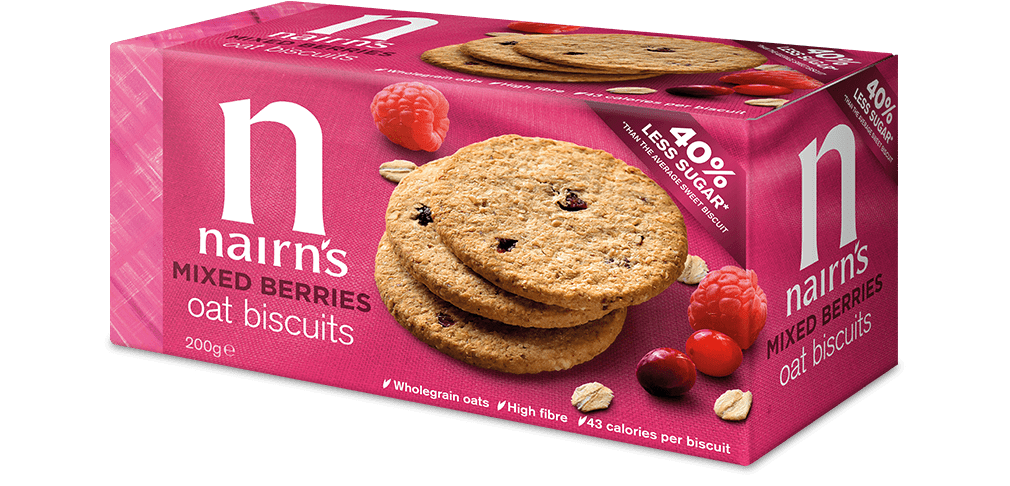
Shelf impact is a crucial factor that influences buying decisions at the point of purchase. Custom packaging, with its unique designs, shapes, and colors, can enhance the product’s appeal on the shelves. Customers’ eyes are naturally drawn to items that stand out, so designing a package that is visually arresting and clearly communicates the product’s benefits can significantly increase the likelihood of the product being noticed and picked up.
Unboxing Experience
In the age of social media, the unboxing experience has become an integral part of the customer journey. A product packaged in a custom box provides a memorable unboxing experience that customers may share on social media platforms, thereby acting as free advertising and reaching a larger audience. This not only amplifies product visibility but also provides potential customers with a sneak peek into the product, thereby increasing their likelihood of making a purchase.
Imparting Value and Quality
Custom packaging can serve as an indicator of a product’s value and quality. High-quality, attractive packaging suggests that a lot of thought and care has gone into the product, implying that the product itself is of high quality. By investing in high-quality custom packaging, you communicate to customers that your product is worth their money, which can, in turn, drive sales.
Reinforcing Brand Message and Story
Every brand has a unique story and message. Custom packaging offers a valuable opportunity to reinforce this message and communicate your brand story directly to your customers. This can be done through creative use of design elements, color schemes, and even printed stories or messages on the packaging itself. By creating an emotional resonance with your brand, customers are more likely to remember your product and choose it over others.
In conclusion, custom packaging goes far beyond simply holding a product; it is a significant aspect of brand identity, product visibility, and customer engagement. It provides a unique opportunity for businesses to differentiate themselves, create a memorable unboxing experience, impart perceived value and quality, and reinforce their brand message. As such, businesses should see custom packaging not as an expense, but as a strategic investment that can significantly enhance product visibility and drive sales.
If you are interested in custom packaging solutions, then partner with Brown Packaging today to get started.
In 2026, sustainability is no longer just a trend—it’s a buyer expectation. Forest Stewardship Council (FSC) certification has become a key benchmark for responsible packaging, signaling that materials are sourced from responsibly managed forests. For packaging buyers, FSC certification is more than a compliance checkbox—it’s a brand value that influences purchasing decisions, retailer acceptance, and customer loyalty. What Is FSC Certification? The Forest Stewardship Council certifies that paper-based packaging materials are sourced from forests managed for environmental responsibility, social benefit, and economic viability. FSC Mix: Packaging contains a blend of FSC-certified and controlled wood. FSC Recycled: Packaging is made entirely from recycled fiber. FSC 100%: Packaging is sourced only from FSC-certified forests. Why FSC Matters to Buyers in 2026 Retail access: Many major retailers now require FSC-certified packaging. Sustainability goals: Aligns with corporate ESG and carbon reduction commitments. Consumer trust: Customers recognize the FSC label and view it as credible. Global compliance: Meets international sustainability regulations. How FSC Certification Strengthens Brand Value Differentiation: Stand out with certified sustainable packaging. Marketing advantage: FSC logos reinforce eco-friendly messaging. Risk reduction: Verified sourcing prevents greenwashing claims. Customer loyalty: Environmentally conscious buyers prefer certified products. Challenges in FSC Implementation Limited supply of certain FSC substrates. Higher costs compared to non-certified materials. Need for supplier audits and documentation. Packaging Solutions with Brown Packaging Brown Packaging partners with buyers to integrate FSC-certified materials into corrugated boxes, folding cartons, and retail packaging. Our solutions support sustainability while maintaining cost efficiency and protection. Contact us to strengthen your brand with FSC-certified packaging. References Forest Stewardship Council (FSC). (2023). FSC Certification Guidelines for Packaging. Retrieved from https://fsc.orgSustainable Packaging Coalition. (2023). Consumer Insights on Sustainable Packaging. Retrieved from https://sustainablepackaging.orgSoroka, W. (2009). Fundamentals of Packaging Technology (4th ed.). Institute of Packaging Professionals. (714)300-0650 request@brownpackaging.com Most Recent Posts: Subscribe To Our Newsletter By submitting your information, you agree to our terms and conditions and privacy policy. Sustainable Packaging Facebook Twitter LinkedIn Pinterest Relevant Posts
Sustainability is now a top priority for packaging buyers. Retailers, regulators, and consumers are all demanding packaging solutions that reduce environmental impact without sacrificing performance. In 2026, buyers must balance eco-friendly materials, cost, and compliance to build programs that are both effective and future-ready. What Buyers Need to Know About Sustainable Packaging Regulatory pressure: Governments are enforcing stricter rules on recyclability and plastic use. Retail mandates: FSC certification and recyclable packaging are becoming standard requirements. Consumer expectations: Customers increasingly choose brands with visible sustainability commitments. Sustainable Material Options Recycled corrugated: High recycled content while maintaining compression strength. Compostable films: Suitable for select food and retail applications. Molded pulp inserts: Replace foam or plastic for protective packaging. Water-based coatings: Enhance moisture resistance without harmful chemicals. Balancing Cost and Performance Right-size packaging: Reduces material waste and shipping costs. Hybrid solutions: Combine eco-materials with corrugated for balance. Life cycle analysis: Evaluate true environmental impact, not just marketing claims. How to Evaluate Sustainable Suppliers Verify FSC, SPC, or ISO certifications. Request testing data for durability and recyclability. Audit supply chains for consistency and transparency. Ensure claims meet local and international compliance standards. Packaging Solutions with Brown Packaging Brown Packaging helps buyers implement sustainable packaging programs that balance cost, performance, and compliance. From recycled corrugated to eco-friendly coatings and inserts, we deliver solutions that meet 2026 sustainability goals. Contact us to explore sustainable packaging options. References Forest Stewardship Council (FSC). (2023). FSC Certification Guidelines for Packaging. Retrieved from https://fsc.orgSustainable Packaging Coalition. (2023). Packaging Sustainability Trends and Buyer Insights. Retrieved from https://sustainablepackaging.orgSoroka, W. (2009). Fundamentals of Packaging Technology (4th ed.). Institute of Packaging Professionals. (714)300-0650 request@brownpackaging.com Most Recent Posts: Categories: Corrugated Ecommerce ESD Design Display Flexible Packaging Foam Folding Carton Packaging Plastic Packaging Pouch Printing Protection Retail Rigid Box Thermoform Sustainability Subscribe To Our Newsletter By submitting your information, you agree to our terms and conditions and privacy policy. Sustainable Packaging Facebook Twitter LinkedIn Pinterest Relevant Posts
Choosing the right packaging material is one of the most important decisions buyers face. Single-material packaging offers simplicity and recyclability, while multi-material designs provide enhanced performance and protection. Understanding the trade-offs helps companies balance cost, functionality, and sustainability goals in 2026. What Is Single-Material Packaging? Single-material packaging uses one substrate—such as corrugated board, folding carton, or plastic—for the entire structure. Advantages: Easier to recycle and dispose. Lower material costs in many cases. Streamlined sourcing and inventory. Supports sustainability messaging. Disadvantages: Limited barrier protection. Less customization for fragile or complex products. May require added thickness for strength, increasing weight. What Is Multi-Material Packaging? Multi-material packaging combines two or more substrates—such as corrugated with foam, or paperboard laminated with film—to achieve specific performance outcomes. Advantages: Greater protection against moisture, oxygen, and impact. Allows for premium finishes and enhanced graphics. Ideal for fragile or high-value products. Customizable for unique supply chain conditions. Disadvantages: More difficult to recycle due to material separation. Higher cost and longer lead times. Complex sourcing and inventory management. When to Use Each Approach Single-material packaging: Best for products with low fragility, strong sustainability requirements, or cost-driven programs. Multi-material packaging: Best for high-value, fragile, or regulated products requiring advanced protection. Balancing Performance and Sustainability Buyers must weigh performance needs against eco goals: Use recyclable coatings to extend single-material performance. Choose hybrid designs that separate easily for recycling. Apply multi-material solutions only where risk of damage outweighs cost. Packaging Solutions with Brown Packaging Brown Packaging helps buyers evaluate when to use single- vs. multi-material packaging. Our team balances sustainability, performance, and cost to deliver solutions tailored to your supply chain. Contact us to explore the right approach for your products. References Forest Stewardship Council (FSC). (2023). FSC Packaging Certification Guidelines. Retrieved from https://fsc.orgSoroka, W. (2009). Fundamentals of Packaging Technology (4th ed.). Institute of Packaging Professionals.Sustainable Packaging Coalition. (2022). Design for Recyclability and Multi-Material Packaging Report. Retrieved from https://sustainablepackaging.org (714)300-0650 request@brownpackaging.com Most Recent Posts: Categories: Corrugated Ecommerce ESD Design Display Flexible Packaging Foam Folding Carton Packaging Plastic Packaging Pouch Printing Protection Retail Rigid Box Thermoform Sustainability Subscribe To Our Newsletter By submitting your information, you agree to our terms and conditions and privacy policy. Custom Packaging Facebook Twitter LinkedIn Pinterest Relevant Posts
One of the biggest challenges in sustainable packaging is balancing environmental responsibility with product protection. Buyers often worry that switching to eco-friendly materials means sacrificing durability or driving up costs. In 2026, new material technologies allow brands to meet sustainability goals without compromising strength or supply chain performance. Why Protection Still Matters Damaged products create more waste than packaging ever could. Returns increase logistics costs and carbon emissions. Retailers and e-commerce platforms expect packaging to deliver both sustainability and reliability. Eco-Friendly Material Options Recycled corrugated: Maintains stacking strength while reducing virgin fiber use. Molded pulp inserts: Cushion fragile items while replacing plastic foam. Water-based barrier coatings: Add moisture resistance without plastic films. Compostable films: Ideal for short shelf-life or single-use applications. Paper-based mailers: Replace poly mailers for e-commerce shipments. How to Balance Eco Goals and Protection Use right-sizing to reduce material volume while improving fit. Apply hybrid solutions (corrugated + pulp) for high-value goods. Conduct ISTA testing to validate protective performance. Match material choice to product fragility and supply chain conditions. Examples in Action Electronics: Molded pulp trays replacing EPS foam. Food and beverage: FSC-certified corrugated with recyclable coatings. Retail e-commerce: Recycled paper mailers protecting apparel. Packaging Solutions with Brown Packaging Brown Packaging develops eco-friendly solutions that protect products while meeting sustainability requirements. From recycled corrugated to innovative coatings, our team ensures you never trade protection for environmental impact. Contact us to explore eco-material options. References Forest Stewardship Council (FSC). (2023). FSC Certification Guidelines for Packaging. Retrieved from https://fsc.orgSustainable Packaging Coalition. (2023). Eco-Friendly Packaging Materials and Case Studies. Retrieved from https://sustainablepackaging.orgASTM International. (2023). ASTM D4169: Standard Practice for Performance Testing of Shipping Containers and Systems. (714)300-0650 request@brownpackaging.com Most Recent Posts: Subscribe To Our Newsletter By submitting your information, you agree to our terms and conditions and privacy policy. Custom Packaging Facebook Twitter LinkedIn Pinterest Relevant Posts
In today’s competitive market, packaging affordability doesn’t start with cheaper materials — it starts with smarter design. Every score, fold, and insert decision affects not only how a box looks and feels, but how efficiently it’s made, shipped, and used. Structural engineering is the silent driver of cost efficiency — optimizing strength, space, and performance before the first sheet is ever printed. Why Structure Matters More Than You Think The most impactful cost savings in packaging rarely come from supplier discounts; they come from structural efficiency.A box that uses 10% less board but maintains the same compression strength directly reduces both material and freight cost. A redesigned insert that eliminates the need for secondary packaging saves time and labor at the line. Every cut line and fold path tells a story of cost, sustainability, and brand care — and when those align, affordability becomes part of your brand’s DNA. Designing for Efficiency, Not Excess In a market saturated with overbuilt packaging, engineering restraint is a competitive advantage. Structural teams now rely on 3D CAD modeling and virtual prototyping to simulate performance before production — identifying unnecessary material use and structural redundancies. Through precision die-line planning, engineers can improve sheet yield, reduce assembly time, and minimize void space — the dead air that drives up freight bills.It’s not about doing less; it’s about doing smarter. Balancing Protection and Presentation The temptation to “overprotect” products is common — especially in fragile or high-value goods. But protection doesn’t have to mean bulk. Strategic reinforcements, engineered fluting, and interlocking designs can maintain crush resistance and shock absorption while reducing total board weight. For e-commerce and shelf packaging alike, brands can achieve premium presentation with structural simplicity — a key to making packaging both sustainable and affordable. Prototyping to Prevent Waste Prototyping isn’t just for aesthetics — it’s a safeguard against costly production errors.With short-run sample testing and performance mockups, brands can evaluate fit, function, and protection early in development. Adjusting dimensions by fractions of an inch can save thousands in material waste and prevent rejected runs down the line. Smart packaging buyers now view prototyping not as an expense, but as a cost-control strategy that pays dividends in scale. How Structural Design Supports Brand and Budget Affordable design doesn’t mean compromising brand identity — it means integrating brand goals into structure. A well-engineered box reinforces trust, ensures product consistency, and communicates value through precision and fit. When structure, design, and production align, packaging stops being a cost and starts becoming a business asset. That’s where the real savings live — and where long-term brand equity begins. The Brown Packaging Difference At Brown Packaging, every packaging solution starts with structural intent — not guesswork.Our engineering and design teams collaborate to create packaging that performs across shipping, retail, and automation lines, balancing protection, brand visibility, and cost efficiency. We don’t cut corners; we cut waste.That’s how our clients achieve packaging that’s not just affordable — it’s engineered to perform. References Soroka, W. (2009). Fundamentals of Packaging Technology (4th ed.). Institute of Packaging Professionals. PMMI. (2024). Optimizing Structural Design for Packaging Efficiency. Packaging World. (2025). Engineering the Future of Cost-Effective Packaging. Smithers. (2025). Packaging Innovation and Material Efficiency Trends. (714)300-0650 request@brownpackaging.com Most Recent Posts: Categories: Corrugated Ecommerce ESD Design Display Flexible Packaging Foam Folding Carton Packaging Plastic Packaging Pouch Printing Protection Retail Rigid Box Thermoform Sustainability Subscribe To Our Newsletter By submitting your information, you agree to our terms and conditions and privacy policy. Custom Packaging Facebook Twitter LinkedIn Pinterest Relevant Posts
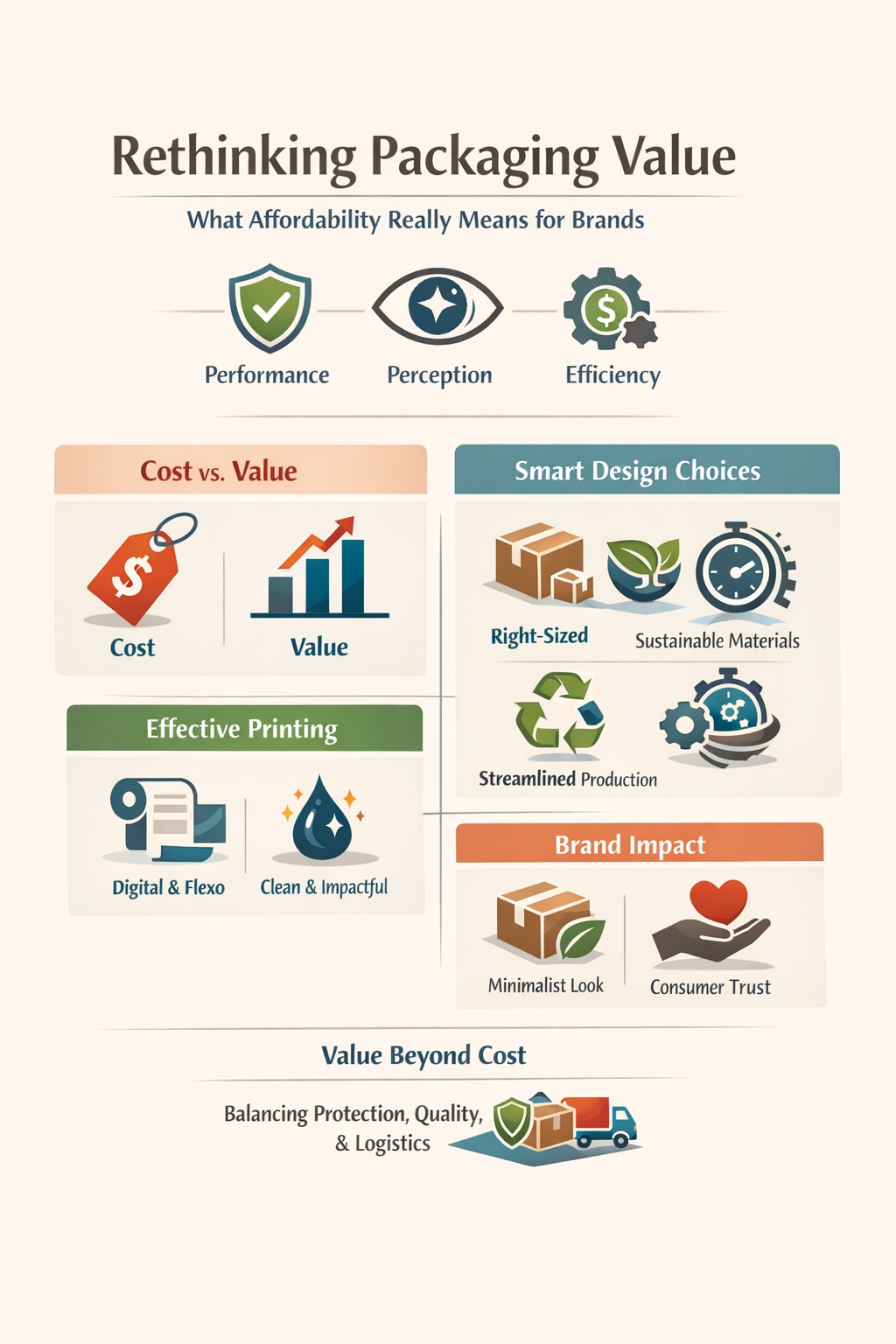
Every brand is feeling the squeeze — higher raw material costs, volatile freight rates, and a consumer base more price-conscious than ever. But cutting packaging budgets blindly can lead to damaged goods, compliance issues, and eroded brand value. Smart brands aren’t chasing cheaper boxes — they’re making smarter packaging decisions that balance performance, cost, and perception. The difference between saving money and losing value comes down to how you evaluate your packaging, not just what you pay for it. Beyond Unit Price: Understanding Total Packaging Cost A low unit price might look great on paper — until you factor in assembly time, damage rates, and freight efficiency. Smart packaging evaluation considers the total cost of ownership, including: Material yield (how efficiently sheets convert into boxes) Pallet and trailer utilization (freight optimization) Labor efficiency (ease of assembly or automation compatibility) Product protection (damage rates, replacements, and returns) When buyers assess all these metrics, the lowest-cost box often isn’t the best-value box. Material Selection That Saves in the Long Run Switching materials isn’t just about cutting cost — it’s about reducing waste and improving performance. For instance, moving from double-wall to a high-performance single-wall with better flute structure can cut weight and shipping cost without sacrificing protection. In folding cartons, substrate optimization — using a lighter caliper SBS or switching to coated recycled board — can yield savings that scale across production runs. And for rigid boxes, structural tweaks like thinner chipboard paired with strong wrap papers can preserve presentation while reducing material use. Every small change adds up when you scale across thousands of units. Design Efficiency: The Overlooked Cost Saver A smart structural design can eliminate cost before production even starts. Simplifying folds, reducing glue flaps, or reengineering inserts can cut assembly time and material waste. Modern packaging engineers use CAD-based dieline analysis to optimize layouts — ensuring maximum sheet yield and minimal offcut. For e-commerce and retail brands alike, right-sizing packaging improves shipping efficiency and reduces filler materials while maintaining the brand’s polished look. It’s not just design — it’s design that earns its keep Printing Smart: Matching the Process to the Purpose Not every job needs premium litho or complex spot varnishes. A good packaging partner matches print method to scale and brand intent: Flexo printing for high-volume, cost-efficient runs. Digital printing for short runs, personalization, and multi-SKU campaigns. Litho laminating for high-end visuals in rigid or premium retail displays. By choosing the right print method early, brands can avoid over-engineering — saving both time and money without compromising quality. Data-Driven Decisions: The New Standard for Packaging Buyers Leading companies now use data to guide packaging spend. Damage rate metrics, SKU-level freight analysis, and consumer perception studies all contribute to smarter choices. Smart buyers are no longer asking, “What’s the cheapest box?” They’re asking, “What’s the most efficient box that protects the product, ships well, and supports brand goals?” This mindset shift is what separates cost-cutting from cost control. The Brown Packaging Approach At Brown Packaging, we help brands make smarter packaging decisions by combining engineering analysis, supplier network leverage, and real-world testing. Our process aligns packaging performance with total cost goals — from box design to print selection and logistics. The result: stronger packaging, lower waste, and sustainable cost savings that scale with your business. Because in today’s market, smart packaging isn’t just a cost center — it’s a competitive advantage. References PMMI. (2025). Operational Cost Efficiency in Packaging and Logistics. McKinsey & Company. (2024). Total Cost of Ownership in Consumer Goods Packaging. Packaging World. (2025). Data-Driven Decisions in Packaging Sourcing. Soroka, W. (2009). Fundamentals of Packaging Technology (4th ed.). (714)300-0650 request@brownpackaging.com Most Recent Posts: Categories: Corrugated Ecommerce ESD Design Display Flexible Packaging Foam Folding Carton Packaging Plastic Packaging Pouch Printing Protection Retail Rigid Box Thermoform Sustainability Subscribe To Our Newsletter By submitting your information, you agree to our terms and conditions and privacy policy. Custom Packaging Facebook Twitter LinkedIn Pinterest Relevant Posts
Home » 5 Ways Custom Packaging Can Enhance Product Visibility and Sales

Millennials, born roughly between 1981 and 1996, have become a dominant force in the consumer market. Their unique preferences and values significantly influence packaging trends. Brands looking to appeal to this demographic need to understand what resonates with them. This blog post explores effective packaging strategies that can attract and engage millennials. Understanding Millennial Values To design packaging that appeals to millennials, it’s crucial to grasp their values: Sustainability: Millennials are environmentally conscious and prefer brands that demonstrate a commitment to sustainability. Authenticity and Originality: They value originality and authenticity, both in product and packaging. Convenience and Functionality: This demographic appreciates practicality and ease of use in packaging. Digital Connectivity: Millennials are digital natives and respond well to packaging that integrates digital elements. Designing with Sustainability in Mind Sustainability is more than a buzzword for millennials; it’s a crucial purchasing factor. Eco-friendly Materials: Use recyclable, biodegradable, or compostable materials. Minimalism: Adopt a minimalist approach to packaging, reducing unnecessary waste. Transparency: Clearly communicate your brand’s sustainability efforts on the packaging. Creating Authentic and Original Designs Millennials are drawn to packaging that feels genuine and unique. Storytelling: Use packaging to tell a story about your brand or product. This could include information about the product’s origins or the brand’s journey. Unique Aesthetics: Stand out with creative, unconventional designs. Bold colors, interesting textures, and unique shapes can make your product pop on the shelf. Personalization: Offer personalized packaging options when possible, as millennials appreciate a tailored experience. Prioritizing Convenience and Functionality Functional packaging that makes life easier can be a big draw. Ease of Use: Ensure that packaging is easy to open, use, and store. Portability: Consider the on-the-go lifestyle of many millennials and design packaging that is portable and travel-friendly. Reusability: Design packaging that has a secondary use, adding value for the consumer. Integrating Digital Elements Leveraging technology can create a more engaging experience. QR Codes and AR: Incorporate QR codes that lead to digital content or use augmented reality (AR) to provide interactive experiences. Social Media-Friendly: Design packaging that is visually appealing for sharing on social media platforms. Consider how your packaging can encourage user-generated content. Being Transparent and Informational Millennials appreciate transparency and detailed information. Clear Labeling: Provide clear, honest information about the product. This includes ingredients, usage instructions, and any health benefits. Educational Content: Use packaging to educate consumers about the product or related topics. If you are interested in packaging for millennials, then partner with Brown Packaging today to get started. (714)300-0650 request@brownpackaging.com Most Recent Posts: Categories: Corrugated Ecommerce ESD Design Display Flexible Packaging Foam Folding Carton Packaging Plastic Packaging Pouch Printing Protection Retail Rigid Box Thermoform Sustainability Subscribe To Our Newsletter By submitting your information, you agree to our terms and conditions and privacy policy. Custom Packaging Facebook Twitter LinkedIn Pinterest Relevant Posts

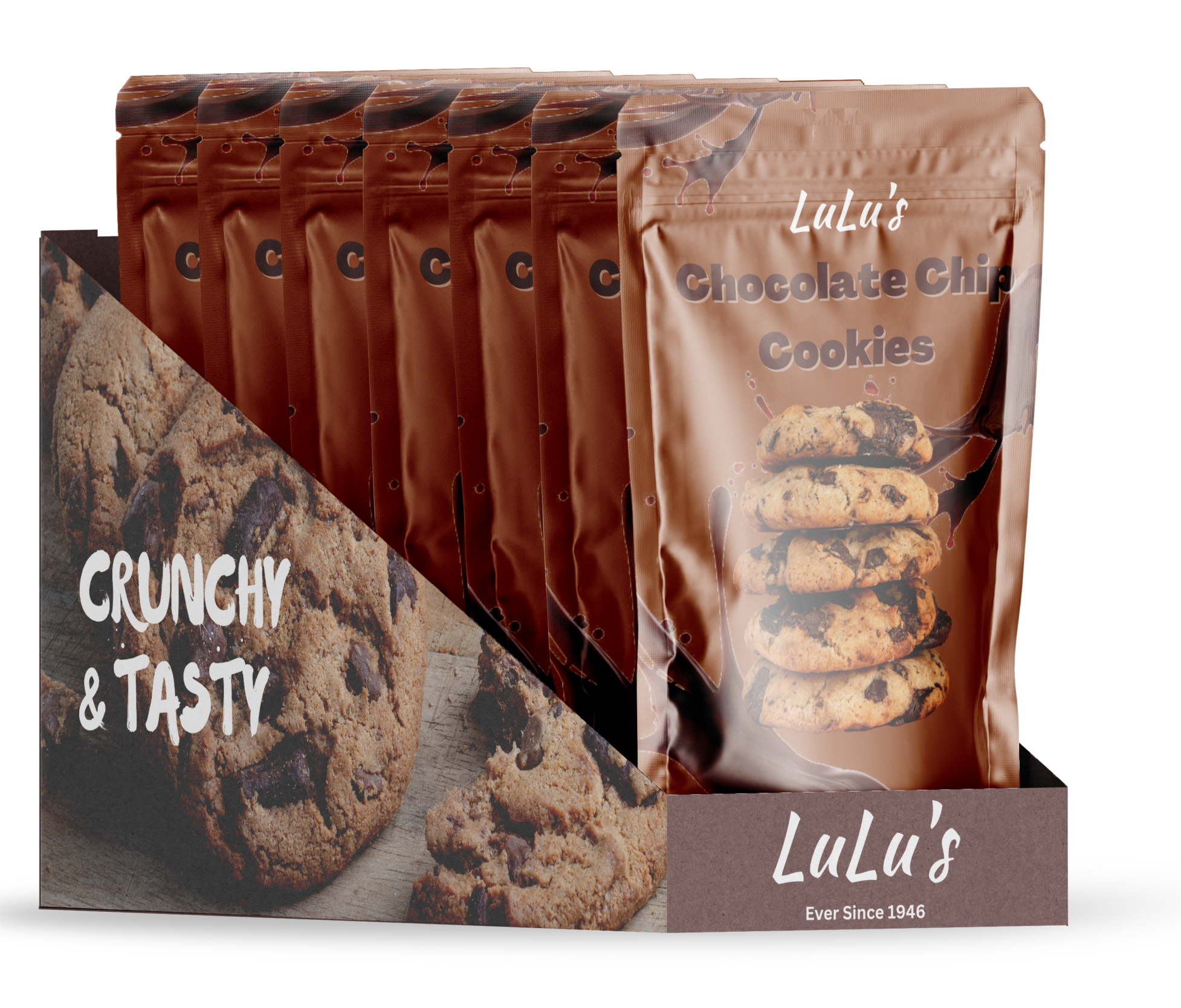
Secondary packaging plays a vital role in the supply chain, influencing marketing, protection, and logistics. It’s an integral component for businesses in various industries. In this blog, we explore the essence of secondary packaging, its significance, various types, applications, and its distinction from primary and tertiary packaging. Understanding Secondary Packaging Secondary packaging encases the primary packaging of a product. It doesn’t come into direct contact with the product but serves as an additional protective layer. This layer of packaging, often seen on store shelves, is crucial in both marketing and safeguarding products during their journey from manufacturer to consumer. The Significance of Secondary Packaging The role of secondary packaging extends beyond mere protection. It is an essential element for branding and marketing, drawing consumer attention with its design and graphics. It also simplifies handling, storage, and transportation of products, particularly in bulk. Additionally, secondary packaging can be a valuable source of product information, such as instructions or ingredients. In today’s environmentally conscious market, eco-friendly secondary packaging options are increasingly important for both brand image and environmental responsibility. Different Types of Secondary Packaging There’s a variety of secondary packaging materials and styles, each suited to different product types and industries. Common forms include boxes and cartons, which offer robust protection and ample branding space. Shrink wrap is great for bundling items like beverages together. Paperboard packaging, often seen in cosmetics and pharmaceuticals, strikes a balance between protection and aesthetic appeal. Plastic cases are another option, offering durability for items like electronics and tools. Applications Across Industries Secondary packaging finds its place in diverse sectors. In the food and beverage industry, it’s crucial for the safe transportation and storage of items. The pharmaceutical industry relies on it for additional protection and information dissemination for medications. In cosmetics and personal care, it enhances brand visibility and safeguards delicate products. For electronics, it provides necessary protection against various environmental factors. Comparing Packaging Levels Secondary packaging differs from primary and tertiary packaging in its focus and function. While primary packaging is in direct contact with the product, such as a beverage bottle, and is mainly concerned with preservation and initial presentation, secondary packaging focuses more on branding, bulk handling, and additional protection. Tertiary packaging, on the other hand, is used for larger-scale handling and transportation, involving items like pallets and crates. Conclusion Secondary packaging is a multifaceted element in product distribution, crucial for protection, presentation, and logistics. It’s not just about safeguarding the product; it’s about enhancing brand value, ensuring product safety, appealing to the target audience, and considering the environmental impact. Thoughtful secondary packaging choices can significantly influence a product’s success in the market. If you are interested in secondary packaging, then partner with Brown Packaging today to get started. (714)300-0650 request@brownpackaging.com Most Recent Posts: Categories: Corrugated Ecommerce ESD Design Display Flexible Packaging Foam Folding Carton Packaging Plastic Packaging Pouch Printing Protection Retail Rigid Box Thermoform Sustainability Subscribe To Our Newsletter By submitting your information, you agree to our terms and conditions and privacy policy. Custom Packaging Facebook Twitter LinkedIn Pinterest Relevant Posts

Generation X, typically defined as those born between 1965 and 1980, holds significant purchasing power and influence in today’s market. Often characterized as pragmatic and value-oriented, this demographic has distinct preferences when it comes to packaging. Brands looking to appeal to Generation X need to understand their unique values and priorities. This blog post explores effective packaging strategies that resonate with Generation X, offering insights for brands to effectively engage with this demographic. Understanding Generation X Values To design packaging that appeals to Generation X, it’s important to grasp their core values: Practicality and Functionality: Gen Xers value practicality and straightforward functionality in products and packaging. Quality and Durability: This generation tends to prioritize quality and durability over flashy or trendy designs. Brand Loyalty: Once loyal to a brand, Gen X consumers are likely to remain loyal, provided the quality and value remain consistent. Environmental Awareness: While not as vocal as millennials or Gen Z, Gen Xers are environmentally conscious and appreciate sustainable practices. Designing for Practicality and Ease of Use Functionality is key for packaging aimed at Generation X. User-Friendly Design: Ensure that packaging is easy to open, use, and store. Consider the ergonomics of packaging, especially for products used frequently. Clear Instructions: Include straightforward and easy-to-read instructions or product information. Emphasizing Quality and Durability Generation X tends to view purchases as long-term investments. Durable Materials: Use high-quality materials that convey the durability and longevity of the product. Classic Design: Opt for classic and timeless designs over trendy aesthetics. Gen Xers often prefer simplicity and sophistication. Building Brand Loyalty through Consistency Brand consistency is crucial in maintaining the loyalty of Gen X consumers. Consistent Branding: Maintain a consistent brand image across all packaging. Sudden rebrands or drastic design changes might be off-putting. Trust and Reliability: Emphasize the reliability and trustworthiness of your brand through your packaging. Eco-friendly Packaging Options Incorporate sustainable practices in your packaging strategy. Recyclable Materials: Utilize materials that are recyclable or have been recycled. Minimalist Packaging: Adopt a minimalist approach to reduce waste. Gen Xers appreciate packaging that doesn’t feel excessive or environmentally unfriendly. Incorporating Technology Smartly While Gen Xers are comfortable with technology, they don’t necessarily seek it out in packaging. QR Codes for Information: Use QR codes sparingly to provide additional product information or instructions. Subtle Tech Integration: Any tech features should enhance the functionality or user experience without being overly complicated. Marketing Through Packaging Use packaging as a tool for subtle yet effective marketing. Promotions and Rewards: Include information about loyalty programs, promotions, or rewards that might appeal to the value-oriented nature of Gen X. Testimonials and Ratings: Incorporate customer testimonials or ratings, as Gen X consumers often seek out peer reviews and opinions. If you are interested in packaging for generation x, then partner with Brown Packaging today to get started. (714)300-0650 request@brownpackaging.com Most Recent Posts: Categories: Corrugated Ecommerce ESD Design Display Flexible Packaging Foam Folding Carton Packaging Plastic Packaging Pouch Printing Protection Retail Rigid Box Thermoform Sustainability Subscribe To Our Newsletter By submitting your information, you agree to our terms and conditions and privacy policy. Custom Packaging Facebook Twitter LinkedIn Pinterest Relevant Posts