
Home » How Over-Shipping Air Increases POP Display Costs
How Over-Shipping Air Increases POP Display Costs
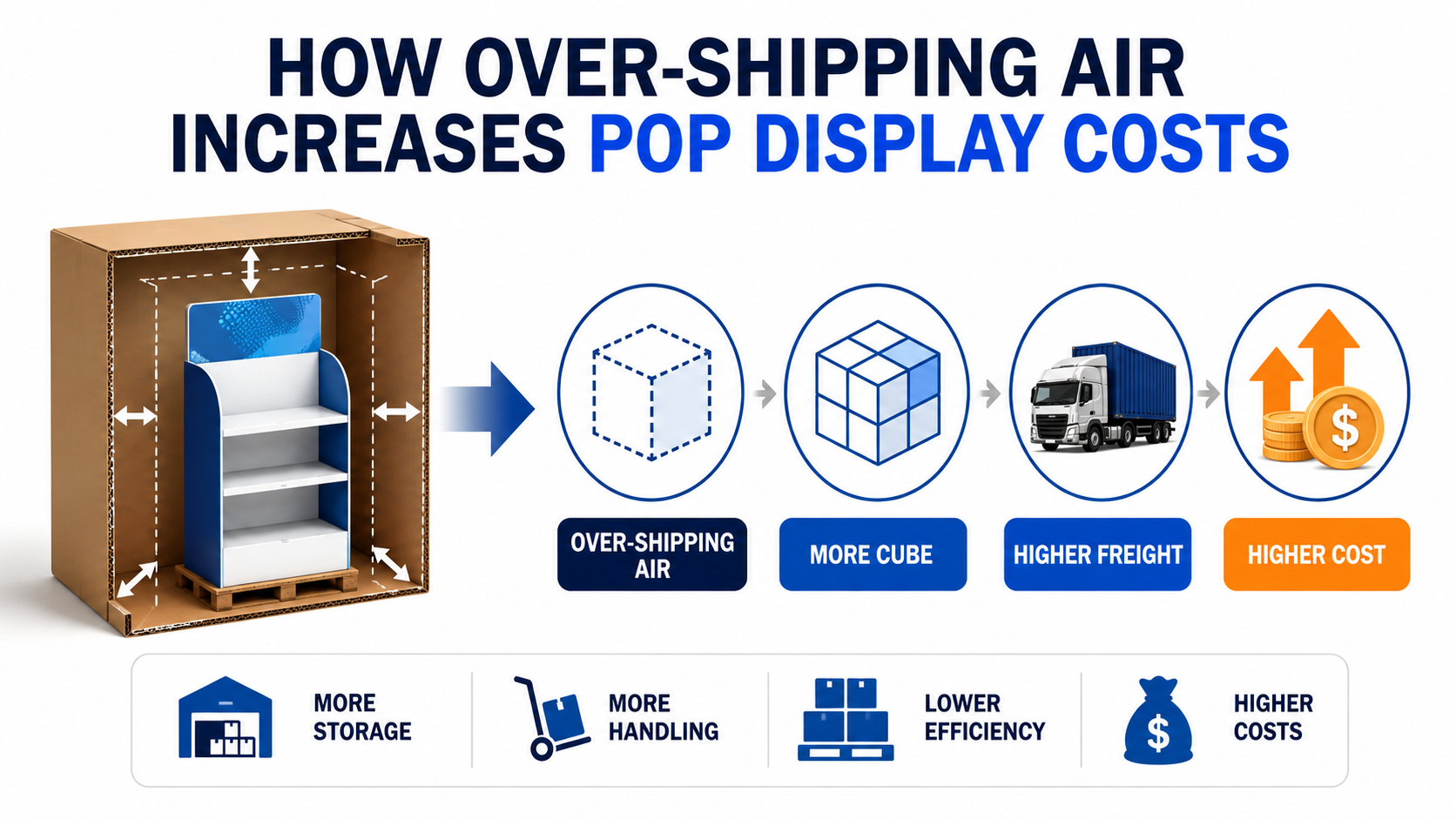
Most POP display programs don’t lose money on materials.
They lose it in:
👉 empty space
Displays are often shipped with:
- Excess void space
- Poor stacking efficiency
- Low pallet utilization
You’re not just shipping displays—
👉 You’re shipping air
And it adds up fast.
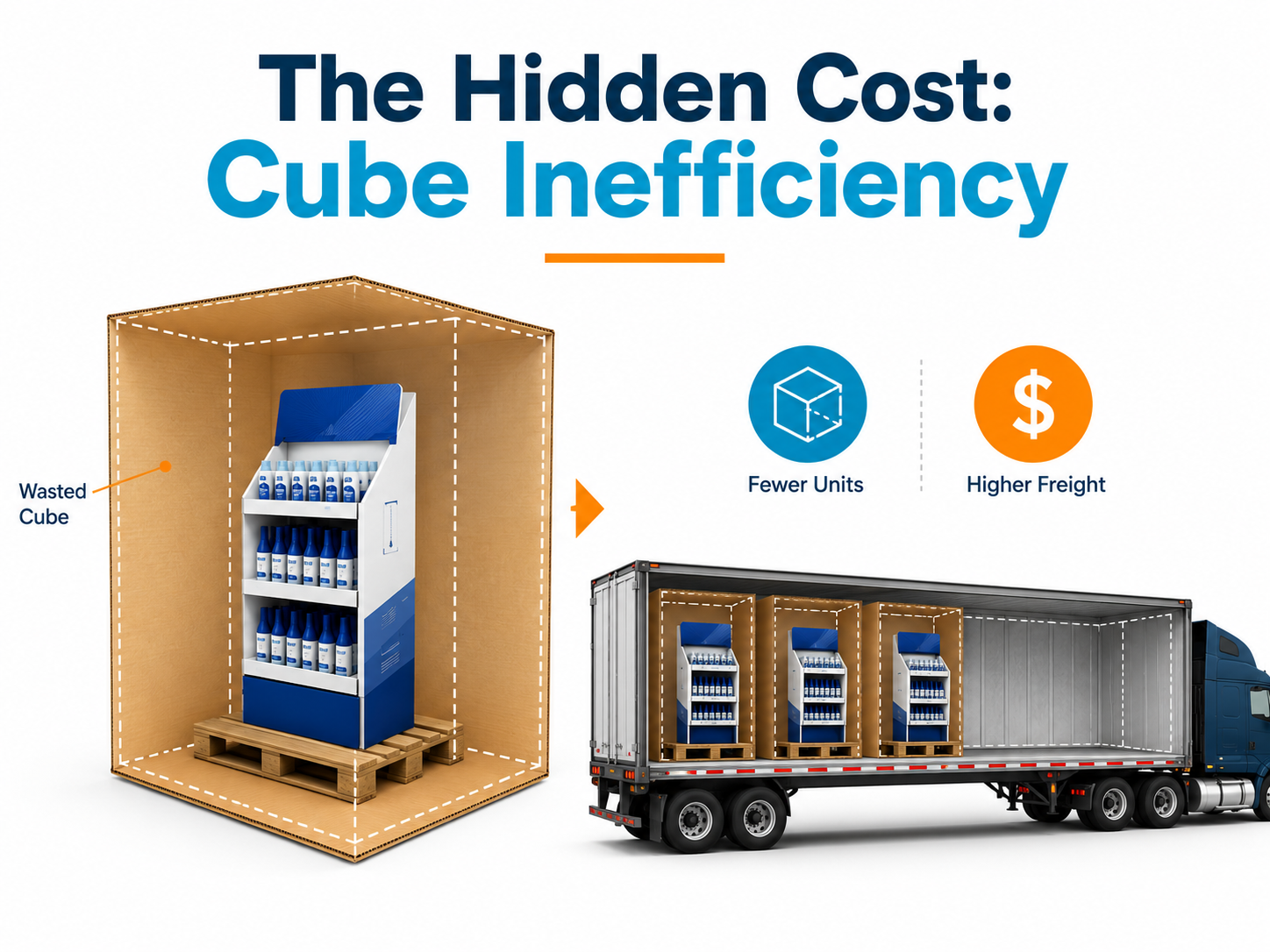
The Hidden Cost: Cube Inefficiency
Freight is based on:
- Volume (cube)
- Not just weight
If your packaging:
- Doesn’t maximize space
- Leaves gaps between units
You pay for:
👉 unused volume
This increases:
- Cost per unit shipped
- Overall program spend
Without changing the display itself.
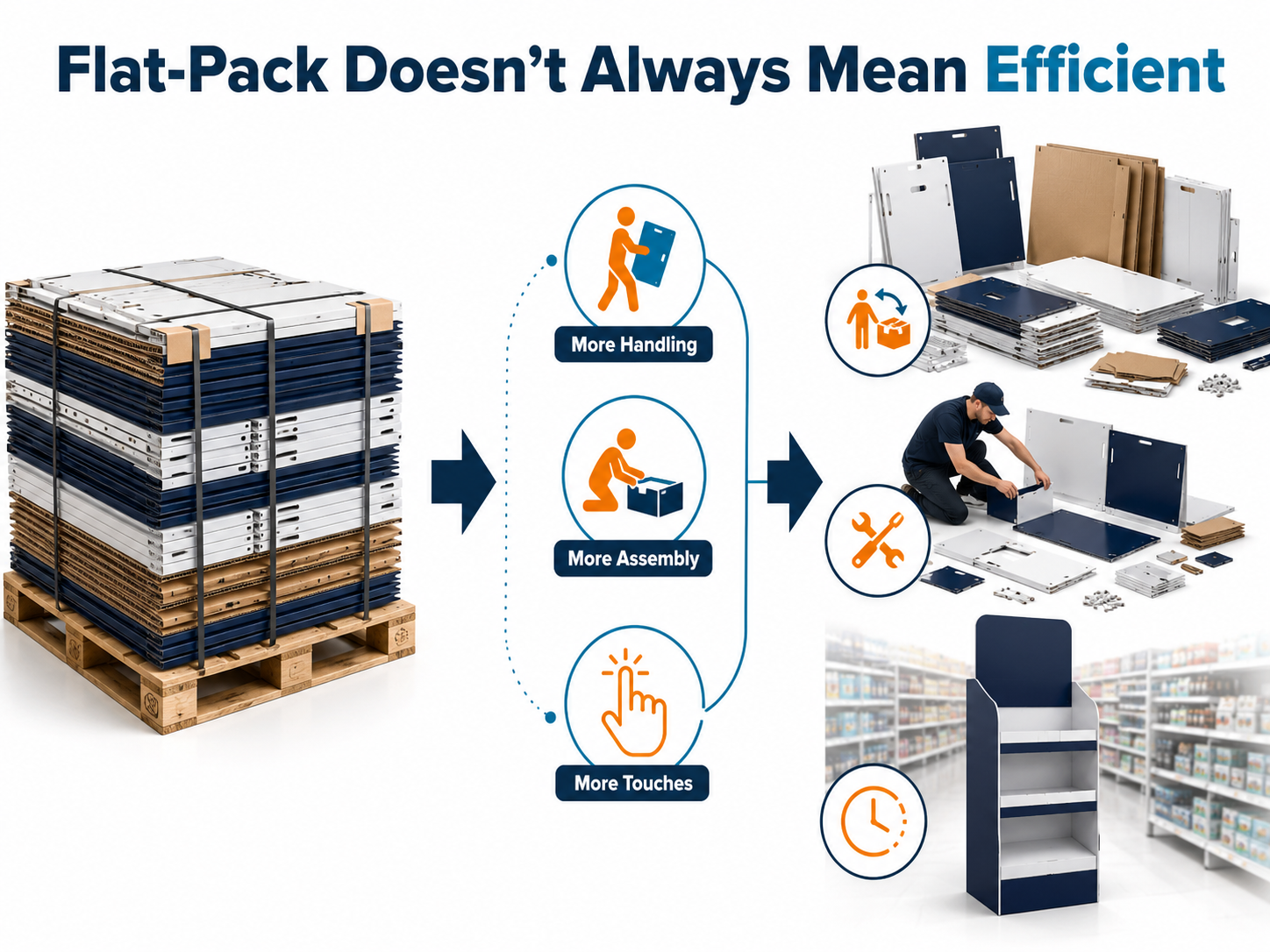
Flat-Pack Doesn’t Always Mean Efficient
Flat-pack is often assumed to reduce cost.
But poor flat-pack design can:
- Leave unused space between components
- Prevent tight stacking
- Create inconsistent pallet loads
Result:
👉 More units per shipment lost to air
Flat-pack only works if it’s:
👉 engineered for density
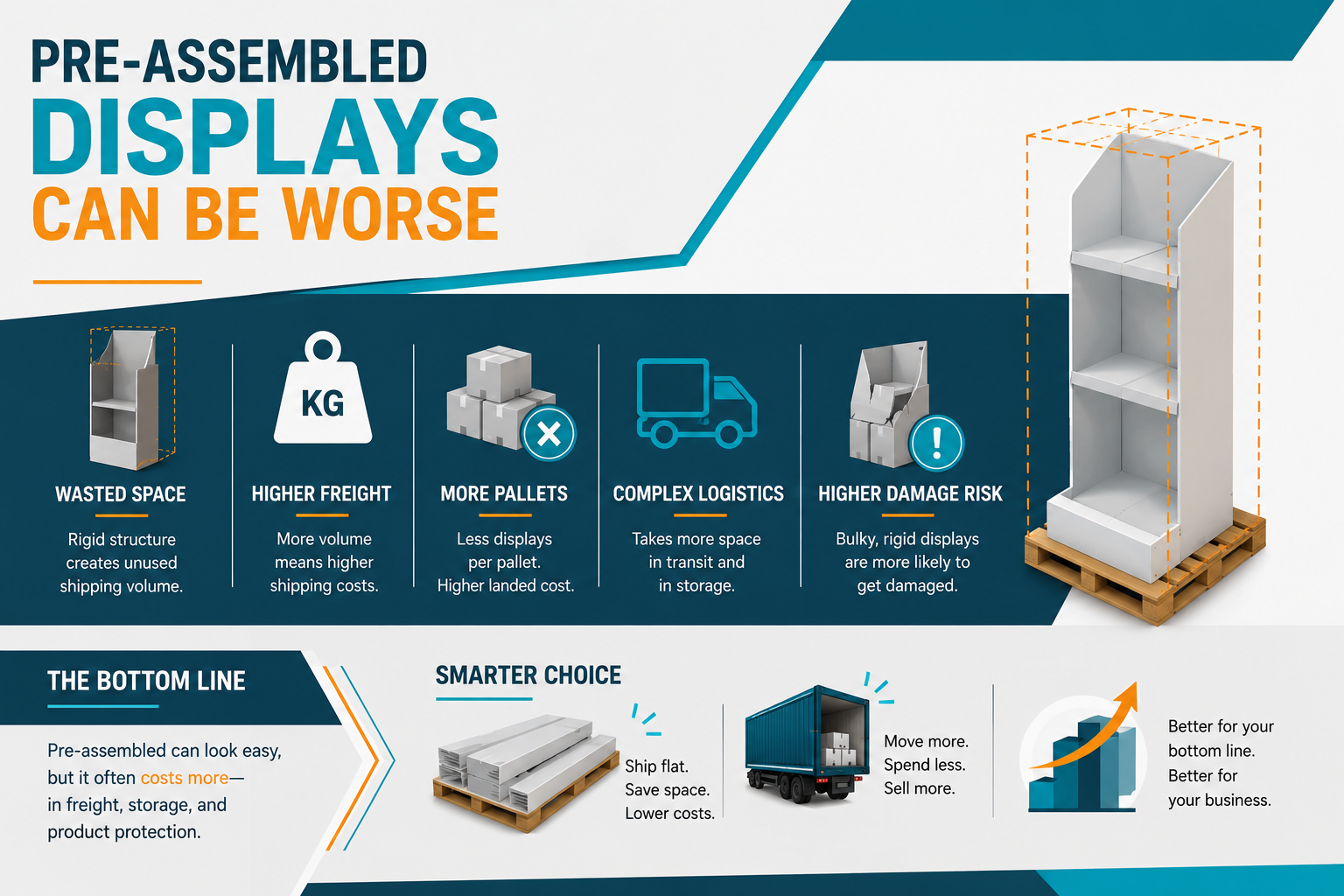
Pre-Assembled Displays Can Be Worse
Pre-assembled displays:
- Take up more space
- Limit stacking options
- Increase risk of inefficient pallet layouts
Without optimization:
- You ship fewer units per pallet
- Freight cost per display increases
Convenience comes at a cost—if not designed properly.
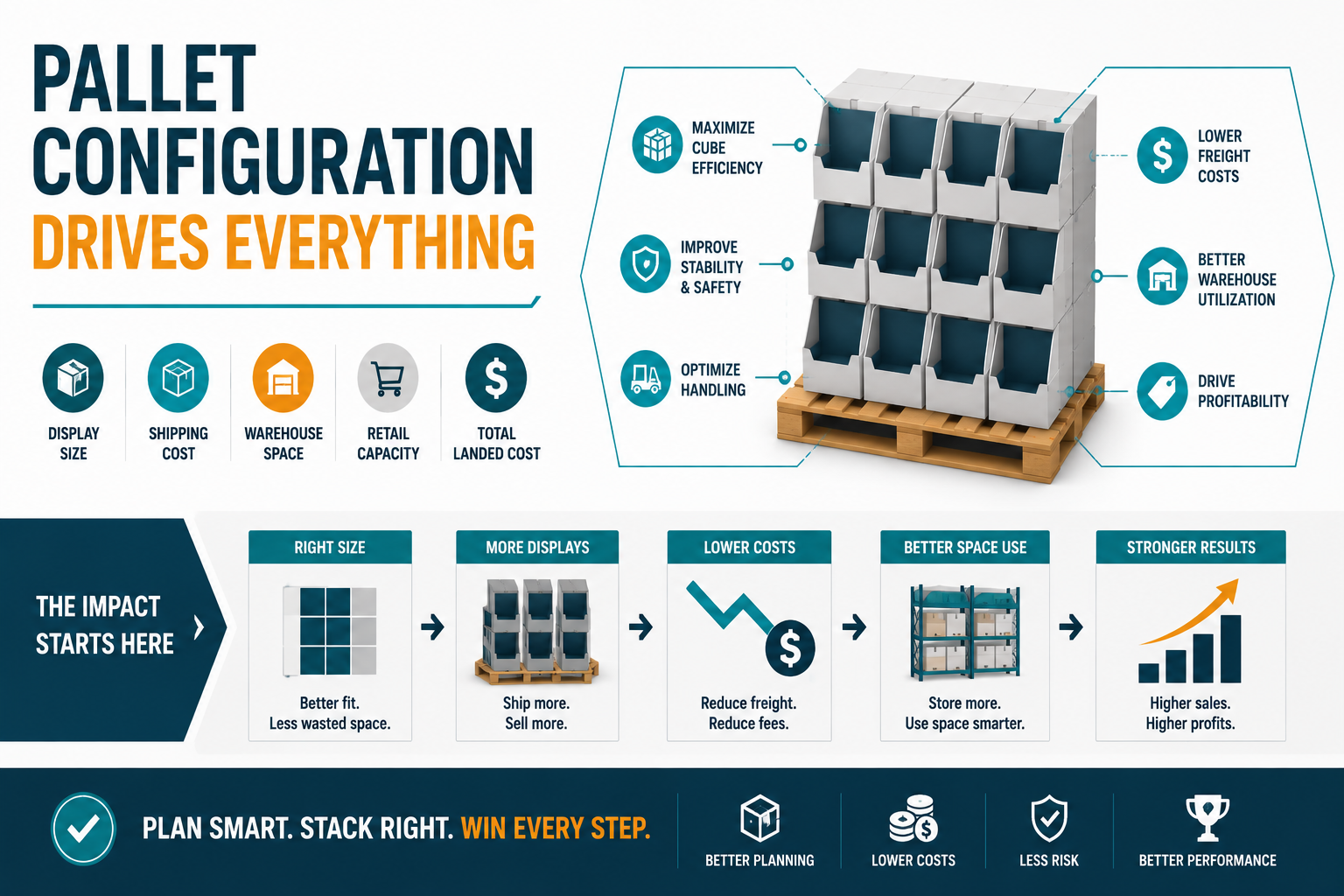
Pallet Configuration Drives Everything
How displays fit on a pallet determines:
- Units per load
- Stability during shipping
- Overall freight efficiency
Common issues:
- Misaligned dimensions
- Wasted edge space
- Inconsistent stacking patterns
Even small inefficiencies:
👉 Multiply across shipments
Void Space Between Components Adds Up
Inside packaging:
- Gaps between parts
- Loose configurations
- Poor nesting
These create:
- Inefficient use of space
- More cartons needed
- Higher freight cost per program
If components don’t fit tightly:
👉 You’re paying for nothing
Shipping More Loads Than Necessary
Inefficient pack-out leads to:
- More pallets
- More truckloads
- More handling
Each adds:
- Freight cost
- Labor cost
- Risk of damage
This is where:
👉 Small inefficiencies become large expenses
The Compounding Effect Across Programs
One inefficient shipment isn’t the issue.
But across:
- Thousands of units
- Multiple locations
- Repeated programs
You get:
👉 Significant cost leakage
All from space that wasn’t optimized.
What Efficient Programs Do Differently
They:
- Maximize units per pallet
- Eliminate unnecessary void space
- Design components to nest tightly
- Align dimensions with pallet standards
They treat shipping as:
👉 A design variable—not an afterthought
Where Brands Get It Wrong
- Assuming flat-pack is automatically efficient
- Ignoring pallet configuration during design
- Not optimizing component layout
- Overlooking cube vs weight cost impact
- Treating freight as fixed instead of controllable
These mistakes quietly increase total program cost.
How Brown Packaging Optimizes Freight Efficiency
At Brown Packaging, POP displays are designed with:
👉 shipping efficiency built in
We focus on:
- Pack-out optimization to reduce void space
- Pallet configuration that maximizes density
- Structural design that supports tight nesting
- Reducing freight cost per unit across programs
Because reducing air isn’t just about shipping—
👉 It’s about improving total cost efficiency.
References
Deloitte. (2022). Supply Chain Optimization Report.
Freedonia Group. (2023). Packaging Logistics Analysis.
McKinsey & Company. (2021). Freight and Efficiency Study.
ISTA. (2023). Packaging and Transport Guidelines.
Soroka, W. (2009). Fundamentals of Packaging Technology.
Corrugated box trends in 2027 will be driven by a practical mix of cost control, sustainability, ecommerce growth, automation, retail requirements, and supply chain performance. Buyers will still need boxes
Packaging trends in 2027 will be shaped by one major reality: buyers are no longer looking at packaging as just a box, carton, insert, pouch, or display. They are looking
Folding cartons are often treated as a simple retail packaging option, but the best folding carton programs are built around more than appearance. The right carton has to balance product
Box Compression Test (BCT) measures how much vertical load a corrugated box can last before it collapses. This matters when: Boxes are stacked on pallets Loads are stored for extended
Home » How Over-Shipping Air Increases POP Display Costs