

Home » How Oil Prices Impact Packaging Costs
How Oil Prices Impact Packaging Costs
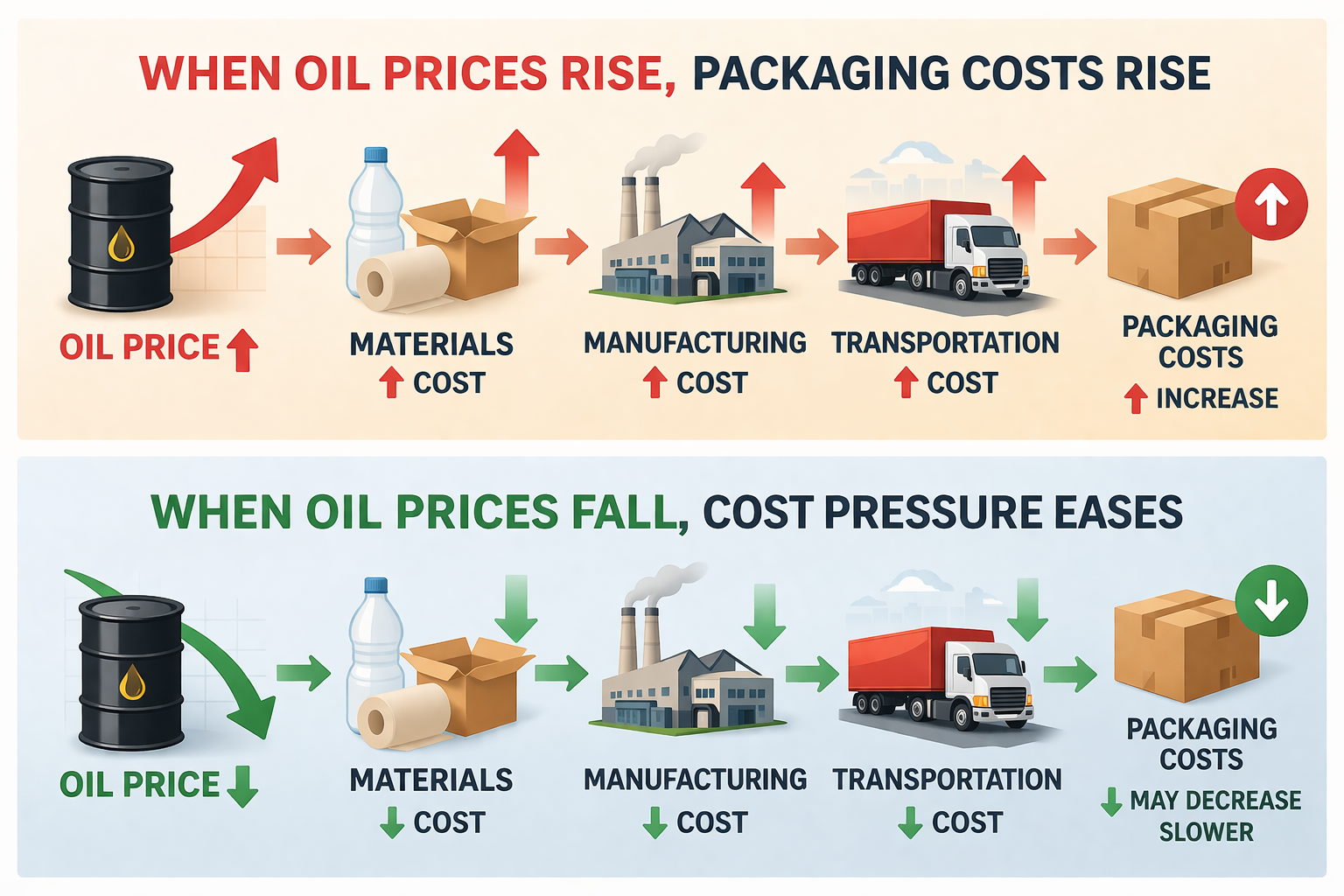
Oil prices don’t just affect fuel—they ripple through nearly every part of packaging.
When oil rises, packaging costs follow.
When oil drops, costs don’t always fall as quickly.
That’s because oil influences:
👉 materials, manufacturing, and transportation
Understanding this helps explain why packaging pricing fluctuates—even when your design doesn’t change.
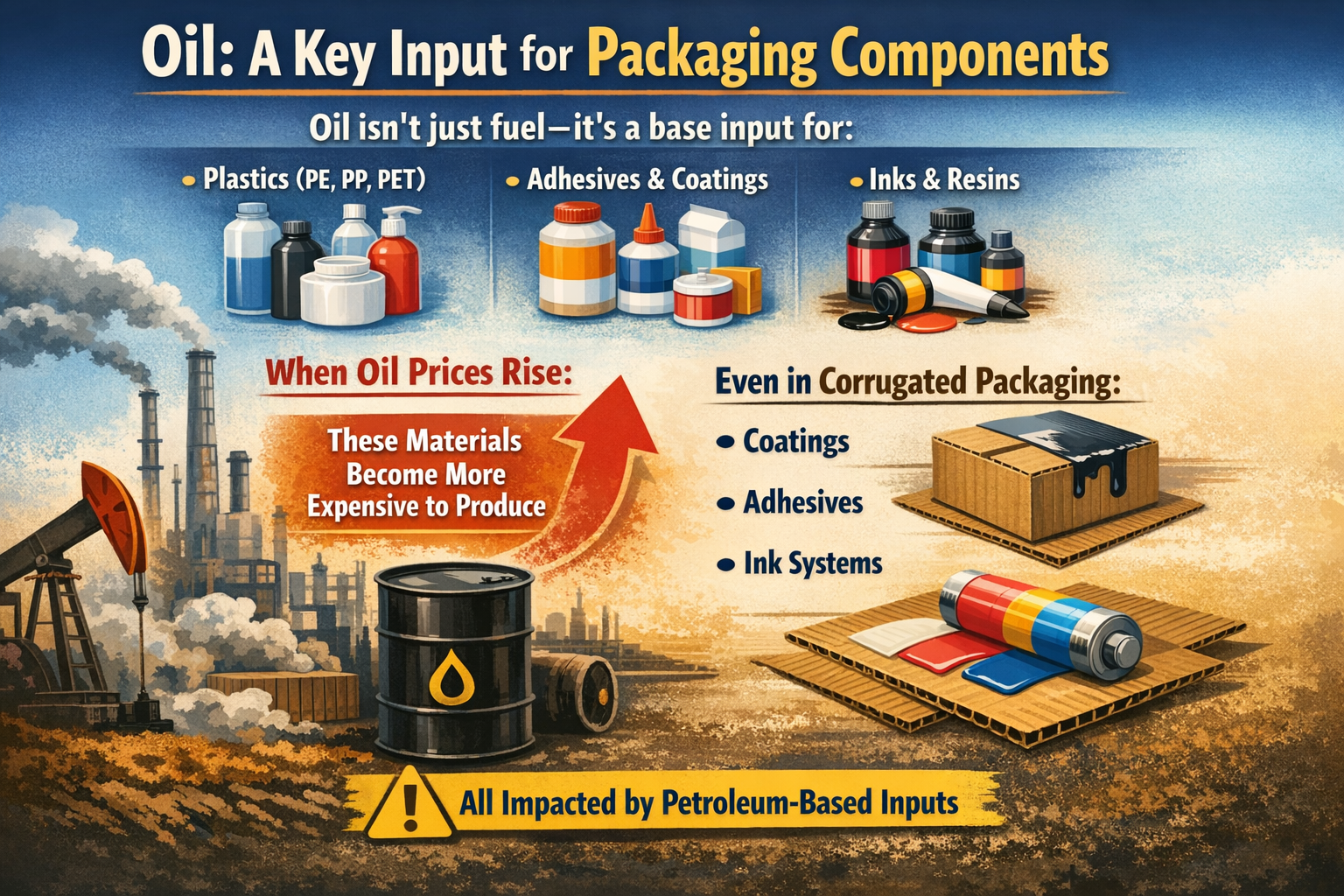
Oil Is a Raw Material for Many Packaging Components
Oil isn’t just fuel—it’s a base input for:
- Plastics (polyethylene, polypropylene, PET)
- Adhesives and coatings
- Inks and resins
When oil prices increase:
👉 These materials become more expensive to produce
Even in corrugated packaging:
- Coatings
- Adhesives
- Ink systems
👉 Are all impacted by petroleum-based inputs
Corrugated Isn’t Immune to Oil Prices
Even though corrugated is paper-based:
Oil still affects:
- Chemical additives used in board production
- Starch and adhesive processing costs
- Energy required for paper mills
Paper mills are energy-intensive operations.
When oil and energy costs rise:
👉 Board costs increase
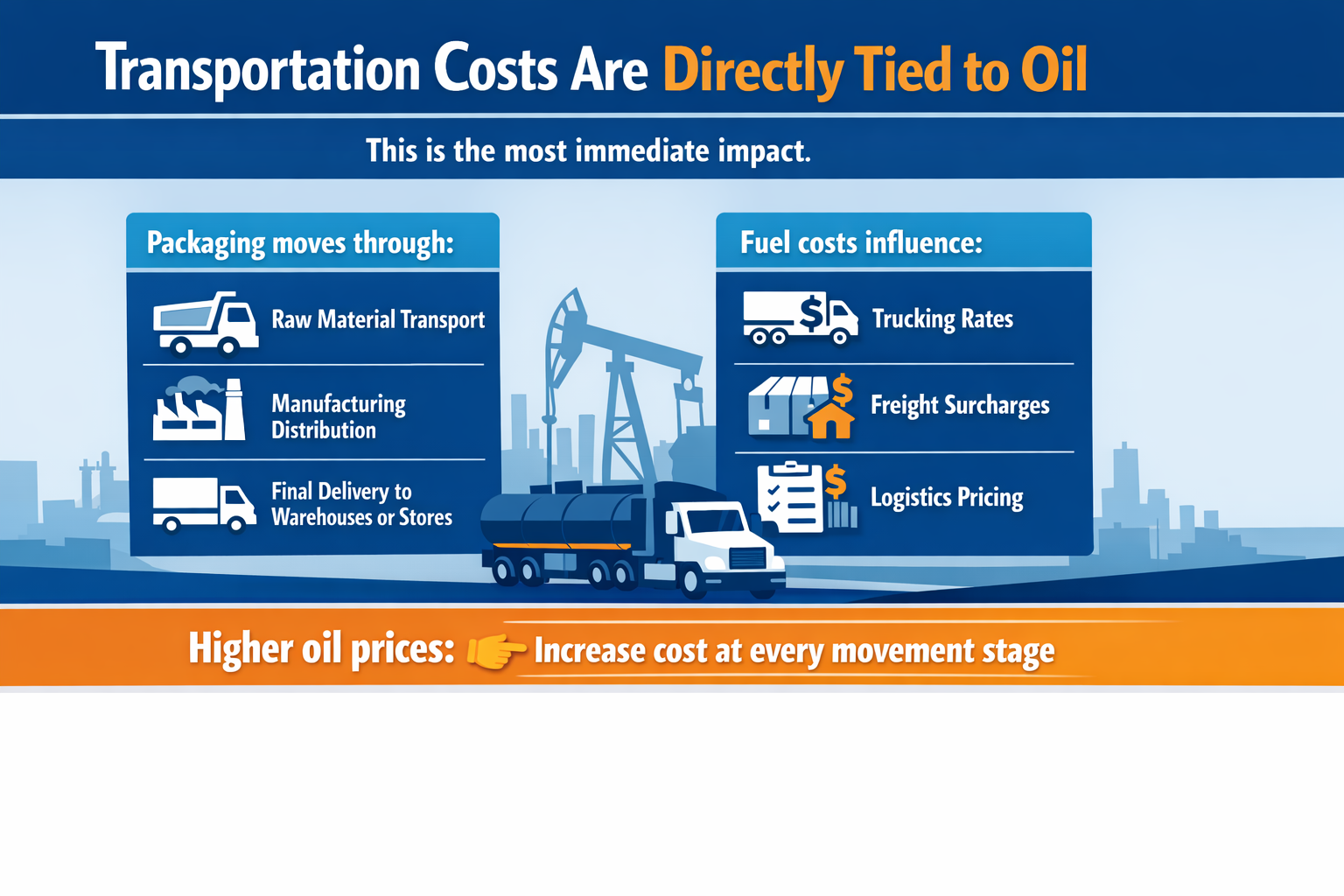
Transportation Costs Are Directly Tied to Oil
This is the most immediate impact.
Packaging moves through:
- Raw material transport
- Manufacturing distribution
- Final delivery to warehouses or stores
Fuel costs influence:
- Trucking rates
- Freight surcharges
- Logistics pricing
Higher oil prices:
👉 Increase cost at every movement stage
Freight Becomes a Major Cost Driver
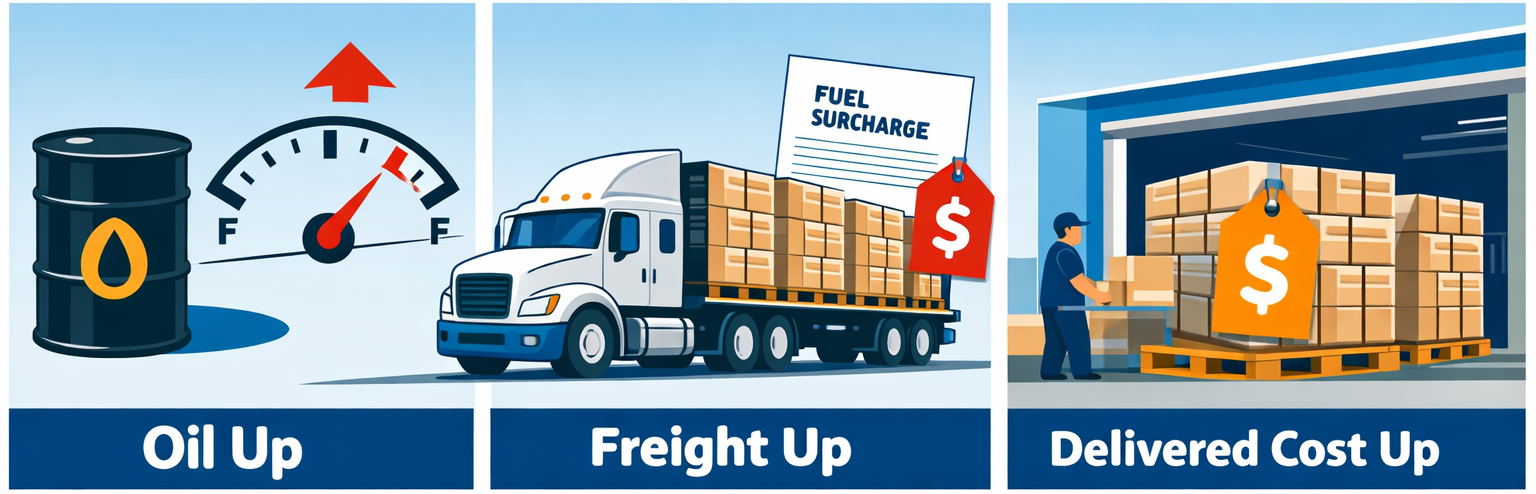
As oil rises:
- Carriers increase fuel surcharges
- Shipping rates adjust quickly
This impacts:
- Cost per pallet
- Cost per unit delivered
- Overall program pricing
Even if production cost stays stable:
👉 Freight alone can increase total packaging cost significantly
Manufacturing Energy Costs Increase
Packaging production requires:
- Heat
- Electricity
- Mechanical processing
Oil and natural gas influence:
- Energy pricing
- Plant operating costs
Higher energy costs lead to:
👉 Higher conversion costs
This includes:
- Printing
- Die cutting
- Folding and gluing
Price Increases Don’t Reverse Immediately
When oil prices rise:
👉 Costs increase quickly
But when oil drops:
👉 Packaging prices don’t always fall at the same pace
Why:
- Inventory purchased at higher cost
- Supplier contracts lag behind market changes
- Production planning cycles delay adjustments
This creates:
👉 Lag in pricing corrections
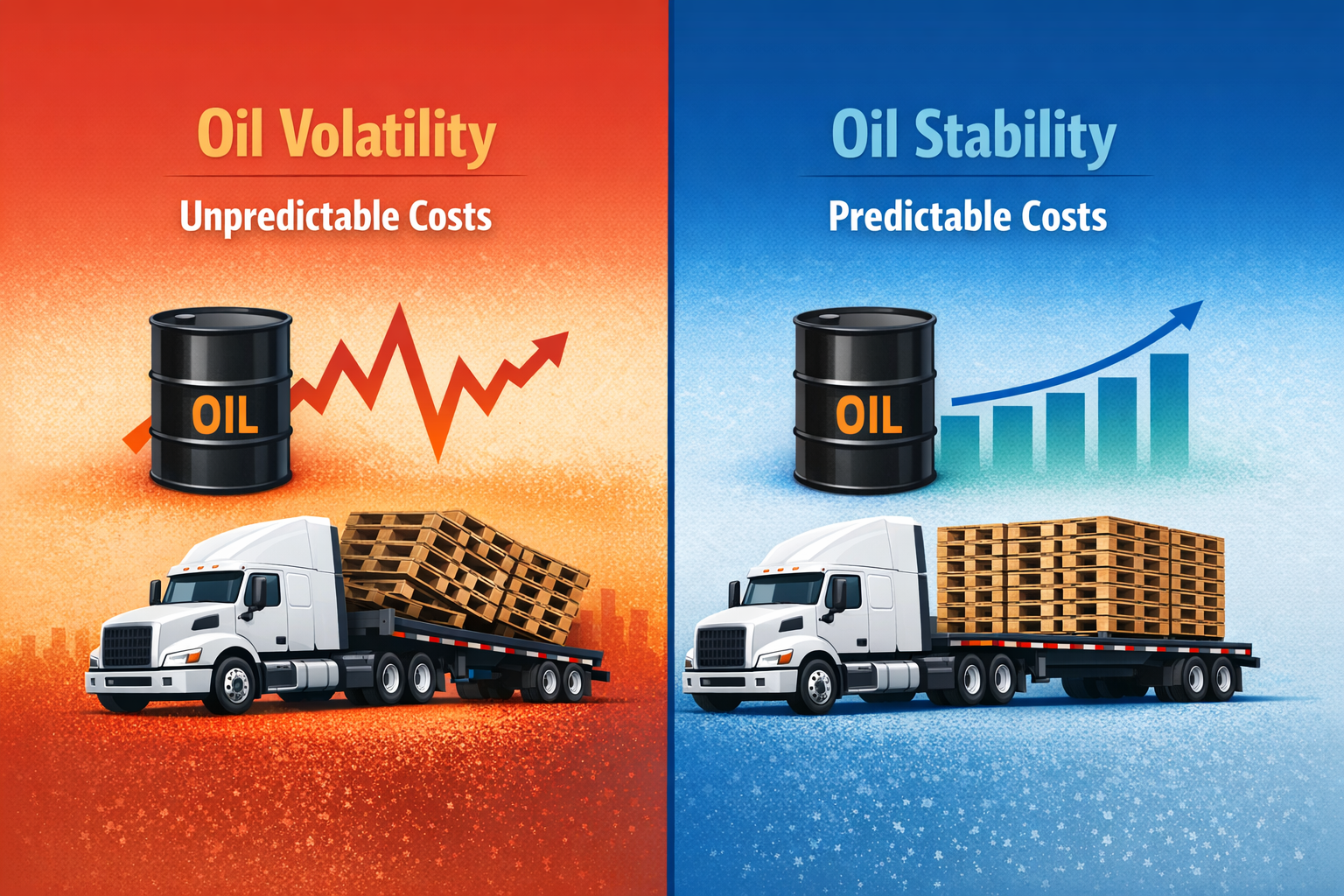
Supply Chain Volatility Amplifies the Effect
Oil price swings create:
- Uncertainty in material pricing
- Fluctuations in freight availability
- Shifts in supplier cost structures
This leads to:
- Less predictable packaging pricing
- Short-term cost spikes
Stability in oil markets:
👉 Improves predictability in packaging costs
What Buyers Often Miss
Common assumption:
👉 “Packaging cost is based on materials only”
Reality:
Packaging cost includes:
- Materials
- Energy
- Labor
- Freight
Oil impacts:
👉 All of them simultaneously
How to Manage Oil-Driven Cost Fluctuations
Buyers can reduce exposure by:
- Optimizing pack-out to reduce freight cost
- Right-sizing packaging to lower shipping volume
- Planning orders to avoid frequent small shipments
- Working with suppliers on cost-efficient designs
You can’t control oil prices—
👉 But you can control how much they impact you
What High-Performing Buyers Do Differently
They:
- Track cost drivers beyond materials
- Understand freight and energy impact
- Optimize packaging design for logistics efficiency
- Plan purchasing around market conditions
They don’t just react to price changes—
👉 They anticipate them
How Brown Packaging Helps Navigate Cost Volatility
At Brown Packaging, we help customers manage:
👉 Total packaging cost—not just unit price
We focus on:
- Freight optimization
- Material efficiency
- Structural design improvements
- Reducing exposure to volatile cost drivers
Because packaging cost isn’t fixed—
👉 It’s influenced by forces like oil that extend far beyond the box itself.
References
Freedonia Group. (2023). Packaging Market Analysis.
U.S. Energy Information Administration (EIA). (2023). Energy Price Reports.
Deloitte. (2022). Supply Chain Cost Drivers Study.
McKinsey & Company. (2021). Manufacturing Cost Volatility Report.
TAPPI. (2021). Paperboard Production and Energy Use.
Most cost-cutting in POP displays happens in the wrong place. Brands reduce board grade, simplify structure too aggressively, or cut print quality—only to see: Higher damage rates Poor retail execution
Oil prices don’t just affect fuel—they ripple through nearly every part of packaging. When oil rises, packaging costs follow.When oil drops, costs don’t always fall as quickly. That’s because oil
Most POP display failures aren’t caused by weak materials—they’re caused by poor weight distribution. A display can use the right board, the right flute, and still fail early if the
Not all retail environments are the same—and your POP display shouldn’t be either. What works in big box retail often fails in specialty stores, and vice versa. The difference isn’t
Home » How Oil Prices Impact Packaging Costs