
window.uetq = window.uetq || []; window.uetq.push(‘event’, ‘submit_lead_form’,{ event_label:‘SUBMIT MESSAGE’ }); window.lintrk('track', { conversion_id: 10271009 }); window.lintrk('track', { conversion_id: 10271017 });

Single vs Double vs Triple Wall FOL Boxes

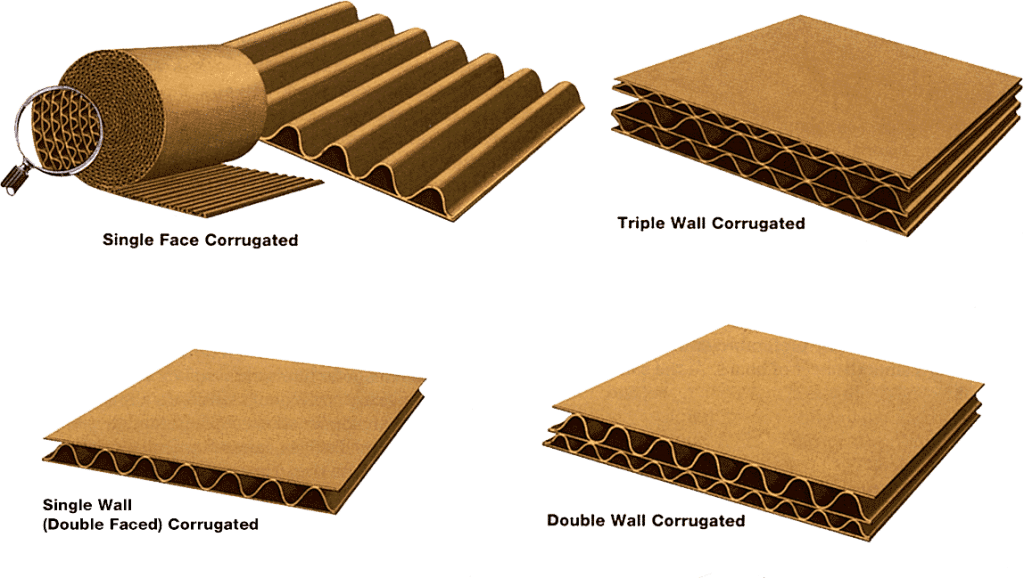
single face, single wall, double wall, triple wall corrugated

Full Overlap (FOL) corrugated boxes are valued for their durability, with overlapping flaps that add protection on the top and bottom panels. But the strength of an FOL container depends heavily on its wall construction. Choosing between single-, double-, or triple-wall board makes a direct impact on performance, cost, and suitability for specific applications.

Single-Wall FOL Boxes

Single-wall corrugated is the most common construction, featuring one layer of fluted medium sandwiched between two linerboards. When used in an FOL style, single-wall boxes provide greater strength than a comparable RSC, but remain cost-effective and lightweight.

  • Best for: Medium-weight consumer goods, e-commerce shipments, or products requiring moderate stacking strength.
  • Advantages: Lower material cost, easier to handle, lighter freight weight.
  • Limitations: Not recommended for very heavy or high-value industrial items.

Double-Wall FOL Boxes

Double-wall corrugated combines two fluted mediums with three linerboards, producing a stronger structure. In an FOL format, double-wall boxes are highly reliable in demanding supply chains and long-term warehousing.

  • Best for: Industrial parts, furniture, appliances, and products stored or stacked for long durations.
  • Advantages: Higher compression resistance, better puncture resistance, improved protection against handling damage.
  • Limitations: Higher material cost and increased weight per box.

Triple-Wall FOL Boxes

Triple-wall corrugated has three fluted mediums and four linerboards, creating the maximum strength available before moving into wooden crates. FOL boxes built from triple-wall board are designed to protect the heaviest and most fragile products.

  • Best for: Machinery, auto engines, export shipments, and bulk industrial loads.
  • Advantages: Exceptional stacking strength, often replacing wood crates, superior damage prevention.
  • Limitations: Highest cost, heavier handling, over-specification for light or medium products.

Choosing the Right Wall Construction

Selecting between single, double, and triple wall depends on your product’s weight, supply chain conditions, and cost priorities.

  • If freight efficiency and cost are the priority → Single-wall FOL.
  • If stacking, warehousing, or industrial protection are critical → Double-wall FOL.
  • If products are extremely heavy, fragile, or exported globally → Triple-wall FOL.

By matching wall construction with application, buyers can minimize packaging waste while maximizing protection.

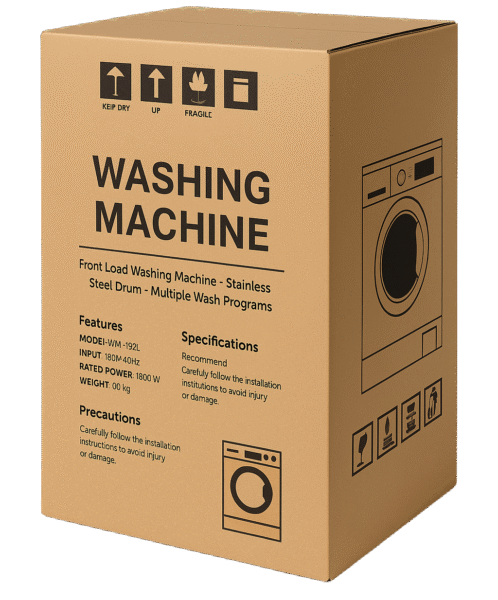
custom printed full overlap (FOL) corrugated box, appliance packaging

FOL Solutions with Brown Packaging

Brown Packaging designs FOL boxes in single-, double-, and triple-wall grades to meet the needs of industrial, e-commerce, and retail supply chains. Our team helps you select the right construction to balance cost, performance, and protection. Contact us to get started.

References


Fiber Box Association. (2022). Corrugated Packaging 101. Retrieved from https://www.fibrebox.org
Soroka, W. (2009). Fundamentals of Packaging Technology (4th ed.). Institute of Packaging Professionals.
ASTM International. (2023). ASTM D642: Standard Test Method for Determining Compressive Resistance of Shipping Containers.

Most Recent Posts:
Subscribe To Our Newsletter

By submitting your information, you agree to our terms and conditions and privacy policy.

Full Overlap FOL Box
Full Overlap Box
Facebook
Twitter
LinkedIn
Pinterest
Relevant Posts