

Home » Rethinking Packaging Value: What Affordability Means for Brands
Rethinking Packaging Value: What Affordability Means for Brands
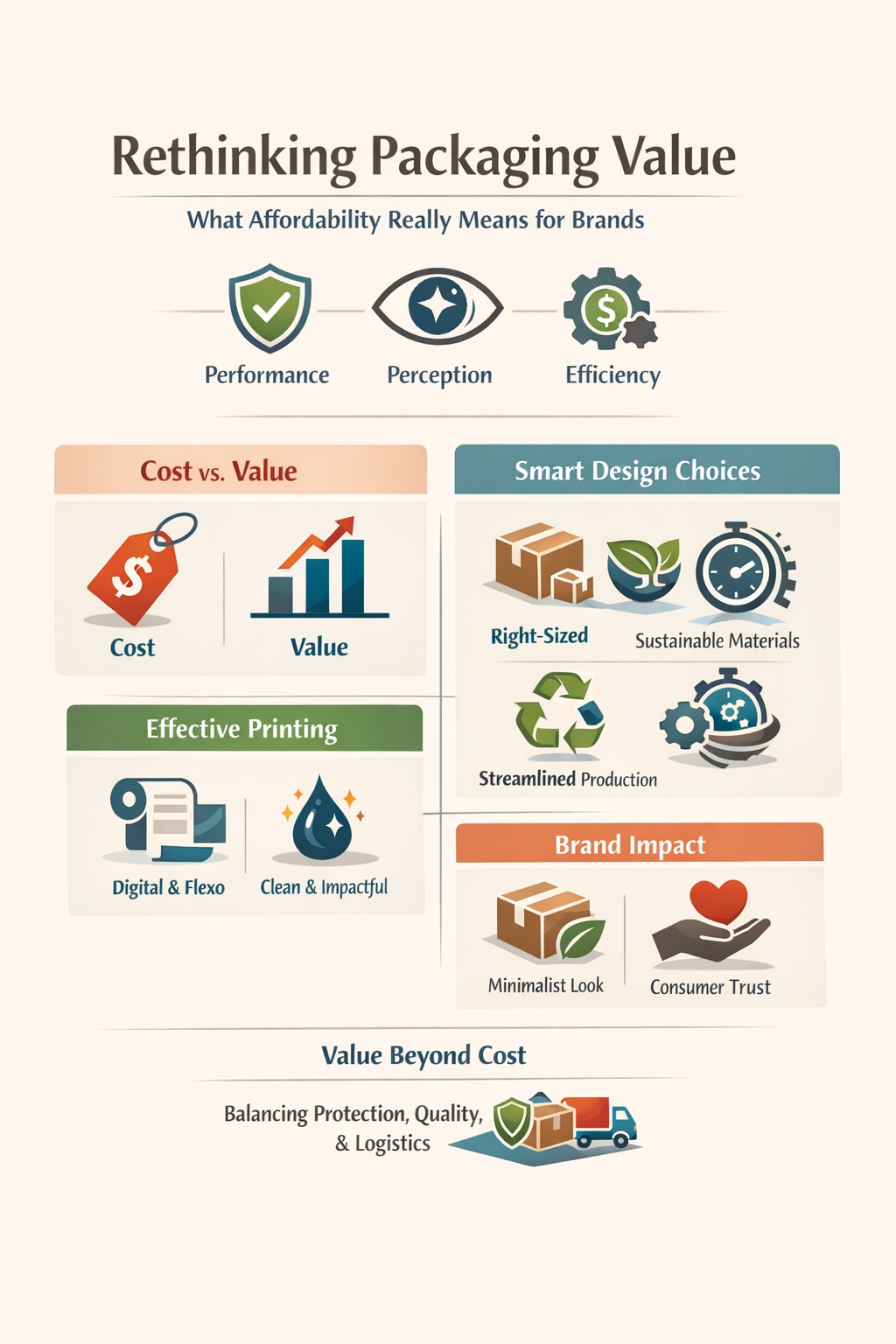
The conversation around affordability has changed. Brands aren’t just trying to spend less — they’re trying to spend smarter while maintaining the same level of consumer trust, visual appeal, and supply-chain efficiency. In today’s market, value isn’t determined by how much packaging costs — it’s measured by how well it performs across protection, perception, and logistics.
The Difference Between Cost and Value
Packaging cost is easy to measure. Packaging value isn’t.
A corrugated shipper that costs a few cents more but cuts damage rates by 15% can save thousands in returns and replacements. A slightly heavier folding carton might improve shelf stability, reducing product turnover and improving brand presence.
This is where many brands get stuck — chasing price over purpose. The most affordable solution is often the one that protects the product better, prints cleaner, and moves faster through fulfillment.
Defining Affordability Beyond the Unit Price
The biggest mistake brands make is treating packaging as a line item, not a value multiplier.
Affordability isn’t about driving price down at all costs — it’s about balancing function, compliance, and brand impact while keeping total cost of ownership low.
- Design efficiency reduces waste, tooling, and production time.
- Right-sized packaging cuts freight and DIM charges.
- Standardized materials lower inventory complexity and procurement lead times.
When viewed this way, affordability becomes a systems decision, not a budget cut.
Materials and Printing: Rethinking the Spend
Material choice has always been one of the biggest cost levers, but brands now realize the cheapest substrate rarely performs best.
Recycled or lightweight materials can reduce cost and carbon footprint — if they’re engineered properly. For example, coated unbleached kraft (CUK) offers excellent rigidity for less than laminated alternatives, and digital print can outperform offset when used strategically on short runs.
Affordability means knowing where to invest — in performance-critical materials, efficient layouts, or long-term consistency — and where to simplify without sacrificing integrity.
Perception Drives Value
What consumers perceive as “premium” or “affordable” has evolved. Clean, minimalist design is now associated with sustainability, transparency, and honesty.
That means a simple flexo-printed corrugated box can carry just as much brand equity as a multi-layer litho wrap — if it’s executed with intent.
Affordability becomes a brand choice, not a compromise. By focusing on clarity, material authenticity, and consistent branding, companies can elevate perceived value even as they reduce total spend.
Balancing Economics and Brand Integrity
Modern brands walk a fine line between cost control and consumer perception.
The most successful ones treat packaging as a bridge between operations and marketing — not an expense on either side. They collaborate early with suppliers to design solutions that meet cost targets without eroding brand presence or sustainability standards.
That’s the future of affordability: transparent, measurable, and brand-aligned value.
Partnering for Smarter Packaging Decisions
At Brown Packaging, we help brands quantify true packaging value through design optimization, material analysis, and sourcing efficiency. Our goal isn’t to make packaging cheaper — it’s to make it work harder for your product and your margins.
Whether you’re rethinking a single SKU or an entire packaging line, we’ll help you achieve affordability through engineering, not elimination — ensuring every dollar you spend earns its place on the shelf.
References
- Soroka, W. (2009). Fundamentals of Packaging Technology (4th ed.). Institute of Packaging Professionals.
- Packaging World. (2025). Packaging Value Analysis in Cost-Constrained Markets.
- McKinsey & Company. (2024). Design-to-Value in Consumer Goods Packaging.
- PMMI. (2023). Smart Manufacturing and Cost Efficiency in Packaging.
Most POP floor displays don’t fail immediately—they fail after they’ve been on the retail floor for a short period of time. Week one looks fine.By week two, problems start showing:
A lower unit price doesn’t mean lower cost. In POP display programs, the biggest losses rarely show up on the quote—they show up in damage rates, retail rejection, poor sell-through,
A visually impressive POP display doesn’t guarantee performance. In fact, many of the best-looking displays underperform because they’re designed for approval—not for real retail conditions. What works in a render,
Digital printing is often positioned as a short-run solution for emerging brands. But advances in press technology, workflow automation, and material compatibility have expanded its role well beyond limited production.
Home » Rethinking Packaging Value: What Affordability Means for Brands