

Home » Packaging Trends 2027: Buyer’s Guide
Packaging Trends 2027: Buyer’s Guide
Packaging trends in 2027 will be shaped by one major reality: buyers are no longer looking at packaging as just a box, carton, insert, pouch, or display. They are looking at packaging as part of a larger cost, compliance, sustainability, automation, and supply chain strategy.
For companies that ship products, sell through retail, manage ecommerce fulfillment, or run high-volume operations, the biggest packaging trends for 2027 will focus on:
- Sustainable packaging
- Right-sized packaging
- Corrugated packaging optimization
- Automation-ready packaging
- Ecommerce packaging performance
- Extended Producer Responsibility
- Packaging cost reduction
- Retail-ready packaging
- Smarter protective packaging
- Data-driven packaging decisions
The companies that win will not be the ones chasing every new material trend. They will be the ones choosing packaging that performs better, wastes less, supports compliance, and reduces total cost.
Sustainable Packaging Will Move From Marketing Claim to Business Requirement
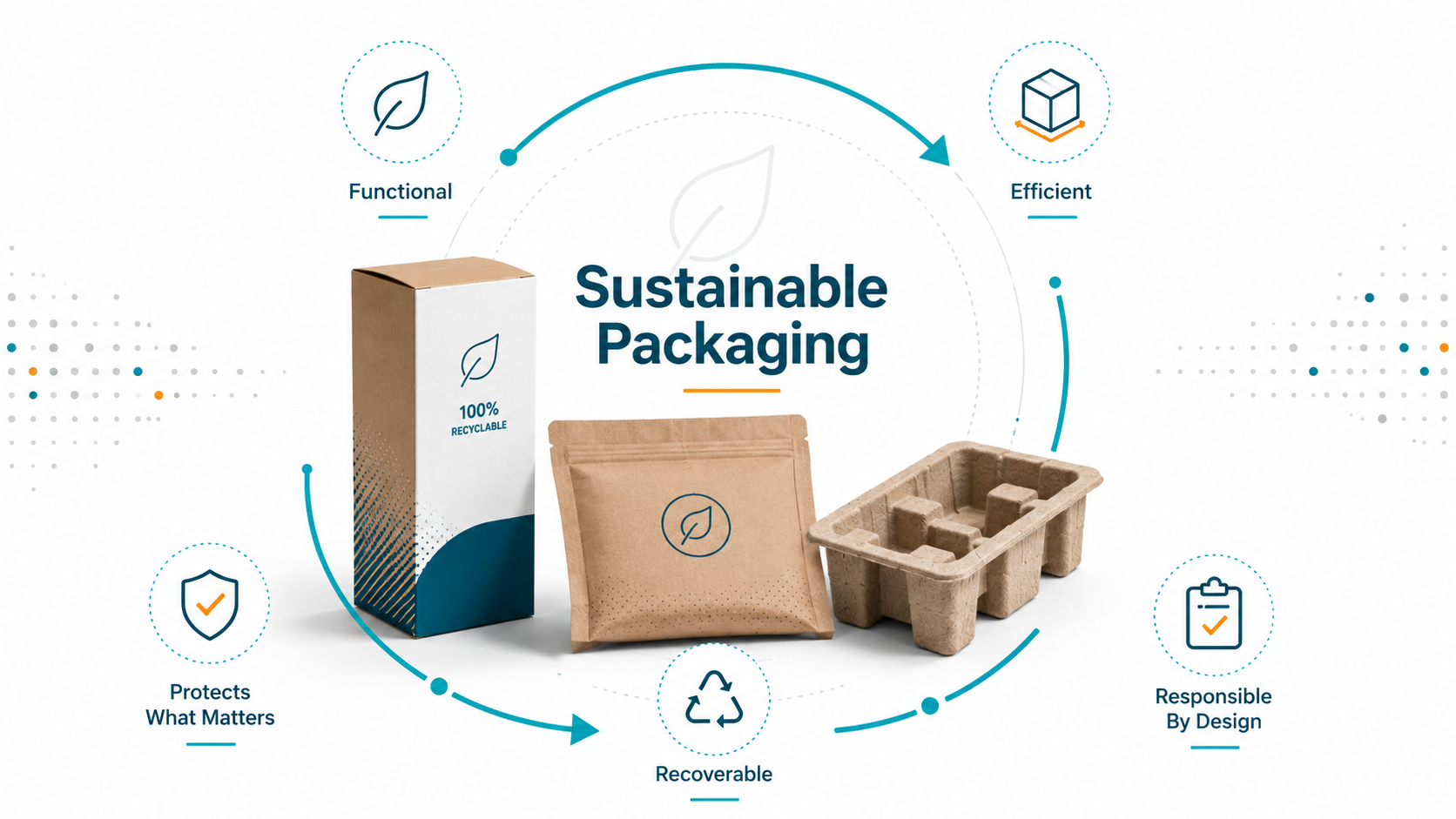
Sustainable packaging will continue to be one of the biggest packaging trends in 2027, but the conversation is becoming more practical. Buyers are moving beyond vague “eco-friendly” claims and asking harder questions:
- Is the package recyclable in real systems?
- Does it reduce unnecessary material?
- Does it protect the product well enough to prevent waste?
- Does it help meet customer or retailer requirements?
- Does it support future compliance needs?
The Sustainable Packaging Coalition notes that sustainable packaging trends are being shaped by design, innovation, recovery, and policy forces, not just material swaps.
That matters because poor packaging decisions can create waste even when the material sounds sustainable. A recyclable box that fails during shipping can still create product loss, returns, replacements, and extra transportation.
In 2027, buyers should expect more pressure to prove that packaging is not only “greener,” but also functional, efficient, and recoverable.
Extended Producer Responsibility Will Affect Packaging Decisions
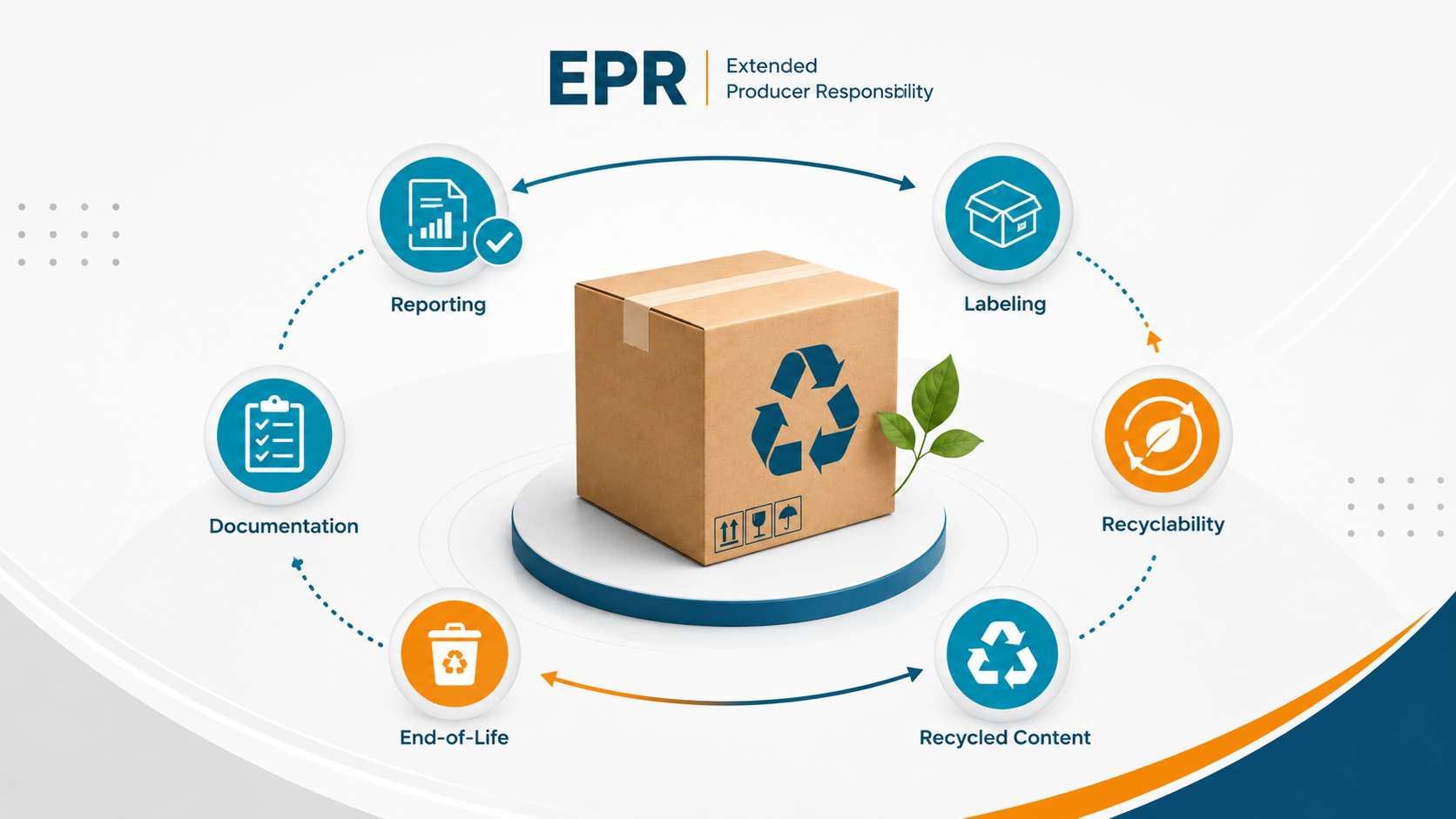
Extended Producer Responsibility, or EPR, will become more important for packaging buyers in 2027. EPR programs shift more responsibility for packaging end-of-life management toward producers, brand owners, and companies placing packaged goods into the market.
The Sustainable Packaging Coalition reported in 2026 that packaging policy across the United States is shifting, with states adopting legislation involving data reporting, labeling, and packaging requirements. EY also reported that EPR is expanding across U.S. states and reshaping packaging compliance, reporting, and sustainability strategy.
For buyers, this means packaging choices may need to account for:
- Material reporting
- Recyclability claims
- Labeling requirements
- Recycled content goals
- Packaging data management
- Supplier documentation
- End-of-life considerations
This trend does not mean every company needs to panic. It means packaging decisions should become more documented and intentional.
By 2027, companies should be asking whether their packaging supplier can help them understand material choices, packaging specifications, and opportunities to reduce unnecessary material.
Right-Sized Packaging Will Become a Cost and Sustainability Priority
Right-sized packaging will be one of the most practical packaging trends in 2027 because it connects sustainability directly to cost reduction.
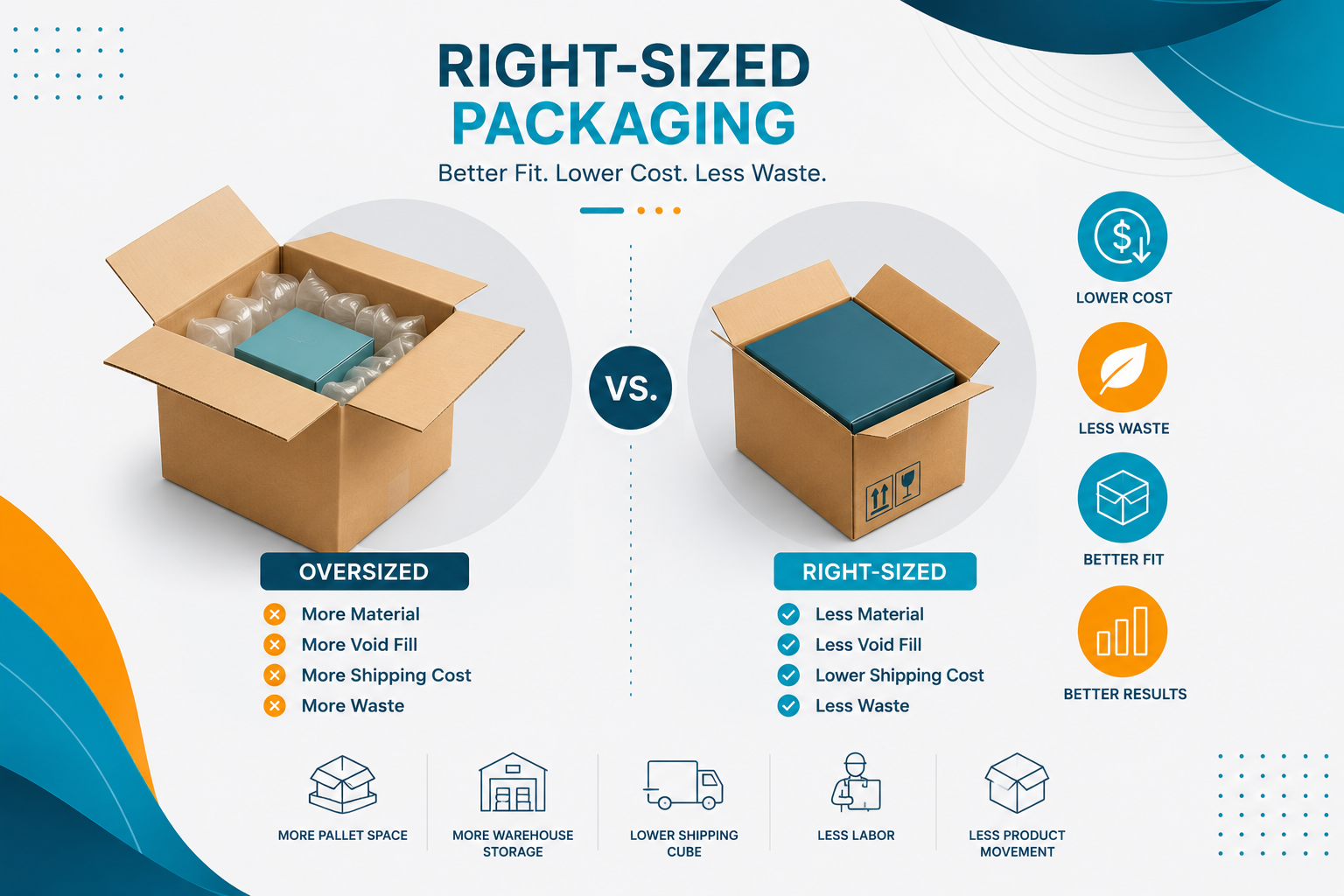
Oversized packaging creates multiple problems:
- More corrugated material
- More void fill
- More pallet space
- More warehouse storage
- More shipping cube
- More labor
- More product movement inside the box
Right-sizing does not mean making the smallest box possible. It means designing packaging that fits the product, protects it properly, and avoids unnecessary empty space.
This is especially important for ecommerce, industrial shipping, retail distribution, and high-volume fulfillment operations.
For many companies, the easiest packaging improvement in 2027 will not be switching to a new material. It will be eliminating wasted space in the packaging they already use.
Corrugated Packaging Will Stay Critical
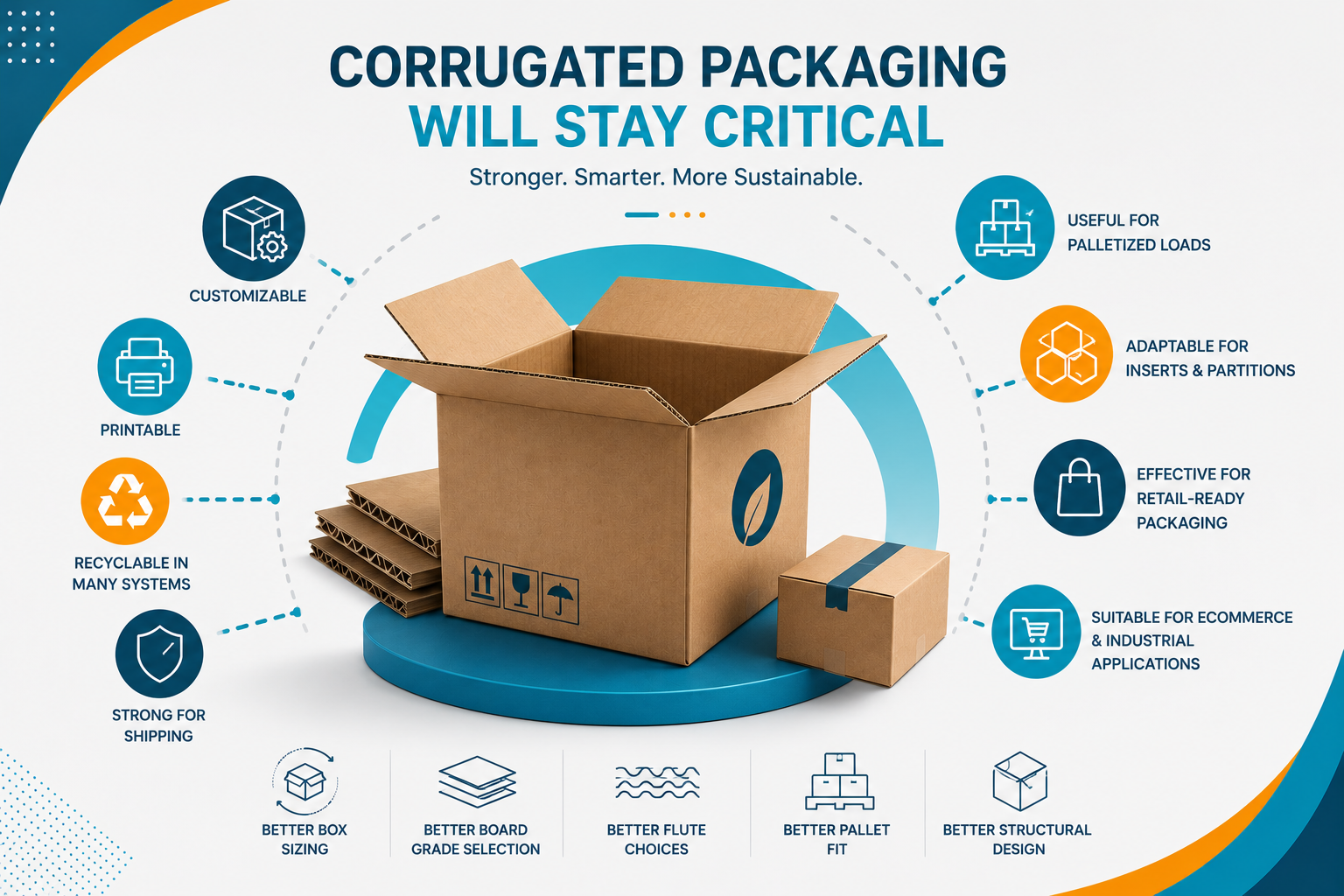
Corrugated packaging will remain one of the most important packaging formats in 2027 because it supports shipping, ecommerce, retail, industrial products, food and beverage, medical supplies, and consumer goods.
Smithers projects the global fibre-based packaging market to reach $503.4 billion by 2027, with cartons, corrugated, and paper-based formats playing a major role.
Corrugated packaging will continue to matter because it is:
- Customizable
- Printable
- Recyclable in many systems
- Strong for shipping
- Useful for palletized loads
- Adaptable for inserts and partitions
- Effective for retail-ready packaging
- Suitable for ecommerce and industrial applications
The trend is not just “use more corrugated.” The trend is use corrugated better.
That means better box sizing, better board grade selection, better flute choices, better pallet fit, and better structural design.
Ecommerce Packaging Will Keep Growing, but Expectations Will Rise
Ecommerce packaging will continue to influence packaging trends in 2027. Buyers want packaging that protects products through shipping while also controlling cost, reducing material, and supporting the customer experience.
Smithers data cited in a 2025 packaging market report stated that global ecommerce packaging sales were forecast to pass $100 billion by 2028, with corrugated accounting for roughly 81% of ecommerce packaging.
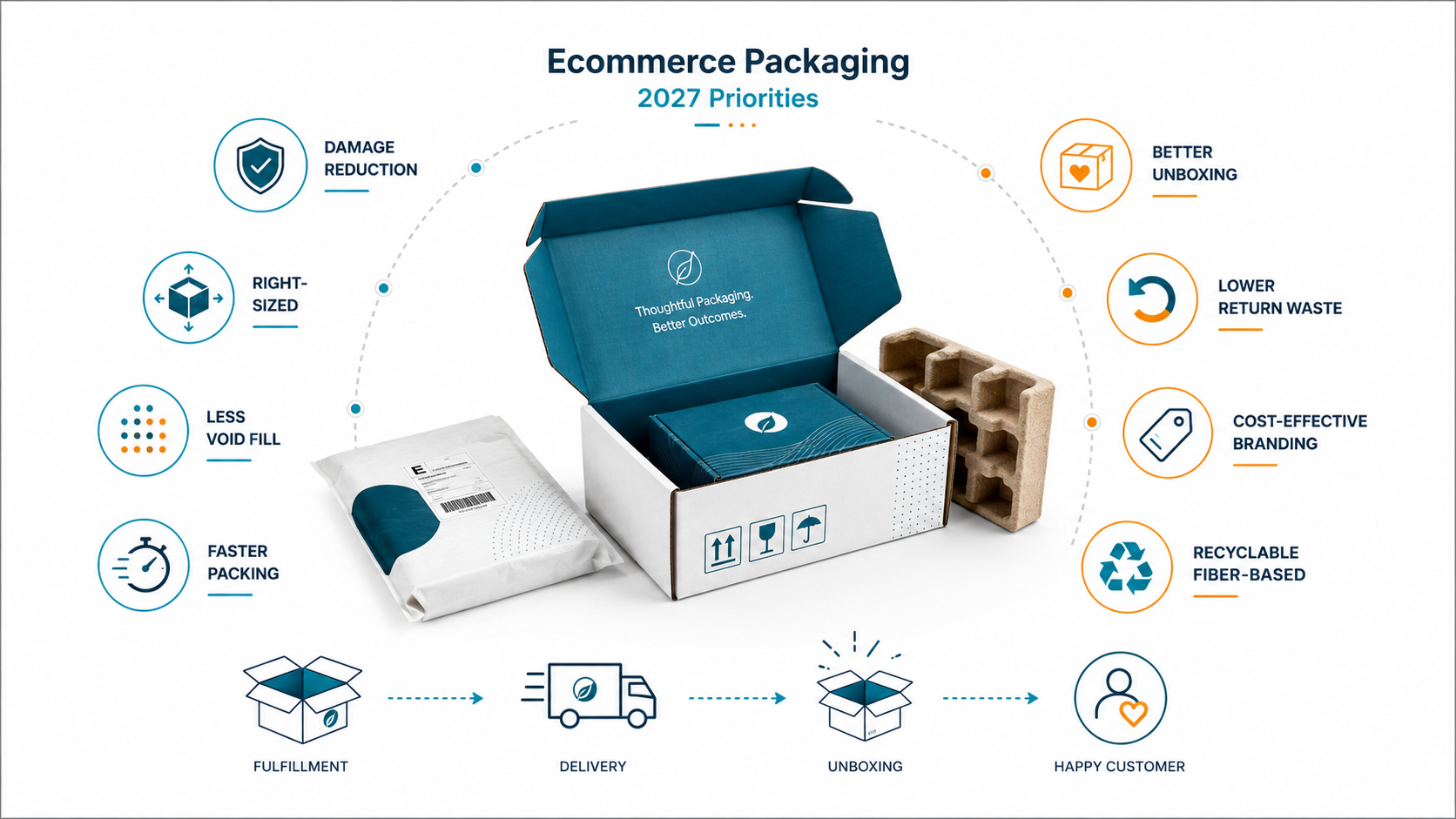
For ecommerce brands and fulfillment operations, 2027 packaging priorities will include:
- Damage reduction
- Right-sized boxes
- Less void fill
- Faster packing
- Better unboxing experience
- Lower return-related waste
- Branded but cost-effective packaging
- Recyclable and fiber-based solutions
The mistake many companies make is treating ecommerce packaging as either a plain shipper or a premium branded box. The better approach is matching packaging to the product, order profile, brand promise, and shipping environment.
Automation-Ready Packaging Will Matter More
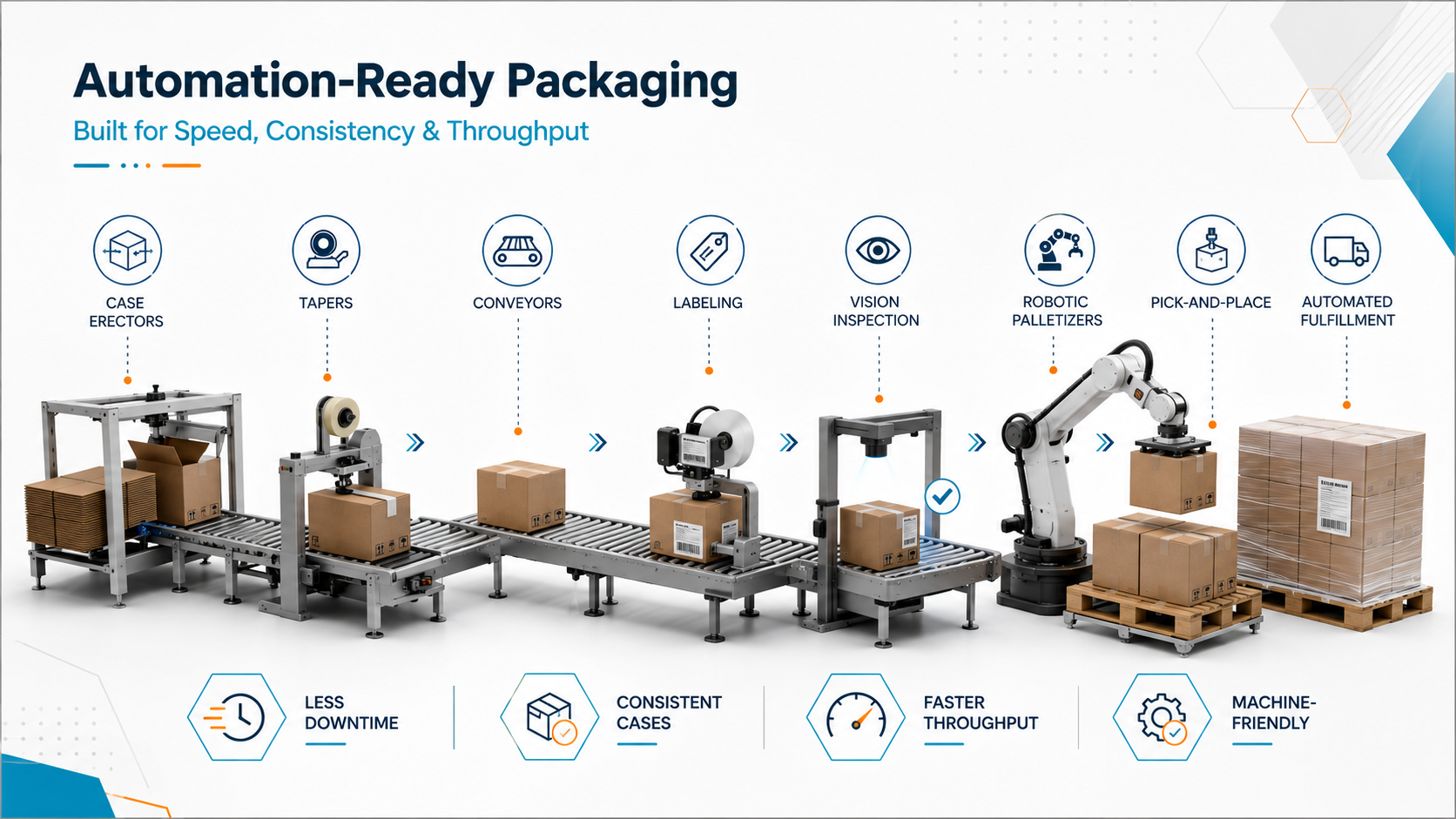
Automation-ready packaging will become more important as companies try to reduce labor dependence, increase throughput, and improve consistency.
PMMI reported that automation and robotics are expanding across packaging lines, including case packing, palletizing, and pick-and-place applications. PMMI also identified AI, automation, and sustainability as leading packaging and processing trends.
For buyers, packaging may need to work better with:
- Case erectors
- Tapers
- Conveyors
- Robotic palletizers
- Pick-and-place systems
- Automated fulfillment lines
- Labeling systems
- Vision inspection systems
Packaging that works manually may not work well in automated environments. Inconsistent dimensions, weak board, difficult closures, poor stacking, or irregular case designs can slow equipment and create downtime.
In 2027, more buyers will need packaging that is not only protective, but also machine-friendly.
Packaging Cost Reduction Will Focus on Total Cost, Not Unit Price
One of the strongest packaging trends for 2027 will be a shift from box price to total packaging cost.
A cheaper package can become more expensive if it causes:
- Product damage
- Returns
- Higher labor
- More tape
- More void fill
- Poor pallet utilization
- Higher storage demand
- Slower fulfillment
- Freight inefficiency
The smartest packaging buyers will look at the full system. That includes material, labor, damage, freight, storage, automation, inventory, and customer experience.
For example, a custom corrugated box may cost more per unit than a stock box but still reduce total cost if it improves fit, reduces damage, lowers void fill, and improves pallet efficiency.
In 2027, packaging teams should be asking:
What does this package cost after it moves through the entire operation?
Protective Packaging Will Become More Targeted
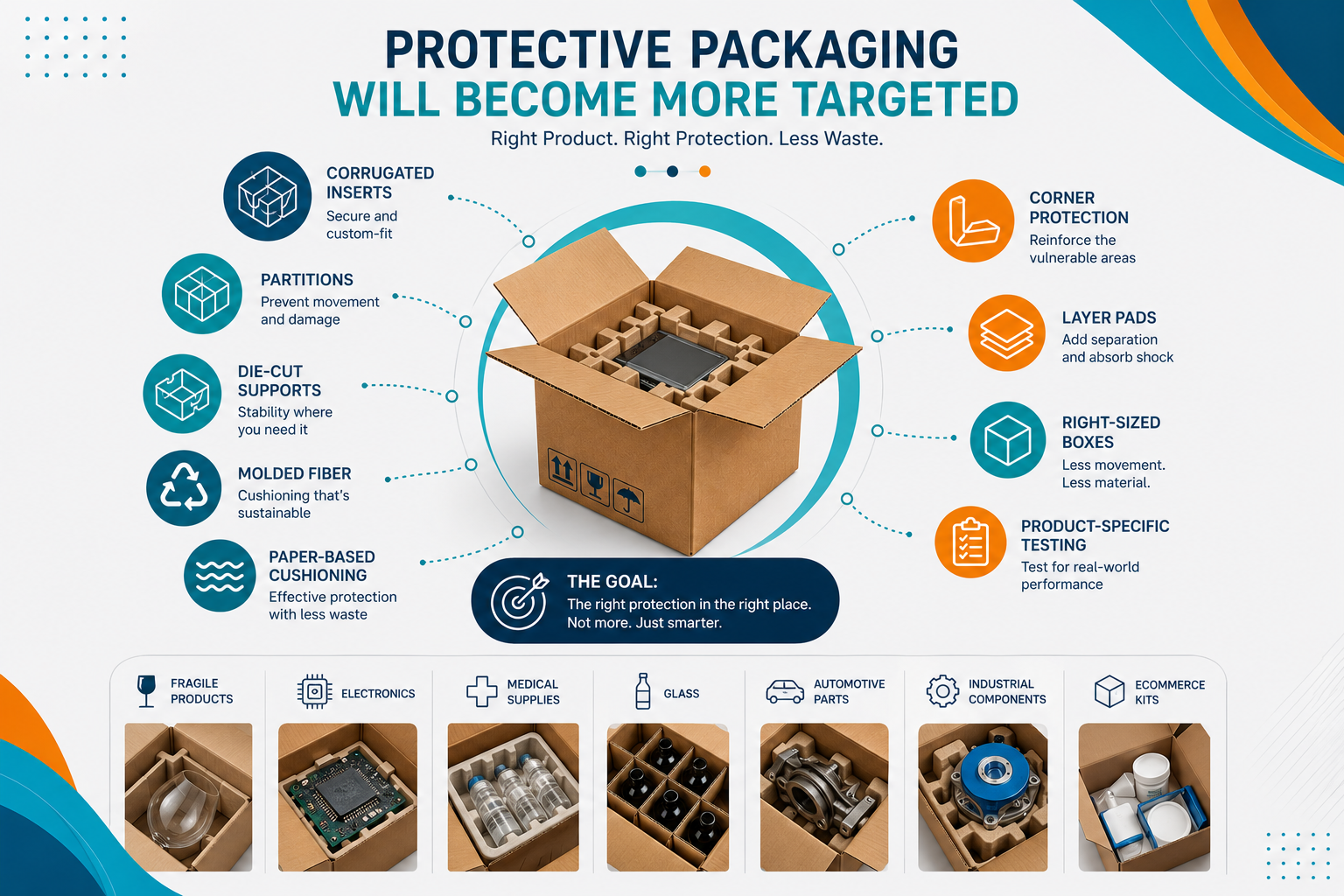
Protective packaging will become more precise in 2027. Instead of adding more void fill, foam, paper, bubble, or inserts by default, buyers will look for protection that is specific to the product risk.
The International Safe Transit Association focuses on helping companies evaluate package performance through testing and distribution design, which reflects the growing importance of matching packaging to real hazards instead of guessing.
Better protective packaging may involve:
- Corrugated inserts
- Partitions
- Die-cut supports
- Molded fiber
- Paper-based cushioning
- Corner protection
- Layer pads
- Right-sized boxes
- Product-specific testing
The goal is not just more protection. The goal is the right protection in the right place.
This matters for fragile products, electronics, medical supplies, glass, automotive parts, industrial components, and ecommerce kits.
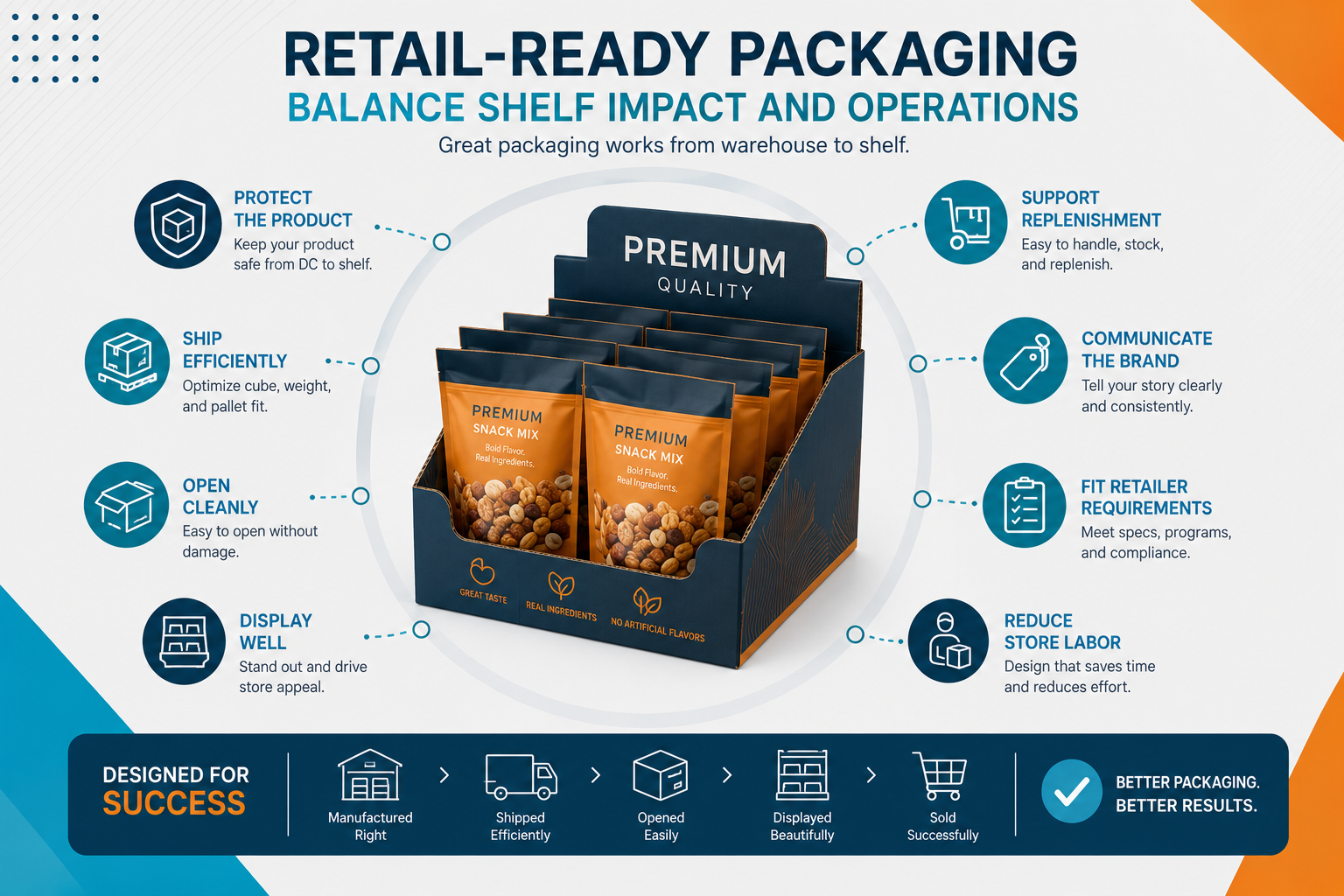
Retail-Ready Packaging Will Need to Balance Shelf Impact and Operations
Retail-ready packaging and display packaging will continue to matter in 2027, especially for brands selling through retail, club stores, and high-volume merchandising programs.
The challenge is that retail packaging has to do multiple jobs:
- Protect the product
- Ship efficiently
- Open cleanly
- Display well
- Support replenishment
- Communicate the brand
- Fit retailer requirements
- Reduce store labor
Packaging that looks good but fails during distribution is not good packaging. Packaging that protects the product but is hard to open or stock at store level can also create problems.
In 2027, better retail packaging will be designed around both presentation and execution.
Packaging Data Will Become More Important
Packaging decisions in 2027 will become more data-driven. Buyers will need better information about material usage, damage rates, cube efficiency, packaging SKUs, supplier lead times, and compliance requirements.
This will matter for:
- EPR reporting
- Sustainability claims
- Packaging audits
- Cost reduction
- SKU consolidation
- Freight optimization
- Damage reduction
- Inventory planning
Companies that do not track packaging data may struggle to identify where money is being lost.
A packaging audit can help reveal issues such as oversized boxes, too many similar SKUs, poor pallet fit, underbuilt packaging, overbuilt packaging, excessive void fill, and recurring damage patterns.

What Packaging Buyers Should Do Before 2027
Companies do not need to chase every trend. They need to review where packaging is creating risk, cost, or inefficiency.
Before 2027, buyers should evaluate:
- Which boxes are oversized
- Which products have recurring damage
- Which packaging SKUs are rarely used
- Which boxes create poor pallet fit
- Which packages use unnecessary void fill
- Which printed packaging may need updates
- Which materials may face compliance pressure
- Which packaging slows down labor or automation
- Which products need better inserts or partitions
The best packaging trend to follow is the one that solves a real business problem.
Why Work With Brown Packaging?
Brown Packaging helps companies prepare for changing packaging needs by focusing on total packaging performance, not just unit price.
We support custom corrugated boxes, printed packaging, protective inserts, partitions, retail-ready packaging, displays, kitting, and packaging optimization. Our team helps buyers evaluate how packaging affects freight, labor, storage, product protection, pallet fit, sustainability goals, and total cost.
As packaging trends move toward right-sizing, sustainability, automation, EPR readiness, ecommerce performance, and cost reduction, Brown Packaging helps companies identify where packaging can be improved before small inefficiencies become expensive problems.
References
(2026). Extended producer responsibility and packaging strategy. https://www.ey.com/en_us/insights/climate-change-sustainability-services/extended-producer-responsibility-and-packaging-strategy
Fibre Box Association. (n.d.). What is corrugated? https://www.fibrebox.org/what-is-corrugated/
International Safe Transit Association. (n.d.). The impact of omnichannel on e-commerce packaging to 2027. https://www.smithers.com/services/market-reports/packaging/impact-of-omnichannel-on-e-commerce-packaging-2027
PMMI. (2026). AI, automation, and sustainability lead packaging and processing trends. https://www.pmmi.org/news/ai-automation-and-sustainability-lead-packaging-and-processing-trends
Smithers. (n.d.). The future of fibre-based packaging to 2027. https://www.smithers.com/services/market-reports/packaging/the-future-of-fibre-based-packaging-to-2027
Sustainable Packaging Coalition. (2026). 2026 sustainable packaging trends report. https://sustainablepackaging.org/2026-sustainable-packaging-trends-report/
Sustainable Packaging Coalition. (2026). What’s new in packaging policy? Packaging policy roundup. https://sustainablepackaging.org/2026/05/21/packaging-policy-news/
Sustainable packaging in 2027 will be less about broad claims and more about proof, performance, compliance, and cost control. Buyers will still care about recyclable materials, recycled content, and lower
Sustainable packaging in 2027 will be less about broad claims and more about proof, performance, compliance, and cost control. Buyers will still care about recyclable materials, recycled content, and lower
A folding carton may look simple once it reaches the shelf, but it goes through a controlled production process before it becomes a finished package. Every step — from paperboard
Folding carton production is becoming more automated because buyers are asking for faster timelines, tighter consistency, and more flexibility across more SKUs. Shorter product lifecycles, retail launch windows, labor pressure,
By submitting your information, you agree to our terms and conditions and privacy policy.
Home » Packaging Trends 2027: Buyer’s Guide

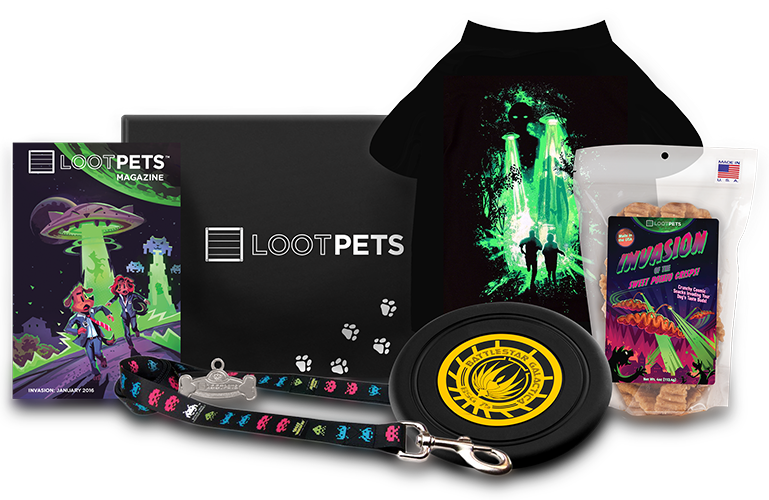

In the world of e-commerce, packaging is much more than just protection for your products. It has evolved into a vital marketing asset that helps

The packaging of your product is the first impression your customers will have of your brand. It needs to grab their attention, communicate your product’s
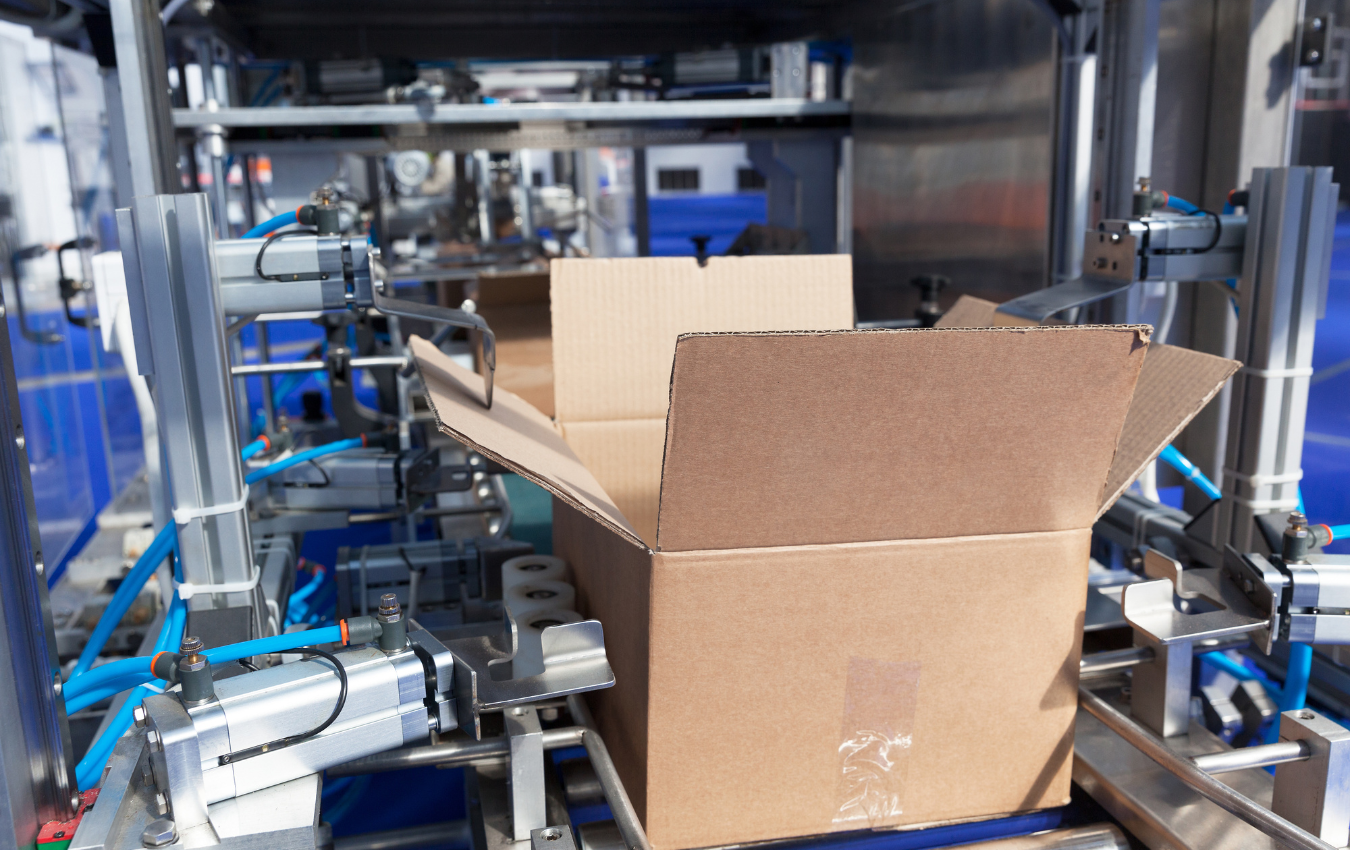
Whether storing household items, packing for a move, or packaging products for shipping, we often take corrugated boxes for granted. They offer strength, durability, and