


Home » 32 ECT vs 44 ECT: Which Do You Need?
32 ECT vs 44 ECT: Which Do You Need?
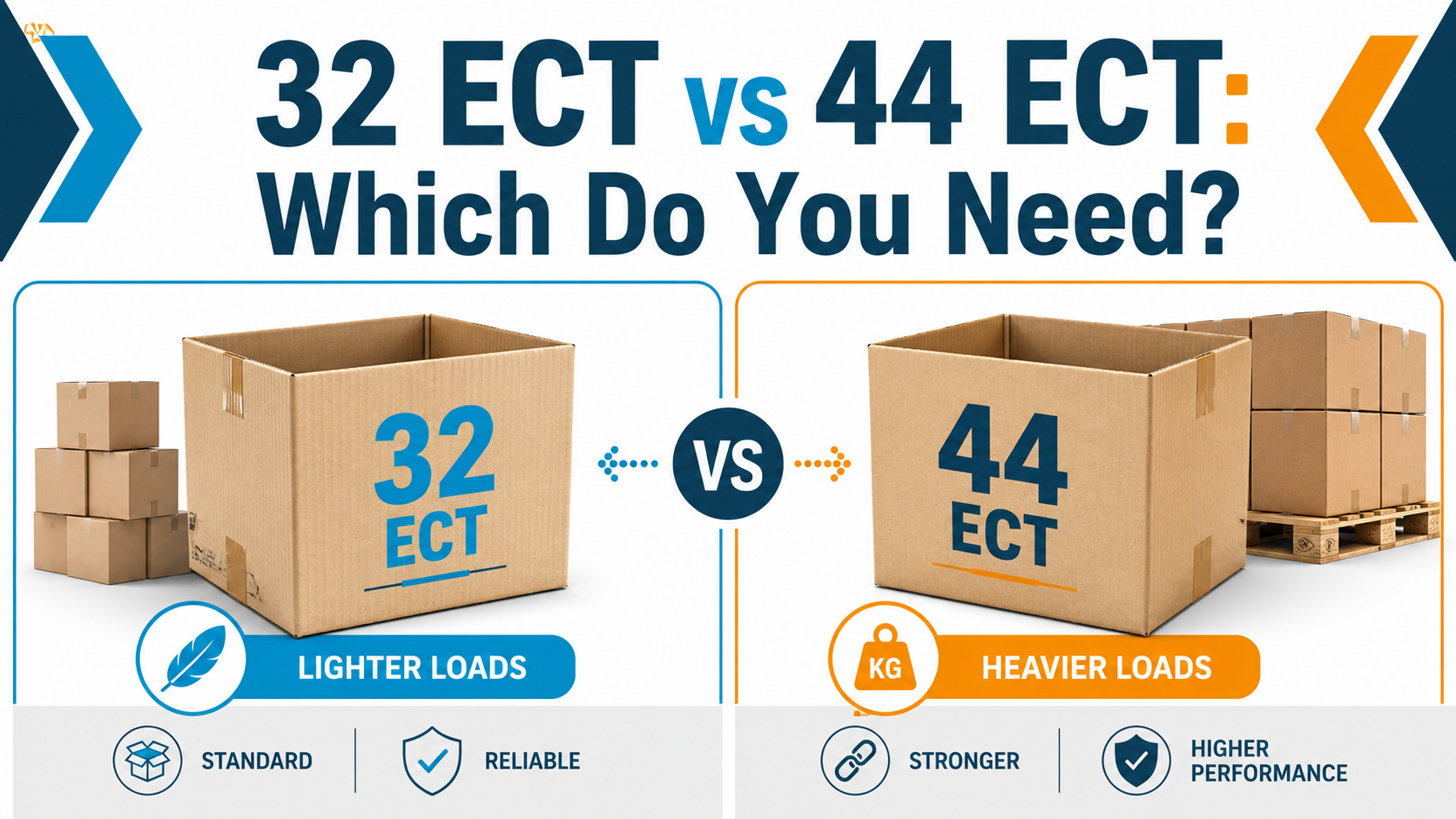
Choosing between 32 ECT and 44 ECT is one of the most common decisions in corrugated packaging.
It’s also one of the most misunderstood.
Most companies either default to 32 ECT or upgrade to 44 ECT after failures—without fully understanding what actually drives performance.
What 32 ECT and 44 ECT Mean
ECT (Edge Crush Test) measures the stacking strength of corrugated board.
- 32 ECT = 32 pounds of force per inch
- 44 ECT = 44 pounds of force per inch
👉 Higher ECT = greater resistance to vertical compression
But ECT alone does not determine real-world performance.
The Real Difference Between 32 ECT and 44 ECT
Stacking Strength
44 ECT provides significantly higher box compression strength (BCT).
- Better performance under pallet stacking
- Higher tolerance for stack height and load
👉 Critical for heavy products or high stacking conditions
Material Cost
44 ECT uses more material and increases cost.
- Higher board weight
- Increased packaging spend per unit
👉 Cost difference becomes significant at scale
Performance Margin
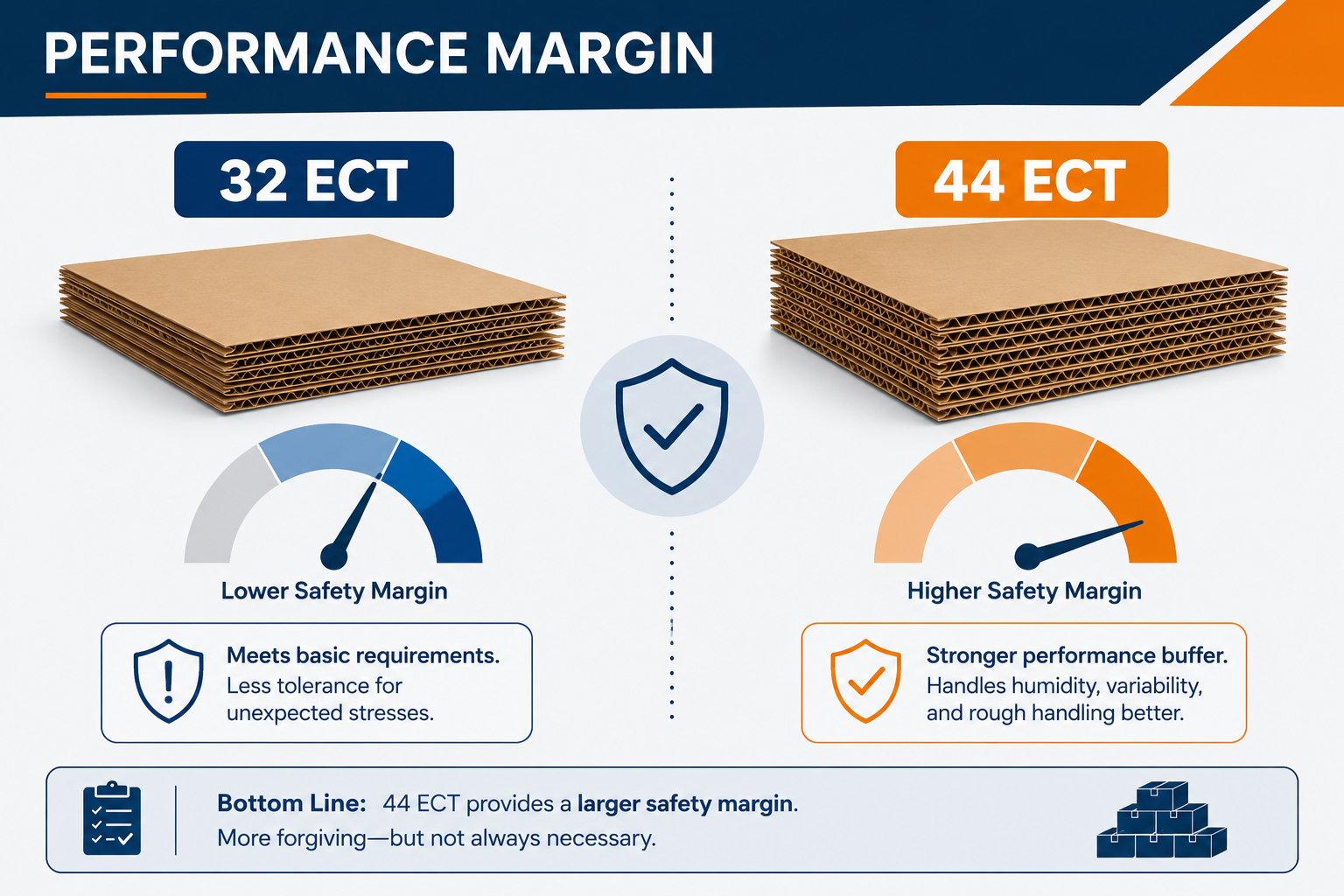
44 ECT provides a larger safety margin.
- Better resistance to humidity and variability
- Reduced risk of failure under imperfect conditions
👉 More forgiving—but not always necessary
When 32 ECT Is the Right Choice
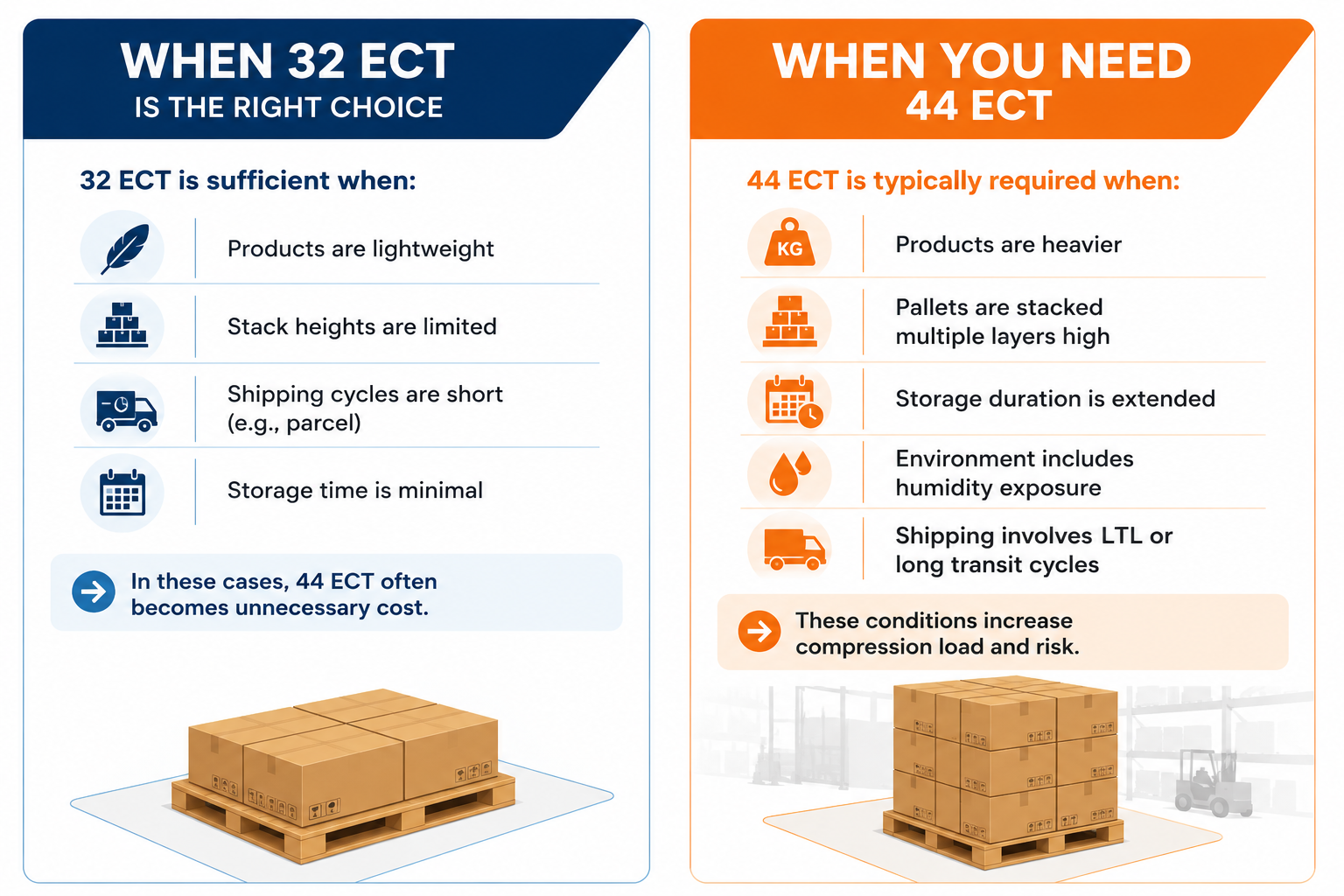
32 ECT is sufficient when:
- Products are lightweight
- Stack heights are limited
- Shipping cycles are short (e.g., parcel)
- Storage time is minimal
👉 In these cases, 44 ECT often becomes unnecessary cost
When You Need 44 ECT
44 ECT is typically required when:
- Products are heavier
- Pallets are stacked multiple layers high
- Storage duration is extended
- Environment includes humidity exposure
- Shipping involves LTL or long transit cycles
👉 These conditions increase compression load and risk
Where Companies Get This Wrong
Defaulting Without Evaluation
- Using 32 ECT across all SKUs
- Not accounting for load or environment
Upgrading Without Solving the Problem
- Switching to 44 ECT after failures
- Ignoring pallet configuration or box sizing
👉 Strength increases cost—but doesn’t always fix the issue
Ignoring System Factors
- Pallet layout
- Stack height
- Handling conditions
👉 Packaging performance is not just about board grade
How to Choose the Right Strength
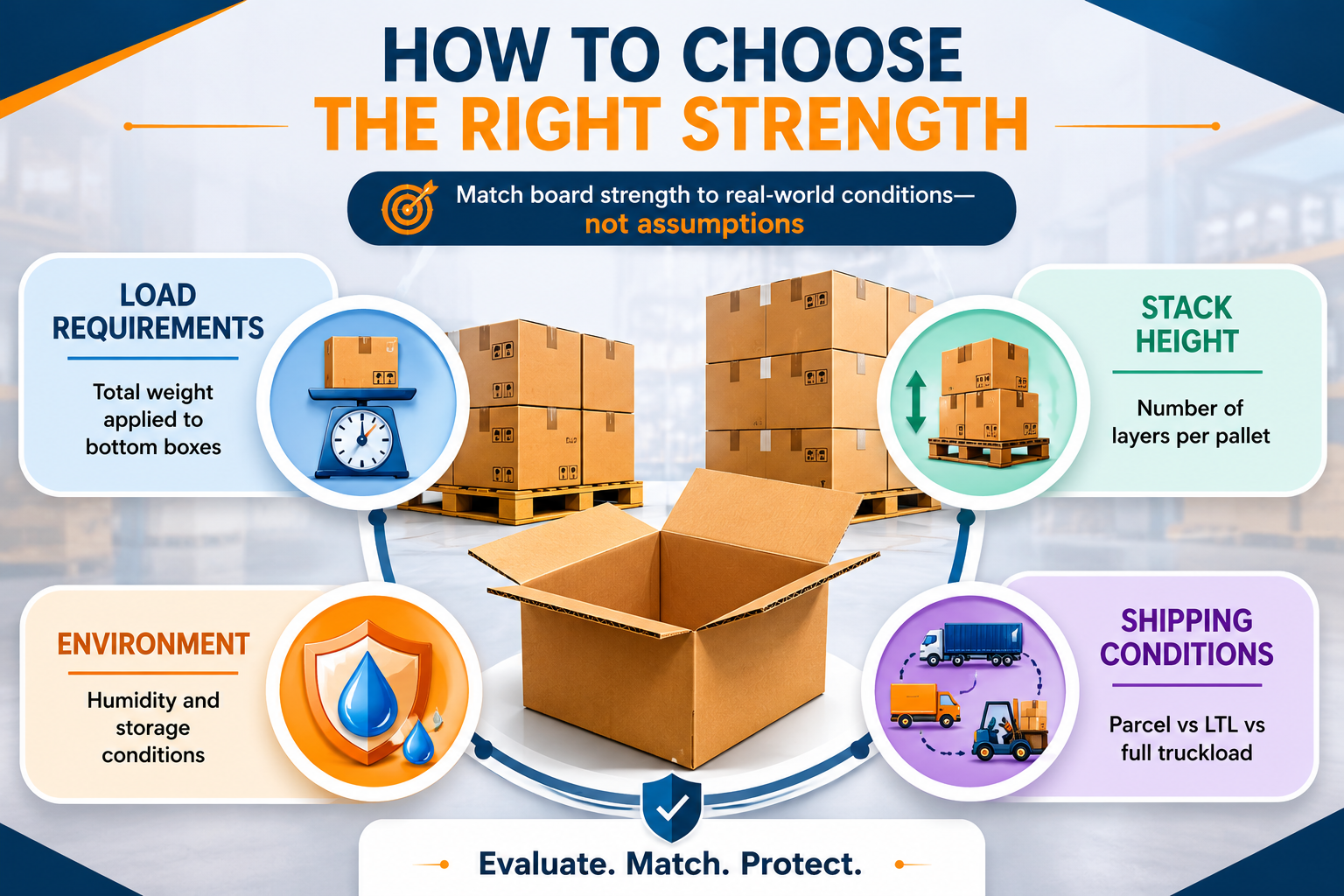
Instead of choosing based on habit, evaluate:
Load Requirements
- Total weight applied to bottom boxes
Stack Height
- Number of layers per pallet
Environment
- Humidity and storage conditions
Shipping Conditions
- Parcel vs LTL vs full truckload
👉 Match board strength to real-world conditions—not assumptions
What This Means for Cost
This decision directly impacts total cost:
- Too weak → damage, returns, product loss
- Too strong → unnecessary material spend
👉 The goal is correct strength—not maximum strength
Final Takeaway
32 ECT and 44 ECT are not interchangeable—they are designed for different conditions.
If you’re not evaluating load, environment, and shipping factors, you’re either:
- Risking failure
- Or overpaying for protection you don’t need
Choosing between 32 ECT and 44 ECT is one of the most common decisions in corrugated packaging. It’s also one of the most misunderstood. Most companies either default to 32
Excess moisture in pet food packaging can cause mold growth, nutrient degradation, clumping, and product spoilage. Effective moisture control combines barrier material selection, packaging design, and controlled production environments to
Exporting products requires packaging that can endure extended transit times, multiple handling points, and strict international regulations. Full Overlap (FOL) boxes are a proven solution for export shipments because their
A POP display can be perfectly designed, well-produced, and shipped on time… …and still never get placed. This isn’t a design failure—it’s an execution failure. And it’s more common than
Home » 32 ECT vs 44 ECT: Which Do You Need?