


window.uetq = window.uetq || []; window.uetq.push(‘event’, ‘submit_lead_form’,{ event_label:‘SUBMIT MESSAGE’ }); window.lintrk('track', { conversion_id: 10271009 }); window.lintrk('track', { conversion_id: 10271017 });

Packaging Cost Per Shipment vs Per Box

Packaging Cost Per Shipment vs Per Box

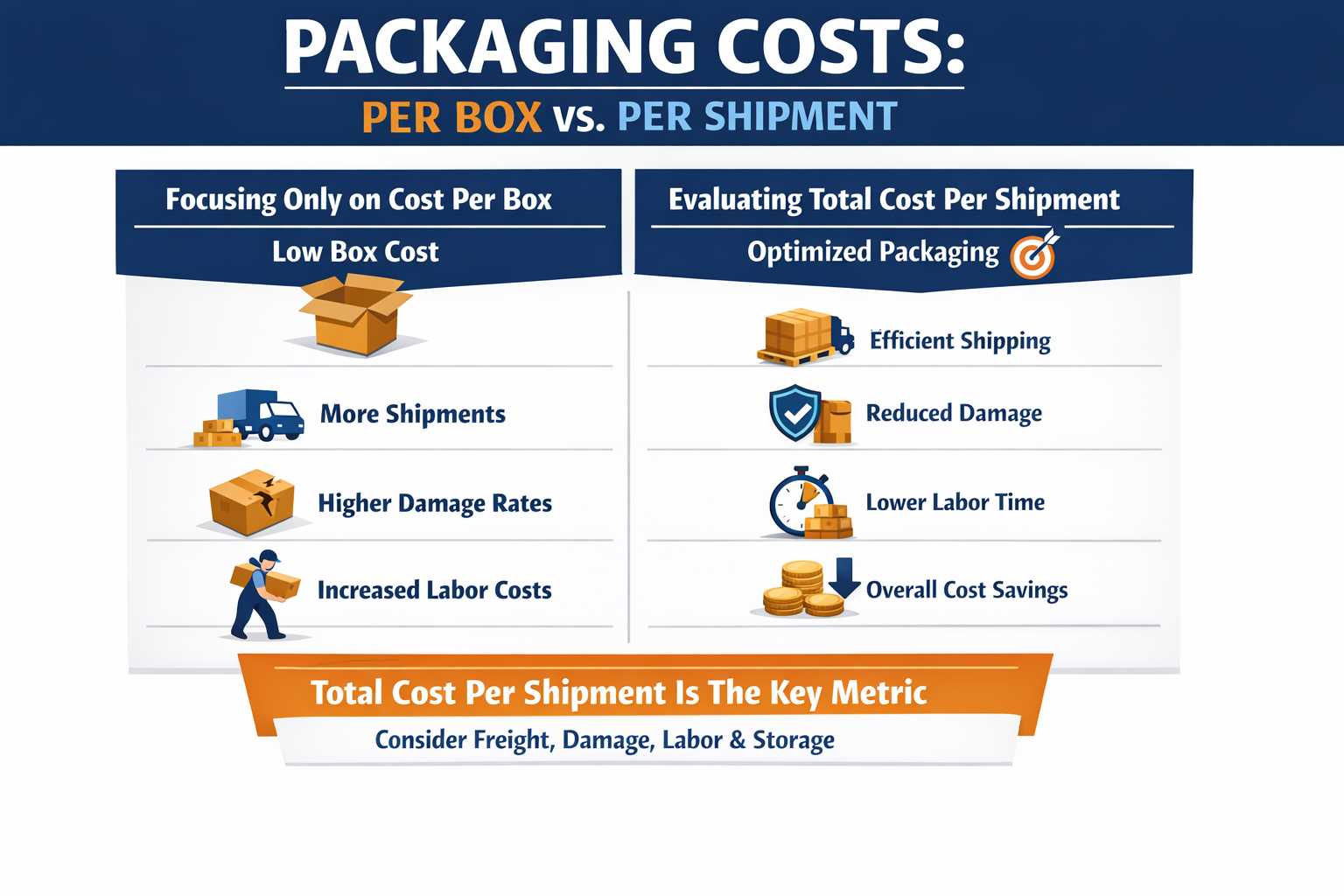
Many packaging purchasing decisions are made by comparing price per box. While this metric is easy to evaluate, it often fails to capture the real economics of packaging systems.

Packaging performance affects freight efficiency, product protection, and operational labor. When companies evaluate packaging only by unit cost, they may choose packaging that appears inexpensive but increases overall supply chain costs.

Understanding packaging cost at the shipment level provides a more accurate view of packaging performance and efficiency.

Why Cost Per Box Can Be Misleading

Packaging suppliers typically quote prices based on unit cost, which encourages buyers to compare packaging options solely on price.

However, the lowest-cost box may create hidden expenses elsewhere in the supply chain.

Examples include:

  • Larger boxes increasing freight cube
  • Weak packaging causing product damage
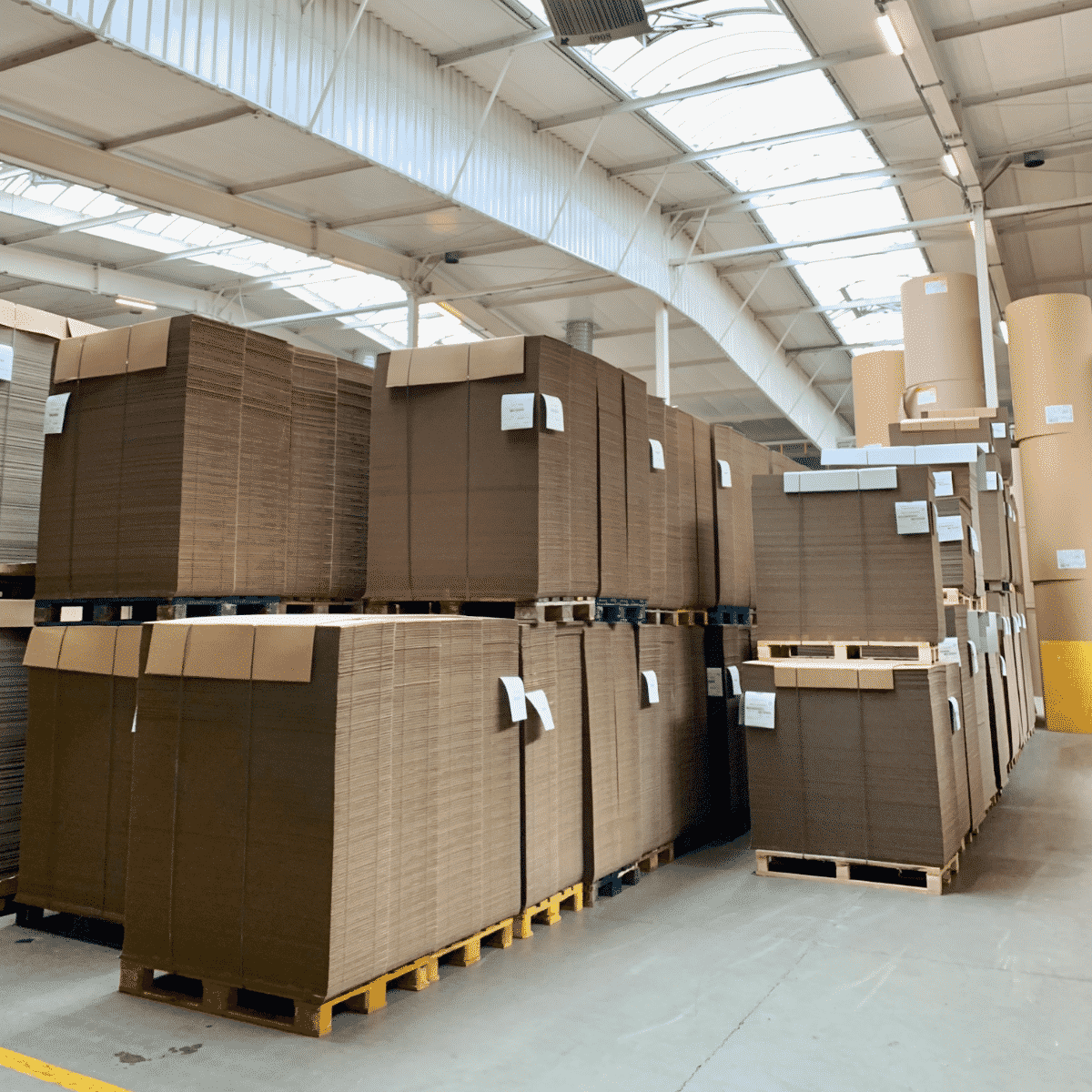
  • Inefficient pallet patterns reducing trailer utilization
  • Packaging structures slowing packing operations

When these factors are considered, the lowest unit cost does not always deliver the lowest total cost of distribution.

Understanding Cost Per Shipment

Cost per shipment evaluates packaging within the context of the entire logistics process. Instead of focusing only on packaging price, this approach considers how packaging influences transportation and product protection.

Factors that affect cost per shipment include:

  • Packaging material cost
  • Freight cube utilization
  • Dimensional weight charges
  • Damage and return rates
  • Fulfillment labor efficiency

When these factors are evaluated together, packaging decisions become more strategic and data-driven.

Freight Efficiency and Packaging Design

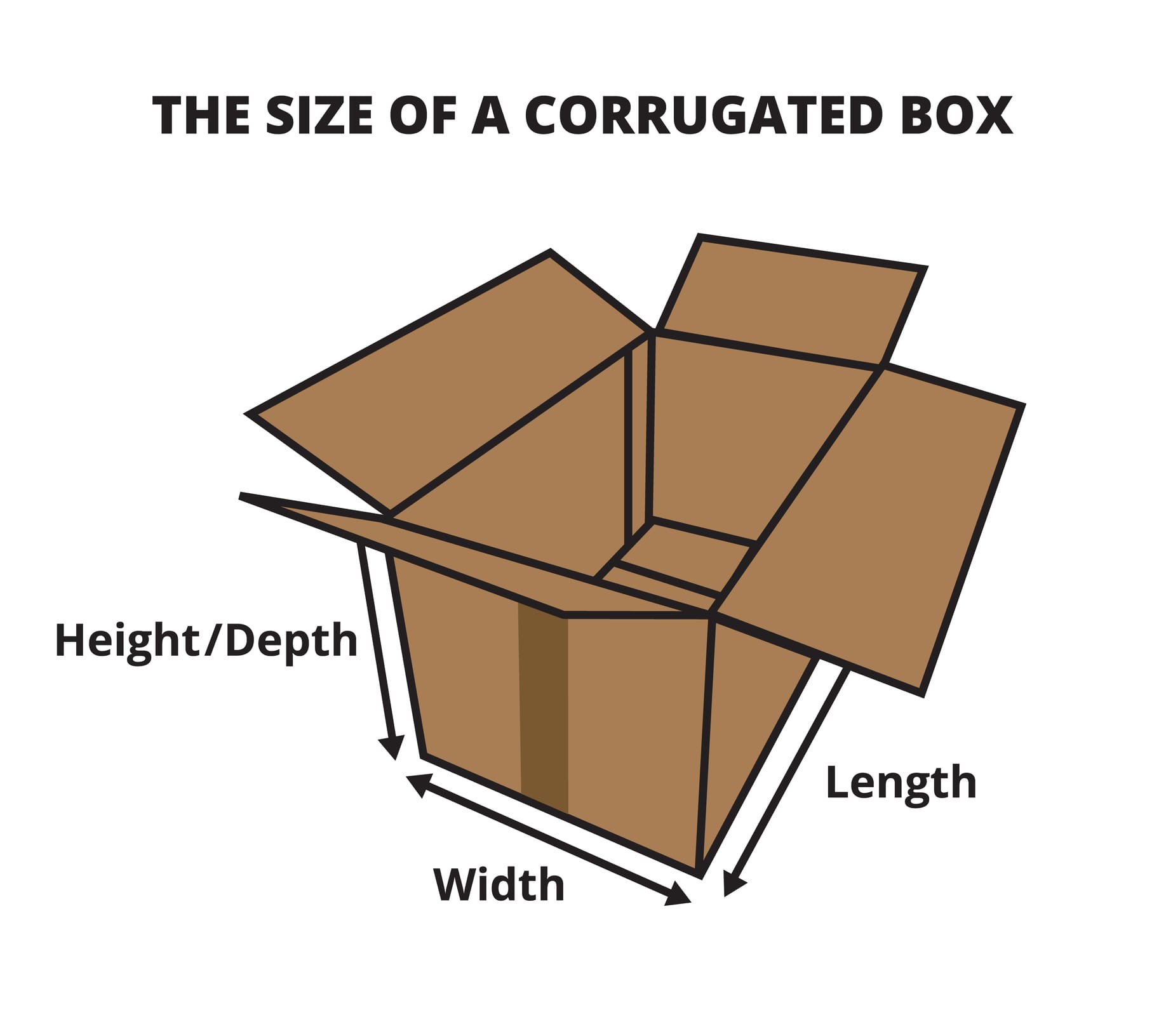
Packaging dimensions significantly influence transportation costs. A box that is slightly oversized may reduce pallet density or increase dimensional weight charges.

In large distribution networks, inefficient packaging dimensions can result in:

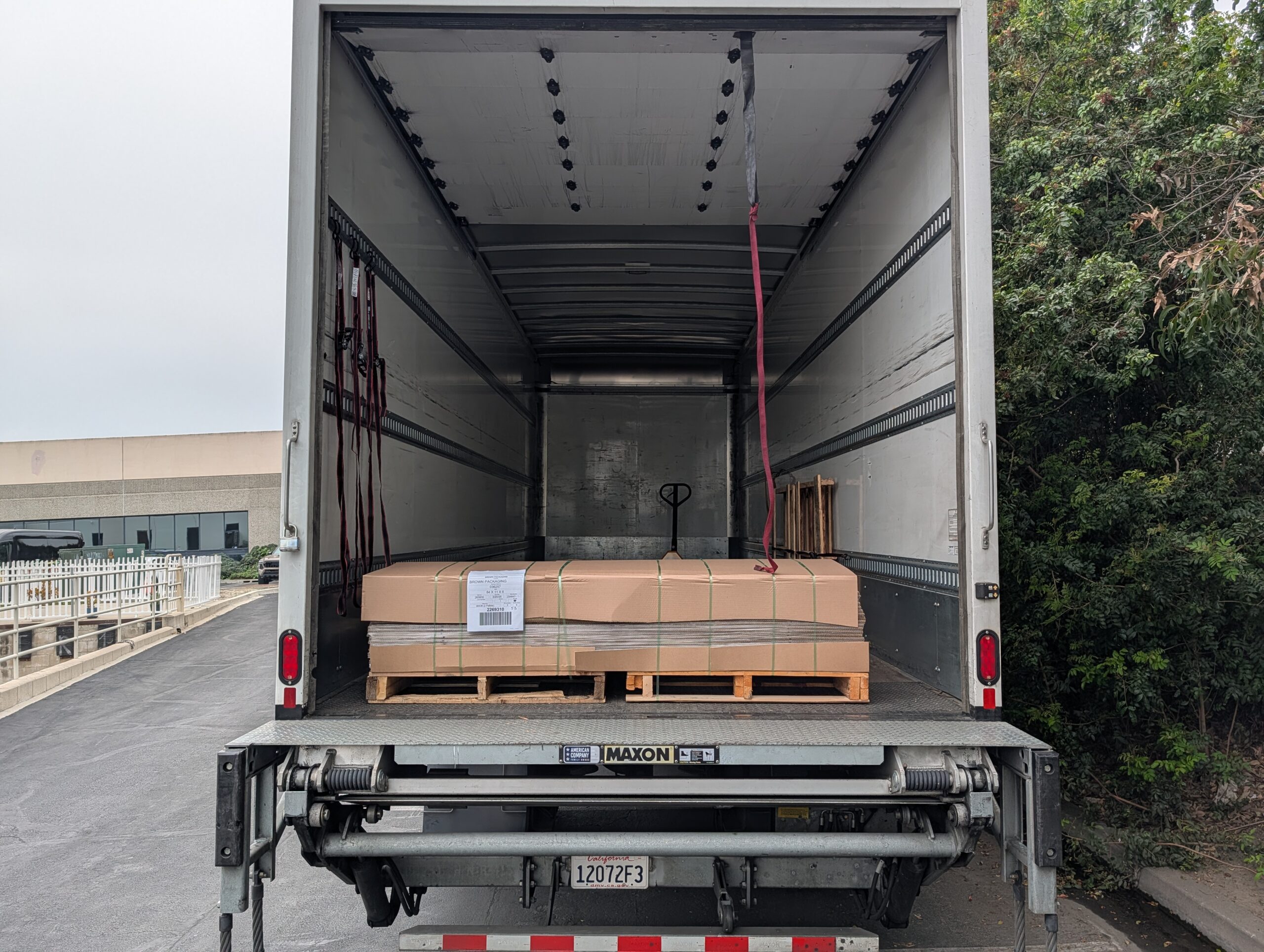
  • Additional truckloads required for shipments
  • Increased parcel carrier fees
  • Reduced pallet stacking efficiency

Improving packaging dimensions often reduces freight cost more than reducing the packaging material itself.

Damage Costs and Packaging Performance

Product damage is another factor often overlooked when evaluating packaging cost.

Weak packaging can increase:

  • Product returns
  • Replacement shipments
  • Customer service costs
  • Brand reputation damage

In some cases, upgrading packaging structure or board grade slightly increases packaging cost but significantly reduces the overall cost per delivered product.

How to Optimize Your Packaging in Delivery Trucks Using CAPE Software

Operational Efficiency and Packaging Systems

Packaging systems also affect fulfillment speed and labor efficiency. Complex packaging structures or excessive box sizes can slow packing operations and increase handling time.

Optimized packaging systems help improve:

  • Packing line efficiency
  • Warehouse throughput
  • Inventory organization
  • Shipping accuracy

These operational improvements reduce labor costs while improving order processing speed.

Evaluating Packaging as a Distribution System

Companies achieve the best packaging economics when they evaluate packaging as part of the entire distribution system rather than as a standalone component.

Effective packaging decisions consider:

✔ Material cost
✔ Freight efficiency
✔ Damage prevention
✔ Operational workflow
✔ Inventory complexity

This system-level approach allows companies to select packaging that delivers the best overall cost performance.

Packaging Supplier

Partnering with Brown Packaging

At Brown Packaging, we help companies evaluate packaging systems beyond unit cost. Our team works with clients to analyze packaging structures, freight efficiency, and distribution environments to ensure packaging solutions balance protection, operational efficiency, and cost control.

By focusing on total system performance, companies can make packaging decisions that reduce long-term distribution expenses.

References

  • Soroka, W. (2009). Fundamentals of Packaging Technology (4th ed.). Institute of Packaging Professionals.
    • ASTM International. (2022). ASTM D4169 – Standard Practice for Performance Testing of Shipping Containers.
    • PMMI. (2023). Packaging and Logistics Efficiency Report.
    • Packaging World. (2024). Evaluating Total Cost of Packaging Systems.
Most Recent Posts:
Subscribe To Our Newsletter

By submitting your information, you agree to our terms and conditions and privacy policy.

custom printed pouch
Custom Packaging
Facebook
Twitter
LinkedIn
Pinterest
Relevant Posts