
Home » Multi-SKU Packaging with Interchangeable Inserts
Multi-SKU Packaging with Interchangeable Inserts
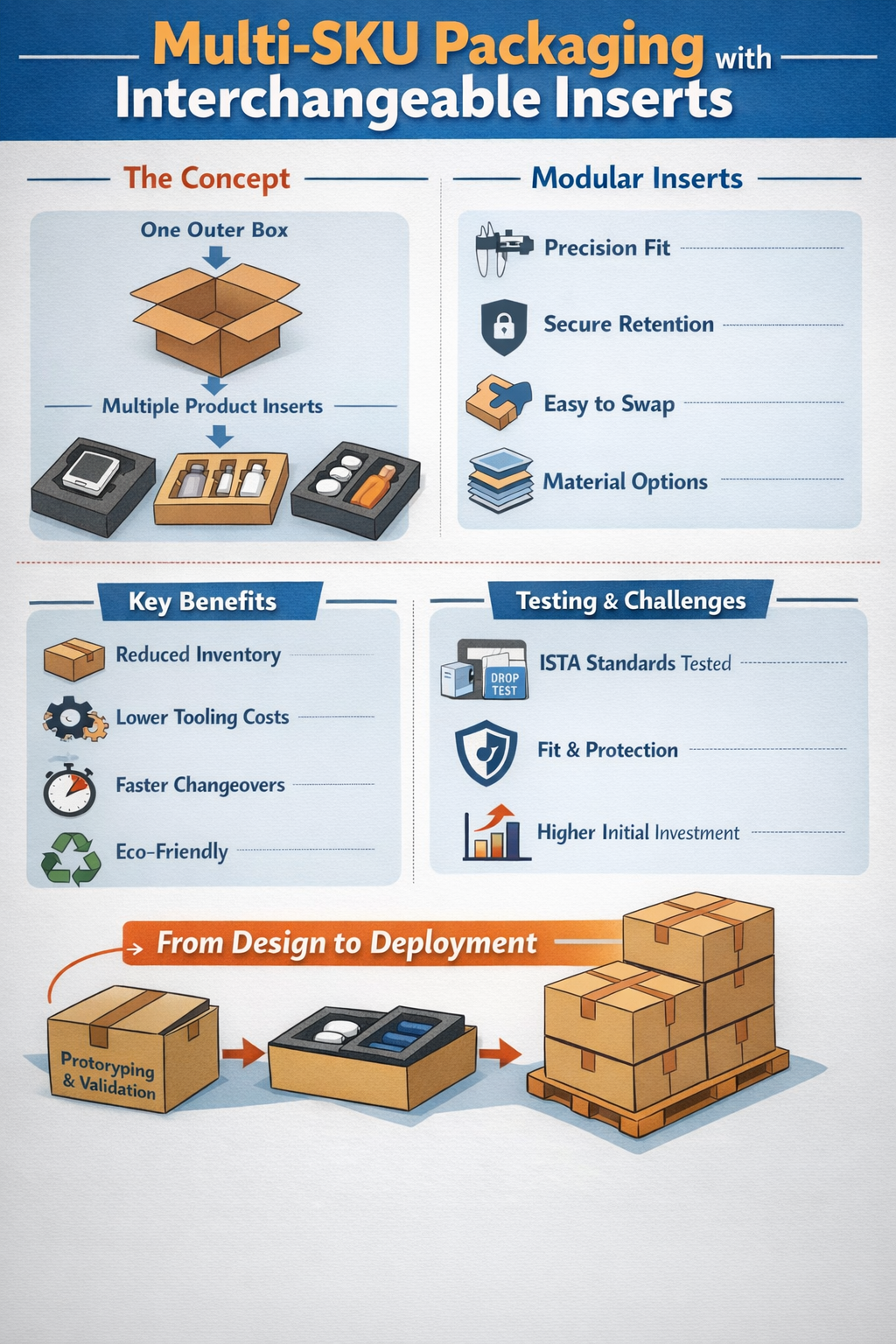
Companies managing multiple SKUs often face the challenge of balancing protection, efficiency, and cost in their packaging systems. Custom inserts can be designed with modularity in mind, allowing a single outer box to house different product variations by swapping or rearranging inserts. This approach supports scalability, reduces inventory complexity, and cuts costs across production and logistics.
Rationale for Interchangeable Inserts
A major pain point in multi-SKU packaging is the need for separate packaging designs for each product, which increases tooling costs, warehousing needs, and supply chain complexity. Interchangeable inserts mitigate these issues by allowing a shared outer carton or tray to be paired with product-specific inserts. This reduces total SKUs in packaging materials and streamlines changeovers on packing lines.
Design Considerations
- Tolerance Control – Inserts must be engineered with dimensional precision to accommodate different product shapes without excessive movement. CAD-driven dielines and CNC-cut foam can achieve tolerances within millimeters.
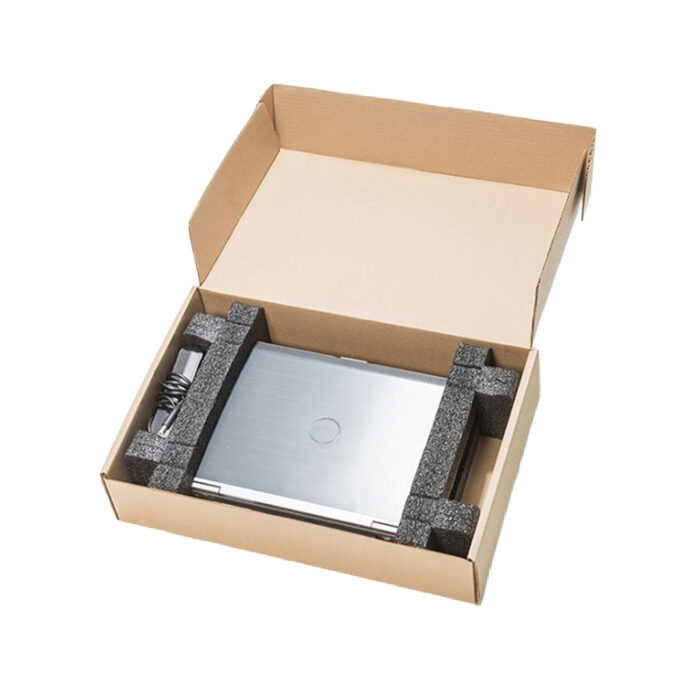
- Retention Systems – Features such as die-cut slots, foam cavities, or scored folds can secure products ranging from electronics to cosmetics while maintaining consistent performance across variations.
- Material Selection – For heavier or fragile SKUs, hybrid foam-corrugated or laminated structures may be necessary. Lightweight products may rely solely on corrugated partitions with adjustable folds.
- Ease of Assembly – Inserts should allow operators to quickly swap configurations without complex folding or adhesives, reducing downtime.
Operational Benefits
- Reduced Packaging Inventory – One outer box + modular inserts replaces multiple full-package SKUs.
- Lower Tooling Costs – A single set of cutting dies or molds for inserts is less expensive than separate designs for each SKU.
- Faster Line Changeovers – Operators only replace the insert, avoiding the need to stock or switch entire box designs.
- Sustainability Advantages – Optimized use of outer cartons reduces corrugated usage and can simplify recycling streams.
Challenges and Limitations
- Fit Compromise – Inserts that fit multiple products may not provide as tight of a fit as SKU-specific designs, potentially reducing protection.
- Increased Design Complexity – Engineering universal inserts requires extensive testing across all SKUs.
- Upfront Development Costs – Designing modular packaging can require higher initial design investment, though it pays off at scale.
Testing Protocols
Validation is essential to ensure interchangeable inserts maintain performance. Testing under ISTA 6-Series (Amazon and FedEx protocols) can verify that inserts withstand drops, vibration, and compression across multiple SKUs. Prototyping with CNC-cut foam and sample corrugated builds allows designers to refine tolerances before committing to large production runs.
References
International Safe Transit Association. (2018). ISTA 6-Series: Member Performance Tests. https://ista.org
ASTM International. (2014). ASTM D4169-14: Standard Practice for Performance Testing of Shipping Containers and Systems. https://doi.org/10.1520/D4169-14
Soroka, W. (2016). Fundamentals of Packaging Technology (5th ed.). Institute of Packaging Professionals.
Lockhart, H. & Paine, F. (2016). Packaging of Pharmaceuticals and Healthcare Products (5th ed.). CRC Press.
Companies managing multiple SKUs often face the challenge of balancing protection, efficiency, and cost in their packaging systems. Custom inserts can be designed with modularity in mind, allowing a single
Many packaging programs grow bloated over time, with dozens of overlapping box sizes, materials, and formats. While this may seem flexible, it often increases costs, complicates inventory, and slows fulfillment.
The conversation around affordability has changed. Brands aren’t just trying to spend less — they’re trying to spend smarter while maintaining the same level of consumer trust, visual appeal, and
In today’s cost-sensitive market, brands face a double challenge: protecting margins without eroding consumer confidence. When packaging fails — whether through damage, overuse of materials, or inconsistency — both profitability
Home » Multi-SKU Packaging with Interchangeable Inserts