
Home » How to Maximize Boxes Per Pallet Without Increasing Damage
How to Maximize Boxes Per Pallet Without Increasing Damage
Pallet efficiency is one of the most overlooked drivers of shipping cost.
Most companies try to increase boxes per pallet—but do it in ways that compromise stability and increase damage.
The goal is not to fit more boxes.
It’s to increase density without reducing performance.
Why Pallet Efficiency Matters
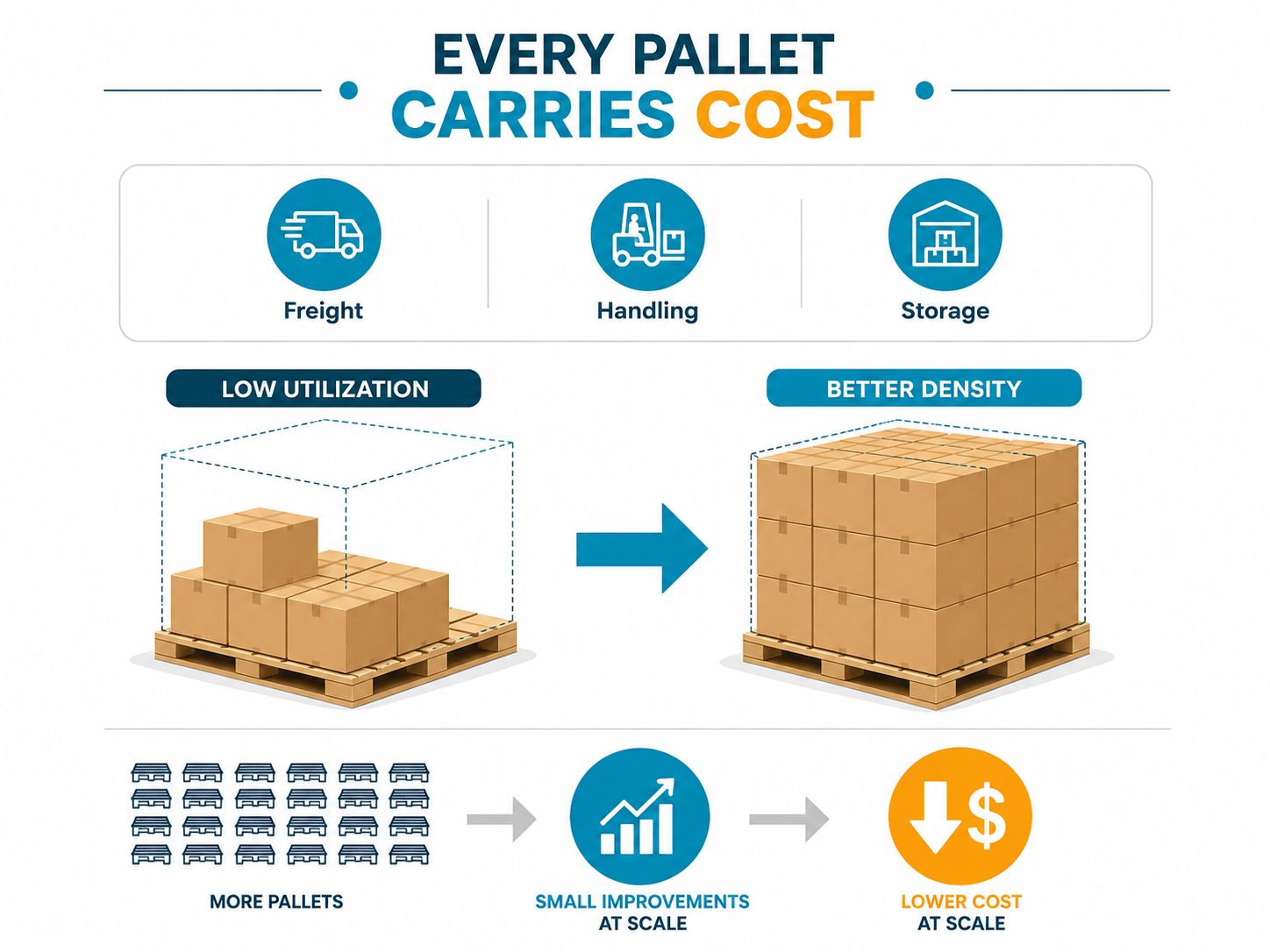
Every pallet represents:
- Freight cost
- Handling cost
- Storage space
When pallet utilization is low:
- You ship more pallets than necessary
- You increase transportation cost per unit
- You reduce warehouse efficiency
👉 Small improvements in pallet density can create meaningful cost savings at scale
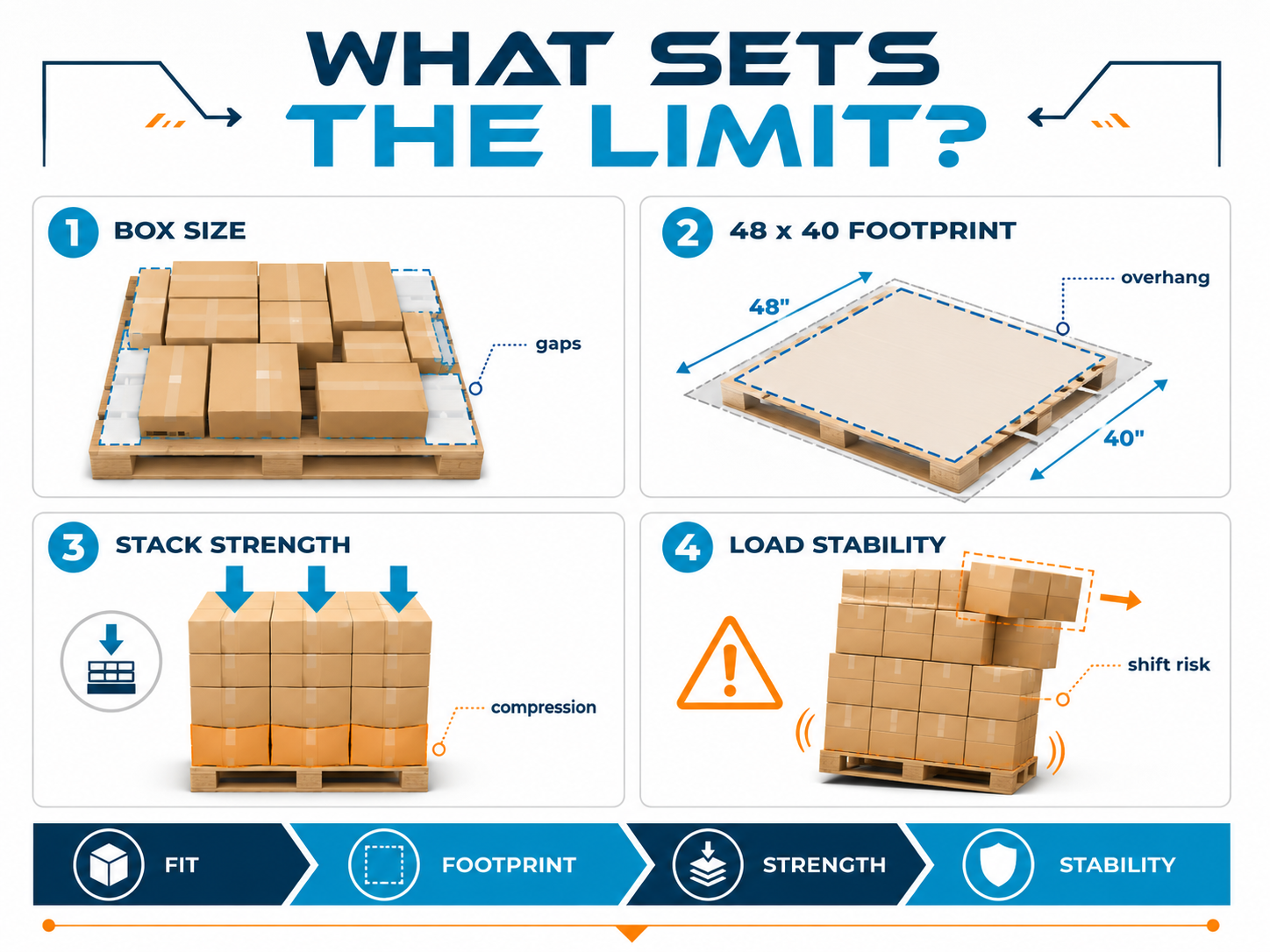
What Limits Boxes Per Pallet
Box Dimensions
Box size determines how efficiently it fits on a standard pallet.
- Poor sizing creates unused pallet space
- Mismatched dimensions reduce layer efficiency
👉 Even small dimensional mismatches compound across every layer
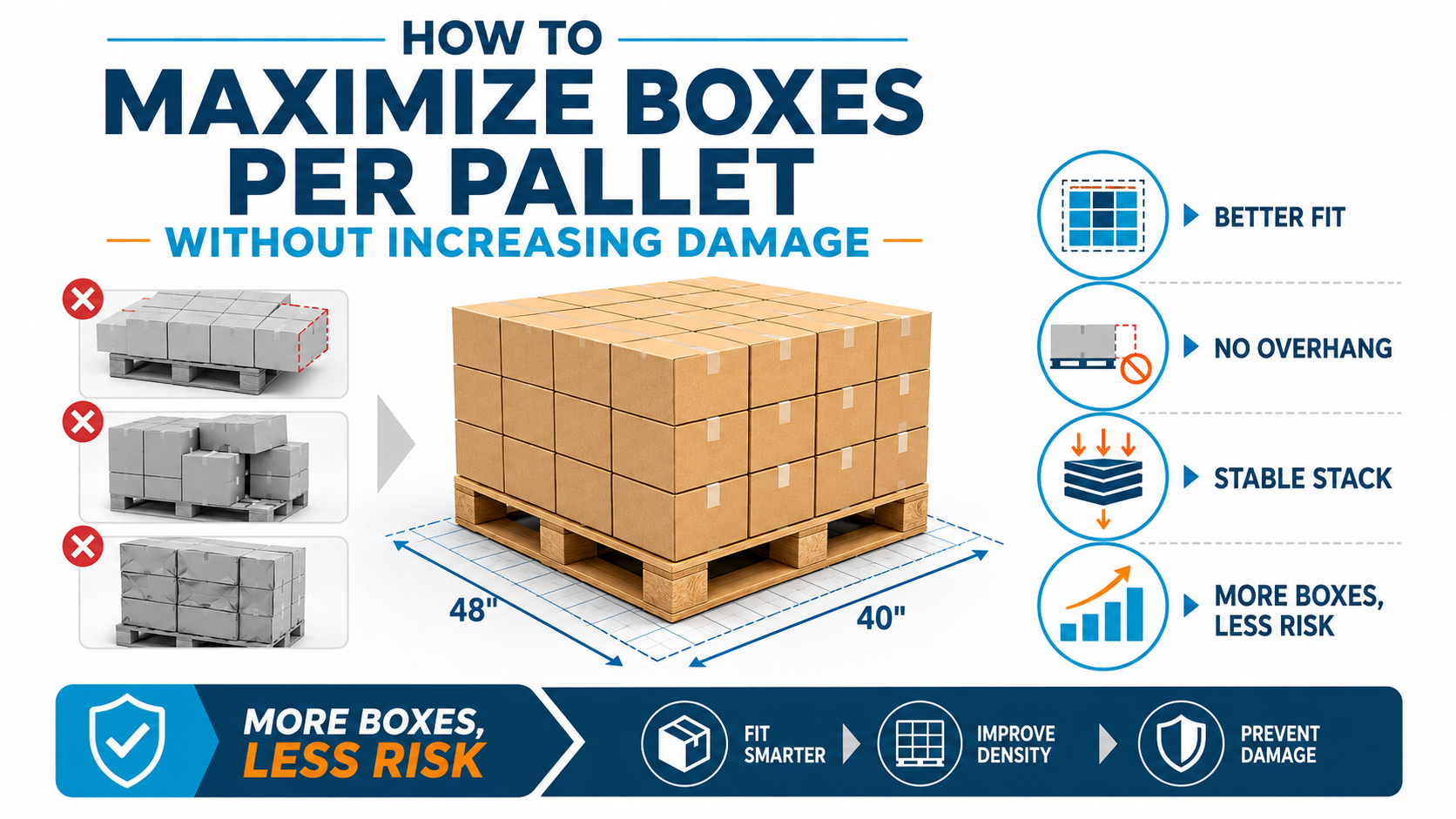
Pallet Footprint (48” x 40”)
Most pallets follow a standard footprint.
- Boxes that don’t align create gaps or overhang
- Inefficient patterns reduce total case count per pallet
👉 Packaging should be designed to fit the pallet—not fight it
Stacking Strength
More boxes per pallet increases total load.
- Bottom boxes carry significantly more weight
- Weak stacking leads to crushing and deformation
👉 Density must be balanced with compression strength
Stability & Load Integrity
Increasing quantity without considering stability leads to failure.
- Unstable stacks shift during transit
- Poor interlock patterns reduce load strength
- Overhang increases edge stress
👉 Instability leads to damage, not efficiency
How to Increase Pallet Density (Correctly)
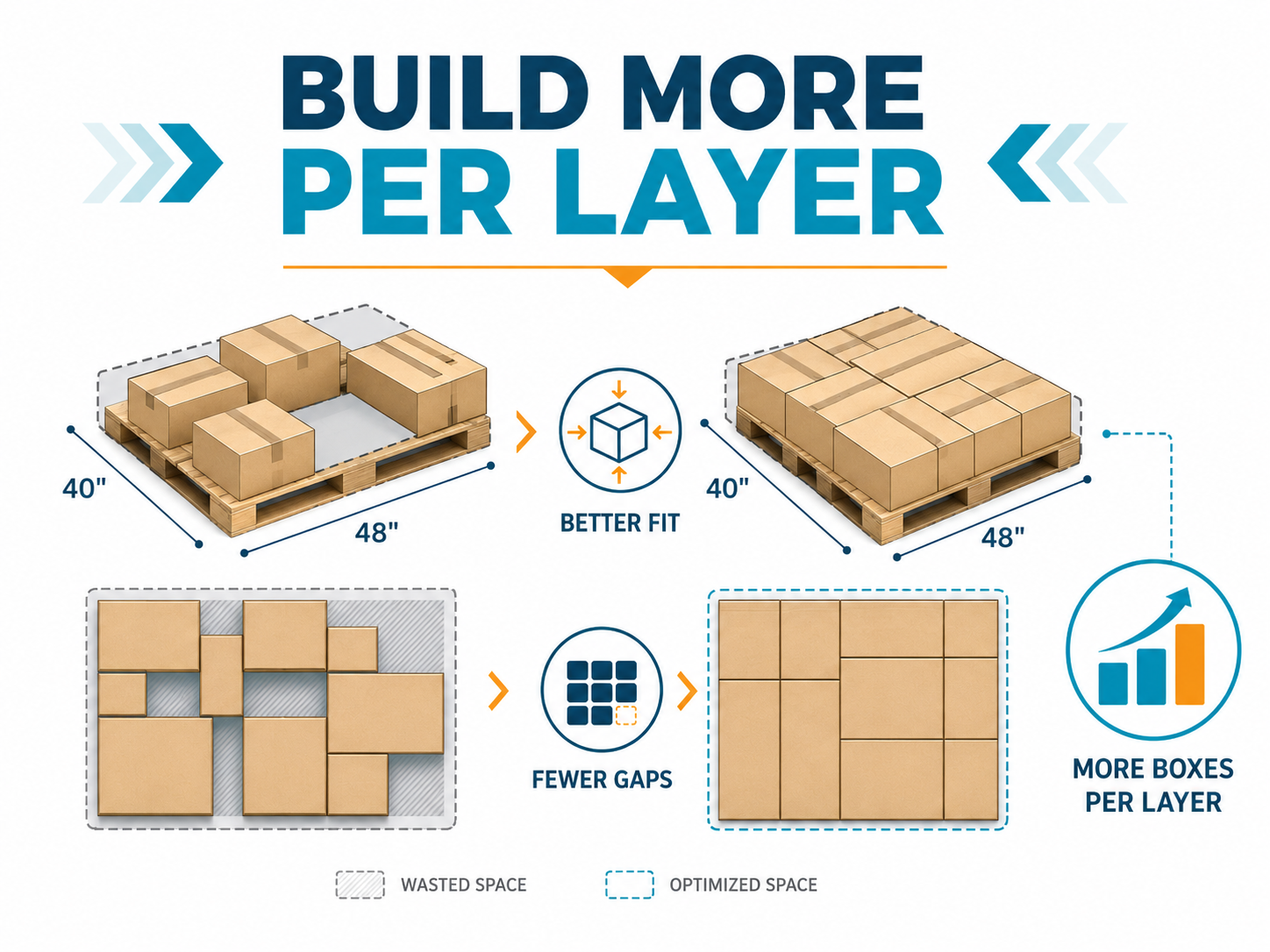
Optimize Box Dimensions
Design boxes to align with pallet dimensions.
- Fit evenly into 48” x 40” footprint
- Minimize unused space per layer
👉 Better fit = more boxes per layer
Maximize Layer Efficiency
Focus on how boxes are arranged—not just how many fit.
- Use patterns that fully utilize pallet area
- Reduce gaps between boxes
👉 Layer optimization is often the biggest opportunity
Balance Stack Height with Strength
Increasing stack height adds load.
- Ensure boxes can handle top load requirements
- Apply appropriate safety factors
👉 More layers only work if boxes can support the load
Use the Right Stacking Pattern
- Column stacking → maximum strength
- Interlocking → improved stability, reduced strength
👉 Choose based on whether strength or stability is the priority
Eliminate Overhang
Boxes extending beyond pallet edges create risk.
- Increased crushing at edges
- Higher likelihood of damage during handling
👉 Proper fit prevents load failure at the weakest points
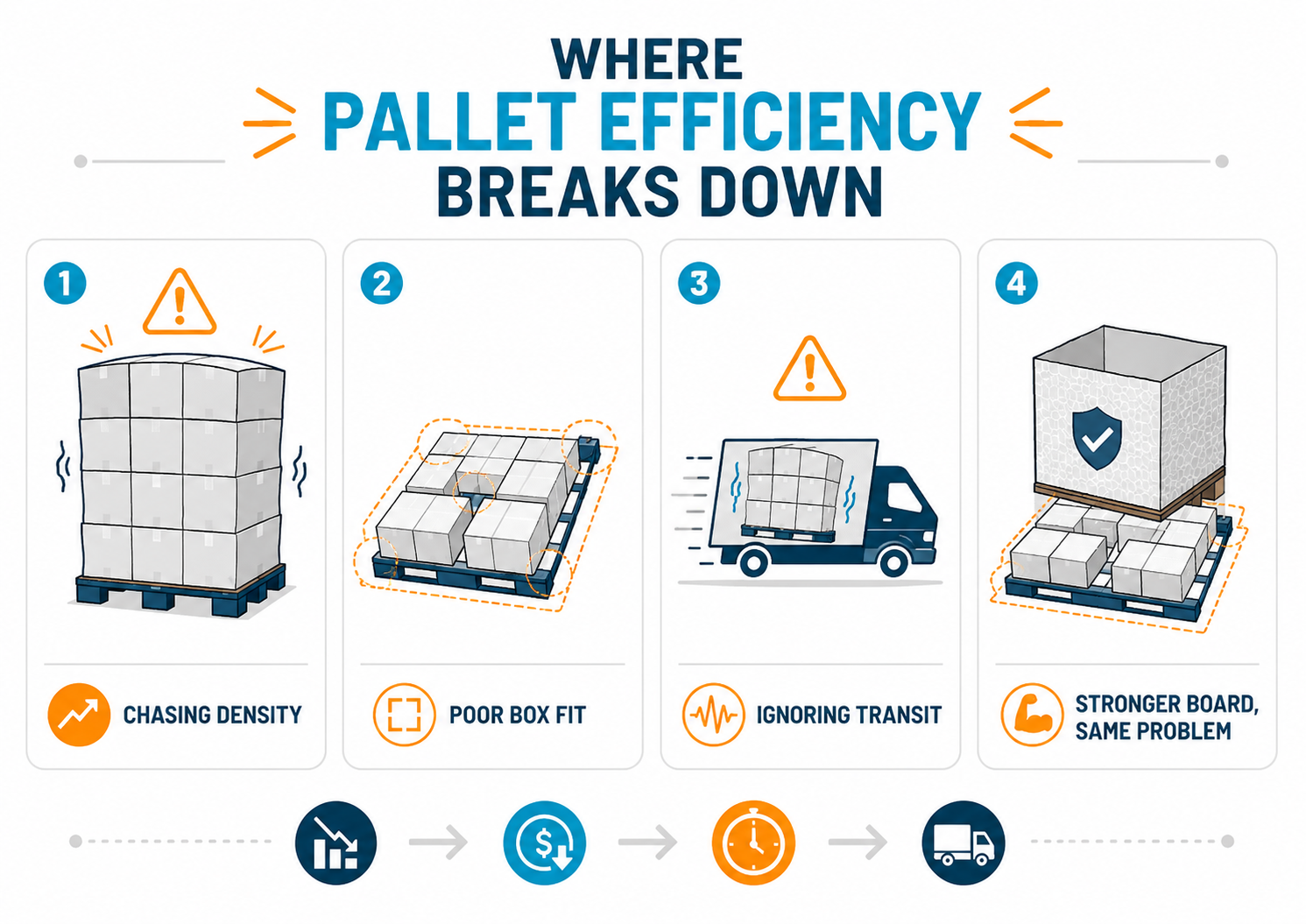
Where Companies Get This Wrong
Chasing Density Without Strength
- Adding layers without evaluating compression
- Leading to crushed bottom cases
Using Poorly Sized Boxes
- Standard sizes that don’t fit pallet dimensions
- Creating wasted space and inefficiency
Ignoring Real Shipping Conditions
- Designing for ideal stacking, not actual handling
- Overlooking vibration and movement
Overcorrecting with Stronger Boxes
- Increasing board grade instead of fixing dimensions
- Adding cost without improving efficiency
What This Means for Cost
Pallet inefficiency directly increases:
- Freight cost per unit
- Number of shipments required
- Handling and storage cost
👉 You are paying more to move the same product
Final Takeaway
Maximizing boxes per pallet is not about fitting more — it is about fitting smarter.
The best packaging systems balance:
- Dimensional efficiency
- Stacking strength
- Load stability
- Pallet fit
- Real-world shipping conditions
That is how companies reduce freight cost without increasing damage.
Brown Packaging helps businesses evaluate box dimensions, pallet configuration, board strength, and load stability to improve pallet efficiency without sacrificing product protection. The goal is not just more boxes per pallet — it is lower total cost per shipment.
Pallet efficiency is one of the most overlooked drivers of shipping cost. Most companies try to increase boxes per pallet—but do it in ways that compromise stability and increase damage.
Choosing between 32 ECT and 44 ECT is one of the most common decisions in corrugated packaging. It’s also one of the most misunderstood. Most companies either default to 32
Excess moisture in pet food packaging can cause mold growth, nutrient degradation, clumping, and product spoilage. Effective moisture control combines barrier material selection, packaging design, and controlled production environments to
Exporting products requires packaging that can endure extended transit times, multiple handling points, and strict international regulations. Full Overlap (FOL) boxes are a proven solution for export shipments because their
Home » How to Maximize Boxes Per Pallet Without Increasing Damage