

Home » Why Packaging Fails Even After Passing Tests
Why Packaging Fails Even After Passing Tests
Packaging performance testing is designed to verify that packaging can withstand the stresses of distribution. Tests such as drop testing, compression testing, and vibration testing simulate transportation conditions and help validate packaging strength before production.
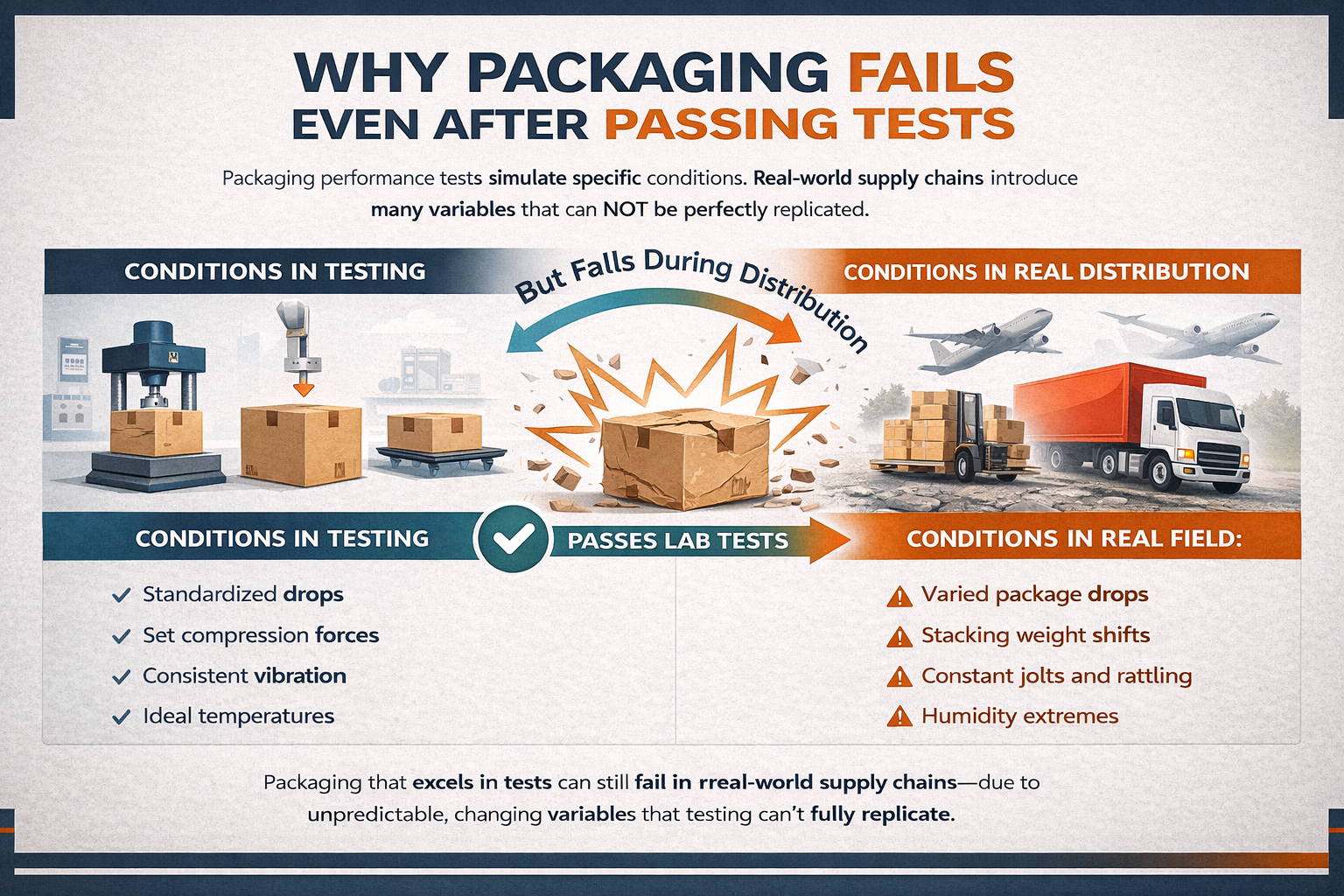
However, packaging that performs well during testing may still fail during real distribution. This occurs because laboratory tests simulate specific conditions, while actual supply chains introduce many variables that cannot be perfectly replicated.
Understanding why packaging sometimes fails even after testing helps companies design packaging systems that better reflect real-world distribution environments.
Laboratory Tests Simulate Controlled Conditions
Most packaging tests are conducted in controlled laboratory environments. These tests apply defined forces or movements to simulate distribution events.
Common packaging tests include:
- Compression testing to measure stacking strength
- Drop testing to simulate impact events
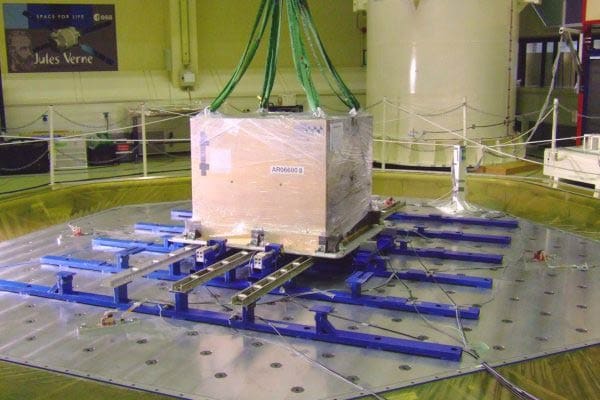
- Vibration testing to replicate transportation movement
- Environmental testing for humidity and temperature exposure
These methods are extremely valuable for evaluating packaging performance, but they represent simplified versions of real distribution conditions.
Real Distribution Introduces Multiple Stress Factors
In actual supply chains, packaging is exposed to multiple stress factors at the same time.
Products may experience:
- Repeated handling events
- Extended warehouse storage periods
- Changing humidity levels
- Variable stacking loads
- Unexpected impacts during loading and unloading
While laboratory tests isolate specific conditions, real-world distribution environments often combine these stresses simultaneously.
Distribution Duration Can Exceed Test Conditions
Many tests simulate short-term distribution events, but packaging may remain in storage or transit for much longer periods.
For example:
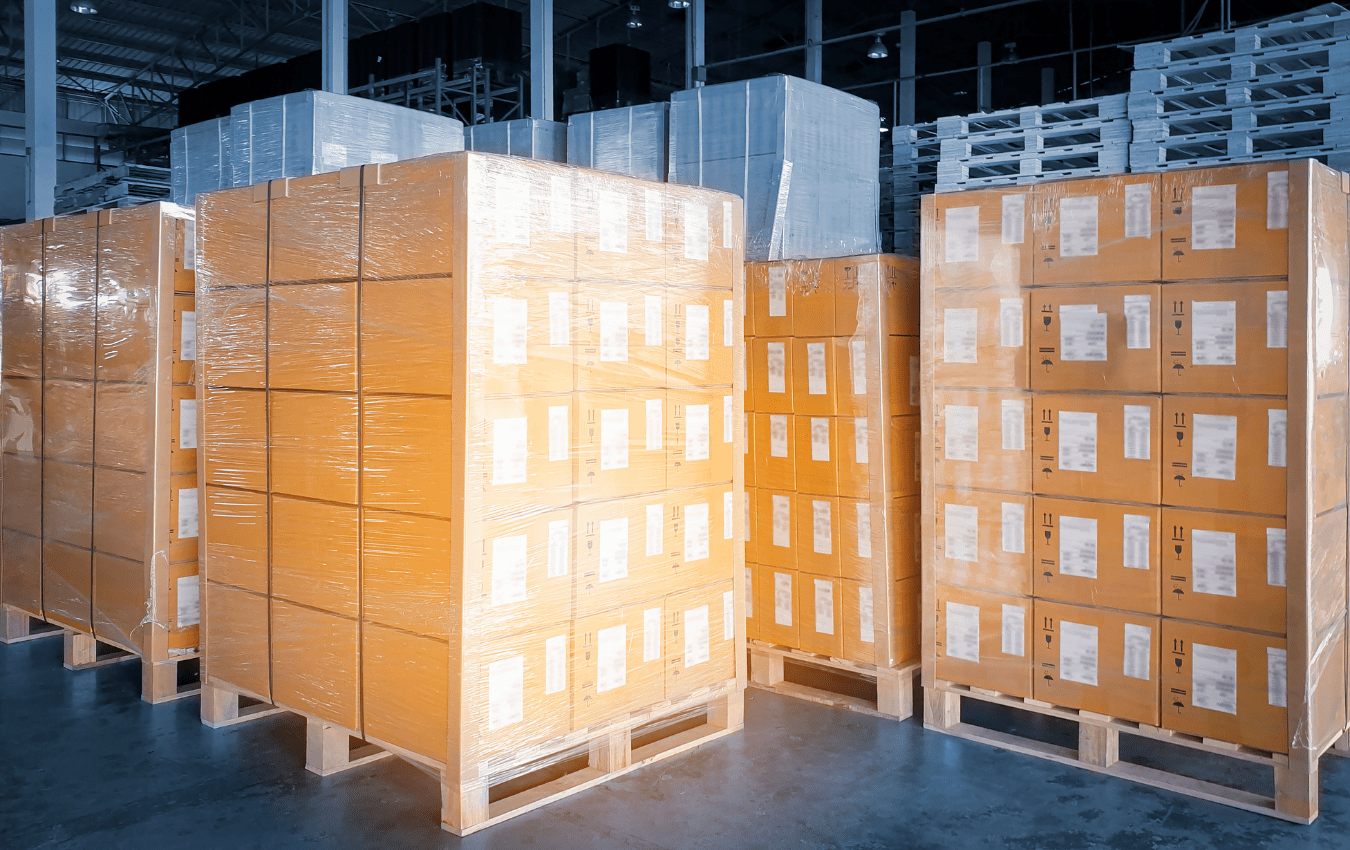
- Pallets may be stacked for weeks in warehouses
- Products may experience multiple loading and unloading cycles
- International shipments may travel through multiple climates
Over time, compression loads and environmental exposure can weaken packaging structures even if they initially passed testing.
Handling Variability in Distribution
Packaging tests assume controlled handling procedures, but real distribution involves human operators and equipment variability.
Forklift handling, pallet stacking, and loading procedures can vary between facilities. These variations introduce additional stresses that may not be fully represented during testing.
Common real-world handling issues include:
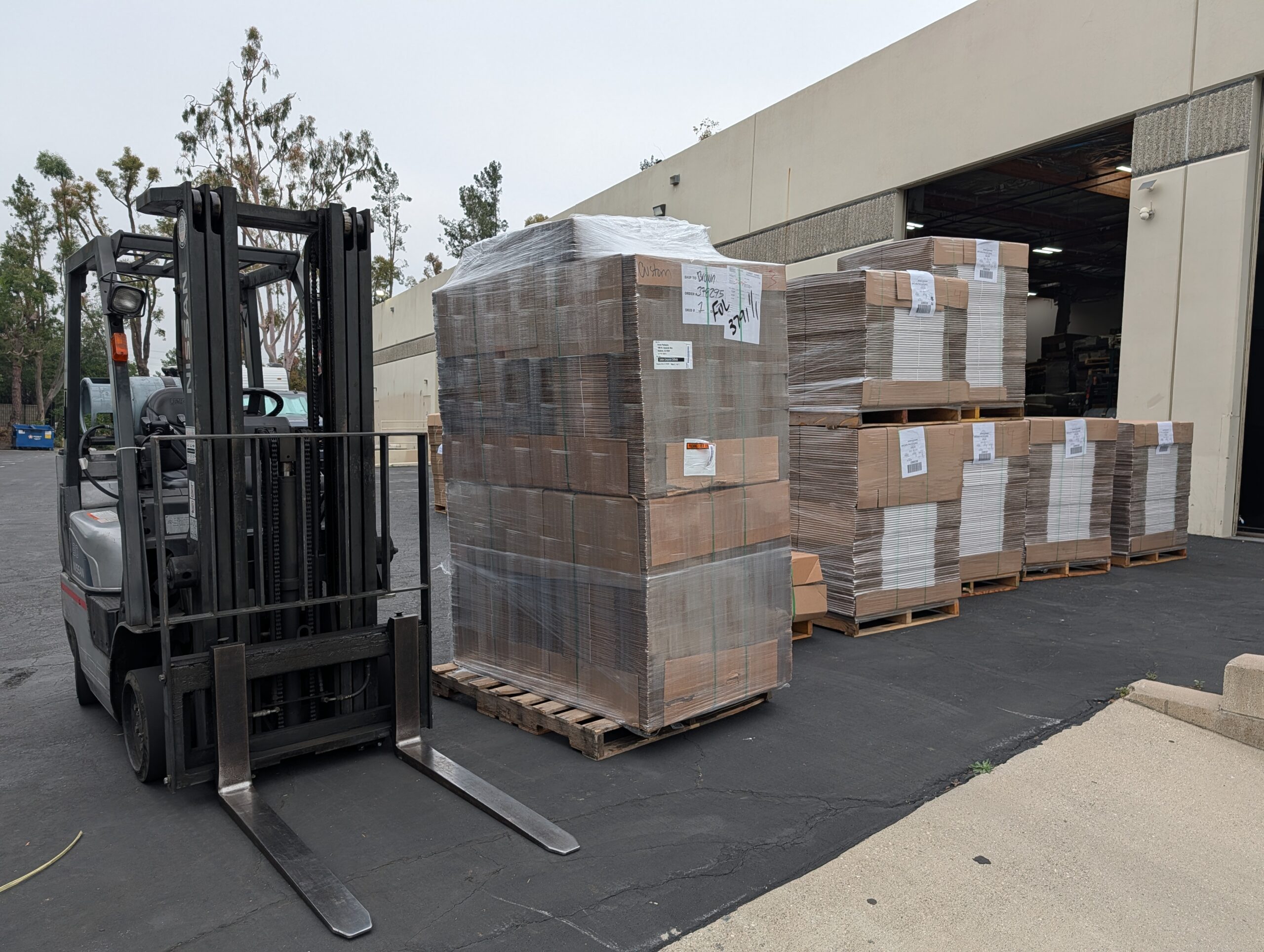
- Forklift impacts on pallet loads
- Uneven pallet stacking
- Shifting loads during transport
Packaging designed with limited safety margins may perform well in tests but struggle under these variable conditions.
Packaging Systems vs Individual Tests
Another reason packaging may fail after testing is that tests often focus on individual packaging components rather than the entire packaging system.
A shipping container may pass a drop test, but the pallet configuration, internal packaging, and stacking loads may create different stresses during distribution.
Effective packaging design considers the entire packaging system, including:
✔ Box structure and board strength
✔ Internal packaging components
✔ Pallet patterns and stacking loads
✔ Distribution duration and handling frequency
Evaluating the full system helps ensure packaging performs consistently across the entire supply chain.
Testing as Part of a Broader Packaging Strategy
Packaging testing remains an essential tool for validating packaging performance. However, testing should be combined with distribution analysis and packaging engineering to ensure packaging solutions perform reliably.
Companies often improve packaging reliability by:
✔ Simulating realistic distribution environments
✔ Evaluating pallet stacking conditions
✔ Testing packaging with actual product loads
✔ Reviewing handling procedures within the supply chain
This broader approach helps ensure packaging performs effectively beyond laboratory conditions.
Partnering with Brown Packaging
At Brown Packaging, we help companies evaluate packaging systems within the context of real distribution environments. By combining performance testing, structural design analysis, and distribution insights, we develop packaging solutions that provide reliable protection across complex supply chains.
Understanding how packaging behaves outside the laboratory allows companies to reduce damage risk while maintaining efficient packaging systems.
References
- Soroka, W. (2009). Fundamentals of Packaging Technology (4th ed.). Institute of Packaging Professionals.
• ASTM International. (2022). ASTM D4169 – Standard Practice for Performance Testing of Shipping Containers.
• ISTA (International Safe Transit Association). (2023). ISTA 3A and 6-Series Packaging Testing Protocols.
• Packaging World. (2024). Distribution Testing and Packaging System Performance.
Packaging performance testing is designed to verify that packaging can withstand the stresses of distribution. Tests such as drop testing, compression testing, and vibration testing simulate transportation conditions and help
Most POP floor displays don’t fail immediately—they fail after they’ve been on the retail floor for a short period of time. Week one looks fine.By week two, problems start showing:
A lower unit price doesn’t mean lower cost. In POP display programs, the biggest losses rarely show up on the quote—they show up in damage rates, retail rejection, poor sell-through,
A visually impressive POP display doesn’t guarantee performance. In fact, many of the best-looking displays underperform because they’re designed for approval—not for real retail conditions. What works in a render,
Home » Why Packaging Fails Even After Passing Tests