
Home » The Hidden Cost of Cheap POP Displays
The Hidden Cost of Cheap POP Displays
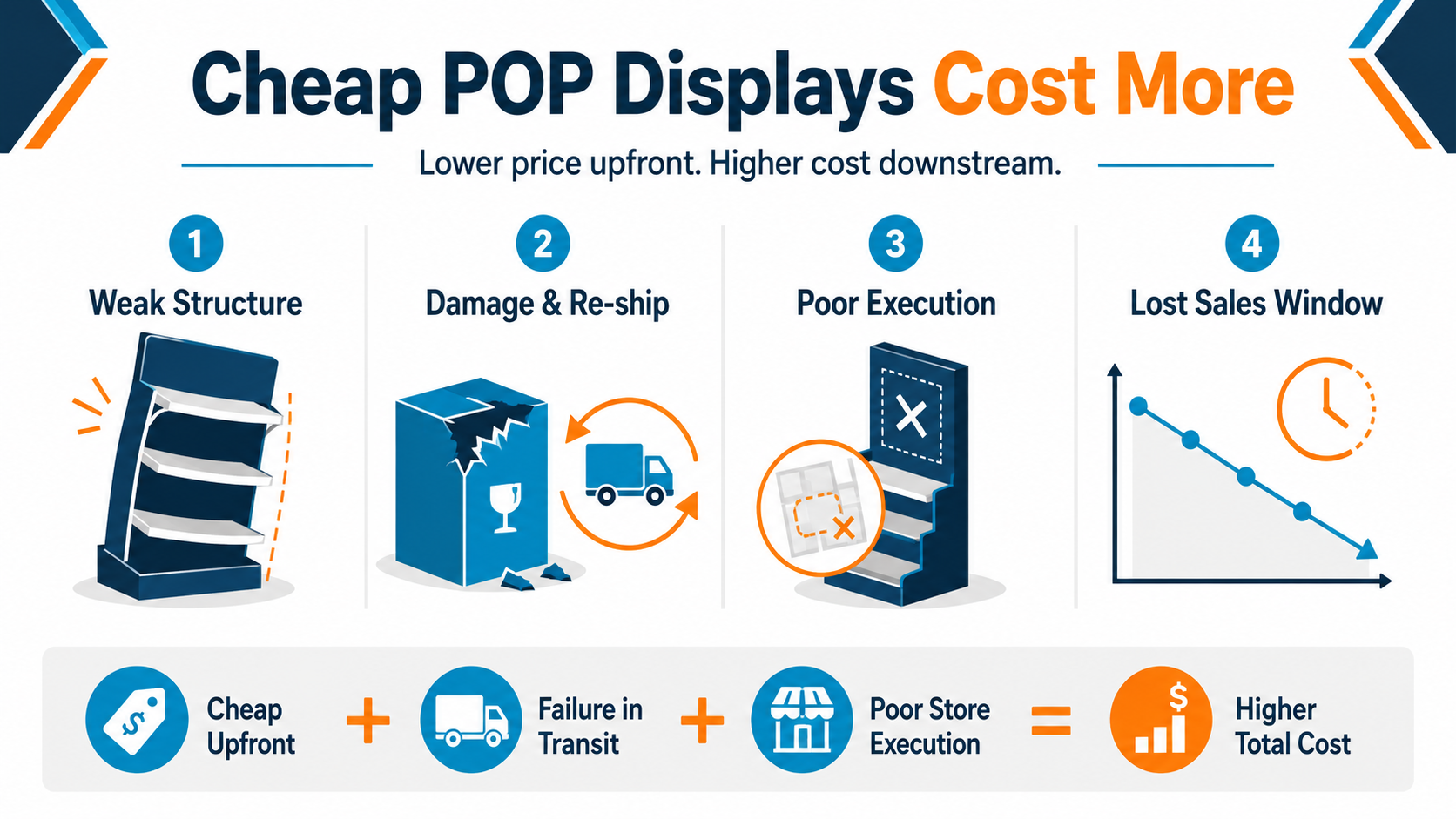
Lower cost per unit looks like a win.
Until the display:
- Fails early
- Doesn’t get placed
- Doesn’t sell product
Then it becomes expensive—fast.
Because POP display cost isn’t about what you pay upfront.
It’s about what it delivers over time.
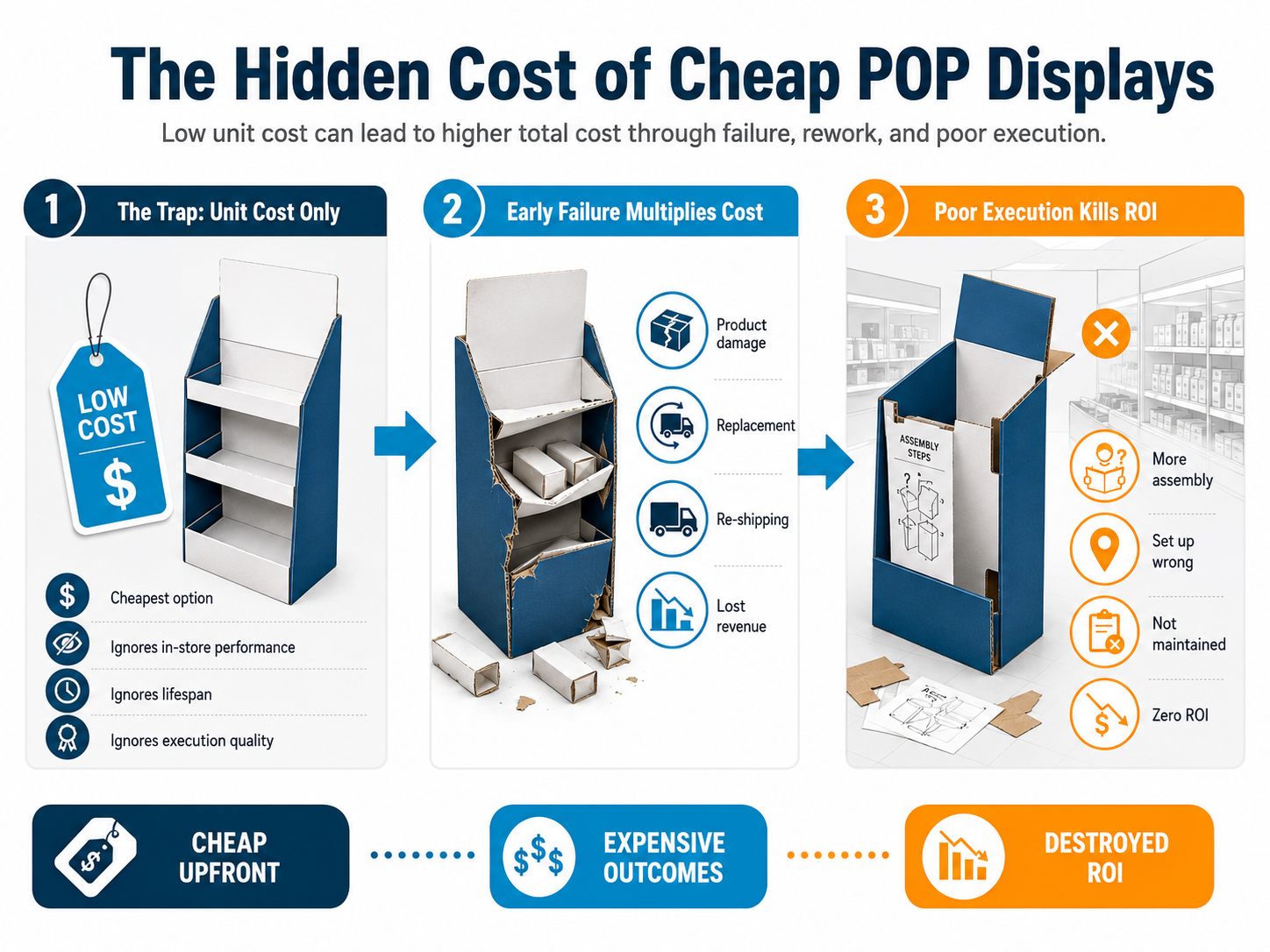
The Trap: Focusing on Unit Cost Only
Most buying decisions start with:
👉 “What’s the cheapest option?”
But that ignores:
- Performance in-store
- Lifespan of the display
- Execution quality
A cheaper display that underperforms:
👉 Costs more in lost sales than it saves in production
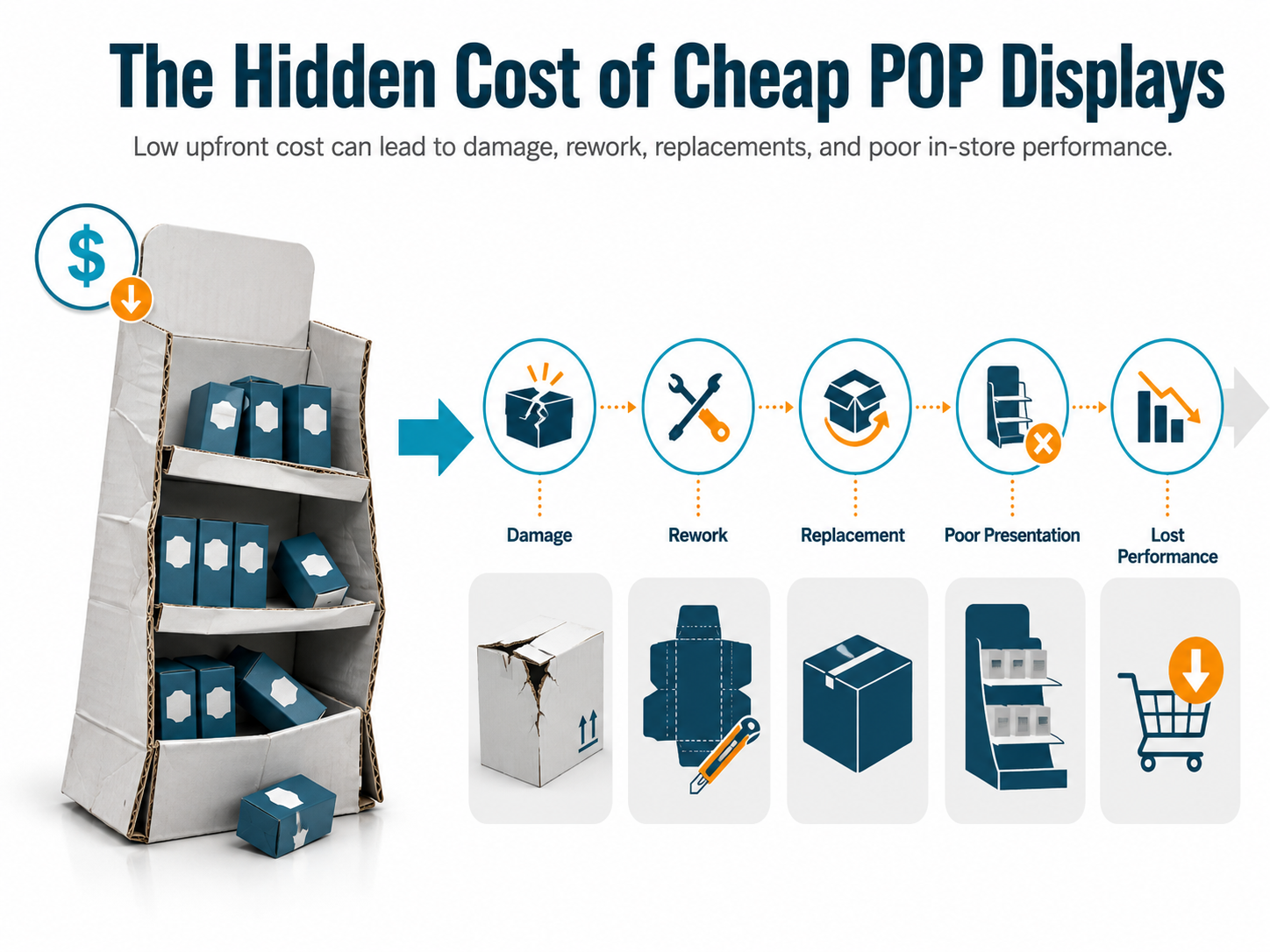
Early Failure Multiplies Cost
When displays fail:
- Shelves sag
- Structures lean
- Units collapse
This leads to:
- Product damage
- Display removal
- Lost selling time
Now you’re paying for:
- Replacement
- Re-shipping
- Missed revenue
Cheap upfront → expensive outcome
Poor Execution Kills ROI
Lower-cost displays often:
- Require more assembly
- Are less intuitive to set up
- Create friction for store staff
Result:
- Not placed
- Placed incorrectly
- Not maintained
A display that never gets executed:
👉 Has zero ROI
Material Downgrades Have Hidden Effects
Reducing board grade or structure:
- Lowers compression strength
- Reduces durability during transit
- Increases sensitivity to handling
This creates:
- Damage before reaching the floor
- Shorter in-store lifespan
Material savings upfront can destroy performance downstream.
Freight and Damage Costs Add Up
Lower-cost designs often ignore:
- Pack-out efficiency
- Structural protection during shipping
This leads to:
- Higher damage rates
- Inefficient pallet utilization
- Increased freight cost per usable unit
You don’t just lose displays—you lose margin.
Short Lifespan = Lost Revenue Window
Displays are meant to:
👉 Sell product over time
If they fail early:
- Selling window is cut short
- Inventory doesn’t move as planned
Even if cost was low:
👉 Revenue opportunity is lower
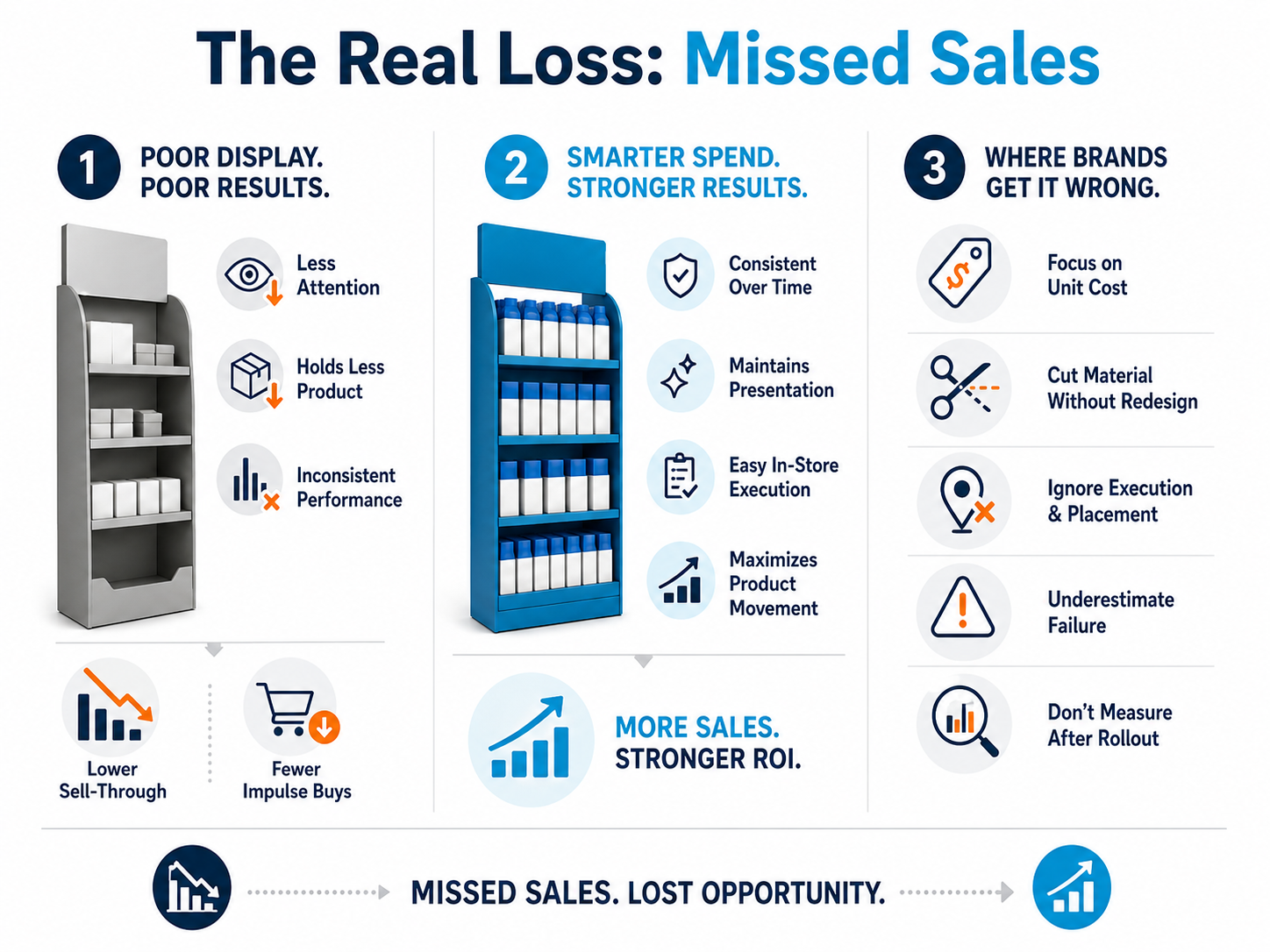
The Hidden Cost: Missed Sales
This is the biggest one—and most overlooked.
A poor display:
- Gets less attention
- Holds less product
- Performs inconsistently
This leads to:
- Lower sell-through
- Reduced impulse purchases
The real cost isn’t the display—it’s the sales it didn’t generate.
What Cost-Efficient Displays Actually Do
They:
- Perform consistently over time
- Maintain structure and presentation
- Support easy execution in-store
- Maximize product movement
They aren’t the cheapest:
👉 They’re the most effective per dollar spent
Where Brands Get It Wrong
- Optimizing for unit cost instead of total cost
- Cutting material without adjusting design
- Ignoring execution and placement factors
- Underestimating failure rates
- Not measuring performance after rollout
These decisions look efficient—but aren’t.
How Brown Packaging Defines True Cost Efficiency
At Brown Packaging, cost is evaluated through:
👉 Total program performance—not unit price
We focus on:
- Structural durability over lifecycle
- Execution success at store level
- Freight and damage optimization
- Maximizing sell-through and ROI
Because the cheapest display doesn’t win—
👉 The one that performs does.
References
Freedonia Group. (2023). Packaging Market Analysis.
Shop! Association. (2023). Retail Display Performance Study.
Deloitte. (2022). Cost Optimization in Supply Chain.
McKinsey & Company. (2021). Operational Efficiency Report.
Soroka, W. (2009). Fundamentals of Packaging Technology.
Lower cost per unit looks like a win. Until the display: Fails early Doesn’t get placed Doesn’t sell product Then it becomes expensive—fast. Because POP display cost isn’t about what
Many packaging systems pass lab testing—and still fail in real-world shipping. This disconnect happens because testing measures controlled conditions, while shipping introduces variables that are rarely accounted for. If your
Folding carton artwork can look finished on screen and still create problems once it reaches production. The dieline is where design, structure, printing, cutting, folding, and gluing all come together.
Most POP display failures don’t start with materials—they start with geometry. Specifically:👉 Shelf span Designs often look structurally sound on paper, but once loaded, shelves begin to: Sag Bend unevenly
Home » The Hidden Cost of Cheap POP Displays