Home » Working Capital Optimization Through Print Strategy
Working Capital Optimization Through Print Strategy
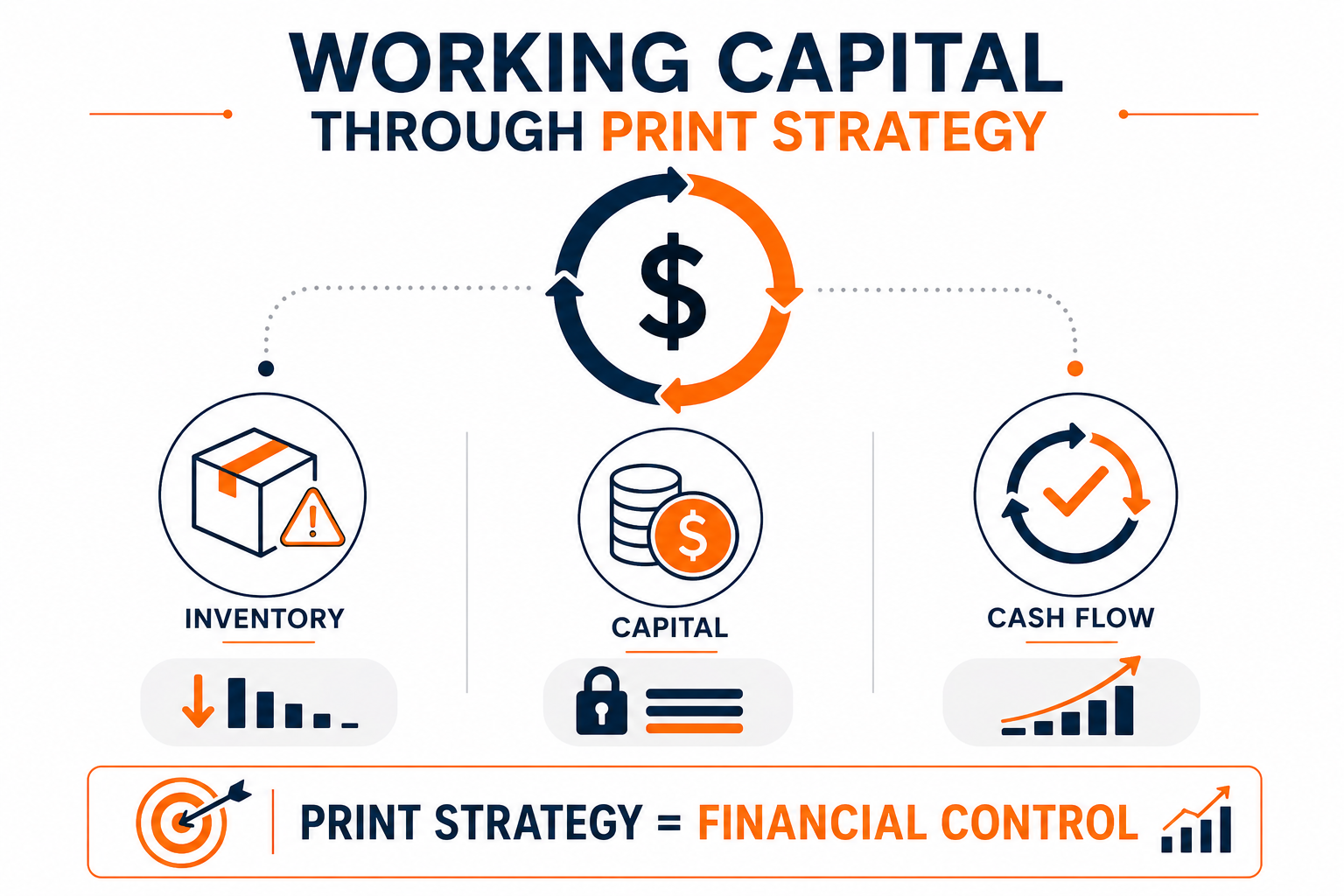
Packaging is rarely viewed as a capital allocation decision. Yet print method selection directly affects working capital, inventory exposure, and cash flow flexibility. In 2026, print strategy is increasingly a financial lever — not just a production choice.
How Packaging Ties Up Capital
Large traditional print runs require:
- Higher minimum order quantities
- Plate and setup investments
- Extended production cycles
- Larger warehouse footprints
The result is capital locked in packaging inventory long before product revenue is realized.
When demand forecasts are inaccurate, that capital remains idle — or worse, becomes obsolete.
Inventory Turns vs Unit Cost
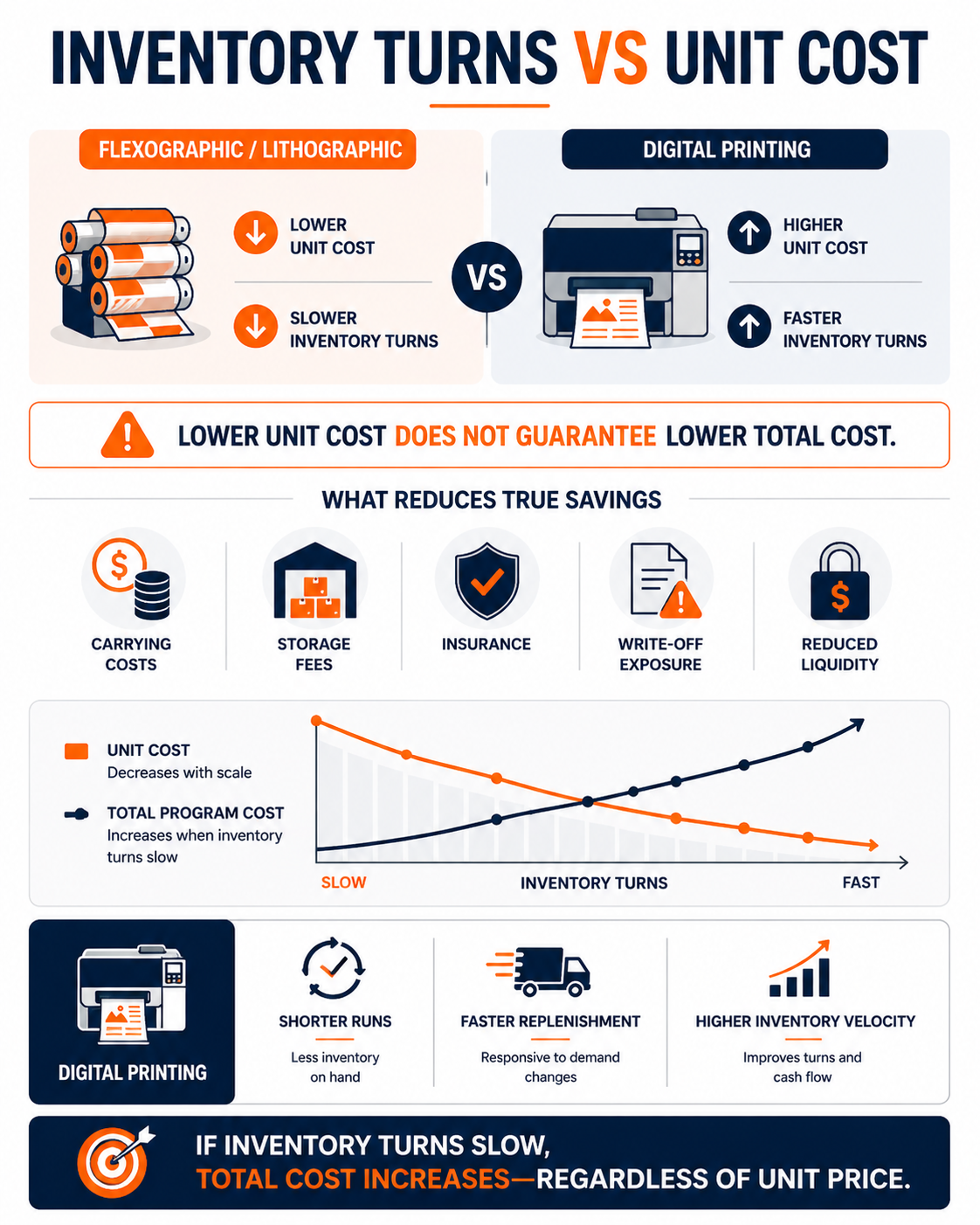
Flexographic and lithographic printing often reduce per-unit cost at scale. However, the savings must outweigh:
- Carrying costs
- Storage fees
- Insurance
- Write-off exposure
- Reduced liquidity
If inventory turns slow, total program cost increases despite lower unit pricing.
Digital printing typically improves inventory velocity by allowing shorter runs and faster replenishment cycles.
Forecast Reliability and Capital Risk
The more volatile demand becomes, the greater the financial risk of long print commitments.
High SKU counts, seasonal packaging, retailer-specific requirements, and promotional programs increase variability. In these environments, shorter print cycles can preserve capital flexibility.
Working capital efficiency often matters more than incremental unit savings.
When Traditional Print Strengthens Capital Efficiency
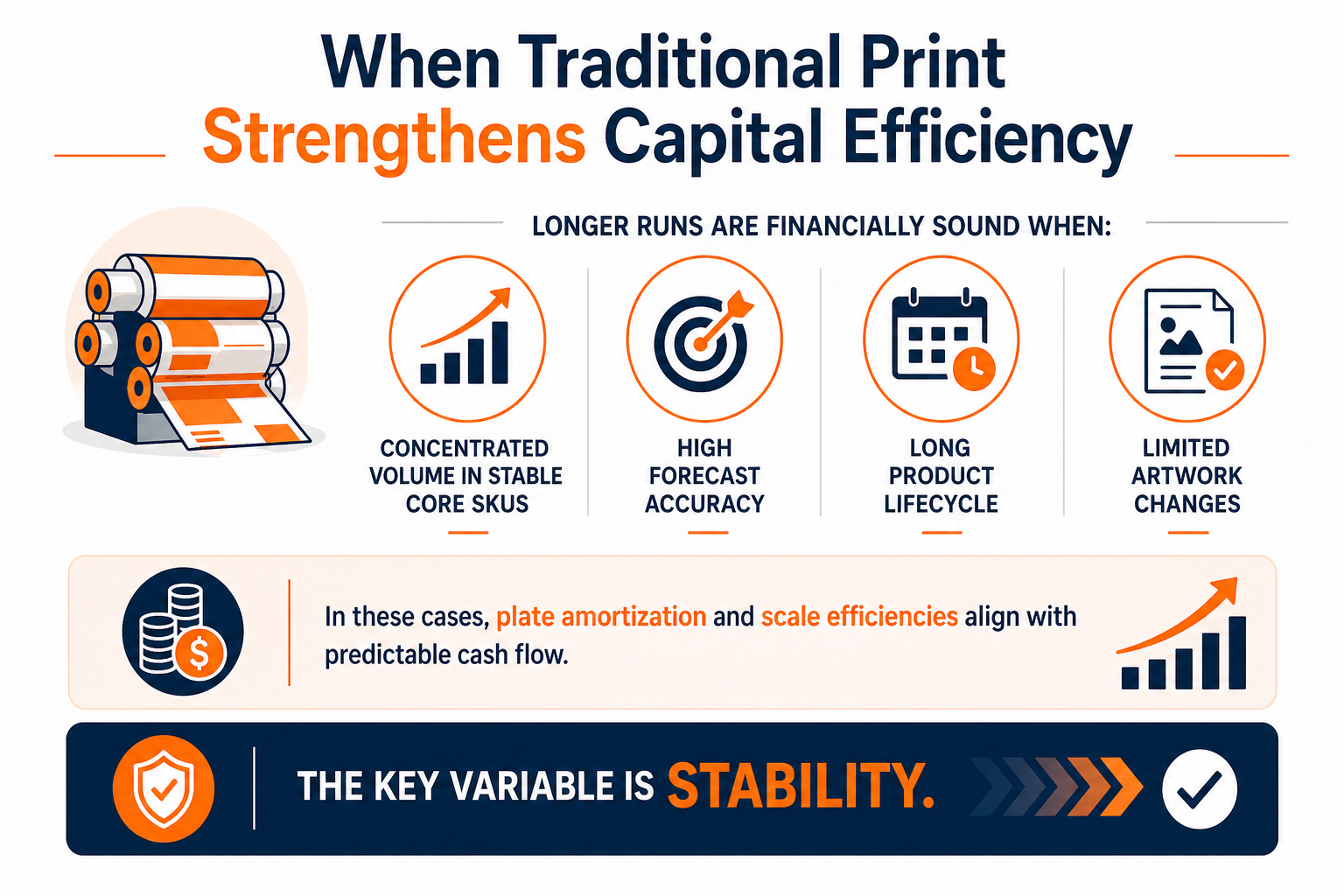
There are situations where longer runs are financially sound:
- Concentrated volume in stable core SKUs
- High forecast accuracy
- Long product lifecycle
- Limited artwork changes
In these cases, plate amortization and scale efficiencies align with predictable cash flow.
The key variable is stability.
Segmenting Print Strategy for Capital Control
Leading packaging programs segment by financial behavior:
- Digital printing for volatile, evolving, or test-market SKUs
- Flexographic or lithographic printing for stable, predictable volume
This approach balances cost efficiency with capital preservation.
Print method becomes a risk management tool.
The Bottom Line
Print strategy directly impacts working capital exposure, inventory velocity, and financial flexibility. Buyers who evaluate packaging decisions through a capital lens — not just a pricing lens — protect margin and liquidity more effectively.
Contact Brown Packaging to evaluate your packaging program against forecast stability, SKU behavior, and capital allocation goals to determine the most efficient print strategy for your operation.
Sources
- PRINTING United Alliance – Print production cost structures
- Flexible Packaging Association (FPA) – Digital and traditional print market data
- PMMI – The Association for Packaging and Processing Technologies – Packaging efficiency and operations research
- McKinsey & Company – Working capital optimization studies
- Deloitte Supply Chain Research – Inventory risk and financial exposure analysis
Pallet efficiency is one of the most overlooked drivers of shipping cost. Most companies try to increase boxes per pallet—but do it in ways that compromise stability and increase damage.
Choosing between 32 ECT and 44 ECT is one of the most common decisions in corrugated packaging. It’s also one of the most misunderstood. Most companies either default to 32
Excess moisture in pet food packaging can cause mold growth, nutrient degradation, clumping, and product spoilage. Effective moisture control combines barrier material selection, packaging design, and controlled production environments to
Exporting products requires packaging that can endure extended transit times, multiple handling points, and strict international regulations. Full Overlap (FOL) boxes are a proven solution for export shipments because their
Home » Working Capital Optimization Through Print Strategy