Home » Why Full Overlap Boxes Are the Ultimate Bike Shipping Box
Why Full Overlap Boxes Are the Ultimate Bike Shipping Box
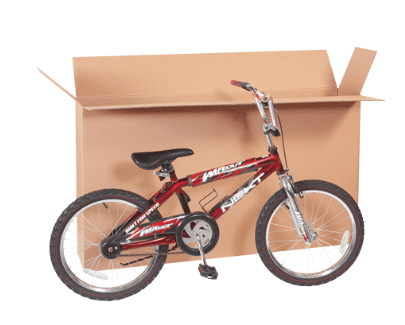
A Full Overlap (FOL) box is a type of corrugated shipping box where the flaps fully overlap each other when closed, providing additional strength and durability. Unlike regular slotted containers (RSCs), FOL boxes have double-layered protection on the top and bottom, making them ideal for heavy, bulky, or fragile items. This structural design enhances stacking strength, impact resistance, and overall box integrity, reducing the risk of damage during transit and storage.
Why Full Overlap Boxes are Ideal for Bike Packaging
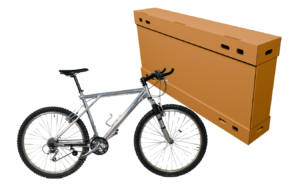
Bikes require durable, impact-resistant packaging to ensure they arrive undamaged, whether shipped to retailers, distributors, or customers. A Full Overlap Box provides superior protection against crushing, punctures, and rough handling. Here’s why they are the preferred choice for bike packaging:
- Increased Strength & Durability – The overlapping flaps create a reinforced structure, preventing crushing and minimizing movement inside the box.
- Added Protection for Fragile Components – Bikes have delicate parts like gears, chains, and brake systems that require extra care during shipping.
- Enhanced Stacking Capability – FOL boxes handle vertical pressure better, making them ideal for warehouse storage and bulk shipments.
- Custom Fit & Inserts Available – These boxes can be designed with custom inserts and foam padding to keep bike parts securely in place and prevent shifting.
- Eco-Friendly & Sustainable – Many FOL boxes are made from recycled materials and can be fully recyclable, aligning with sustainability goals.
Customizing Full Overlap Boxes for Bikes
To provide maximum protection and branding, Full Overlap Boxes can be customized to fit specific bike models and shipping needs. Some key customization options include:
- Size & Structure Customization
- Designed to fit various bike sizes, from road bikes to mountain bikes.
- Can include double-wall or triple-wall corrugated material for added protection.
- Reinforced edges and custom cut-outs for better handling.
- Protective Inserts & Cushioning
- Foam padding and corrugated inserts to keep the bike frame and parts from moving.
- Dividers for accessories like pedals, seats, and handlebars.
- Shock-absorbing corner protectors to reduce impact damage.
- Branding & Printing Options
- Custom printing for logos, handling instructions, and product details.
- Lithographic, flexographic, or digital printing to match branding requirements.
- Matte or gloss finishes for a premium look.
The Shipping & Storage Advantages of FOL Bike Boxes
When shipping bikes, damage prevention and cost efficiency are top priorities. Full Overlap Boxes help optimize shipping in the following ways:
- Easier Palletization & Secure Stacking – Their rigid structure allows for safe stacking on pallets, reducing wasted space and ensuring safe transit.
- Reduced Shipping Damage – The extra layers of corrugated flaps absorb shock and pressure, lowering the chance of returns due to damage.
- Better Handling for Warehouses & Retailers – Reinforced hand holes or built-in grip areas can be added for easier transport.
- Flat-Pack Storage Efficiency – Unassembled boxes take up minimal space until needed, making inventory storage easier.
Conclusion: Why Full Overlap Boxes Are the Best Choice for Bikes
For businesses in the cycling industry, choosing the right packaging can make a significant difference in product safety, customer satisfaction, and shipping efficiency. Full Overlap Boxes provide maximum protection, superior stacking strength, and customizable features that cater specifically to bike packaging needs. Whether you’re shipping single bikes to customers or bulk orders to retailers, these boxes offer a reliable, cost-effective, and sustainable packaging solution.
Need a custom Full Overlap Box for your bikes? Contact Brown Packaging today to discuss your packaging requirements and let our experts create the perfect solution for you!
In 2026, sustainability is no longer just a trend—it’s a buyer expectation. Forest Stewardship Council (FSC) certification has become a key benchmark for responsible packaging, signaling that materials are sourced
Sustainability is now a top priority for packaging buyers. Retailers, regulators, and consumers are all demanding packaging solutions that reduce environmental impact without sacrificing performance. In 2026, buyers must balance
Choosing the right packaging material is one of the most important decisions buyers face. Single-material packaging offers simplicity and recyclability, while multi-material designs provide enhanced performance and protection. Understanding the
One of the biggest challenges in sustainable packaging is balancing environmental responsibility with product protection. Buyers often worry that switching to eco-friendly materials means sacrificing durability or driving up costs.
Home » Why Full Overlap Boxes Are the Ultimate Bike Shipping Box
One of the biggest challenges in sustainable packaging is balancing environmental responsibility with product protection. Buyers often worry that switching to eco-friendly materials means sacrificing durability or driving up costs. In 2026, new material technologies allow brands to meet sustainability goals without compromising strength or supply chain performance. Why Protection Still Matters Damaged products create more waste than packaging ever could. Returns increase logistics costs and carbon emissions. Retailers and e-commerce platforms expect packaging to deliver both sustainability and reliability. Eco-Friendly Material Options Recycled corrugated: Maintains stacking strength while reducing virgin fiber use. Molded pulp inserts: Cushion fragile items while replacing plastic foam. Water-based barrier coatings: Add moisture resistance without plastic films. Compostable films: Ideal for short shelf-life or single-use applications. Paper-based mailers: Replace poly mailers for e-commerce shipments. How to Balance Eco Goals and Protection Use right-sizing to reduce material volume while improving fit. Apply hybrid solutions (corrugated + pulp) for high-value goods. Conduct ISTA testing to validate protective performance. Match material choice to product fragility and supply chain conditions. Examples in Action Electronics: Molded pulp trays replacing EPS foam. Food and beverage: FSC-certified corrugated with recyclable coatings. Retail e-commerce: Recycled paper mailers protecting apparel. Packaging Solutions with Brown Packaging Brown Packaging develops eco-friendly solutions that protect products while meeting sustainability requirements. From recycled corrugated to innovative coatings, our team ensures you never trade protection for environmental impact. Contact us to explore eco-material options. References Forest Stewardship Council (FSC). (2023). FSC Certification Guidelines for Packaging. Retrieved from https://fsc.orgSustainable Packaging Coalition. (2023). Eco-Friendly Packaging Materials and Case Studies. Retrieved from https://sustainablepackaging.orgASTM International. (2023). ASTM D4169: Standard Practice for Performance Testing of Shipping Containers and Systems. (714)300-0650 request@brownpackaging.com Most Recent Posts: Subscribe To Our Newsletter By submitting your information, you agree to our terms and conditions and privacy policy. Custom Packaging Facebook Twitter LinkedIn Pinterest Relevant Posts
When it comes to printing on packaging, color is one of the most important components in attracting a consumer. Most people aren’t aware that there is a variety of different color process options to choose from including; CMYK, PMS, and GCMI. Understanding the difference between them all, will help you make the best decision for your business needs. It is important to take into consideration accuracy, pricing, lead time, and cost. What is 4 color process: CMYK Four color printing utilizes Cyan, Magenta, Yellow, and Black (CMYK), to create the visual effect of a full-color image. The process is applied through adding tiny dots, overlapping in different concentrations to create a match as exact as possible to the desired colors. CMYK can be applied digitally or with other printing methods, and is best for full-color images. It is not 100% accurate when it comes to color matching, which means your image could look different run to run. If you need 10 colors for your print, this process will create the image as close as possible using only 4 colors. On traditional printing when a specific color cannot be produced by the 4 color process, you can choose to incorporate a specific PMS color into the CMYK colors. Although this adds on to the overall cost, it will give the ability to create more color variations. If you aren’t sure about your artwork and think there might be some changes, always stick to CMYK digital printing because there is no initial investment and it is easier to change. Ultimately this method is cheaper when deciding which color printing process to choose. Advantages of CMYK: Cheapest Fastest No startup cost Easy to change/edit image Prints images with wide range of color Disadvantages of CMYK: Not 100% accurate Not consistent run to run Shade variation What Are Specific Colors: Pantone Matching System Pantone Matching Systems also known as (PMS) is created using a specific numbering system and is applied using a spot color method. This system is printed using flexographic printing, which has a numbering system that allows for exact color matching and consistency. There is currently over a thousand colors, each given a number and a name, which creates a universally recognized matching system. Although this system is overall more expensive, it is necessary when needing an exact color match. PMS color process is best for those who need their image, logo or design to be an exact color or have perfect attention to detail. Glass Containers Manufacturers Institute Glass Containers Manufacturers Institute also known as (GCMI) is a water-based ink used in flexographic printing. It is similar to PMS, in which they both ensure the perfect match to your prints. This coloring system has less than a hundred colors and is targeted to corrugated and paper board. PMS GCMI Advantages of Specific Colors: Exact coloring Consistent results run to run Has a universally recognized matching system Disadvantages of Specific Colors: More expensive Limited applications GCMI can only be used on corrugated and paper board Summary 4 Color Process VS Specified Colors: Overall each color process has their own benefits. CMYK is best used for images and for an affordable and almost accurate color print. Both PMS and GCMI are best for exact color match printing, but are more expensive and have limited application. GCMI is accurate when it comes to color match but is only used for printing on corrugated boxes. It is best to weigh out your options to determine which color printing method would be best for your business needs. It is important to take into consideration cost, lead time, consistency, and accuracy. If you need help determining which color method to choose, please contact Brown Packaging today so one of our packaging experts can assist you. (714)300-0650 request@brownpackaging.com Most Recent Posts: Categories: Corrugated Folding Carton Display Packaging Rigid Box Subscribe To Our Newsletter By submitting your information, you agree to our terms and conditions and privacy policy. Custom Packaging Facebook Twitter LinkedIn Pinterest Relevant Posts
Rigid boxes, also known as set-up boxes, are high-quality packaging boxes that offer an unmatched level of durability and sturdiness. They are often used for luxury products like cosmetics, electronics, and other high-end products that require extra protection during shipping and handling. While rigid boxes are known for their superior quality, they can be more costly than alternatives. In this blog, we will explore why rigid boxes are more expensive than people think and what factors contribute to their higher cost. Why Rigid Boxes Are Costly Material Costs One of the primary reasons why rigid boxes are more expensive than alternatives is the cost of the materials used to make them. Unlike regular corrugated boxes, rigid boxes are made from thicker and sturdier materials, such as heavier gauge chipboard. These materials are more expensive than regular cardboard, and the thickness of the material increases the cost of the box further. In addition, rigid boxes often require additional materials, such as foam inserts or magnetic closures, which can increase the overall cost of the box. Production Rigid boxes require a more complicated manufacturing process than regular cardboard boxes. The production process involves several steps, including cutting, folding, gluing, and assembly, which require specialized machinery and skilled labor. The production process for rigid boxes is more time-consuming and requires more manual labor, which adds to the overall cost of the box. Customization Rigid boxes are often used for high-end products that require a unique and personalized packaging solution. Customization options like embossing, debossing, foil stamping, and printing can add to the cost of the box. The cost of customization depends on the complexity of the design, the number of colors used, and the printing method used. In addition, the cost of customization increases with the size of the box, making larger boxes more expensive to customize. Shipping Costs Rigid boxes are heavier and bulkier than regular cardboard boxes, which can increase the cost of shipping. The additional weight and size of the box can also affect the cost of storage and warehousing. Brand Value Finally, the brand value associated with rigid boxes can also add to the overall cost. Rigid boxes are often associated with high-end products and luxury brands, and the premium packaging can enhance the overall customer experience. While the cost of the box may be higher, the perceived value of the product is also higher, which can justify the increased cost. Minimum Order Quantity Rigid boxes are often custom-made, which means that there may be a minimum order quantity (MOQ) requirement. The MOQ can vary depending on the size, material, and customization options of the box. A higher MOQ can increase the overall cost of the box, especially if you don’t need a large quantity. Design Costs If you don’t have an existing packaging design, you may need to hire a graphic designer or packaging specialist to create a design that fits your brand and product. Design costs can add to the overall cost of the box, especially if you require a complex or detailed design. Storage and Warehousing Costs Rigid boxes are bulkier than regular cardboard boxes, which can affect the storage and warehousing costs. If you’re ordering a large quantity of rigid boxes, you may need to find additional storage space to keep them until they’re ready to be shipped. Storage and warehousing costs can add to the overall cost of the box, especially if you’re working with a tight budget. When Should You Invest in a Rigid Box? When it comes to packaging, choosing the right box for your product is crucial for its protection during shipping and handling, as well as for the overall customer experience. While rigid boxes may be more expensive than regular cardboard boxes, there are several instances when investing in a rigid box can be a worthwhile investment for your product. Here are some of the scenarios when you should consider investing in a rigid box: High-End Products If you’re selling high-end products like luxury cosmetics, electronics, or other premium products, a rigid box is an excellent investment to enhance the overall customer experience. Rigid boxes offer a premium and sophisticated look and feel, which can increase the perceived value of the product. Fragile or Heavy Products If your product is fragile or heavy, a rigid box can provide the necessary protection during shipping and handling. The thick and sturdy material of rigid boxes can prevent damage or breakage, which can save you money in the long run by reducing the number of damaged or returned products. Customization Needs If you want to create a unique and personalized packaging solution for your product, a rigid box is an excellent choice. Rigid boxes offer a variety of customization options, including embossing, debossing, foil stamping, and printing. These customization options can help you create a packaging design that reflects your brand and enhances the overall customer experience. Retail Display Needs If your product will be displayed in a retail store, a rigid box can provide a more professional and polished look than regular cardboard boxes. Rigid boxes are sturdy and can be customized with your brand’s logo and design, making them an excellent choice for retail displays. Reusability Rigid boxes are durable and can be reused, making them a sustainable choice for packaging. If you’re selling a product that has a long shelf life or can be repurposed, a rigid box can be a great investment, as customers are more likely to keep the box and reuse it for storage or other purposes. Product Differentiation Investing in a rigid box can help your product stand out on the shelf and differentiate it from competitors. By customizing your rigid box with unique design elements, such as embossing or foiling, you can create a packaging solution that reflects your brand and product and captures the attention of consumers. If you are interested in rigid boxes or more cost-effective alternatives for your product, then partner with Brown Packaging today to get started. (714)300-0650 request@brownpackaging.com Most